Brass Jewelry Tarnish Explained: Metallurgy, Alloys & Care
Explore the metallurgy of brass jewelry tarnish. Learn how C23000, C26000, and C46400 alloys oxidize, and discover advanced chemical cleaning methods.

The Metallurgy of Oxidation: Why Brass Tarnishes
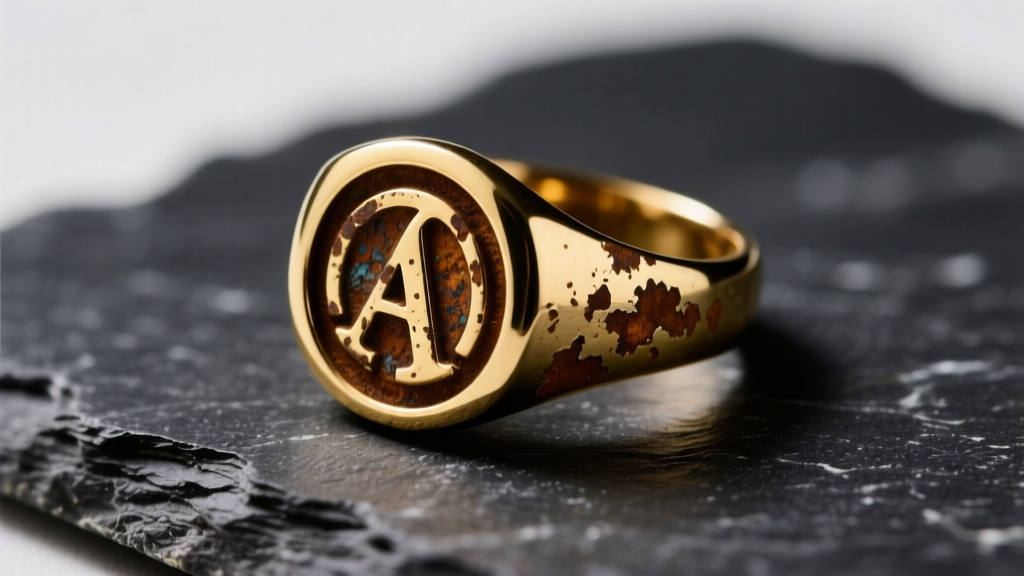
To truly understand brass jewelry tarnish, we must look past the surface and examine the alloy at a crystalline level. Brass is not a pure element; it is a substitutional alloy composed primarily of copper (Cu) and zinc (Zn). When exposed to atmospheric oxygen, moisture, and sulfur compounds, the copper atoms at the surface undergo a predictable sequence of oxidation reactions.
According to the Copper Development Association, the initial reaction forms cuprous oxide (Cu2O), which presents as a faint reddish or pinkish hue. As oxidation progresses, this layer converts into cupric oxide (CuO), resulting in the familiar dull brown or black tarnish. In environments with high sulfur content—such as urban pollution or proximity to volcanic soils—copper sulfides (Cu2S) form rapidly, creating a deep, iridescent purple-black patina that is notoriously difficult to remove mechanically.
Crucially, the zinc in the alloy does not remain passive. In the presence of electrolytes (like human sweat), micro-galvanic cells form on the jewelry's surface. Zinc, being more anodic than copper, can selectively leach out in a process known as dezincification. This leaves behind a porous, copper-rich surface layer that is highly susceptible to rapid, uneven tarnishing and structural weakening.
Alloy Composition and Tarnish Velocity
Not all brass is created equal. The ratio of copper to zinc—and the addition of trace elements like tin or lead—fundamentally alters the alloy's tarnish velocity and the aesthetic quality of the resulting patina. Jewelers and metallurgists categorize brass into specific UNS (Unified Numbering System) designations, each with distinct wear characteristics.
| Alloy Designation | Common Name | Composition (Cu/Zn/Other) | Tarnish Velocity | Patina Color Profile |
|---|---|---|---|---|
| C23000 | Red Brass | 85% Cu, 15% Zn | Slow | Rich brown, deep plum |
| C26000 | Yellow / Cartridge Brass | 70% Cu, 30% Zn | Rapid | Muddy brown, black, green |
| C46400 | Naval Brass | 60% Cu, 39.2% Zn, 0.8% Sn | Moderate | Olive drab, dark bronze |
As noted by materials science resources like Corrosion Doctors, the addition of just 0.8% tin in C46400 Naval Brass dramatically increases its resistance to dezincification and chloride-induced corrosion. For jewelry designers creating pieces intended for high-sweat environments or coastal wear, specifying C46400 over standard C26000 yellow brass is a critical technical decision that reduces long-term tarnish complaints and structural failure.
The Biochemistry of Skin Reactions and 'Greening'
A frequent complaint conflated with brass jewelry tarnish is the 'green skin' phenomenon. This is not tarnish transferring to the skin; it is a distinct biochemical chelation process. Human sweat is a complex electrolyte containing water, sodium chloride, urea, lactic acid, and amino acids, typically ranging from a pH of 4.5 to 7.0.
The Role of Sebum and Urea
When brass rests against the stratum corneum (the outermost layer of skin), the acidic components of sweat react with the surface copper to form water-soluble copper chelates and copper chlorides. These microscopic compounds are easily absorbed into the skin's lipid barrier, oxidizing further to produce the characteristic blue-green stain. Individuals with highly acidic sweat (pH below 5.0) or those who consume high-sodium diets will accelerate this chelation process, causing standard yellow brass to tarnish and stain within hours of wear.
Mitigating Contact Dermatitis
While the green stain itself is harmless, the nickel or lead impurities sometimes found in lower-grade commercial brass alloys can trigger allergic contact dermatitis. Sourcing lead-free, nickel-free brass (such as Eco-Brass C69300) is essential for hypoallergenic claims, though it does not entirely eliminate the copper-driven greening effect.
Advanced Remediation: Chemical vs. Mechanical Descaling
When brass jewelry tarnish has progressed to thick cupric oxide or copper sulfide layers, mechanical polishing (using abrasive pastes or polishing wheels) is often counterproductive. Abrasives remove the underlying zinc-rich matrix, altering the surface color and creating micro-scratches that actually increase the surface area for future oxidation. Instead, expert jewelers rely on targeted chemical descaling.
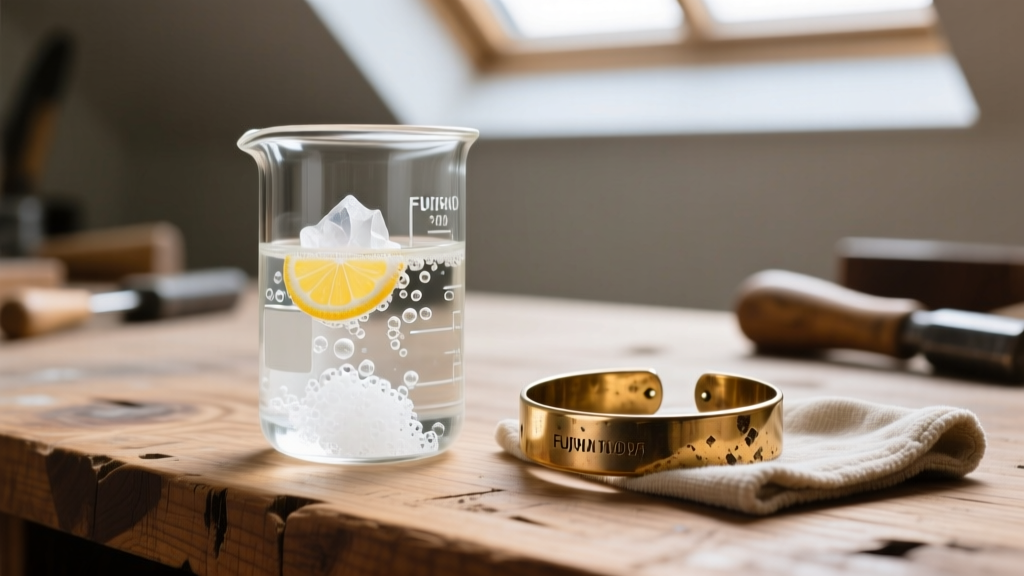
- Citric Acid + Sodium Chloride Bath: A 5% molar solution of citric acid combined with a pinch of non-iodized salt creates a mild electrochemical reaction. The chloride ions act as a catalyst, breaking down the copper oxide lattice and forming soluble copper-chloride complexes that wash away cleanly without attacking the underlying zinc.
- Thiourea-Based Dips: Commercial silver and brass dips utilize thiourea, a powerful complexing agent that strips tarnish in seconds. However, these are highly toxic, leave a sulfurous residue if not neutralized properly, and can cause 'flash tarnishing' where the piece oxidizes even faster post-clean.
- Ultrasonic Limitations: While ultrasonic cleaners are excellent for removing sebum and dirt from gemstone settings, they do nothing to dissolve chemical tarnish. Using an ultrasonic machine with plain water on heavily oxidized brass will merely clean the dirt off the tarnish layer.
Preventative Coatings: Clear Coats, Waxes, and PVD
The ultimate defense against brass jewelry tarnish is isolating the alloy from atmospheric oxygen and skin electrolytes. The jewelry industry utilizes three primary barrier methods, each with vastly different lifespans and technical requirements.
Microcrystalline Waxes: Products like Renaissance Wax form a breathable, non-yellowing barrier. Applied via a soft cloth and buffed to a hard sheen, these waxes are ideal for antique brass or pieces where a natural, uncoated feel is desired. However, the friction of daily wear and the solvent properties of skin oils will degrade a wax coating in 2 to 4 weeks, requiring frequent reapplication.
Acrylic and Polyurethane Clear Coats: Liquid coatings (e.g., ProtectaClear or Everbrite) are brushed or dipped onto the jewelry, curing into a microscopic plastic shell. While they offer 6 to 12 months of protection, they are prone to micro-cracking. Once moisture breaches a crack, localized galvanic corrosion occurs beneath the coating, resulting in blistering that requires aggressive chemical stripping to repair.
Physical Vapor Deposition (PVD): The gold standard for modern brass jewelry is PVD coating, typically using silicon dioxide (SiO2) or zirconium nitride. Applied in a vacuum chamber, PVD creates a molecular bond with the brass surface at a thickness of 0.5 to 2.0 microns. PVD coatings are entirely impervious to sweat, UV degradation, and friction, offering 5 to 10 years of tarnish resistance while maintaining the exact optical reflectivity of raw, polished brass.
Understanding brass jewelry tarnish is not about fighting a losing battle against oxidation; it is about selecting the correct alloy grade for the intended environment and applying the appropriate metallurgical barrier to preserve the artisan's original vision.