Real Benefits of Copper Jewelry: Style, Patina, and Health Myths
Discover the real benefits of copper jewelry. We separate health myths from metallurgical facts, explain patina, and stop green skin.

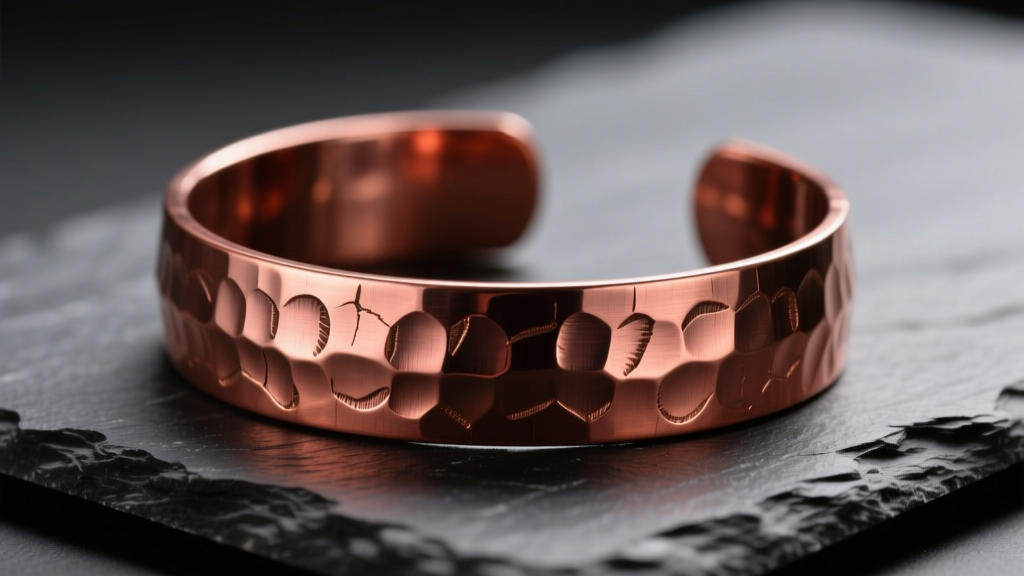
When beginners first explore the world of non-precious metals, they are immediately drawn to the warm, earthy tones of copper. However, a quick internet search for the benefits of copper jewelry often leads to a confusing mix of metaphysical claims, unproven health remedies, and genuine metallurgical advantages. As a beginner, it is crucial to separate the internet folklore from the actual material science.
In this comprehensive guide, we will break down the true benefits of copper jewelry. We will explore its unique structural properties, the aesthetic evolution of its patina, the reality behind the infamous 'green skin' reaction, and the medical consensus on its health claims. Whether you are looking to buy your first copper ring or understand how to care for a vintage brass cuff, this explainer will give you the foundational knowledge you need.
The Metallurgical Benefits of Copper in Jewelry Making
Before discussing how copper interacts with the human body, we must look at its physical properties. Pure copper (specifically C11000, also known as Electrolytic Tough Pitch or ETP copper, which is 99.9% pure) offers distinct advantages for both jewelers and wearers.
- Exceptional Malleability: Copper is highly ductile. A single ounce of copper can be drawn into a wire 50 miles long. For jewelry, this means artisans can easily stamp, forge, and texture the metal without it cracking, allowing for intricate, handcrafted designs that are difficult to achieve with harder metals like stainless steel.
- Work Hardening Capabilities: While pure copper is soft, it 'work hardens' when bent or hammered. A jeweler can forge a copper cuff while it is soft, and the physical act of hammering increases its tensile strength, ensuring the final piece holds its shape on your wrist.
- Alloy Versatility: Copper is the foundational base for brass (copper and zinc) and bronze (copper and tin). Understanding pure copper is the first step to mastering the entire copper-family alloy spectrum.
Separating Health Myths from Medical Reality
The most heavily debated 'benefit' of copper jewelry is its purported ability to alleviate joint pain and arthritis. For decades, alternative medicine advocates have claimed that micro-doses of copper absorbed through the skin reduce inflammation. But what does the clinical data actually say?
According to a comprehensive randomized, double-blind placebo-controlled trial published in the National Institutes of Health (NIH), copper bracelets and magnetic wrist straps have no meaningful clinical effect on pain, swelling, or disease progression in rheumatoid arthritis. The study concluded that any perceived benefits were strictly the result of the placebo effect.
Furthermore, the Copper Development Association notes that while copper is an essential trace mineral for human health, the amount absorbed through the skin from a bracelet is negligible compared to dietary intake. Therefore, the true benefits of copper jewelry are aesthetic, historical, and structural—not medicinal. Wearing copper should be about personal style and an appreciation for living metals, not as a substitute for medical treatment.
The Aesthetic Benefit: Mastering the Living Patina
Unlike gold or platinum, which remain static, copper is a 'living' metal. It reacts with oxygen, moisture, and sulfur in the environment to create a patina. For beginners, this oxidation process is one of the most rewarding benefits of copper jewelry, as it allows the piece to tell a story over time.
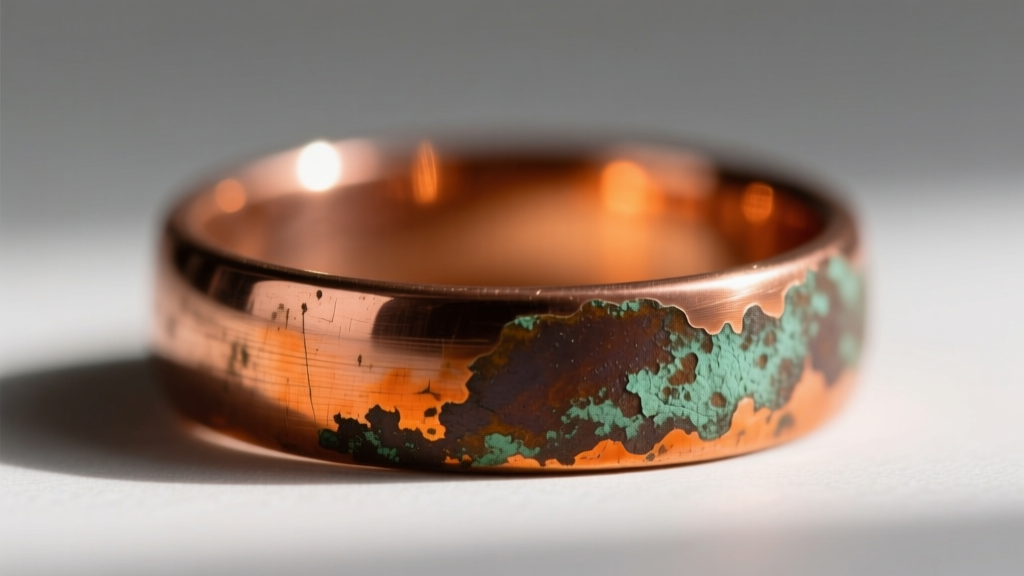
Understanding the timeline of copper oxidation helps you decide whether to polish your piece back to its original shine or let it age naturally.
| Oxidation Stage | Visual Appearance | Timeline (Daily Wear) | Cause |
|---|---|---|---|
| Stage 1: Fresh Polish | Bright, reflective salmon-pink/orange | Day 0 | Mechanical polishing removes surface oxides. |
| Stage 2: Initial Tarnish | Muted, matte reddish-brown | 1 to 3 Weeks | Reaction with atmospheric oxygen (Cuprous oxide). |
| Stage 3: Deep Brown | Rich, dark chocolate brown | 1 to 3 Months | Further oxidation and reaction with skin oils (Cupric oxide). |
| Stage 4: Verdigris | Faint green or teal spotting in crevices | 6+ Months (in humid conditions) | Reaction with chlorides, carbonates, and sweat. |
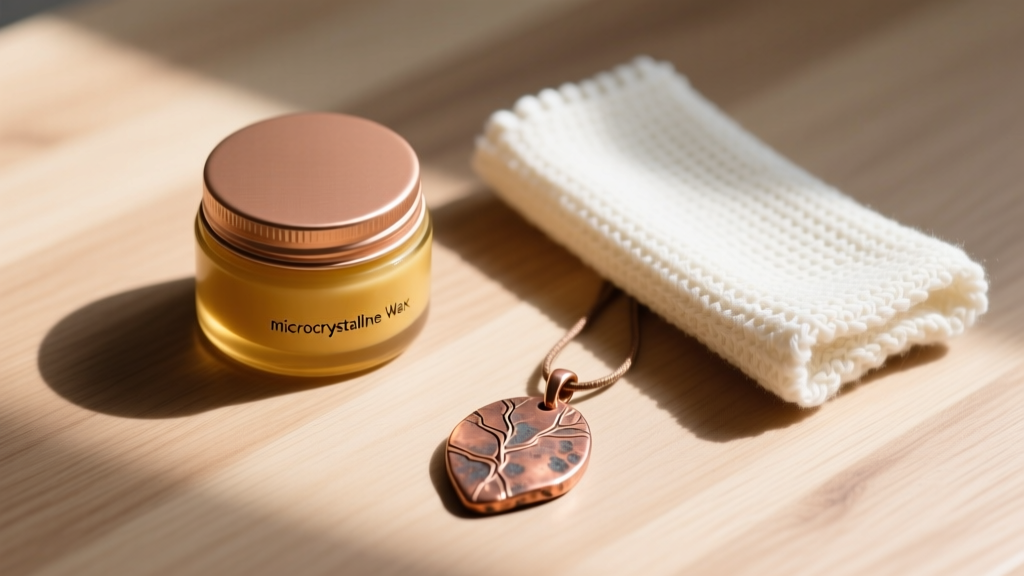
Pro Tip: If you prefer the dark brown Stage 3 look but want to avoid the green Stage 4 verdigris, you can halt the oxidation process by applying a microcrystalline wax sealant once the desired color is reached.
The 'Green Skin' Phenomenon: Chemistry and Prevention
No beginner's guide to the benefits of copper jewelry is complete without addressing the elephant in the room: the green skin reaction. Many beginners mistake this for an allergic reaction or a sign of cheap, toxic metal. In reality, it is a harmless, easily preventable chemical reaction.
When copper mixes with the salts, acids, and moisture found in human sweat, it creates copper chloride and copper carbonate. These compounds are green and easily transfer to the outermost layer of dead skin cells. It is not dangerous, and it washes off with basic soap and water.
3 Actionable Ways to Prevent Green Skin
- The Renaissance Wax Method: For high-end artisan pieces, apply a thin coat of Renaissance Wax (a microcrystalline wax used by museum conservators). Buff it with a soft cloth. This creates an invisible, non-yellowing barrier between the copper and your skin, lasting for several months of daily wear.
- The Clear Coat Barrier: For inexpensive or casual copper rings, painting the inside band with a thin layer of clear nail polish (polyurethane-based) provides a cheap, effective waterproof seal. Reapply every few weeks as it wears off.
- Moisture Management: Simply removing your copper rings before washing your hands, swimming, or exercising drastically reduces the chemical reaction. Dry the inside of your cuffs and rings with a microfiber cloth at the end of the day.
Beginner's Buying Guide: Gauges, Grades, and Pricing
When shopping for your first copper piece, understanding wire gauges and pricing tiers will help you identify quality craftsmanship and avoid overpaying for mass-produced items.
Understanding Wire Gauges in Copper Jewelry
Copper wire is measured in American Wire Gauge (AWG). The lower the number, the thicker the wire.
- 20g to 18g (0.8mm - 1.0mm): Ideal for delicate ear wires, wire-wrapped pendants, and lightweight chain links. Too thin for rings that endure heavy impact.
- 14g to 12g (1.6mm - 2.0mm): The standard for durable, everyday copper rings and sturdy jump rings. A 12g copper band will resist bending during manual labor.
- 10g to 8g (2.5mm - 3.2mm): Used for heavy, statement-making cuffs and thick bangles that require structural rigidity.
What Should You Pay?
Copper is an abundant, inexpensive base metal. Therefore, you are paying for the labor and artistry, not the raw material value.
- Mass-Produced Copper Chains & Blank Stamps ($15 - $35): Machine-made items. Good for layering and testing your skin's reaction to copper before investing in artisan work.
- Hand-Forged Artisan Cuffs & Rings ($45 - $120): You are paying for the jeweler's time, custom sizing, and specialized techniques like reticulation or acid etching. Look for makers who specify their copper grade (e.g., C110) and use lead-free solder.
- Complex Wire-Woven or Gem-Set Pieces ($130 - $250+): High-end copper jewelry that incorporates intricate weaving (like Persian or Byzantine weaves) or sets semi-precious stones like turquoise and malachite, which pair beautifully with copper's warm tones.
Final Thoughts for the Copper Beginner
The true benefits of copper jewelry lie in its organic beauty, its rich historical significance, and its unique ability to age alongside you. By understanding the metallurgical facts, accepting the reality of its patina, and utilizing simple barrier methods to prevent oxidation transfer, you can confidently integrate copper into your daily wardrobe. It is a metal that demands a little interaction and care, rewarding the wearer with a deeply personalized accessory that no precious metal could ever replicate.
Related stories
By Material
How To Match Wear With Hallmarks: A Practical Guide for Copper and Brass Collectors & Restorers
By Material
Solutions Face Essentials: Copper-Brass Expert Analysis of Material Performance, Corrosion Resistance, and Real-World Applications

By Material