How to Clean Lake Gray Jewelry Cubic Zirconia Safely
Learn how to safely clean, style, and store lake gray jewelry cubic zirconia pieces to protect their unique PVD coatings and settings.

The Rise of Moody Gemstones: Understanding Lake Gray CZ
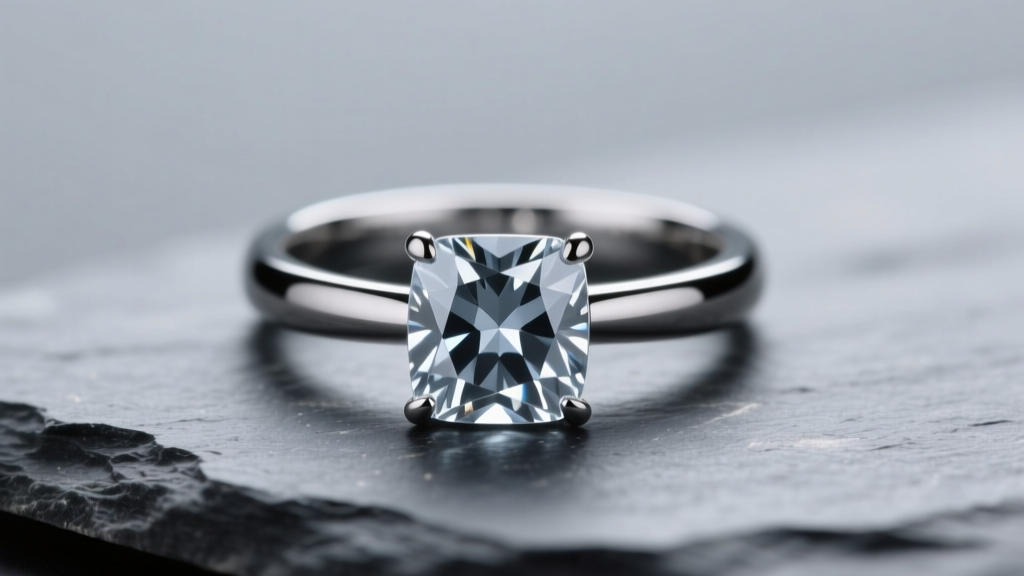
In the contemporary jewelry landscape of 2026, the demand for moody, unconventional gemstones has surged, pushing alternative stones to the forefront of high fashion. Among these, the stormy, muted blue-silver hue of lake gray jewelry cubic zirconia has become a standout choice for those seeking the brilliance of a diamond with a brooding, sophisticated twist. However, maintaining the optical clarity and structural integrity of these specific stones requires a departure from traditional diamond care routines.
To properly care for these pieces, we must first understand their gemological makeup. Standard cubic zirconia (CZ) is a synthetic crystalline form of zirconium dioxide (ZrO2), stabilized with yttrium or calcium oxide. According to the Gemological Institute of America (GIA), CZ boasts a Mohs hardness of 8 to 8.5 and a high refractive index (2.15–2.18), giving it exceptional brilliance. However, the 'lake gray' coloration is rarely achieved through bulk doping alone. Instead, master lapidaries typically utilize a Physical Vapor Deposition (PVD) process, applying a microscopic titanium-iron coating to the pavilion (the bottom facets) of the stone. This allows the crown to remain highly reflective while the pavilion absorbs and refracts light in cool, stormy gray tones.
Because this coloration relies on a delicate surface treatment rather than internal crystal lattice anomalies, aggressive cleaning methods used for natural gray diamonds will permanently destroy a lake gray CZ stone.
Step-by-Step Cleaning Protocol for Lake Gray CZ
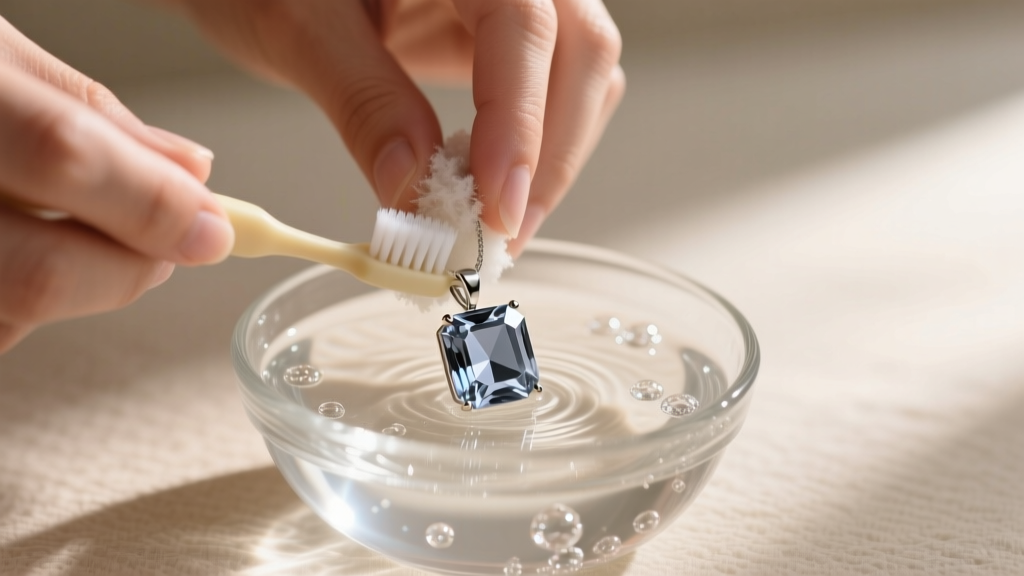
Removing sebum, cosmetic residue, and environmental dust from your jewelry is essential for maintaining its light return. Follow this exact protocol to ensure the PVD coating remains intact.
Step 1: The Lukewarm Soak
Fill a small glass or ceramic bowl with lukewarm water—ideally around 85°F (29°C). Avoid hot water, as extreme thermal shock can cause micro-fractures in the PVD layer or weaken the adhesive in tension-set mountings. Add three drops of a pH-neutral, lotion-free dish soap (such as original blue Dawn). Submerge your lake gray CZ jewelry and let it soak for exactly three to five minutes. This brief window is sufficient to break down surface oils without allowing water to seep into the setting's microscopic porosity.
Step 2: Gentle Agitation
Remove the piece from the solution and use an extra-soft baby toothbrush (with bristles no thicker than 0.1mm) to gently sweep the crown and the metal setting. Critical Warning: Never brush the pavilion or the culet (the bottom point) of the stone if it is exposed in an open-back setting. The mechanical friction, even from soft bristles, can gradually wear away the titanium-iron coating over time, leading to patchy color loss.
Step 3: The Microfiber Dry
Rinse the jewelry under a gentle stream of distilled or filtered water to prevent hard water calcium deposits from spotting the stone. Immediately pat dry with a lint-free, optical-grade microfiber cloth. Do not air dry, as evaporating water leaves mineral streaks that dull the stone's dispersion (0.058–0.066), robbing it of its signature fire.
Chemical Interaction Matrix: What to Avoid
The intersection of coated gemstones and precious metal alloys creates a complex chemical vulnerability. Below is a matrix detailing how common household cleaning agents interact with both the lake gray CZ and its typical rhodium-plated sterling silver or white gold settings.
| Cleaning Agent | Effect on Lake Gray CZ Coating | Effect on Rhodium/Silver Setting | Verdict |
|---|---|---|---|
| Ultrasonic Cleaners | Causes micro-fractures and peeling in the PVD layer | Can strip thin rhodium flashes and loosen prongs | Never Use |
| Chlorine (Bleach/Pool) | Clouds the crown, chemically degrades pavilion coating | Corrodes silver alloys rapidly, causing black pitting | Never Use |
| Mild Dish Soap (pH 7) | Safe; lifts sebum without abrasion or chemical reaction | Safe for all precious metals and plating | Highly Recommended |
| Baking Soda Paste | Micro-scratches the CZ surface (Mohs 8.5 vs abrasive 9) | Scratches high-polish silver, creating a matte finish | Avoid Completely |
| Isopropyl Alcohol | Safe for brief spot cleaning of the crown | Safe, but can dry out porous accent gems like pearls | Use Sparingly |
Styling and Metal Pairings
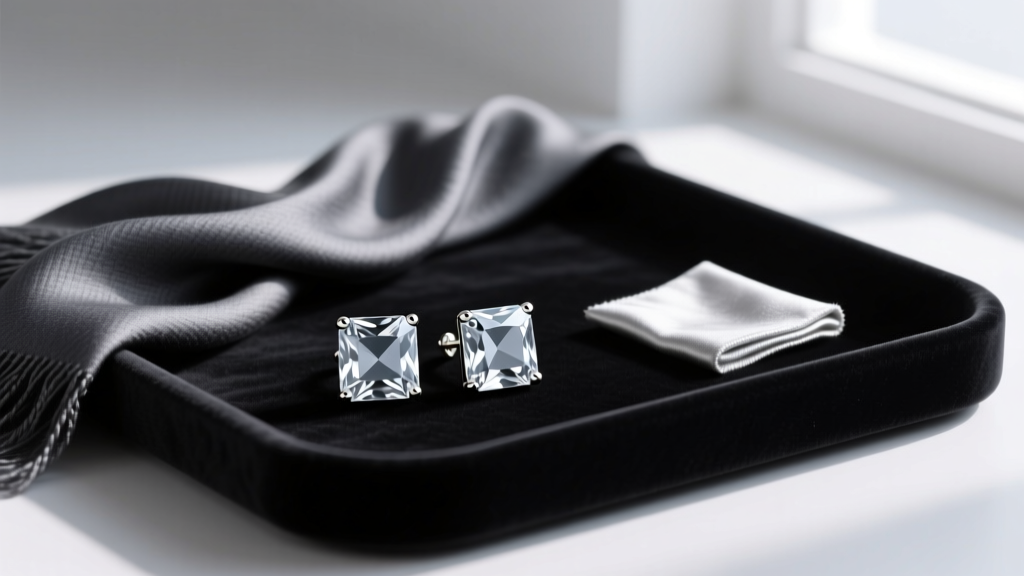
Styling lake gray jewelry cubic zirconia requires an understanding of color theory and metallurgical aesthetics. The stone's inherent undertones lean heavily toward slate, steel, and deep oceanic blue. To maximize the visual impact of the jewelry, the metal setting must complement rather than compete with the stone.
- Ruthenium and Black Rhodium: These dark, gunmetal platings create a seamless, monochromatic transition from the metal to the stone, ideal for avant-garde or gothic-inspired looks.
- Oxidized Sterling Silver: The darkened crevices of oxidized silver provide a vintage, high-contrast backdrop that makes the gray CZ appear more luminous.
- Wardrobe Pairings: These stones perform best against cool-toned fabrics. Pair them with charcoal wools, navy silks, slate-gray cashmeres, and stark white linens. Avoid warm earth tones like mustard or rust, which can make the gray CZ appear muddy or washed out.
Identifying Coating Wear and Tear
Even with meticulous care, PVD coatings on cubic zirconia have a finite lifespan, typically ranging from two to five years depending on wear frequency. It is vital to recognize the early signs of coating degradation.
'The most common mistake consumers make is assuming their coated CZ has simply become dirty. If you look through the table (top facet) and notice a mottled, patchy reflection, or if the stone appears to be shifting toward a pale yellow or transparent hue, the pavilion coating is failing. No amount of cleaning will restore this; it requires professional lapidary re-coating.' — Master Gemologist Appraiser, 2025 Industry Report
If you suspect wear, perform the Flash Test: Hold the stone under a direct, cool-white LED flashlight. A healthy lake gray CZ will reflect a uniform, stormy gray light return. A degrading stone will show pinpoint flashes of clear or yellow light where the coating has flaked off due to friction or chemical exposure.
Long-Term Storage and Preservation
How you store your lake gray CZ jewelry when it is not being worn is just as critical as how you clean it. The Jewelers of America emphasizes that environmental factors are the silent killers of treated gemstones.
First, always store these pieces in individual, airtight polyethylene bags. This prevents the metal settings from tarnishing and protects the CZ from airborne sulfur compounds. Second, include a 3M anti-tarnish strip in the storage bag; these strips absorb corrosive gases without emitting any chemicals that could harm the PVD coating. Finally, keep your jewelry box away from direct, prolonged sunlight. While CZ itself is highly stable, certain metallic oxides used in gray PVD coatings can experience UV degradation over several years, leading to a permanent fading of the signature lake gray hue.
For further reading on maintaining the structural integrity of silver and alternative metal settings, the Silver Institute provides excellent guidelines on preventing micro-abrasions in high-polish finishes. By adhering to these meticulous, step-by-step care protocols, your lake gray cubic zirconia jewelry will retain its moody brilliance and structural integrity for years to come.