Diamond Gems Jewelry: Comparing Natural, Lab, Moissanite & CZ
Compare natural diamonds, lab-grown, moissanite, and CZ in diamond gems jewelry. Explore Mohs hardness, refractive index, and pricing.

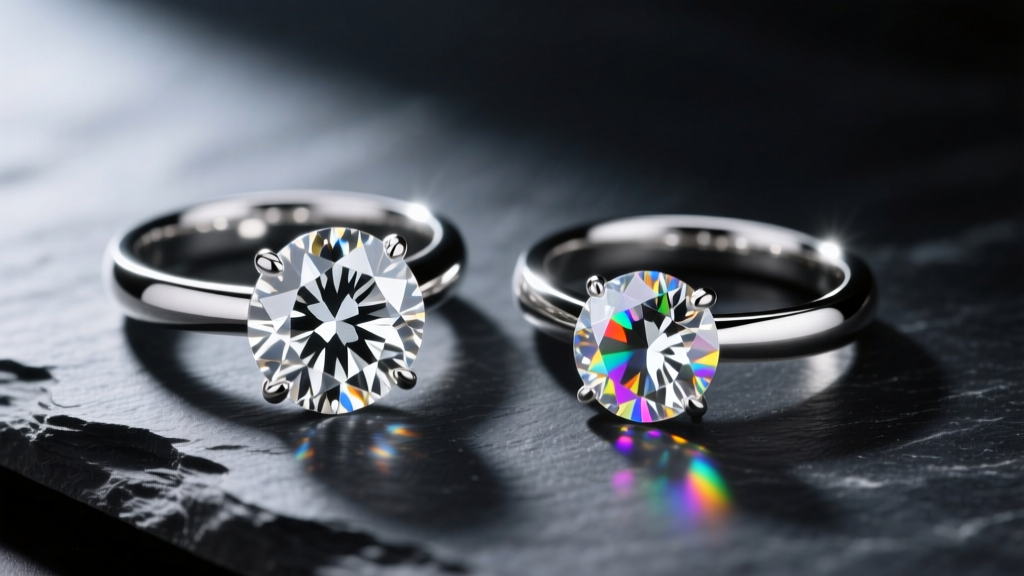
The landscape of diamond gems jewelry has undergone a radical transformation. What was once a market dominated exclusively by mined stones now features a complex matrix of lab-grown diamonds, silicon carbide simulants (moissanite), and advanced cubic zirconia. For consumers and jewelers alike, understanding the distinct material properties of these gemstones is no longer optional—it is essential for making informed decisions regarding durability, optical performance, and long-term value. This guide bypasses marketing fluff to examine the hard gemological data, crystallography, and real-world wear characteristics of the four primary materials used in modern diamond jewelry.
The Physics of Sparkle: Refractive Index and Dispersion
The visual appeal of any gemstone in diamond gems jewelry is dictated by two primary optical properties: Refractive Index (RI) and Dispersion. Refractive index measures how much light bends as it enters the stone, contributing to overall brilliance (white light return). Dispersion measures the stone's ability to split white light into spectral colors, commonly referred to as 'fire'.
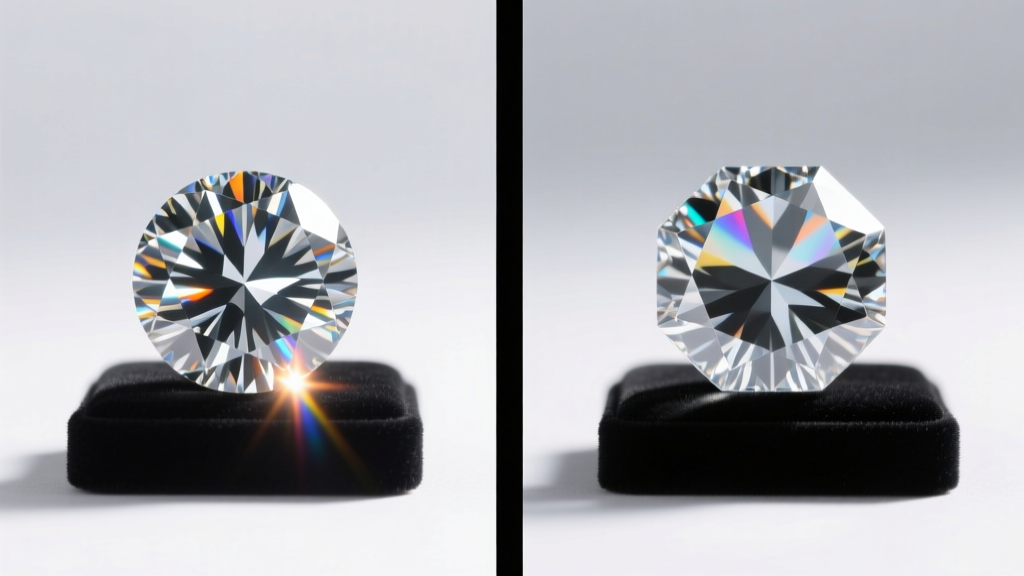
Natural and lab-grown diamonds share identical optical properties, boasting an RI of 2.417 and a dispersion of 0.044. This specific ratio creates the classic, balanced scintillation that defines a diamond. Moissanite, however, possesses a higher RI (2.65) and more than double the dispersion (0.104). While this makes moissanite exceptionally bright, it also produces a hyper-active, rainbow-heavy scintillation often described by gemologists as the 'disco ball effect.' Cubic zirconia (CZ) falls on the lower end of the spectrum with an RI of 2.15 and a dispersion of 0.058, resulting in a glassier appearance with less internal light return compared to diamond.
| Material | Refractive Index | Dispersion (Fire) | Specific Gravity | Optical Character |
|---|---|---|---|---|
| Natural / Lab Diamond | 2.417 | 0.044 | 3.52 | Isotropic (Singly Refractive) |
| Moissanite | 2.65 - 2.69 | 0.104 | 3.22 | Anisotropic (Doubly Refractive) |
| Cubic Zirconia (CZ) | 2.15 - 2.18 | 0.058 - 0.066 | 5.60 - 6.00 | Isotropic (Singly Refractive) |
Durability Metrics: Mohs Hardness vs. Toughness
A critical mistake made by many buyers of diamond gems jewelry is conflating hardness with toughness. The Mohs scale measures scratch resistance, not impact resistance. Diamond sits at the absolute peak of the Mohs scale at 10, making it impervious to scratching by any other natural material. Moissanite follows at 9.25, and CZ sits between 8.0 and 8.5. While a 9.25 rating sounds close to 10, the Mohs scale is logarithmic; diamond is exponentially harder than moissanite, meaning moissanite will eventually accumulate microscopic surface abrasions over decades of daily wear.
However, toughness (resistance to chipping and breaking) tells a different story. According to the Gemological Institute of America (GIA), diamond possesses perfect octahedral cleavage. This means that if a diamond is struck precisely along one of its natural crystallographic planes—most commonly at the vulnerable girdle edge—it can chip or split. Moissanite, conversely, has no true cleavage planes. In scenarios involving blunt force impact, a moissanite stone is structurally less likely to cleave or shatter than a natural diamond, despite its lower scratch resistance.
Real-World Wear and Tear Scenarios
- Daily Desk Work: All three materials will survive perfectly. However, CZ will begin to show microscopic facet-edge abrasions within 2 to 3 years, giving it a cloudy, worn appearance.
- Manual Labor & Gym: Diamond risks girdle chipping if struck against steel weights. Moissanite resists chipping better but can scratch if exposed to diamond-tipped tools or carbide.
- Ultrasonic Cleaning: Diamonds and moissanite are completely safe in standard jewelry ultrasonic cleaners. CZ, particularly if it has internal stress fractures from manufacturing, can fracture under high-frequency vibrations.
Inclusions, Clarity, and Manufacturing Signatures
Identifying the origin of stones in diamond gems jewelry requires an understanding of their formation environments. Natural diamonds are formed in the Earth's mantle and frequently contain mineral inclusions like olivine, garnet, or diamond crystals, alongside feather fractures and twinning wisps. Lab-grown diamonds, created via Chemical Vapor Deposition (CVD) or High Pressure High Temperature (HPHT) methods, have different signatures. CVD diamonds often show silicon inclusions or strain patterns, while HPHT stones may contain metallic flux inclusions that can actually be attracted to a strong neodymium magnet.
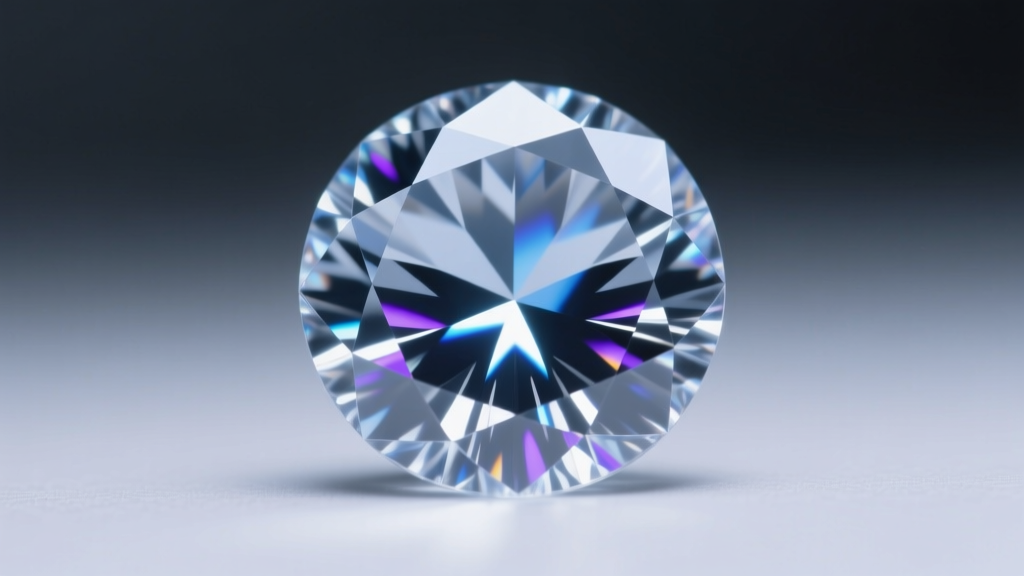
Moissanite and CZ are fundamentally different. Because moissanite is doubly refractive (anisotropic), looking through the crown facets with a 10x jeweler's loupe will reveal a 'doubling' of the pavilion facet edges. Diamond and CZ are singly refractive (isotropic) and will not show this effect. Furthermore, while CZ is manufactured to be virtually flawless, it occasionally contains tiny gas bubbles from the melting process. As noted by the International Gemological Institute (IGI), advanced thermal and electrical conductivity testing is required to separate diamond from moissanite, as both materials conduct heat well enough to fool standard diamond testers.
'The most reliable visual indicator for separating moissanite from diamond in a mounted piece of jewelry is the observation of double refraction through the crown, combined with the distinct absence of natural crystalline inclusions.' — Gemological Appraisal Standards
Market Valuation and Price Per Carat
The pricing structure for diamond gems jewelry has decoupled significantly in recent years. Natural diamonds retain a premium driven by geological rarity and market control, while lab-grown diamonds have experienced massive price deflation due to scalable manufacturing. Simulants like moissanite and CZ are priced purely on the cost of labor and raw materials, with no intrinsic resale value.
When evaluating a standard 1.00-carat equivalent (or 6.5mm round) stone of high color (D-F) and clarity (VS equivalent), the market breakdown is stark:
- Natural Diamond: $4,500 – $8,500+ (Retains 30-50% of retail value on the secondary market).
- Lab-Grown Diamond: $600 – $1,200 (Resale value is currently negligible, often less than 10% of retail).
- Moissanite: $250 – $500 (Priced by millimeter size, not carat weight; zero resale value).
- Cubic Zirconia: $15 – $40 (Essentially a consumable component; zero resale value).
Final Verdict: Matching Material to Lifestyle
Selecting the right material for diamond gems jewelry depends entirely on the wearer's priorities. If generational heirloom status, geological rarity, and traditional resale value are paramount, a natural diamond remains the only choice. For buyers who demand identical physical and optical properties to a natural stone but wish to optimize their budget for a larger carat size or higher setting quality, lab-grown diamonds offer the exact same material benefits at a fraction of the cost.
Moissanite is the superior choice for those who prioritize high brilliance, ethical sourcing, and exceptional chip resistance, provided they do not mind the intense rainbow fire that distinguishes it from diamond. Finally, cubic zirconia should be reserved strictly for fashion jewelry, travel replicas, or temporary placeholder rings, as its softness and high specific gravity make it unsuitable for lifelong daily wear in fine jewelry settings.