How to Sell Diamonds to Miller Jewelry & Diamond Buyers
Learn the exact step-by-step process to appraise, prepare, and negotiate when selling your diamonds to Miller Jewelry & Diamond Buyers for top dollar.

Selling high-value jewelry and loose gemstones to established, reputable entities like Miller Jewelry & Diamond Buyers requires more than simply walking into a storefront and accepting the first offer. Whether you are liquidating an inherited estate piece, upgrading your engagement ring, or selling a loose investment stone, the secondary diamond market in 2026 demands a strategic approach. Professional buyers operate on tight margins, utilizing real-time market data, precise gemological grading, and scrap metal indices to formulate their offers.
This comprehensive, step-by-step guide will walk you through the exact preparation, valuation, and negotiation tactics required to maximize your payout when sitting across the counter from expert diamond buyers.
Understanding the Professional Buyer's Approach
Before initiating a sale, it is crucial to understand how high-end buyers calculate their offers. Reputable buyers do not base their prices on the original retail appraisal, which is often inflated by 100% to 300% for insurance replacement purposes. Instead, they rely on the Rapaport Diamond Report as a baseline wholesale index, adjusting the final offer based on the stone's liquidity, cut precision, fluorescence, and current market demand.
In the current market landscape, natural diamonds with top-tier cut grades and pristine provenance command strong liquidity, while the secondary market for lab-grown diamonds has seen significant price compression due to wholesale saturation. Understanding this distinction is your first step toward a successful negotiation.
Step 1: Gather Certification and Provenance Documentation
The single most important factor in securing a premium offer is the gemological laboratory that graded your stone. Buyers will immediately verify the laser inscription on the diamond's girdle to match it with the physical or digital dossier.
The Laboratory Hierarchy in Resale
- GIA (Gemological Institute of America): The gold standard. Buyers will pay the highest percentage of the Rapaport baseline for GIA-graded stones because the color and clarity grades are universally trusted.
- AGS (American Gem Society): Highly respected, particularly for cut grading. AGS Ideal cut stones often fetch a premium among specialized buyers.
- IGI and GCAL: Widely accepted, especially for lab-grown diamonds and specific niche cut grades, though natural stones may see a slight discount compared to GIA equivalents.
- EGL and Independent Appraisals: Be prepared for a 15% to 30% discount on the buy-side. Buyers historically view these certificates as over-graded, meaning an EGL 'F' color might be re-evaluated as a GIA 'H' or 'I' on their grading mat.
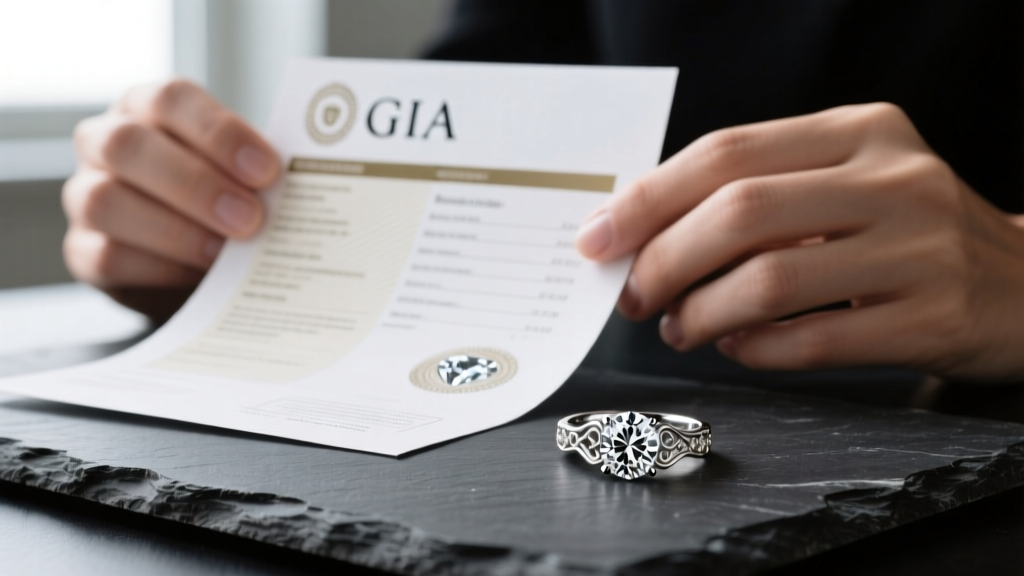
Always bring the original certificate, any historical appraisals, and the original purchase receipt if available. Provenance from prestigious heritage jewelers can sometimes add a modest premium to estate pieces.
Step 2: Pre-Sale Cleaning and Inspection (Do's and Don'ts)
A dirty diamond obscures its true color and hides potential inclusions, which can make a buyer hesitant or prompt them to lower their initial offer to account for 'hidden risks.' However, improper cleaning can destroy a stone's value.
Safe Cleaning Protocol
Soak the jewelry in a bowl of warm water with a few drops of mild, ammonia-free dish soap for 20 minutes. Gently agitate the stone with a soft-bristled baby toothbrush, paying special attention to the pavilion (the underside of the diamond) where grease and lotion accumulate. Rinse with distilled water and pat dry with a lint-free microfiber cloth.
Critical Warning: Avoid Ultrasonic Cleaners
Never place your jewelry in an ultrasonic cleaner before a sale unless you are 100% certain the stone has not been clarity-enhanced. Fracture-filled diamonds or stones with heavy, surface-reaching inclusions can shatter or lose their glass-like fillings under ultrasonic vibrations, instantly reducing their value to near-zero. According to the Gemological Institute of America, understanding your stone's treatment history is vital before applying any mechanical cleaning methods.
Step 3: Calculating the Real Melt and Stone Value
When selling a mounted piece, buyers evaluate the center stone, the accent stones (melee), and the precious metal setting separately. Understanding these distinct value buckets prevents you from being shortchanged.
| Component | Valuation Metric | Expected Buyer Payout (2026) |
|---|---|---|
| Center Stone (GIA, 1.00ct+) | Rapaport Price List | 65% - 85% of Rap (depending on cut/fluorescence) |
| Center Stone (Non-GIA / Commercial) | Wholesale Market Demand | 30% - 50% of estimated Rap equivalent |
| Melee Diamonds (Under 0.15ct) | Parcel Weight / Carat | $150 - $400 per carat (melee parcel rates) |
| 14K Gold Setting | Spot Gold Melt Value | 80% - 90% of pure melt (58.5% purity) |
| Platinum Setting | Spot Platinum Melt | 75% - 85% of pure melt (95% purity) |
Note: The scrap metal value is strictly based on the melt weight. Buyers will not pay for the craftsmanship, brand markup, or design of the mounting unless it is a highly sought-after, signed piece from a house like Cartier or Tiffany & Co.
Step 4: The In-Person Appraisal and Negotiation Tactics
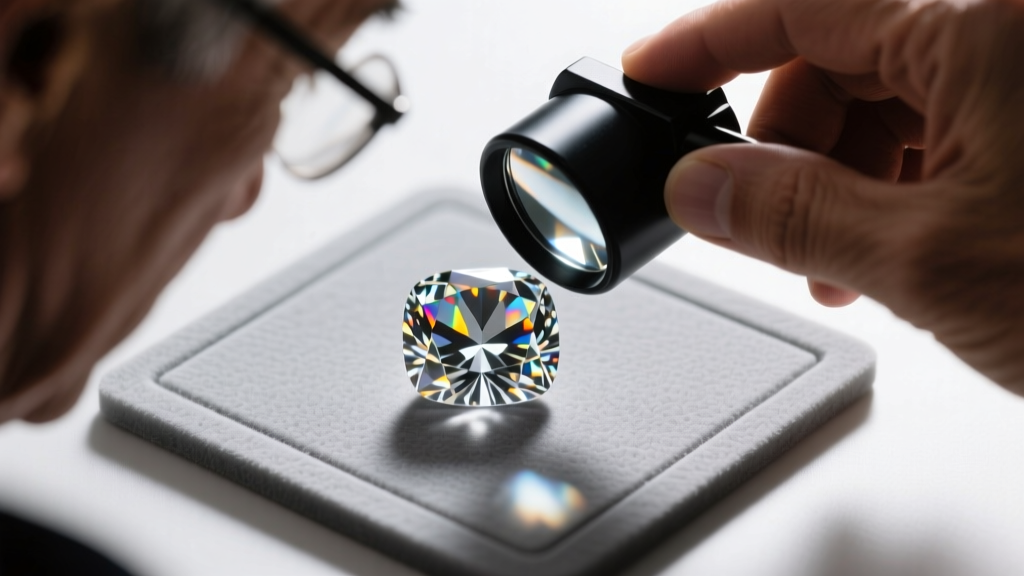
When you arrive at Miller Jewelry & Diamond Buyers, the physical appraisal will begin. The buyer will likely test the metal with an electronic tester or acid, weigh the piece on a calibrated digital scale, and examine the diamond under a 10x triplet loupe.
Key Negotiation Strategies
- Ask for the Rap Price and Discount Percentage: Instead of asking 'What will you give me for this?', ask, 'What percentage below Rap are you offering for this specific cut and clarity?' This signals that you are an educated seller.
- Address Fluorescence Proactively: If your D-F color diamond has 'Strong Blue' fluorescence, buyers will use this to negotiate the price down by 10% to 15%. Acknowledge it upfront, but counter by highlighting the stone's excellent symmetry and lack of milky/hazy characteristics.
- Request a Breakdown: Insist on a written breakdown separating the center stone offer, the melee parcel offer, and the scrap metal offer. This transparency prevents buyers from lowballing the metal weight to subsidize a low stone offer.
Common Pitfalls to Avoid at the Buying Counter
Even seasoned sellers make mistakes when liquidating high-value assets. Avoid these critical errors to protect your bottom line:
- Accepting the First Offer: The initial offer is almost always a 'tester' number. Polite, informed counter-negotiation is expected in the diamond trade.
- Ignoring the Spot Price: Check the daily spot price of gold and platinum on your phone before walking in. If the buyer claims the gold market is down while spot prices are at record highs, walk away.
- Leaving Without a Detailed Receipt: According to Jewelers of America guidelines, reputable buyers must provide a detailed receipt listing the exact weight, metal purity, and diamond specifications of the items purchased. This is crucial for your tax records and legal protection.
Finalizing the Transaction Securely
Once an agreement is reached, ensure the payment method is secure. High-end buyers typically offer wire transfers, cashier's checks, or corporate checks. Avoid accepting personal checks due to the risk of insufficient funds. If the transaction exceeds $10,000, be prepared to provide a valid government-issued ID and fill out IRS Form 8300, as federal law requires businesses to report large cash or equivalent transactions. By approaching Miller Jewelry & Diamond Buyers with meticulous preparation, verifiable documentation, and a firm grasp of wholesale market mechanics, you transform a potentially stressful liquidation into a highly profitable, professional transaction.


