Can Jewelry Stores Test for Lab Grown Diamonds? A Buyer's Guide
Wondering if jewelry stores can test for lab grown diamonds? Discover the tools jewelers use, what to look for, and how to verify your stone's origin.

When investing in a diamond, verifying its origin is just as critical as evaluating its cut, color, and clarity. As lab-grown diamonds continue to capture significant market share due to their ethical appeal and lower price points, a common question arises among buyers: can jewelry stores test for lab grown diamonds? The short answer is yes, but not with the standard tools of the past. Distinguishing between a natural, earth-mined diamond and a laboratory-created counterpart requires advanced gemological science.
This comprehensive buying guide breaks down the exact technology jewelers use to identify lab-grown diamonds, why traditional testers fall short, and the actionable steps you must take to ensure you are getting exactly what you pay for.
The Short Answer: How Jewelers Differentiate Stones
Yes, reputable jewelry stores and certified gemologists can definitively test for lab-grown diamonds. However, they cannot do this by simply looking through a standard 10x jeweler’s loupe. Because lab-grown diamonds possess the exact same physical, chemical, and optical properties as natural diamonds, visual inspection is entirely insufficient.
Lab diamonds are not simulants like cubic zirconia or moissanite. They are pure crystallized carbon. To tell them apart from natural stones, gemologists must look for microscopic growth patterns and trace elemental impurities that differ based on how the crystal was formed—either deep within the Earth's mantle over billions of years, or in a plasma reactor over a few weeks.
The Science: Why Standard Testers Fail
To understand how jewelers test for lab-grown diamonds, you first need to understand why the tools in a typical retail display case fail.
Thermal and Electrical Conductivity Testers
Most handheld "diamond testers" found in retail stores measure thermal conductivity. Because both natural and lab-grown diamonds are exceptional conductors of heat, both will trigger a "pass" on a thermal tester. Similarly, electrical conductivity testers are designed to separate diamonds from moissanite (which conducts electricity). Since neither natural nor lab diamonds conduct electricity, these pens cannot differentiate between the two.
Advanced Spectrometers and Fluorescence Imaging
To accurately identify a lab-grown diamond, jewelers must use advanced spectrometers that analyze how the stone absorbs and emits light. According to the Gemological Institute of America (GIA), natural diamonds typically contain trace amounts of nitrogen that aggregate in specific patterns over millions of years (Type Ia diamonds). In contrast, lab-grown diamonds created via Chemical Vapor Deposition (CVD) or High Pressure High Temperature (HPHT) methods are usually entirely devoid of nitrogen (Type IIa) or contain isolated, unaggregated nitrogen atoms.
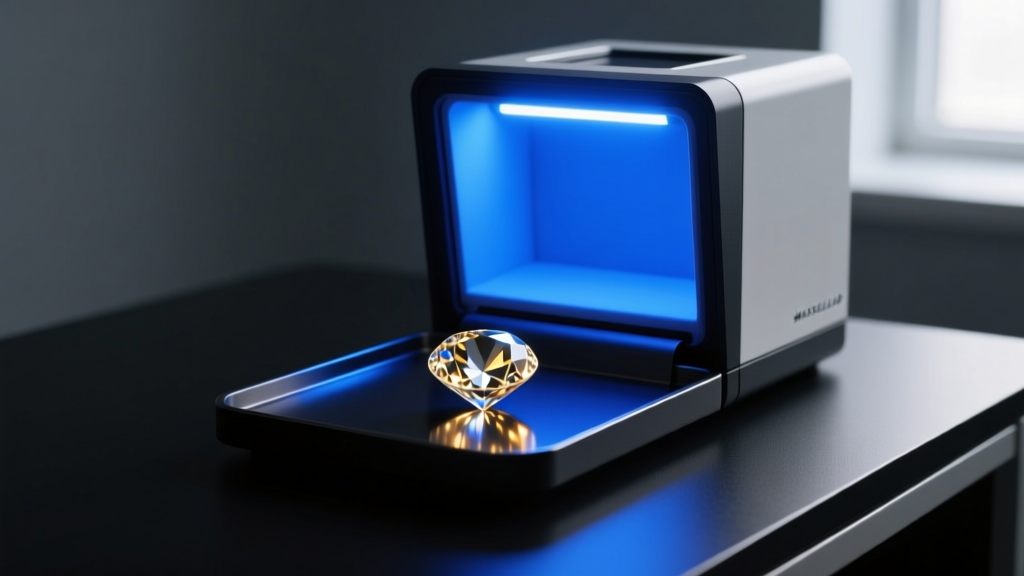
Devices like the GIA DiamondCheck or the iD100 by Gemological Science International (GSI) use photoluminescence spectroscopy. They blast the stone with specific wavelengths of UV light and measure the resulting fluorescence and phosphorescence. HPHT lab diamonds often exhibit distinct metallic flux inclusions and unique phosphorescence (glowing after the light source is turned off), while CVD diamonds may show silicon inclusions and specific strain patterns that natural stones simply do not possess.
Comparison: Standard Retail Tools vs. Gemological Lab Equipment
When asking if jewelry stores can test for lab grown diamonds, it is vital to know the difference between a standard retail shop and a fully equipped gemological laboratory. Below is a breakdown of testing capabilities.
| Testing Method | What It Measures | Can It Detect Lab-Grown Diamonds? |
|---|---|---|
| 10x Jeweler's Loupe | Inclusions, cut quality, surface blemishes | No. Visual differences are invisible to the naked eye. |
| Thermal Tester (Pen) | Heat conductivity | No. Both natural and lab diamonds conduct heat identically. |
| Moissanite Tester | Electrical conductivity | No. Neither natural nor lab diamonds conduct electricity. |
| PL Spectrometer | Light emission and atomic lattice defects | Yes. Detects nitrogen aggregation and CVD/HPHT growth markers. |
| Cathodoluminescence (DiamondView) | Ultra-short wave UV fluorescence patterns | Yes. Reveals distinct geometric growth sectors of lab stones. |
Buying Guide: What to Look For When Purchasing
Relying solely on the jeweler's in-store testing equipment is only one part of a secure purchasing strategy. As a buyer, you must demand verifiable proof of origin. The Federal Trade Commission (FTC) Jewelry Guides strictly mandate that sellers must clearly disclose if a diamond is laboratory-grown, but it is up to you to verify the paperwork.
1. Demand an Independent Grading Report
Never purchase a lab-grown diamond without a grading report from a top-tier, independent laboratory. The most respected entities for lab diamond certification include:
- IGI (International Gemological Institute): Currently the market leader in lab-grown diamond certification, offering highly detailed reports on CVD and HPHT stones.
- GIA (Gemological Institute of America): Offers the GIA Laboratory-Grown Diamond Report, which uses slightly broader color and clarity ranges but provides unmatched scientific rigor.
- GCAL (Gem Certification & Assurance Lab): Known for its 8X cut grade and strict optical symmetry analysis.
2. Verify the Laser Inscription
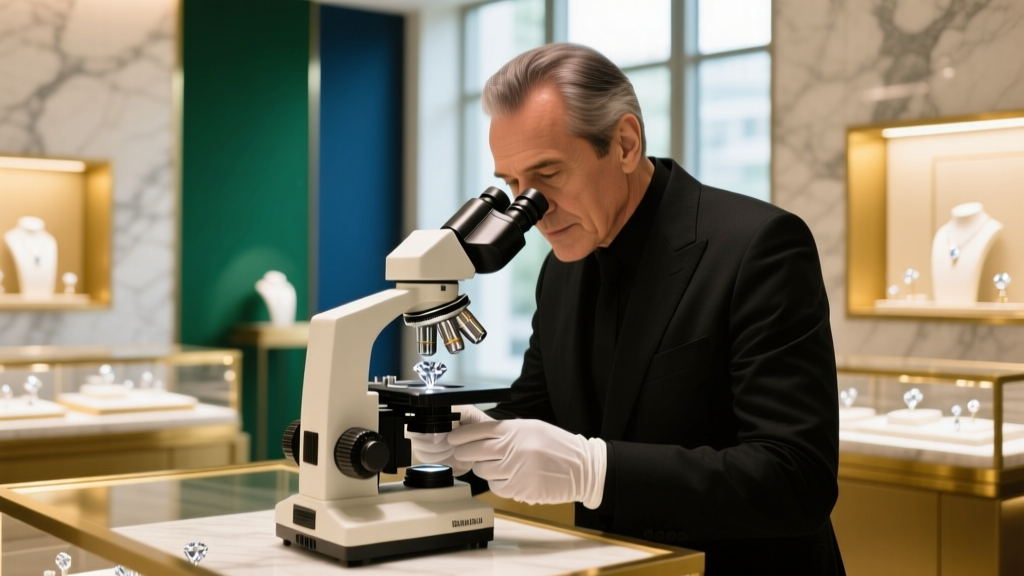
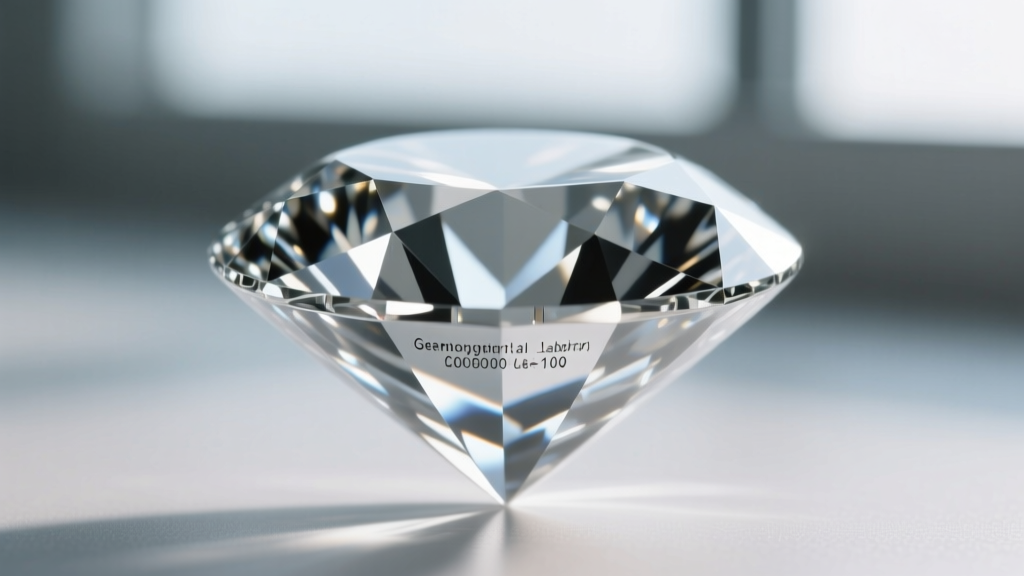
Every certified lab-grown diamond is laser-inscribed on its girdle (the narrow outer edge of the stone) with a microscopic report number and a clear disclosure, such as "Lab Grown" or "LG." When you are at the jewelry counter, ask the jeweler to place the stone under a gemological microscope and let you verify the inscription yourself. The inscription on the stone must perfectly match the number on the physical or digital grading report.
3. Check the Price Per Carat
While lab-grown diamonds are significantly more affordable than natural diamonds, they are not "cheap." If a jeweler is offering a 2-carat, D-color, VVS1 clarity stone for a price that seems impossibly low (e.g., under $800), you may be looking at a simulant like cubic zirconia or a heavily included, poorly cut lab diamond that has been misrepresented. Always cross-reference the store's pricing with current market averages for lab-grown stones of similar specifications.
Red Flags at the Jewelry Counter
When navigating the showroom, be highly cautious if you encounter any of the following scenarios:
Warning: If a jeweler claims they can "eyeball" the difference between a natural and a lab-grown diamond using only a loupe, leave the store immediately. This demonstrates a severe lack of gemological education or a deliberate attempt to mislead you.
- Vague Terminology: Beware of terms like "eco-friendly diamond," "man-made diamond," or "synthetic" without the explicit, written disclosure of "laboratory-grown." The FTC requires unambiguous language.
- Missing Inscriptions: If the jeweler claims the stone "didn't come with an inscription" to preserve its "purity," walk away. Reputable labs inscribe lab diamonds to prevent fraud.
- Reluctance to Use a Spectrometer: If the store claims to sell natural diamonds but refuses to test a stone on a dedicated diamond screener (like a DiamondCheck) in front of you, they may be mixing lab-grown inventory into their natural stock.
Conclusion: Protecting Your Investment
So, can jewelry stores test for lab grown diamonds? Yes, provided they have invested in modern photoluminescence spectrometers and employ trained gemologists. However, the ultimate responsibility falls on you, the buyer. By demanding independent certification from the IGI or GIA, personally verifying the laser inscription under magnification, and understanding the limitations of standard thermal testers, you can shop with absolute confidence. Whether you are intentionally seeking out a lab-grown diamond for its value and ethical footprint, or strictly hunting for a natural stone, knowledge and documentation are your best defenses in the modern jewelry market.