Expert Care & Cleaning Guide for Ceylon Sapphire Jewelry
Discover expert tips to clean, maintain, and protect your Ceylon sapphire jewelry. Learn safe washing methods, storage tricks, and what chemicals to avoid.

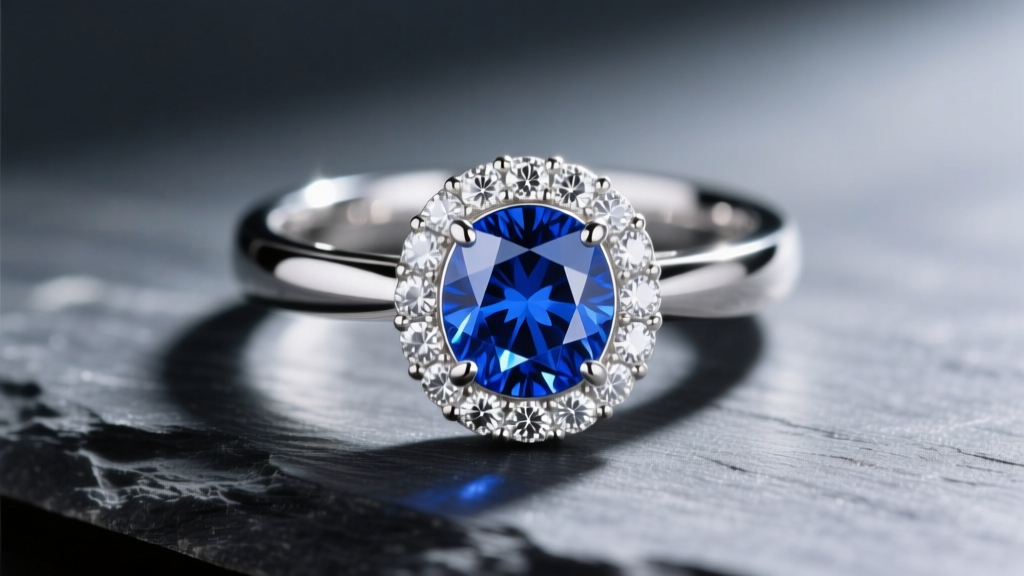
Ceylon sapphires, sourced primarily from the alluvial gravels of Sri Lanka (formerly Ceylon), are globally revered for their exceptional clarity and vibrant "cornflower" blue saturation. Unlike darker Australian or Thai sapphires, Ceylon stones rely heavily on optimal light return to showcase their brilliance. Because of this optical dependency, even a microscopic layer of sebum, hand lotion, or environmental dust can drastically dull their visual performance. Maintaining the fire and brilliance of your Ceylon sapphire jewelry requires a nuanced understanding of corundum's physical properties, the specific treatments it may have undergone, and the structural integrity of its metal setting.
The Mohs Scale Reality: Hardness vs. Toughness
As a variety of the mineral corundum, sapphire registers a 9 on the Mohs scale of mineral hardness. This makes it the second-hardest natural gemstone on earth, surpassed only by diamond. However, a common misconception in jewelry care is conflating hardness (resistance to scratching) with toughness (resistance to breaking or chipping).
While your Ceylon sapphire will not be scratched by everyday metals, glass, or dust (which contains quartz, a 7 on the Mohs scale), it possesses distinct cleavage planes and a "good" toughness rating. A sharp, direct impact against a hard surface—such as a granite countertop or a car door—can cause the girdle (the outer edge of the stone) to chip or the culet (the bottom point) to fracture. Therefore, the golden rule of Ceylon sapphire maintenance is to always remove rings and bracelets before engaging in manual labor, weightlifting, or gardening.
Step-by-Step Cleaning Protocol for Ceylon Sapphires
Because Ceylon sapphires are frequently set in intricate halo or pavé settings with smaller diamonds, grease accumulation is a major issue. The pavilion (the bottom half of the gemstone) acts as a magnet for skin oils, which blocks light from entering and exiting the stone. Follow this professional-grade cleaning protocol to restore your jewelry's optical performance.
What You Need
- pH-Neutral Dish Soap: Use a basic, non-moisturizing liquid dish detergent (like original Dawn). Avoid soaps with added lotions or harsh degreasers that can leave a cloudy film or damage porous accent stones like pearls or opals.
- Soft-Bristled Brush: A clean, unused baby toothbrush or a dedicated jewelry brush with ultra-soft bristles.
- Lint-Free Microfiber Cloth: For final drying and polishing.
- A Small Glass Bowl: Never clean jewelry directly over an open sink drain.
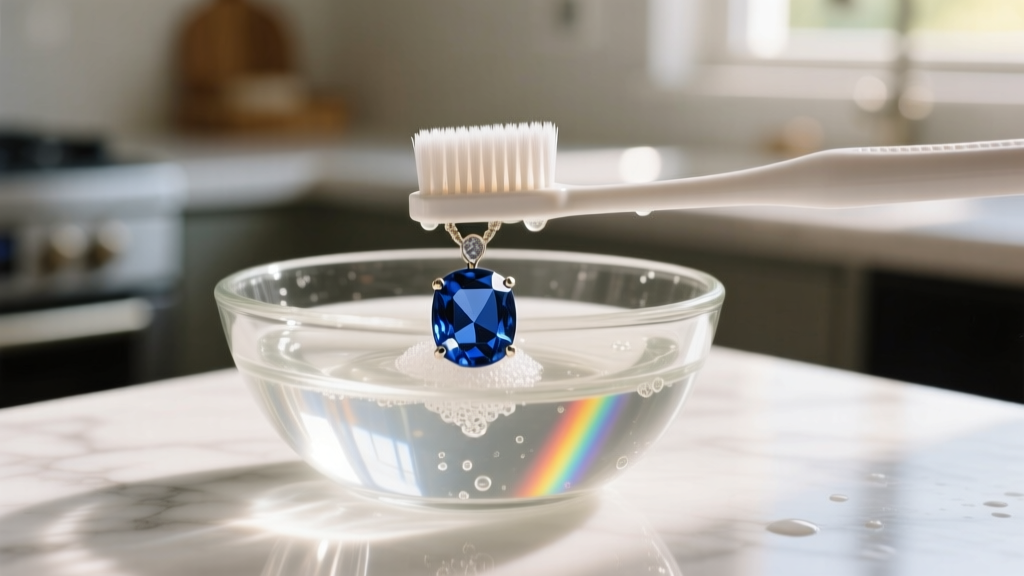
The 15-Minute Soak Method
- Prep the Solution: Fill the glass bowl with lukewarm (never boiling) water and add two drops of the pH-neutral dish soap. Swirl gently to create a mild lather.
- Soak: Submerge your Ceylon sapphire jewelry and let it sit for 10 to 15 minutes. This breaks down the molecular bonds of hardened sebum and cosmetic residues trapped under the setting.
- Agitate and Brush: Gently brush the stone, paying special attention to the underside of the gemstone (the pavilion) and the prongs. Brush in small, circular motions. Do not apply heavy downward pressure on the prongs, as this can bend the metal over time.
- Rinse: Rinse the piece thoroughly under a gentle stream of lukewarm tap water. If you live in an area with hard water, use distilled water for the final rinse to prevent calcium spotting.
- Dry: Pat dry with a microfiber cloth. Avoid paper towels, as their wood-pulp fibers can leave microscopic scratches on the metal setting and lint in the prongs.
Treatments and How They Dictate Care
Not all Ceylon sapphires are created equal in the treatment department. According to the Gemological Institute of America (GIA), the vast majority of sapphires on the market are heat-treated to improve color and clarity. While heat treatment is stable and permanent, other modern treatments require extreme caution. Using the wrong cleaning technology on a treated stone can result in catastrophic, irreversible damage.
| Treatment Type | Ultrasonic Safe? | Steam Safe? | Boiling Safe? | Care Notes |
|---|---|---|---|---|
| Unheated / Natural | Yes | Yes | No | Safest for professional cleaning; preserve natural rutile silk inclusions. |
| Heat-Treated | Yes | Yes | No | Highly stable. Standard ultrasonic and steam cleaning are perfectly safe. |
| Fracture-Filled (Lead Glass) | NEVER | NEVER | NEVER | Acids and ultrasonics will dissolve the filler, leaving the stone cloudy and heavily fractured. Clean only with a damp cloth. |
| Lattice Diffused | Yes | Yes | No | Color is stable, but avoid harsh chemicals like hydrofluoric acid. |
Note: Ultrasonic cleaners operate at high frequencies (typically 20-40 kHz). Even if your Ceylon sapphire is untreated and perfectly safe for ultrasonic cleaning, the vibrations can shake a stone loose if the metal prongs are already worn or bent.
Environmental Hazards and Chemical Exposure
Your Ceylon sapphire jewelry is constantly exposed to environmental stressors that can degrade the metal setting and dull the stone. Chlorine is the enemy of karat gold. Prolonged exposure to chlorinated pool water or hot tubs can cause the alloys in 14k and 18k gold to break down, leading to microscopic stress fractures in the shank and prongs. Over time, this results in the stone falling out.
Furthermore, everyday cosmetics—hairsprays, perfumes, and sunscreens—contain volatile organic compounds and alcohols that can leave a stubborn, sticky film on the sapphire's table facet. Always adopt the "last on, first off" rule: put your jewelry on after your cosmetics and perfumes have fully dried, and take it off first when you begin your evening skincare routine.
Storage and Professional Maintenance
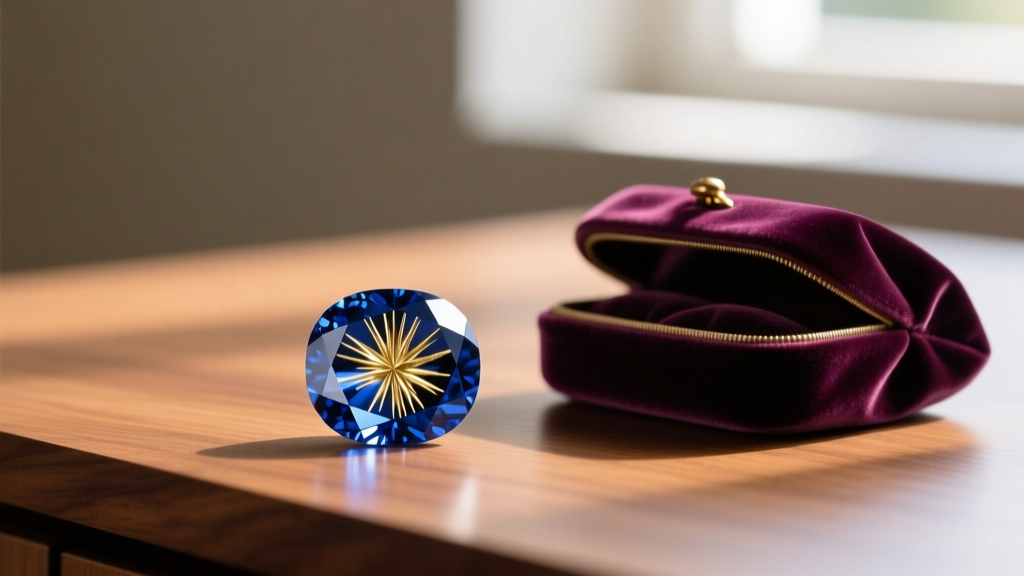
Because corundum is a 9 on the Mohs scale, it is harder than almost every other gemstone and metal in your jewelry box. If you toss your Ceylon sapphire ring into a communal jewelry dish, it will scratch your gold bands, silver necklaces, and softer gems like emeralds, tanzanite, or opals. Always store Ceylon sapphire pieces individually in soft, acid-free velvet pouches or in separate, fabric-lined compartments.
Finally, the American Gem Society (AGS) recommends having fine jewelry professionally inspected every six to twelve months. A bench jeweler will use a loupe to check for prong wear, specifically looking for "galloping" (where the prong pulls away from the stone) or thinning at the tip. They can also safely re-tip worn prongs using a laser welder, which minimizes heat transfer to the gemstone and ensures your Ceylon sapphire remains secure for generations to come.


