Cowrie Shell Jewelry Trends 2026: Elevated Coastal Style
Discover 2026 cowrie shell jewelry trends. Learn how to style elevated coastal pieces, identify ethical sourcing, and pair shells with fine gemstones.

The 2026 Shift: From Surf Souvenir to Sustainable Luxury
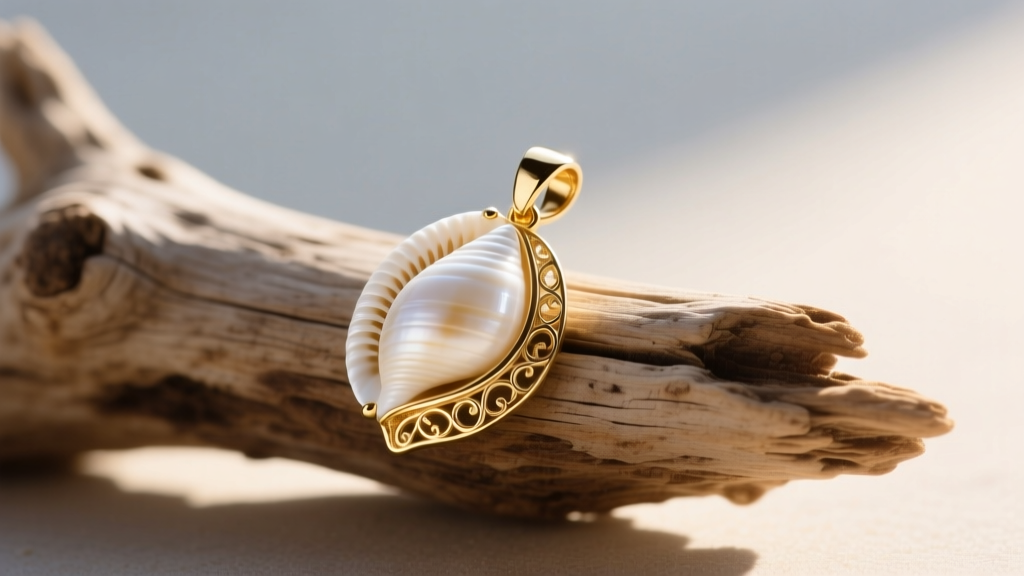
For decades, cowrie shell jewelry was relegated to the realm of beachside gift shops and bohemian festival wear. However, the 2026 jewelry landscape has completely redefined this organic material. Today, cowrie shell jewelry sits at the intersection of "elevated coastal" styling and sustainable luxury. High-end artisans and fine jewelry houses are now treating the cowrie not as a mere trinket, but as a premium organic gemstone, pairing it with ethically sourced crystals, recycled precious metals, and advanced bio-resins.
The cowrie’s smooth, porcelain-like dorsal surface and serrated ventral opening offer a masterclass in natural geometry. As consumers pivot toward "siren elegance"—a mature, sophisticated evolution of the mermaidcore trend—the demand for architecturally sound, ethically harvested shell jewelry has surged. But integrating organic calcium carbonate with traditional crystalline gemstones requires a deep understanding of material science, grading, and structural integrity.
The Gemological Profile of Cowrie Shells
To properly design and wear cowrie shell jewelry, one must understand its mineral composition. According to the Gemological Institute of America (GIA), organic gems like shells, pearls, and coral are primarily composed of calcium carbonate in the form of aragonite or calcite.
- Hardness: 3.0 to 4.0 on the Mohs scale, making them highly susceptible to scratching from quartz dust and harder crystals.
- Structure: Cross-lamellar aragonite layers, which give the shell its incredible impact resistance despite its low scratch hardness.
- Chemical Sensitivity: Highly reactive to acids. Human sweat (pH 4.5-7.0), perfumes, and citrus can etch the enamel-like surface, causing permanent dulling.
The most prevalent species used in fine jewelry is Monetaria moneta (the money cowrie), prized for its uniform, egg-like symmetry and compact size (typically 20-35mm). For statement pieces, designers utilize the Cypraea tigris (tiger cowrie), which features striking brown spotting over a cream base and can reach up to 100mm in length.
2026 Gemstone Pairing Matrix
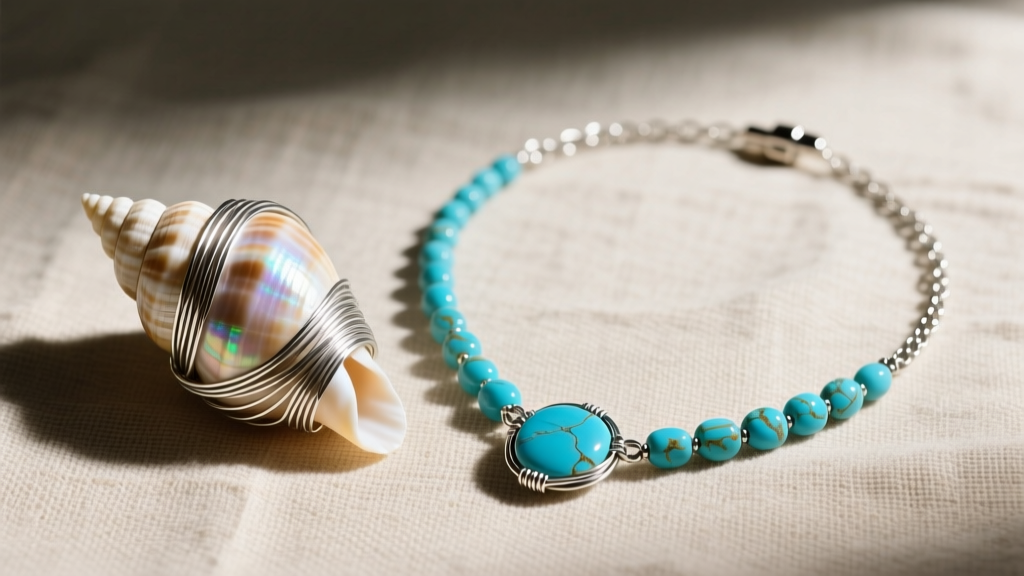
The hallmark of 2026's elevated coastal trend is the juxtaposition of the opaque, milky cowrie with translucent or highly saturated crystalline gemstones. Because the shell rests at a 3.5 on the Mohs scale, The International Gem Society advises against prong-setting shells directly against harder stones without protective bezels or wire-wrapping buffers to prevent friction wear.
| Gemstone Pairing | Mohs Hardness | Aesthetic Synergy | Artisan Price Range (2026) |
|---|---|---|---|
| Sleeping Beauty Turquoise | 5.0 - 6.0 | Earthy, Southwestern contrast; sky blue against milky white. | $95 - $280 |
| Rainbow Moonstone | 6.0 - 6.5 | Ethereal and lunar; adularescence mimics the shell's oceanic origin. | $110 - $320 |
| Larimar | 4.5 - 5.0 | Caribbean coastal; matching the shell with volcanic oceanic blue. | $140 - $400 |
| Baroque Freshwater Pearl | 2.5 - 4.5 | Textural monochrome; high-luster pearls against matte-finish shells. | $75 - $200 |
Pro-Tip for Designers: When wire-wrapping cowrie shells with turquoise or moonstone, use 20-gauge or 22-gauge dead-soft Argentium silver wire. Argentium contains germanium, which makes it highly tarnish-resistant—a crucial feature since polishing tarnished silver with chemical dips can accidentally strip the cowrie’s natural enamel finish.
Sourcing, Grading, and the Bio-Resin Alternative
Ethical sourcing is the most critical conversation in the 2026 shell jewelry market. Wild harvesting of live cowries is heavily restricted in many marine ecosystems to protect coral reef biodiversity. Today’s premium market relies on two primary sourcing methods:
1. Traditional Shell Grading (Byproduct Sourcing)
Ethically sourced cowries are typically a byproduct of the food industry in coastal regions of the Indo-Pacific and West Africa. When evaluating vintage or artisan shell jewelry, look for these industry-standard grades:
- Gem Grade (A+): Flawless, high-gloss enamel. No chips on the serrated lip (ventral side). Sourced exclusively from pristine, unbleached specimens.
- Jewelry Grade (B): Minor dulling of the dorsal enamel. Micro-chips on the ventral teeth. Often used for wire-wrapped pendants where the back is obscured.
- Craft Grade (C): Visible pitting, yellowing, or structural cracks. Generally avoided in fine jewelry but used in macramé or boho-chic layering pieces.
2. The 2026 Innovation: 3D-Scanned Bio-Resin
For the eco-conscious consumer, 2026 has seen a massive spike in bio-resin cowrie replicas. Artisans now use micro-CT scanning to capture the exact micron-level geometry of a Grade A+ tiger cowrie, then cast it using a plant-based, UV-cured epoxy resin infused with crushed, recycled oyster shell powder. This yields a piece that is chemically identical in weight and temperature to a real shell, but entirely cruelty-free and reef-safe.
Hardware and Metal Synergies
The metal you choose to house a cowrie shell dictates both the longevity of the piece and its stylistic impact. Because calcium carbonate is porous and reactive, the hardware must not introduce corrosive elements.
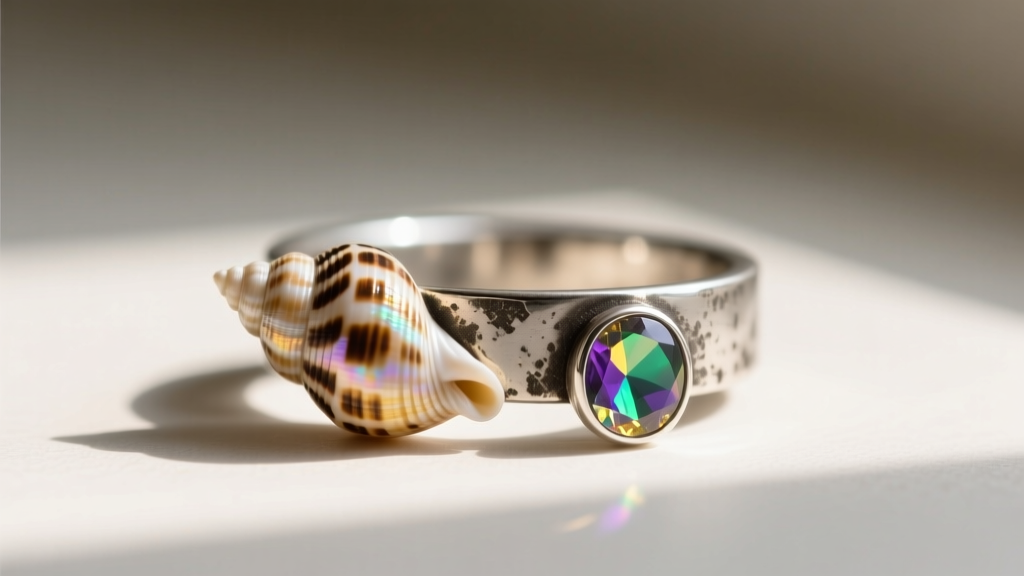
Warning: Never purchase cowrie shell jewelry set in raw brass or copper. The acidic oxidation (patina) that these base metals produce as they react with skin oils will actively eat away at the shell's calcium carbonate structure, leading to chalky degradation and eventual crumbling.
Recommended Metals for 2026
- 14k Recycled Yellow Gold: The warm undertones of yellow gold perfectly complement the creamy, ivory hues of the money cowrie. Look for "cast-shell" techniques, where the actual shell is burned out in a kiln and replaced with molten gold, preserving every serration in solid metal.
- Argentium 960 Silver: Brighter and more durable than traditional 925 sterling, Argentium resists the sulfur-induced tarnishing that threatens organic gems.
- Titanium (Grade 5): For avant-garde, gender-neutral coastal styling, anodized titanium in deep oceanic blues or gunmetal grey provides a lightweight, hypoallergenic, and entirely non-reactive cradle for delicate shell inlays.
Care Protocols for Calcium Carbonate Jewelry
Maintaining the glass-like luster of a cowrie shell requires a departure from standard gemstone care routines. Ultrasonic cleaners, steamers, and commercial jewelry dips are strictly forbidden. The high-frequency vibrations can shatter the aragonite layers, while the harsh chemicals will dissolve the surface enamel.
- The Microfiber Method: After every wear, gently wipe the shell with a dry, untreated microfiber cloth to remove skin oils and microscopic salt deposits.
- Hydration Balance: Unlike opals, cowrie shells do not need to be stored in water. In fact, prolonged submersion in tap water (which contains chlorine and fluoride) can cause micro-fractures. Store them in a breathable linen pouch away from direct, prolonged UV sunlight, which can yellow the organic proteins within the shell matrix.
- The "Last On, First Off' Rule: Always put your cowrie shell jewelry on after applying sunscreen, perfume, and hairspray. The alcohol and chemical UV filters in modern cosmetics are highly acidic and will strip the shell's natural luster within weeks of repeated exposure.
By respecting the organic origins and mineral limitations of the cowrie, collectors and designers in 2026 are elevating this ancient talisman into a cornerstone of modern, sustainable fine jewelry. Whether paired with the electric blue of Larimar or cast in eco-conscious bio-resins, the cowrie shell remains a powerful, oceanic symbol reimagined for the contemporary wardrobe.


