The Beginner's Guide to Buying and Styling Milky Quartz Jewelry
Discover everything about milky quartz jewelry. Learn how to identify genuine stones, understand pricing, and care for your cloudy crystal pieces.

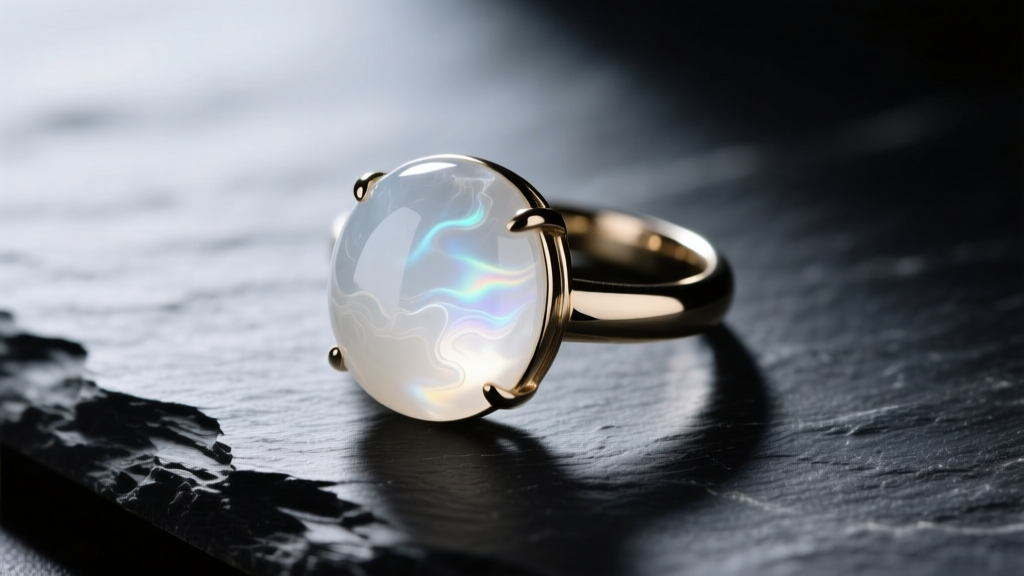
The Ethereal Appeal of Milky Quartz
When most people think of quartz jewelry, they immediately picture the flawless transparency of rock crystal or the soft pink hues of rose quartz. However, milky quartz jewelry offers a uniquely ethereal, cloud-like aesthetic that has been quietly dominating artisan and bohemian jewelry markets. For beginners stepping into the world of gemstone jewelry, milky quartz is an exceptional starting point. It is highly durable, remarkably affordable, and carries a distinct, moody translucency that pairs beautifully with both raw and polished metalwork.
But what exactly causes this cloudy appearance? How can you tell if your stone is genuine? And most importantly, how should you care for it? This comprehensive guide will walk you through the mineralogy, market pricing, and styling nuances of milky quartz, ensuring you make informed decisions whether you are buying your first piece or adding to a growing collection.
The Science of the Cloud: Why is it Milky?
To understand milky quartz, we have to look at it on a microscopic level. According to mineralogical data from Mindat.org, the milky white coloration is not caused by a chemical impurity like iron (which makes amethyst purple) or titanium (which makes rose quartz pink). Instead, the cloudiness is entirely structural.
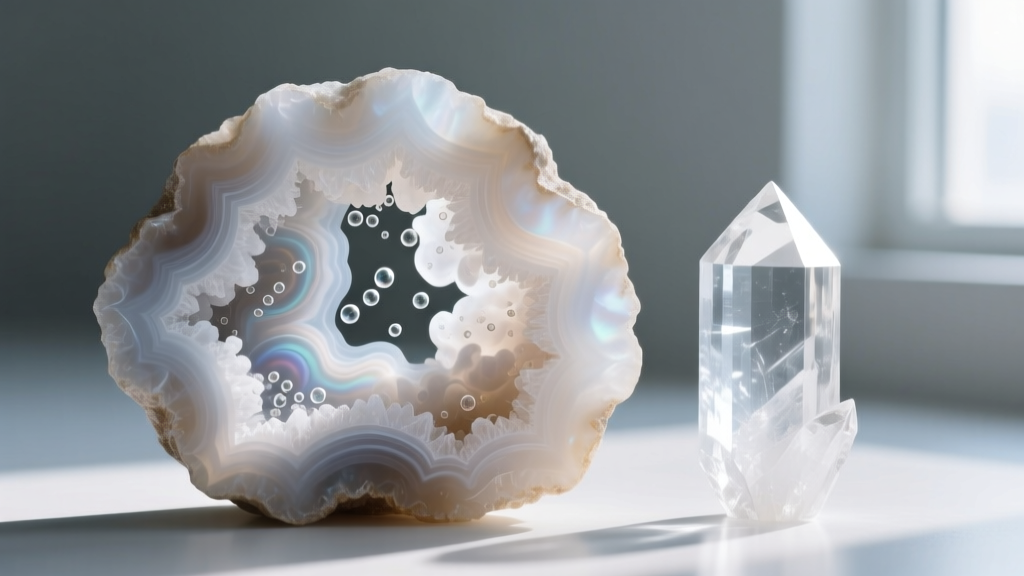
Milky quartz is packed with microscopic fluid inclusions. These are tiny, trapped bubbles of water, carbon dioxide, or other gases that were captured within the crystal lattice as it formed deep within the earth's crust. When light enters the stone, it scatters off these billions of microscopic bubbles, creating the opaque, milky white glow. The denser the inclusions, the more opaque and white the stone appears.
Gemologist's Note: While heavily included quartz is sometimes considered lower grade in the faceted gemstone market, in the realm of artisan and crystal jewelry, these inclusions are celebrated. They give each cabochon or raw stone a unique, unrepeatable internal landscape.
Quartz Varieties Compared: Where Does Milky Fit?
Before purchasing milky quartz jewelry, it helps to understand how it stacks up against its more famous siblings. All three varieties below share the exact same chemical composition (Silicon Dioxide, SiO2) and a Mohs hardness of 7, but their visual and structural differences dictate how they are used in jewelry.
| Feature | Clear Quartz (Rock Crystal) | Rose Quartz | Milky Quartz |
|---|---|---|---|
| Appearance | Transparent, glass-like, highly reflective | Translucent to opaque, soft pink, often cloudy | Translucent to opaque, stark white, cloudy |
| Cause of Color/Effect | Pure, lack of inclusions/impurities | Microscopic dumortierite or titanium inclusions | Microscopic fluid/gas inclusions |
| Best Jewelry Application | Faceted stones, carved pendants | Cabochons, beads, tumbled stones | Raw crystal points, cabochons, wire-wrapping |
| Avg. Price (Cabochon) | $10 - $30 | $5 - $15 | $3 - $12 |
Authentication: Spotting Genuine Milky Quartz
Because milky quartz is relatively inexpensive, it is rarely faked with high-end synthetics. However, beginners often confuse it with milk glass, synthetic opalite, or white chalcedony. Here is a practical framework for verifying your stone:
1. The Temperature Test
Quartz is an excellent thermal conductor compared to glass. When you press a genuine milky quartz cabochon against your cheek or the inside of your wrist, it should feel noticeably cool to the touch and take a few seconds to warm up to your body temperature. Glass or plastic imitations will feel room-temperature or warm almost instantly.
2. Magnification and Inclusions
Using a standard 10x jeweler's loupe, examine the edges and surface of the stone. According to the Gemological Institute of America (GIA), natural quartz will often show conchoidal (shell-like) fractures and internal fluid veils. If you see perfectly spherical air bubbles trapped inside the stone, you are likely looking at molded milk glass, not natural quartz.
3. The Scratch Test (Use with Caution)
With a Mohs hardness of 7, genuine quartz will easily scratch a standard steel knife (hardness 5.5) or a piece of glass (hardness 5.5). Opalite and milk glass will not. Note: Only perform this test on the unpolished back of a cabochon or a raw stone to avoid ruining the finish of your jewelry.
Pricing Guide: What Should You Pay?
One of the greatest advantages of milky quartz jewelry is its accessibility. Because macrocrystalline quartz is one of the most abundant minerals on Earth, the raw material is incredibly cheap. When you buy milky quartz jewelry, you are primarily paying for the metalwork, the lapidary cutting, and the artisan's time, rather than the gemstone itself.
- Simple Wire-Wrapped Pendants (Raw Stones): $15 – $35. These feature unpolished, natural milky quartz points wrapped in copper or sterling silver wire.
- Bezel-Set Cabochon Rings (Sterling Silver): $40 – $85. The price increases here due to the cost of silver and the labor required to cut and polish a smooth, domed cabochon.
- Heavy Statement Cuffs & Necklaces: $90 – $200+. Large, high-quality milky quartz slabs set in oxidized silver or brass command higher prices due to the sheer volume of metal and custom fabrication required.
Care and Maintenance: Protecting Your Cloudy Gems
While quartz is a 7 on the Mohs scale—making it harder than steel and safe for everyday wear—milky quartz requires a slightly more cautious approach than clear quartz due to its internal structure.
The Ultrasonic Cleaner Danger
Never put heavily included milky quartz in an ultrasonic jewelry cleaner. The high-frequency vibrations can cause the microscopic fluid inclusions and internal stress fractures to expand, potentially shattering the stone from the inside out.
The Safe Cleaning Method
- Mix a few drops of mild, phosphate-free dish soap into a bowl of lukewarm water.
- Submerge your milky quartz jewelry for 5 to 10 minutes to loosen oils and lotions.
- Gently scrub the stone and the metal setting with a soft-bristled baby toothbrush.
- Rinse thoroughly under running water and pat dry with a microfiber cloth.
Styling Milky Quartz for Everyday Wear
Milky quartz is incredibly versatile, bridging the gap between rugged, earthy aesthetics and refined, minimalist elegance. The key to styling it lies in the metal pairing and the setting style.
Metal Pairings
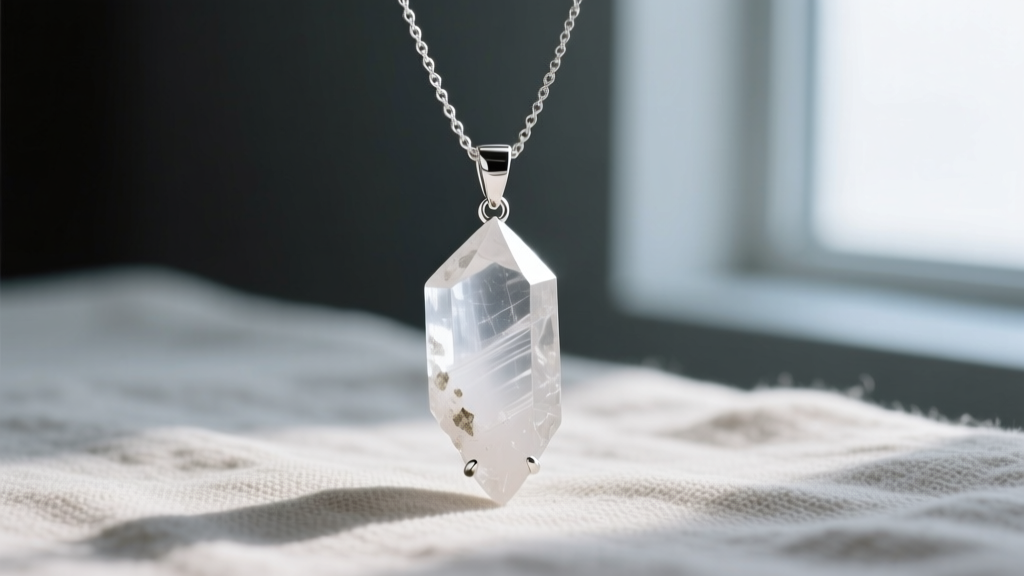
The stark, snowy white of milky quartz contrasts beautifully with oxidized sterling silver. The dark, antiqued crevices of the silver highlight the bright, cloudy nature of the stone, creating a moody, vintage look. Alternatively, pairing milky quartz with matte or brushed yellow gold creates a warm, luxurious contrast that elevates the stone from "bohemian" to "high-end contemporary."
Choosing the Right Setting
If you are buying a milky quartz ring for daily wear, always opt for a bezel setting. Because the cloudiness of the stone is caused in part by internal structural anomalies, the edges of milky quartz can be slightly more prone to chipping upon hard impact than flawless clear quartz. A bezel setting wraps a thin strip of metal entirely around the gemstone's girdle, protecting the vulnerable edges while providing a sleek, modern silhouette.
Final Thoughts
Milky quartz jewelry is a testament to the idea that perfection isn't always the most beautiful trait in a gemstone. The very inclusions that make it cloudy are what give it depth, character, and a soft, glowing luminescence that clear stones simply cannot replicate. By understanding its structural quirks, verifying its authenticity, and caring for it properly, you can enjoy the quiet, cloud-like beauty of milky quartz for decades to come.


