Dominican Republic Amber Jewelry: A Beginner's Guide
Discover how to identify, buy, and care for authentic Dominican Republic amber jewelry. Learn about rare blue amber, pricing, and fakes.

What Makes Dominican Republic Amber Jewelry So Special?
When collectors and jewelry enthusiasts think of amber, the Baltic region often comes to mind. However, Dominican Republic amber jewelry holds a unique, highly coveted position in the gemological world. Unlike Baltic amber, which originates from the extinct conifer Pinus succinifera, Dominican amber is the fossilized resin of the extinct legume tree Hymenaea protera. According to mineralogical data from Mindat, this botanical origin gives Dominican amber a wider, more vibrant color palette and a significantly higher transparency right out of the ground.
Dating back to the Miocene epoch (approximately 15 to 20 million years ago), this gemstone is fully polymerized and fossilized. For beginners stepping into the world of organic gemstones, understanding the geological and botanical roots of your jewelry is the first step toward making informed, confident purchases. Dominican amber is primarily mined in the mountainous regions of the Cordillera Septentrional and the eastern Bayaguana/Sabana de la Mar areas, with the La Toca and Palo Quemado mines being the most famous for yielding gem-quality material.
The Prehistoric Time Capsule: Understanding Inclusions
One of the most thrilling aspects of buying Dominican amber is the potential for inclusions. While Baltic amber contains visible botanical or entomological inclusions in roughly 2% of stones, Dominican amber boasts an inclusion rate of up to 10%. Because the resin was highly viscous and flowed rapidly in tropical environments, it trapped prehistoric mosquitoes, ants, termites, leaf fragments, and even tiny tree frogs with astonishing clarity.
For a beginner, it is crucial to know that perfectly preserved, large animal inclusions command a massive premium. A standard golden amber cabochon might cost a few dollars per carat, but a piece featuring a perfectly intact, identifiable prehistoric insect can easily fetch hundreds or even thousands of dollars. Always ask for magnification photos before purchasing high-ticket inclusion pieces to verify that the insect is natural and not a modern carving or insertion.
The Magic of Dominican Blue Amber
No guide to this gemstone is complete without discussing the legendary Dominican Blue Amber. Found almost exclusively in the Palo Quemado mine south of La Cumbre, this rare variety makes up less than 1% of all amber mined in the region. In normal, indirect lighting, high-quality blue amber often looks like a deeply saturated, slightly greenish-golden honey. However, when exposed to ultraviolet (UV) light or direct sunlight, it exhibits a stunning, vivid cyan-blue fluorescence.
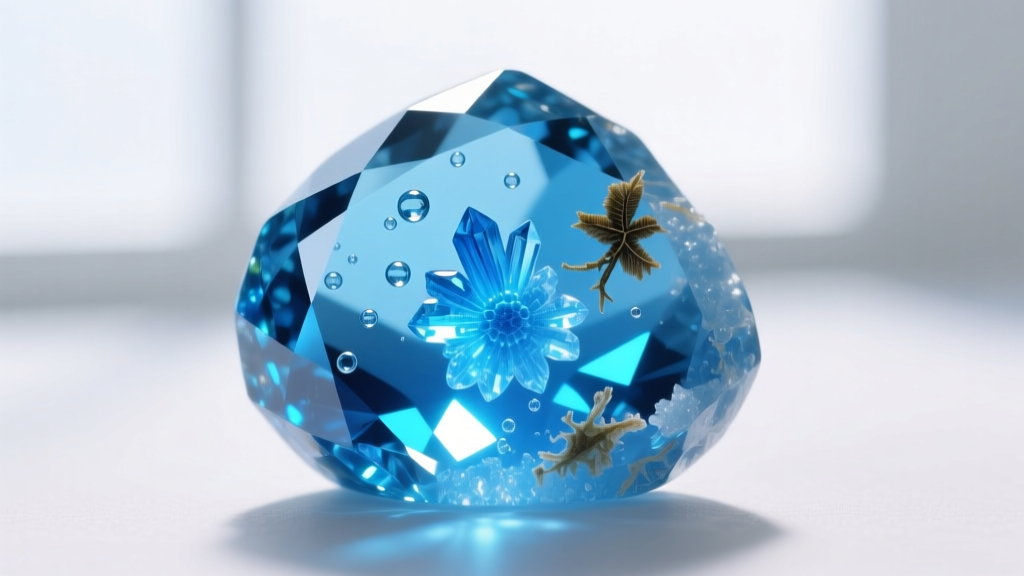
This optical phenomenon is caused by polycyclic aromatic hydrocarbons (fluorophores) within the fossilized resin. These molecules absorb high-energy UV photons and re-emit them as visible blue light. When shopping for blue amber jewelry, always carry a 365nm UV flashlight. If the stone does not fluoresce a bright, glowing blue under the UV beam, it is either not Dominican blue amber, or it has been heavily heat-treated, which destroys the fluorescent hydrocarbons.
Grading and Pricing: What Should You Pay?
Pricing in the amber market can be highly opaque for beginners. To help you navigate the market, we have broken down the average retail prices for authentic Dominican amber based on color, clarity, and rarity. Note that prices are per carat for loose stones or standard cabochons; finished jewelry settings will add to the final cost.
| Amber Variety | Color & Clarity Profile | Avg. Price (Per Carat) | Best Jewelry Application |
|---|---|---|---|
| Standard Golden/Honey | Transparent, warm yellow to rich cognac | $2 - $8 | Beaded bracelets, large pendants |
| Cherry / Red | Deep reddish-brown, highly translucent | $5 - $15 | Statement rings, cabochon earrings |
| Green (Natural) | Earthy olive to vibrant chartreuse | $10 - $25 | Wire-wrapped pendants, men's rings |
| Blue (Low Grade) | Weak fluorescence, heavy matrix/cloudiness | $15 - $30 | Rustic bohemian jewelry, beads |
| Blue (Gem Grade) | Intense cyan fluorescence, high clarity | $50 - $150+ | High-end custom rings, collector pieces |
| Inclusion (Insect/Botanical) | Varies, priced on subject rarity/clarity | $100 - $1,000+ | Display pieces, bespoke pendants |
Spotting Fakes: Copal vs. True Amber vs. Plastic
The market is unfortunately flooded with imitations. As a beginner, you must learn to differentiate between true Miocene amber, immature copal, and synthetic plastics. The Gemological Institute of America (GIA) notes that copal is often misrepresented as ancient amber, but it is merely sub-fossilized resin that is less than 2.5 million years old. Copal is softer, melts at lower temperatures, and will feel tacky if a drop of acetone or alcohol is applied to its surface. True Dominican amber will not react to a quick swipe of acetone.
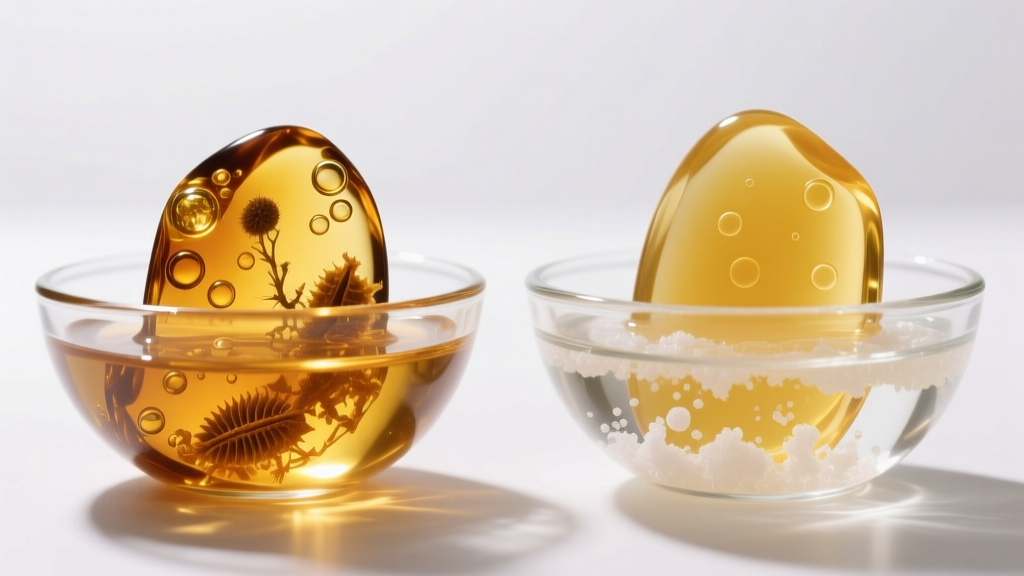
Another highly effective, non-destructive test for beginners is the saltwater float test. Genuine amber has a specific gravity of 1.05 to 1.10, meaning it will sink in fresh water but float in a saturated saltwater solution. To perform this test, mix one part table salt to four parts warm water until the salt completely dissolves. Drop your jewelry in (ensure it has no heavy metal settings attached, as the silver or gold will drag it to the bottom). True amber will bob at the surface, while glass, Bakelite, and most modern plastics will sink like stones.
Pro Tip: Avoid the "hot needle test" on finished jewelry. While a hot needle will emit a pleasant, piney/resinous smell when touching true amber and an acrid, chemical smell when touching plastic, it will permanently scar and melt the surface of your beautiful gemstone.
Essential Care and Maintenance for Soft Gemstones
Dominican amber is incredibly soft, ranking only 2.0 to 2.5 on the Mohs hardness scale. For context, a human fingernail is about 2.5, and a copper penny is 3.5. This means your amber jewelry can be easily scratched by everyday objects, dust (which contains microscopic quartz particles), and other jewelry.
- Storage: Never store amber in a communal jewelry box. Keep it in a soft microfiber pouch or a dedicated velvet-lined compartment away from diamonds, sapphires, and even silver chains that could gouge the surface.
- Chemical Avoidance: Amber is highly sensitive to solvents. Hairspray, perfume, nail polish remover (acetone), and harsh household cleaners will permanently cloud or melt the surface. Always put your amber jewelry on after applying cosmetics and fragrances.
- Cleaning: Never use ultrasonic or steam cleaners; the vibrations and heat will shatter or melt the stone. Simply wipe the amber with a soft, lint-free cloth dampened with lukewarm water and a drop of mild dish soap, then dry immediately.
Where to Buy Authentic Pieces Safely
When purchasing Dominican Republic amber jewelry, provenance is everything. If you are buying online, look for sellers who provide a certificate of authenticity and specify the exact mine or region (e.g., La Toca or Bayaguana). Reputable dealers will gladly provide UV fluorescence videos for blue amber and high-resolution macro photography for inclusion pieces. By understanding the botanical origins, mastering simple at-home tests, and respecting the softness of this prehistoric gem, you can confidently build a stunning, authentic amber collection that will last a lifetime.