Is Pink Spinel Jewelry Worth It? 2026 Value & Budget Guide
Discover the true value of pink spinel jewelry in 2026. Compare prices, origins, and budget tips to buy unheated gemstones without overpaying.

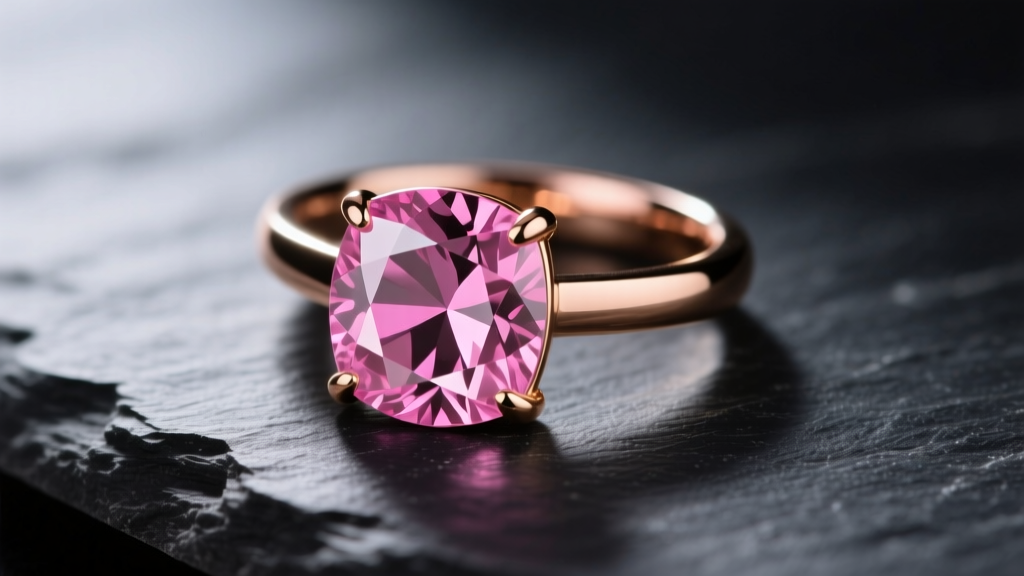
For decades, pink spinel lived in the shadow of the pink sapphire and the ruby. Historically misidentified as ruby (the famous Black Prince's Ruby in the British Crown Jewels is actually a red spinel), this gemstone has finally claimed its rightful place in the market. But as demand surges, so do the prices. If you are navigating the market for pink spinel jewelry in 2026, understanding the nuanced pricing structures, origin premiums, and gemological advantages is critical to securing true value. This guide breaks down exactly what you should pay, where to allocate your budget, and how to avoid overpaying for synthetics or over-hyped origins.
The Gemological Advantage: Why Spinel Outperforms Sapphire
Before assessing price, you must understand the optical superiority of spinel. Unlike sapphire and ruby, which are doubly refractive (anisotropic), spinel is singly refractive (isotropic). When light enters a well-cut pink spinel, it reflects back to the eye without splitting into two rays. This results in a pure, unadulterated brilliance and a distinct lack of "extinction" (the dark, dead spots often seen in poorly cut sapphires).
Furthermore, while over 90% of pink sapphires on the market are heat-treated—often with flux healing or beryllium diffusion to enhance color—spinel is almost entirely unheated and untreated. According to the Gemological Institute of America (GIA), the color you see in a natural pink spinel is exactly as it was formed in the earth. You are paying for a 100% natural, untreated gemstone, which inherently boosts its long-term investment value compared to treated alternatives.
2026 Market Pricing: What You Should Actually Pay
Pricing pink spinel jewelry requires a departure from the traditional diamond or sapphire pricing matrices. Spinel prices do not scale linearly; they experience aggressive "carat jumps" at the 1.0-carat and 2.0-carat thresholds due to the rarity of large, clean crystal rough. Below is a realistic 2026 wholesale-to-retail pricing framework for eye-clean (VS clarity) pink spinels.
| Origin & Color Profile | Weight Range | Estimated Price Per Carat (USD) | Total Retail Value Range |
|---|---|---|---|
| Sri Lanka (Pastel/Baby Pink) | 0.50 - 0.99 ct | $150 - $300 | $75 - $300 |
| Sri Lanka (Pastel/Baby Pink) | 1.00 - 1.99 ct | $300 - $600 | $300 - $1,200 |
| Mahenge, Tanzania (Neon Pink) | 0.50 - 0.99 ct | $500 - $900 | $250 - $900 |
| Mahenge, Tanzania (Neon Pink) | 1.00 - 1.99 ct | $1,500 - $3,500 | $1,500 - $7,000 |
| Mogok, Burma ("Jedi" Red-Pink) | 1.00 - 1.99 ct | $3,000 - $6,000+ | $3,000 - $12,000+ |
Budget Tip: The "sweet spot" for budget-conscious buyers is the 0.80ct to 0.95ct range. You get a visually substantial stone (roughly 6mm in diameter) while staying just below the aggressive 1-carat price multiplier.
Origin Matters: Decoding the Premium
Not all pink spinels are created equal, and the geographic origin dictates the color saturation, fluorescence, and ultimately, the price tag.
The Mahenge Premium
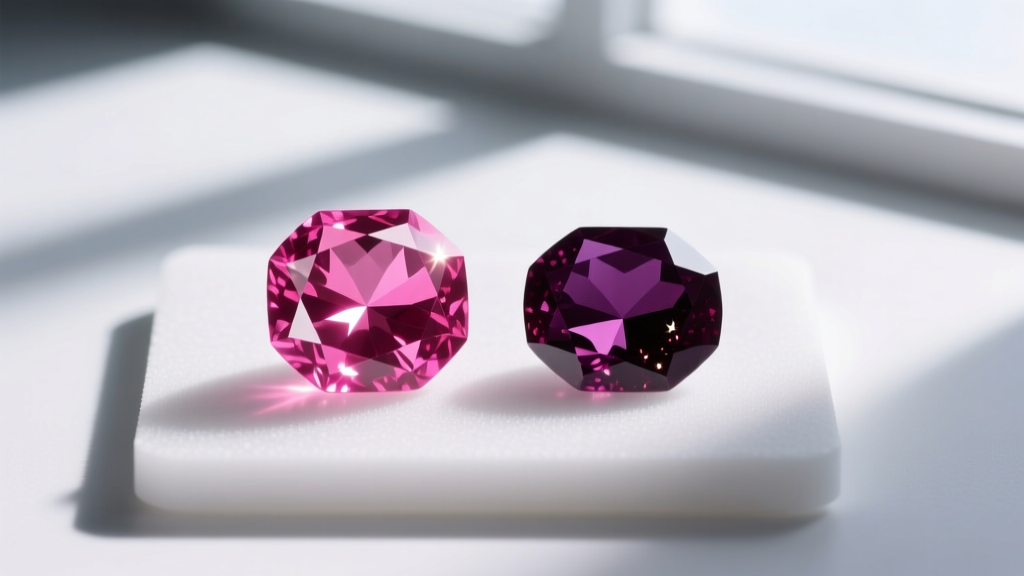
Discovered in Tanzania in 2007, Mahenge spinels are famous for their "bubblegum" or neon pink hues. They possess a unique fluorescence that makes the stone appear to glow from within, even in low lighting. This origin commands the highest premium for pure pink hues. If a vendor is selling a Mahenge spinel at Sri Lankan prices, be highly suspicious of synthetic material or severe gray/brown color modifiers.
The Burmese "Jedi" Phenomenon
Originating from the Mogok valley in Myanmar, "Jedi" spinels are a trade term for stones that exhibit a highly fluorescent, vivid red-pink color without any dark extinction zones. As noted by specialists at Lotus Gemology, these stones are exceptionally rare and are priced closer to fine Burmese rubies than standard pink spinels. For a budget buyer, Burmese stones with slight purple or gray secondary modifiers offer a beautiful, moody aesthetic at a 40% discount compared to pure "Jedi" stones.
Synthetic vs. Natural: Avoiding the Flame-Fusion Trap
Because natural pink spinel is rare and expensive, the market is flooded with synthetics. Understanding how they are made is your best defense against overpaying.
- Flame-Fusion (Verneuil) Spinel: This is the cheap, mass-produced synthetic found in mall jewelry and low-end online marketplaces. It costs roughly $10 to $30 per carat to produce. Under a loupe, you will see curved striae (curved growth lines) and gas bubbles. Natural spinel never has curved striae; it forms in octahedral crystals.
- Flux-Grown Spinel: This is a high-end synthetic that takes months to grow and mimics the natural formation process. It can cost $150+ per carat to produce and is much harder to detect. Flux-grown spinels will contain "fingerprint" inclusions and platinum flakes from the crucible. Always demand a lab report for stones priced over $1,000 to rule out flux-grown synthetics.
"A natural pink spinel will exhibit straight angular growth zoning and octahedral crystal inclusions. If you see curved lines or perfectly spherical gas bubbles, you are looking at a flame-fusion synthetic." — Gemological Field Guide, 2025 Edition.
Setting Costs & Metal Pairings for Maximum ROI
Spinel ranks at an 8 on the Mohs hardness scale. While it is highly durable for daily wear, it lacks cleavage, meaning it won't split like a diamond, but it can chip at the girdle if struck against a hard surface. Your setting choice directly impacts both the safety of the stone and the overall budget.
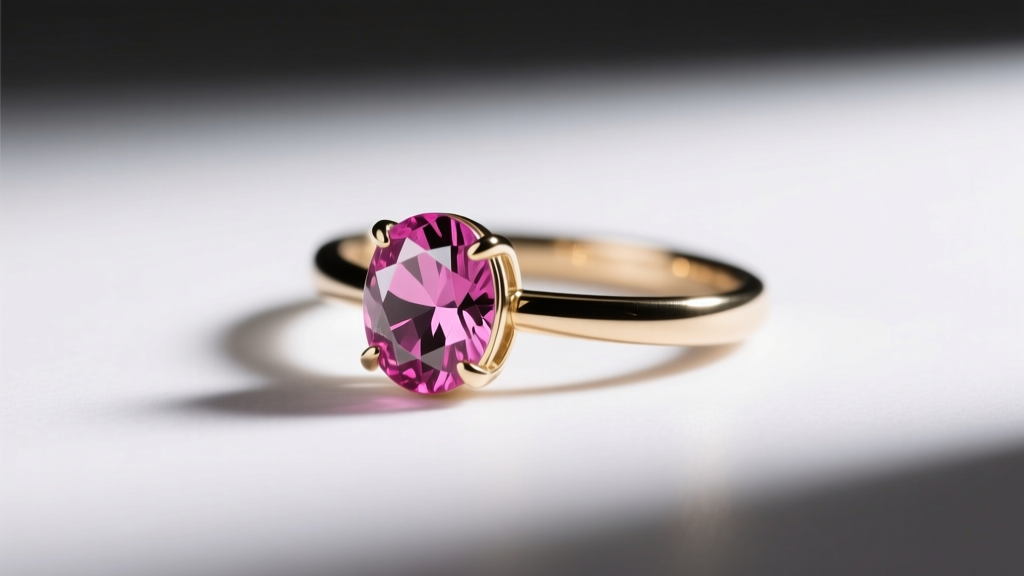
- Bezel Settings (Highest ROI for Durability): A 14k rose gold bezel setting costs roughly $400-$700 more than a standard prong setting but entirely protects the girdle. Rose gold naturally amplifies the pink body color of the spinel, allowing you to buy a slightly lower-saturation (and cheaper) stone while still achieving a vibrant look.
- V-Prong Settings: If you prefer the look of a pear or marquise cut spinel, insist on V-prongs at the pointed ends. Standard prongs leave the tips exposed to catastrophic chipping.
- White Gold vs. Platinum: Platinum is 30-40% more expensive than 14k white gold. Because spinel is relatively lightweight compared to massive diamonds, the structural necessity of platinum is minimal. Opting for 14k or 18k white gold frees up $600-$1,200 in your budget, which is better allocated toward a higher carat weight or better color saturation.
Certification: When to Demand a Lab Report
In the colored gemstone market, a verbal guarantee is worthless. The American Gem Trade Association (AGTA) strictly mandates disclosure of treatments and origins, but independent verification is your only safety net.
For any pink spinel jewelry piece priced above $1,500, you must require a report from a top-tier laboratory. GIA, Lotus Gemology, or AGL are the industry standards. A standard GIA colored stone identification and origin report costs between $150 and $300. If a vendor refuses to provide a report for a $3,000 "Mahenge" spinel, walk away. The cost of the report is a negligible fraction of the stone's value and protects you from buying a $50 flame-fusion synthetic or a heavily included, low-grade Sri Lankan stone masquerading as a premium Tanzanian gem.
Final Verdict: Building a Budget-Smart Collection
Pink spinel jewelry represents one of the last true value propositions in the colored gemstone market. You are acquiring an untreated, singly refractive, highly brilliant gemstone that rivals pink sapphire in durability but surpasses it in optical purity. By targeting the 0.80ct to 0.95ct weight range, prioritizing Mahenge origins for neon hues, and pairing the stone with a protective 14k rose gold bezel, you can build a breathtaking, investment-grade piece of jewelry without falling victim to the arbitrary carat-weight premiums that plague the broader market.