Evaluating the Value of Old Turquoise Jewelry in 2026
Discover the true value of old turquoise jewelry in 2026. Learn how mine origins, matrix patterns, and treatments impact vintage market prices.

The 2026 Vintage Turquoise Market: A Shift Toward Provenance
When collectors, appraisers, and estate liquidators attempt to determine the value of old turquoise jewelry, they are no longer just looking at carat weight or silver content. As we navigate the 2026 market, the vintage sector has pivoted sharply toward geological provenance, indigenous artistry, and untreated gemological integrity. The days of valuing turquoise solely by its color are over; today, the origin of the rough and the historical context of the silversmith dictate the premium.
In recent years, the closure of legendary mines and the exhaustion of high-grade natural rough have created a bottleneck for collectors. Consequently, the value of old turquoise jewelry has surged, particularly for mid-century Native American pieces featuring stones from now-defunct Nevada and Arizona mines. However, this surge has also birthed a secondary market flooded with stabilized, dyed, and lab-created imitations masquerading as historical artifacts. Understanding the nuanced difference between a genuine 1950s Navajo squash blossom and a 1970s tourist-trade reproduction is critical for any serious investor.
Mine Origins: The Biggest Driver of Value
The single most important factor in appraising vintage turquoise is the mine of origin. Because turquoise is a secondary mineral formed by the percolation of acidic, copper-rich groundwater through aluminous rock, its chemical signature—and resulting color and matrix—is entirely unique to its geographic location.
Quick Reference: Top Valued Historical Mines
| Mine Origin | Typical Matrix Color | Estimated Value (Per Carat) | Rarity Level |
|---|---|---|---|
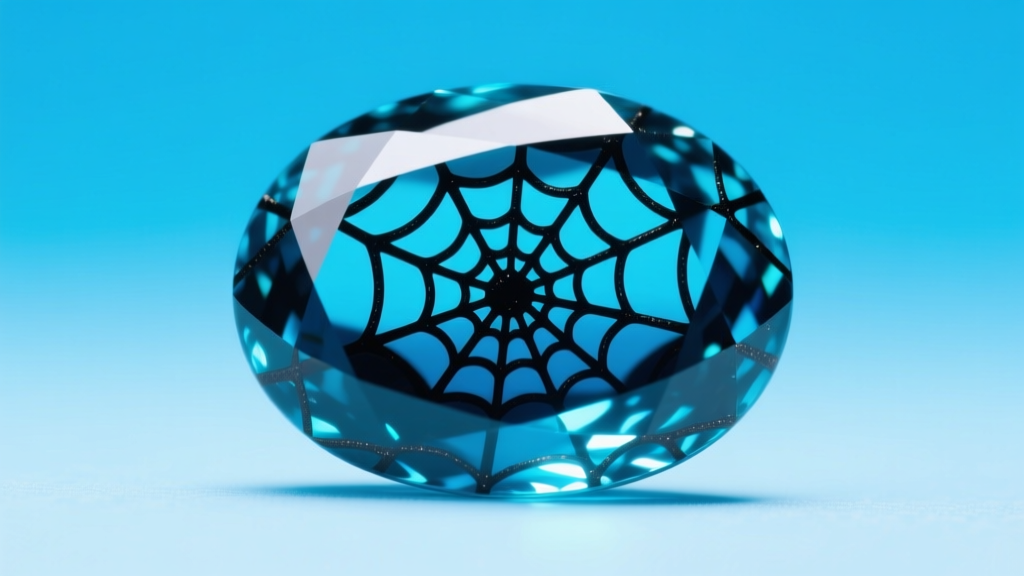
| Lander Blue (NV) | Black Spiderweb | $300 - $600+ | Extremely Rare |
| Bisbee (AZ) | Red/Brown Smoky | $50 - $150 | Rare |
| Number 8 (NV) | Golden/Brown Web | $40 - $120 | Rare |
| Sleeping Beauty (AZ) | None (Clean Sky Blue) | $10 - $30 | Uncommon |
| Persian (Neyshabur) | None or Black Veins | $20 - $80 | Antique Rare |
Lander Blue, discovered in Nevada in the early 1970s, remains the undisputed king of collector-grade turquoise. Producing only an estimated 100 pounds of high-grade gem material before its closure, authentic Lander Blue cabochons in vintage settings command astronomical premiums. Conversely, Sleeping Beauty turquoise, while beautiful and highly prized for its uniform sky-blue hue lacking any matrix, was produced in massive quantities, keeping its per-carat value relatively accessible even in vintage settings.
Treatments vs. Natural: Identifying the Invisible Value Killers
According to the Gemological Institute of America (GIA), an estimated 90% of turquoise on the modern market has undergone some form of treatment. When evaluating the value of old turquoise jewelry, identifying these treatments is paramount, as they can reduce a piece's appraisal value by 80% or more.
The Zachery Treatment: A Modern Trap in Vintage Markets
Developed in the late 1980s and 1990s by electrical engineer James Zachery, this treatment enhances the color and reduces the porosity of turquoise without using traditional plastics or epoxies. Because it does not fluoresce under standard UV light and lacks the plastic odor of a hot-point test, Zachery-treated stones frequently slip into the vintage market mislabeled as 'untreated natural.' Detection requires EDXRF (Energy Dispersive X-Ray Fluorescence) testing to identify the potassium spike introduced during the chemical bath. If you are spending over $2,000 on a vintage piece, insist on an EDXRF lab report.
Stabilization and Block Turquoise
Stabilized turquoise is infused with epoxy resins (like Opticon) to harden chalky, low-grade material. While acceptable in modern commercial jewelry, it holds almost zero value in the vintage collector's market. Block, or reconstituted turquoise, is merely turquoise dust mixed with dyes and resins, pressed into molds. Actionable Tip: Use a 10x jeweler's loupe to inspect the matrix (the host rock veins). If the black or brown webbing shows tiny bubbles, lacks natural crystalline structure, or appears to 'bleed' dye into the surrounding blue, you are looking at dyed or block material.
Expert Insight: Never perform a destructive 'hot point' test on vintage Native American jewelry. The heat can permanently scorch the silver patina and melt the epoxy in stabilized stones, destroying the historical integrity and resale value of the piece.
Silver Alloys and Mid-Century Hallmarks
The value of old turquoise jewelry is inextricably linked to the metalwork holding the stone. In the context of Native American jewelry, the transition from coin silver to sterling silver provides a vital timestamp for appraisers.
Coin Silver vs. Sterling Silver
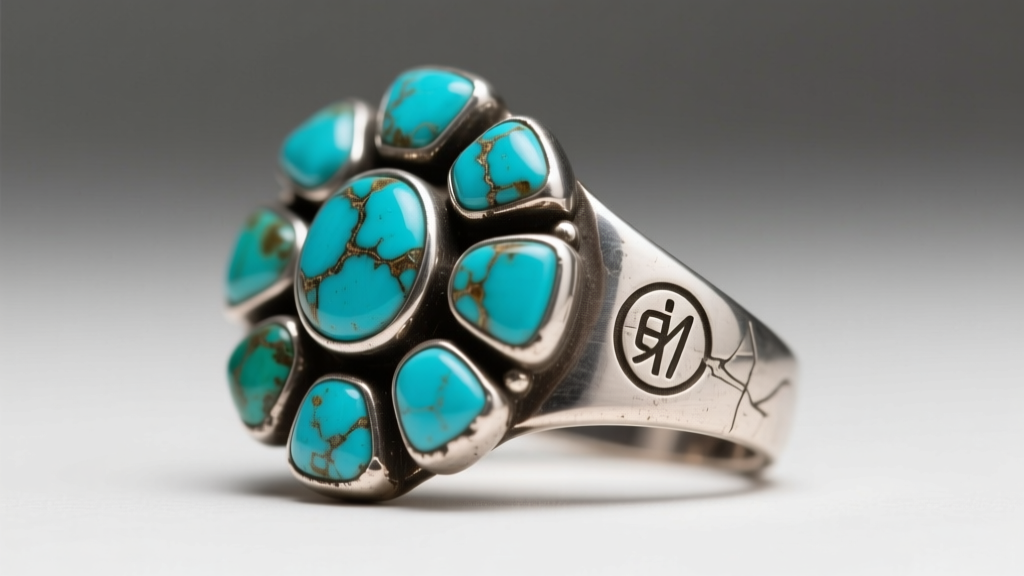
Prior to the 1930s, Navajo and Zuni silversmiths frequently melted down US silver coins to create their jewelry. This 'coin silver' is roughly 90% silver and 10% copper, resulting in a slightly darker, more malleable metal that oxidizes heavily over time. Pieces featuring coin silver settings with crude, hand-filed bezels and uncut turquoise nuggets are highly prized by museum curators and advanced collectors, often fetching thousands of dollars regardless of the stone's mine origin.
Hallmarks and the Indian Arts and Crafts Board
The practice of stamping jewelry with a maker's mark did not become widespread until the late 1940s and 1950s, encouraged by organizations like the Indian Arts and Crafts Board (IACB) to promote authenticity. When evaluating mid-century pieces, look for specific stamps:
- Navajo Guild Stamps: Often feature an 'I' inside a rising sun or specific initials (e.g., 'T. Begay').
- Zuni Petit Point/Needlepoint: Characterized by intricate, hand-cut silver bezels holding dozens of tiny, uniformly shaped turquoise cabochons. Look for hallmarks like 'R. Takahashi' or 'J. Leekya'.
- Hopi Overlay: Two layers of silver soldered together, with the top layer featuring cut-out geometric or animal motifs. Early Hopi Guild pieces often feature a stylized sun or water wave stamp.
The Patina Paradox: To Polish or Not to Polish?
One of the most common mistakes novice sellers make is aggressively polishing old turquoise jewelry before taking it to an appraiser. The dark oxidation (tarnish) that settles into the recesses of stamped silver and around the bezel settings is known as patina. In the 2026 market, heavy, undisturbed patina is considered a badge of authenticity and age. Polishing a 1920s squash blossom necklace to a bright, mirror-like shine can instantly strip it of its historical aura, potentially reducing its value to serious collectors by 20% to 30%. If you must clean a piece, use only a soft, dry microfiber cloth to gently remove surface dust, leaving the deep crevices untouched.
Your Actionable Appraisal Checklist
Before buying, selling, or insuring vintage turquoise, run the piece through this rigorous authentication framework:
- Loupe the Matrix: Check for natural host rock inclusions. Sharp, unnatural lines or dye pooling indicate treatment.
- Inspect the Bezel: Authentic mid-century pieces feature hand-cut, slightly irregular bezel walls with visible file marks. Perfectly uniform, scalloped bezels indicate modern machine stamping.
- Assess the Silver Weight and Patina: Verify the piece is not lightweight or hollow-backed. Check for natural oxidation in the crevices.
- Verify the Hallmark: Cross-reference stamps with established Native American hallmark databases, keeping in mind that many early master smiths never stamped their work.
- Demand Provenance: For pieces valued over $3,000, require documentation of the mine origin or a verifiable chain of ownership.
Ultimately, the value of old turquoise jewelry in today's market is a fascinating intersection of geology, history, and art. By looking past the surface color and diving deep into the matrix, the metalwork, and the historical treatments, collectors can confidently navigate the vintage landscape and secure pieces that will continue to appreciate for generations to come.


