Assessing the Significance of Jade Jewelry: Value & Budget Guide
Discover the true significance of jade jewelry. Learn how to assess value, understand Type A, B, and C grades, and budget wisely for authentic pieces.

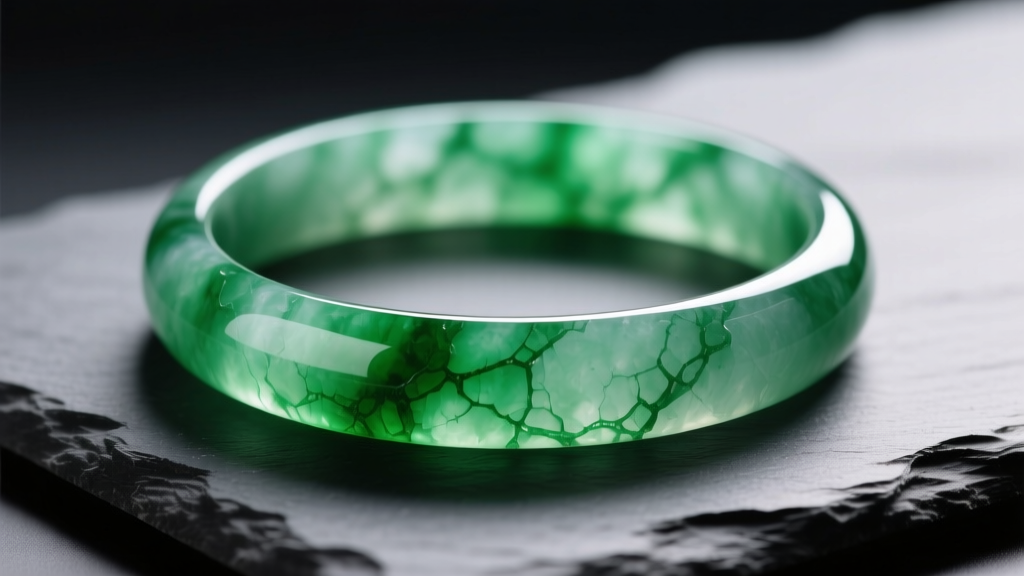
When collectors and enthusiasts discuss the significance of jade jewelry, they are often navigating a complex intersection of ancient cultural reverence and modern gemological science. Unlike diamonds, which are graded on a universal 4Cs scale, jade valuation is notoriously opaque, heavily influenced by translucency, texture, and the pervasive presence of chemical treatments. For buyers in 2026, understanding how to assess the true market value of jade is no longer optional; it is a financial necessity.
This guide bypasses the mystical fluff to provide a rigorous, gemologist-backed framework for budgeting, authenticating, and understanding the real-world pricing tiers of both jadeite and nephrite.
The Dual Significance of Jade: Heritage Meets Market Economics
To accurately budget for jade, one must first distinguish between the two entirely different minerals that share the commercial name: Nephrite and Jadeite. The cultural significance of jade jewelry stems largely from nephrite, which has been carved in China for over 5,000 years and holds deep spiritual importance in Māori culture (where it is known as pounamu). However, the modern financial significance is dominated by jadeite, a harder, rarer, and more vibrant pyroxene mineral primarily sourced from Myanmar (Burma).
- Nephrite (Amphibole): Hardness of 6.0–6.5. Usually found in opaque, earthy tones like spinach green, mutton-fat white, and black. Valued primarily for its historical carving pedigree and toughness.
- Jadeite (Pyroxene): Hardness of 6.5–7.0. Prized for its glassy luster, high translucency, and vivid colors (Imperial Green, lavender, icy white). This is the material that commands astronomical prices at auction.
According to the Gemological Institute of America (GIA), while nephrite is abundant globally, gem-quality jadeite is geologically scarce, creating a steep premium for untreated, highly translucent jadeite specimens.
Decoding the Treatment Matrix: Type A, B, and C
The single most critical factor in the budget assessment of any jade piece is its treatment status. The market categorizes jadeite into three distinct tiers based on chemical manipulation. Buying Type B or C jade at Type A prices is the most common financial pitfall for uninformed consumers.
| Treatment Grade | Gemological Process | Market Value Impact | Long-Term Durability |
|---|---|---|---|
| Type A | Completely natural. Only cut, polished, and waxed with natural beeswax. | Investment Grade. Retains and appreciates in value. | Excellent. Will last generations. |
| Type B | Bleached in strong acids to remove brown/yellow impurities, then injected with polymer resin. | Low. Worth 10% to 20% of an equivalent Type A piece. | Poor. Resin yellows and degrades over 5–10 years. |
| Type C | Chemically dyed to enhance or alter color (often mimicking Imperial Green). | Negligible. Zero investment value; purely costume jewelry. | Fair, but color fades rapidly under UV/sunlight exposure. |
| Type B+C | Acid-bleached, polymer-impregnated, and artificially dyed. | Negligible. Frequently sold as high-end jade to tourists. | Poor. Structural integrity is permanently compromised. |
Expert Insight: Never purchase a high-ticket jadeite bangle or cabochon without a laboratory report from a reputable institution like the GIA or the National Gemstone Testing Center (NGTC). Visual inspection alone cannot reliably detect high-quality polymer impregnation.
2026 Budgeting Framework: Real-World Pricing Tiers
Allocating a budget for jade requires aligning your financial expectations with the physical reality of the stone. Below is a realistic pricing framework for the current market, categorized by material and form factor.
Tier 1: Commercial & Daily Adornment ($50 – $500)
At this price point, you are primarily looking at Nephrite (such as Canadian or Russian green nephrite) or lower-grade, opaque Jadeite with heavy inclusions.
- What to expect: Opaque stones, muted colors, and visible internal fractures or cloudiness.
- Budget Strategy: Focus on the quality of the metalwork (e.g., 14k or 18k gold settings) and the artistry of the carving rather than the gemological rarity of the stone itself.
Tier 2: Fine Jewelry & Enthusiast Grade ($1,000 – $8,000)
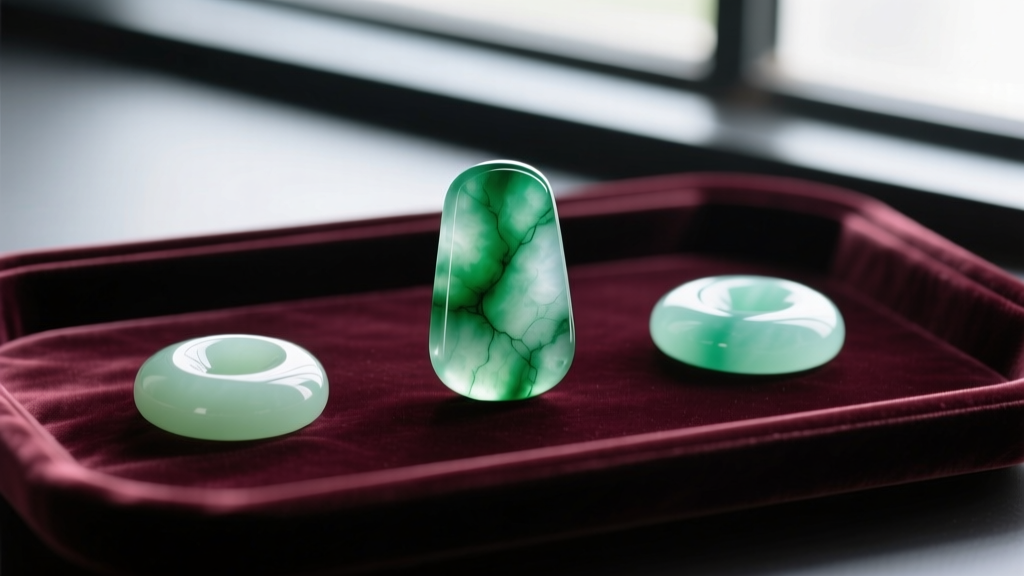
This bracket opens the door to genuine, untreated Type A Jadeite. You will be paying for translucency and specific, desirable colors like lavender, icy white, or apple green.
- What to expect: Good translucency (often described as 'glutinous rice' or 'ice' species), minimal surface-reaching fractures, and vibrant, natural color distribution.
- Budget Strategy: Prioritize translucency over color. A highly translucent, colorless 'icy' jadeite cabochon holds its market value far better than a heavily included, opaque but vividly green stone.
Tier 3: Investment & Collector Grade ($15,000 – $250,000+)
This is the realm of Imperial Green Jadeite and premium Mutton-Fat White Nephrite (Hetian jade).
- What to expect: Flawless internal structures, 'glassy' species transparency, and highly saturated, evenly distributed color that seems to glow from within.
- Budget Strategy: At this level, you are buying an alternative asset class. Provenance, auction history, and top-tier laboratory certification are mandatory. Do not negotiate on cut quality; symmetrical, perfectly proportioned cabochons and unbroken bangles command the highest liquidity.
Gemological Troubleshooting: Verifying Authenticity
While laboratory testing is the gold standard, experienced buyers utilize specific physical properties to weed out blatant fakes (like dyed quartzite, serpentine, or glass) before committing to a purchase. According to experts at Mason-Kay Fine Jade Jewelry, understanding these metrics is vital for on-the-spot assessments.
The Specific Gravity (SG) Test
Jadeite and nephrite have distinctly different densities. If you are buying a loose cabochon, a hydrostatic weighing test is definitive.
- Jadeite SG: 3.30 to 3.38 (Typically 3.33)
- Nephrite SG: 2.90 to 3.03 (Typically 2.95)
- Common Imitators: Serpentine (2.57), Aventurine Quartz (2.65). If the stone feels unusually light for its size, it is likely a quartz or serpentine imitation.
Refractive Index (RI) Spot Testing
Using a standard gemological refractometer on a flat, polished surface of the jade will yield a specific RI reading.
- Jadeite RI: 1.66 (spot reading)
- Nephrite RI: 1.61 to 1.63 (spot reading)
UV Fluorescence and the Chelsea Filter
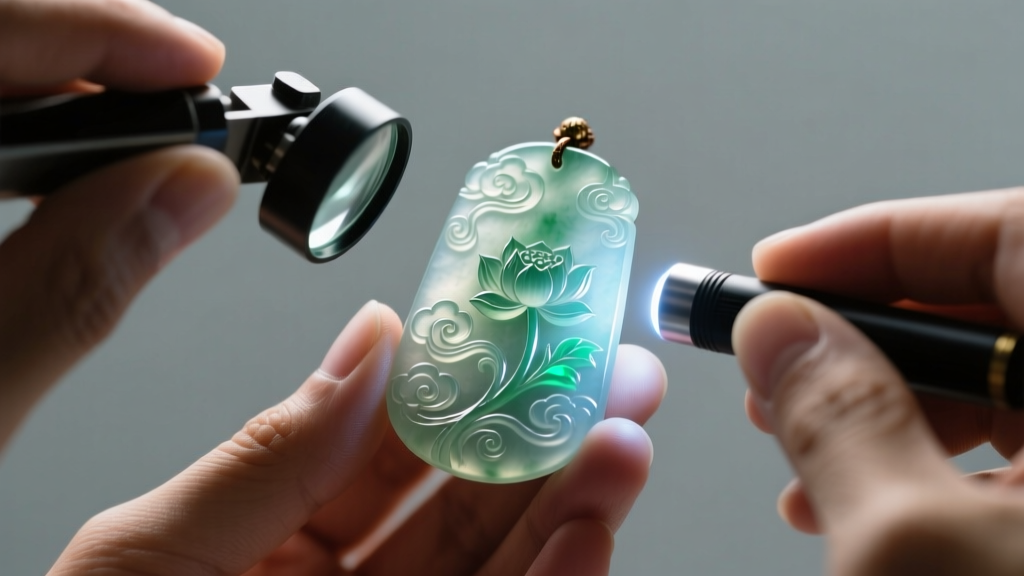
Under long-wave UV light (365nm), Type B jade will often exhibit a chalky, bluish-white fluorescence due to the polymer resins used in the impregnation process. Type A jade is generally inert, though some natural white jadeites may show faint, patchy fluorescence. Furthermore, viewing green jade through a Chelsea Color Filter can help identify dyed stones; if the green turns pink or red under the filter, the stone has almost certainly been treated with chromium-based dyes (Type C).
Strategic Purchasing: Final Decision Framework
Ultimately, assessing the significance of jade jewelry requires aligning your personal intent with market realities. If your goal is spiritual connection, cultural appreciation, or daily fashion, a beautifully carved, mid-tier nephrite piece or a Type A lavender jadeite pendant in the $500 to $2,000 range offers immense aesthetic and emotional value without the stress of high-stakes asset management.
However, if you are approaching jade as an investment vehicle, strict discipline is required. Restrict your budget exclusively to Type A jadeite with 'glass' or 'ice' translucency, backed by verifiable laboratory reports. By understanding the rigorous gemological distinctions between natural and treated stones, you can navigate the jade market with confidence, ensuring your budget translates directly into lasting, authentic value.


