2026 Style Guide: The Evolution of Moss Agate Jewelry
Discover how moss agate jewelry is evolving in 2026. Explore bespoke cuts, high-end settings, and styling tips for this botanical gemstone.

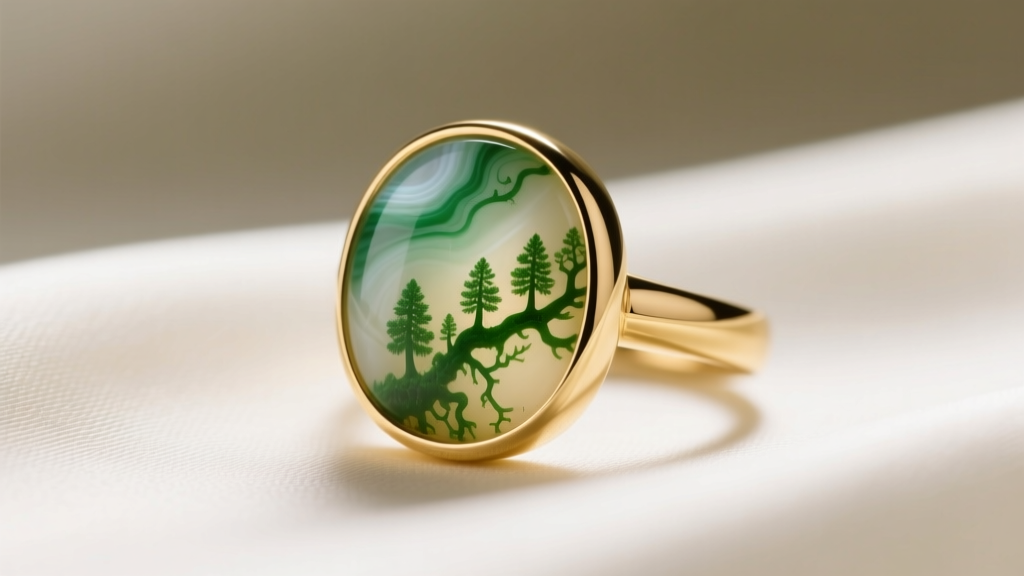
The 2026 Shift: Botanical Gemstones Meet High Jewelry
For decades, moss agate was largely relegated to the bohemian, rustic, and mass-market crystal healing sectors. You likely remember it as the opaque, milky stone wrapped in cheap copper wire at festival stalls. However, as we navigate the jewelry landscape of 2026, moss agate jewelry has undergone a radical, high-end rebranding. Driven by the "Naturecore" and "Quiet Luxury" movements, top-tier lapidaries and bespoke jewelers are now treating this botanical gemstone with the same reverence previously reserved for jade or high-clarity emeralds. The focus has shifted entirely from mass-produced cabochons to master-cut, landscape-oriented pieces set in recycled precious metals.
This evolution is not just aesthetic; it is deeply rooted in a renewed appreciation for the stone's unique geological formation. In this comprehensive style and trend analysis, we break down the gemological realities, the 2026 pricing tiers, and the architectural setting styles that are defining the modern moss agate renaissance.
Decoding the Stone: Gemology and Dendritic Inclusions
To understand the value of modern moss agate jewelry, we must first correct a widespread gemological misnomer. According to the Gemological Institute of America (GIA), moss agate is not a true agate. True agates are defined by their concentric, parallel banding. Moss agate is, in fact, a variety of chalcedony—a cryptocrystalline form of silica (quartz) that lacks this banding.
The "moss" inside the stone is not organic matter, nor is it fossilized plant life. It consists of dendritic (tree-like) inclusions composed of manganese or iron oxides. As the silica-rich gel cooled and solidified in volcanic rock fissures millions of years ago, these metallic minerals crystallized into fractal, fern-like patterns. The Mindat.org mineral database notes that the specific hue of the dendrites—ranging from vibrant emerald green to deep rust red and charcoal black—depends entirely on the oxidation state and the specific mineral (e.g., pyrolusite for black, celadonite for green). In 2026, the most coveted stones feature a glass-clear, colorless chalcedony matrix that acts as a pristine window into highly defined, vibrant green "forests."
2026 Quality Tiers and Pricing Framework
As demand for bespoke moss agate jewelry has surged, the market has stratified into distinct quality tiers. The pricing is no longer based solely on carat weight, but rather on the "landscape composition"—the aesthetic arrangement of the inclusions within the cut stone.
| Quality Tier | Matrix Clarity | Dendrite Pattern | Estimated Price Range (2026) |
|---|---|---|---|
| Commercial | Opaque, milky white to gray | Scattered, muddy, or indistinct blotches | $15 – $45 per finished piece |
| Fine Jewelry | Semi-translucent to translucent | Defined "tree" structures, good contrast | $80 – $250 per custom-cut stone |
| Collector / Bespoke | Glass-clear, colorless, or icy blue | Complete "landscapes," sharp fractals, vivid green | $300 – $1,200+ per master-cut stone |
In the collector tier, master lapidaries use precision faceting and custom cabochon doming to create a "window" effect, polishing the top to a high luster while leaving the bottom slightly matte to diffuse light and illuminate the internal dendrites. This level of craftsmanship is what has pushed moss agate into the realm of high jewelry.
Dominant Setting Styles in 2026
The way moss agate is mounted has completely shifted away from the wire-wrapped pendants of the 2010s. Today's jewelers are treating the stone as an architectural canvas.
Tension and Bezel Minimalism
Because moss agate sits at a 6.5 to 7 on the Mohs hardness scale, it is durable enough for daily wear but still susceptible to chipping if struck against hard surfaces. Furthermore, heavy clusters of manganese inclusions can create microscopic cleavage planes or structural weaknesses within the stone. Consequently, 2026's premier setting style is the sleek, low-profile bezel. Jewelers are utilizing 18k recycled yellow gold and platinum to frame custom-cut, asymmetrical cabochons. The metal acts as a protective bumper while the minimalist design ensures the eye is drawn immediately to the internal "landscape."
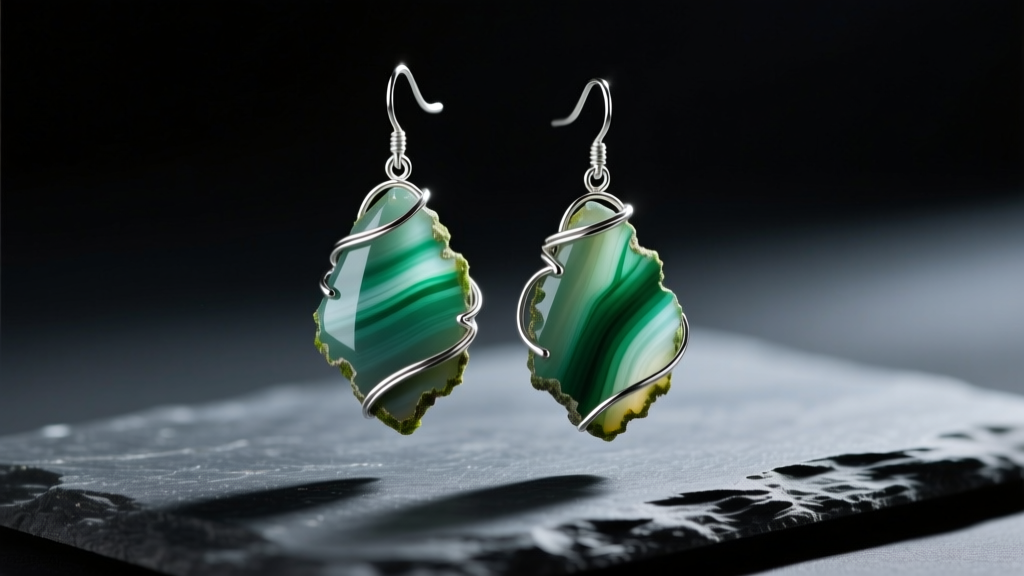
Asymmetrical and Raw-Edge Framing
For evening wear and statement pieces, the "raw-edge" trend has matured. Rather than leaving the entire stone unpolished, contemporary lapidaries are retaining the natural, rugged crust of the chalcedony on the outer perimeter while polishing a flawless, geometric window in the center. These pieces are often set in matte-finished platinum or blackened rhodium, creating a striking contrast between the industrial metal, the rough stone exterior, and the delicate green dendrites within.
Styling Framework: Integrating Moss Agate into Modern Wardrobes
Styling moss agate jewelry in 2026 requires a departure from the layered, bohemian aesthetics of the past. The current paradigm is rooted in intentional contrast and monochromatic backdrops.
- The Monochromatic Canvas: Moss agate's intricate green patterns are easily lost against busy prints. Style your statement pieces against solid, neutral tones—think charcoal wool, cream silk, or stark black architectural tailoring. The stone should act as the sole organic element in your outfit.
- Bimetallic Stacking: A major 2026 trend is mixing metals within a single piece. Look for moss agate rings that feature an 18k yellow gold bezel but a platinum band. This bridges the gap between warm and cool tones, making the jewelry incredibly versatile for stacking with existing pieces in your collection.
- Scale and Proportion: Because the internal inclusions require close inspection, moss agate benefits from larger surface areas. Opt for wide, shield-cut cocktail rings or oversized, horizontal pendant pendants that sit just below the clavicle, allowing the "landscape" to be easily admired without the wearer having to hold the stone up to the light.
Care and Maintenance for Dendritic Inclusions
While chalcedony is relatively tough, the presence of metallic oxide inclusions requires specific care protocols to maintain the structural integrity and visual clarity of your moss agate jewelry.
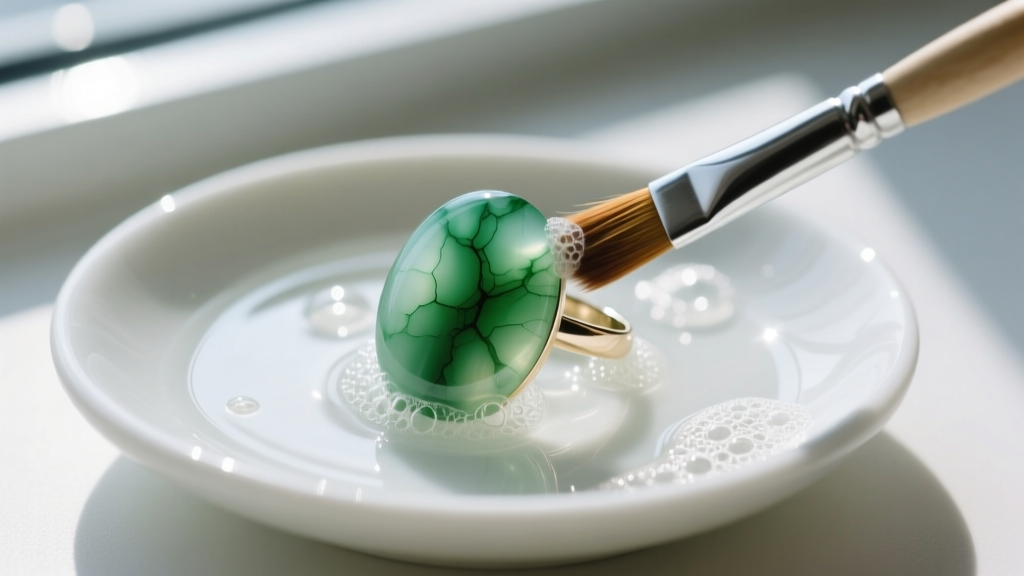
Avoid Ultrasonic Cleaners: This is the most critical rule. The high-frequency vibrations of ultrasonic jewelry cleaners can cause micro-fractures to propagate along the dendritic inclusion lines. What looks like a stable "tree" pattern can quickly splinter into a web of internal cracks.
Chemical Sensitivity: The iron and manganese oxides that create the moss patterns can be sensitive to harsh acids and prolonged exposure to chlorine. Never wear your moss agate jewelry in swimming pools, and avoid cleaning it with commercial silver dips or abrasive polishing cloths, which can dull the high-luster polish of the cabochon dome.
The Safe Cleaning Method: Use a mild, phosphate-free dish soap mixed with lukewarm water. Gently agitate the water and use a soft-bristled baby toothbrush to clean the back of the stone and the setting crevices. Rinse with distilled water to prevent hard water spots from obscuring the translucent matrix, and dry immediately with a microfiber cloth.
Conclusion
The 2026 jewelry market has rightfully elevated moss agate from a novelty crystal to a highly sought-after botanical gemstone. By understanding the gemological nuances of its dendritic inclusions, recognizing the hallmarks of master lapidary work, and adopting modern, minimalist styling frameworks, collectors and enthusiasts can invest in pieces that are as geologically fascinating as they are aesthetically breathtaking. Whether you are drawn to the glass-clear matrix of a collector-grade stone or the rugged charm of a raw-edge pendant, moss agate jewelry now offers a sophisticated, nature-inspired alternative to traditional precious gems.


