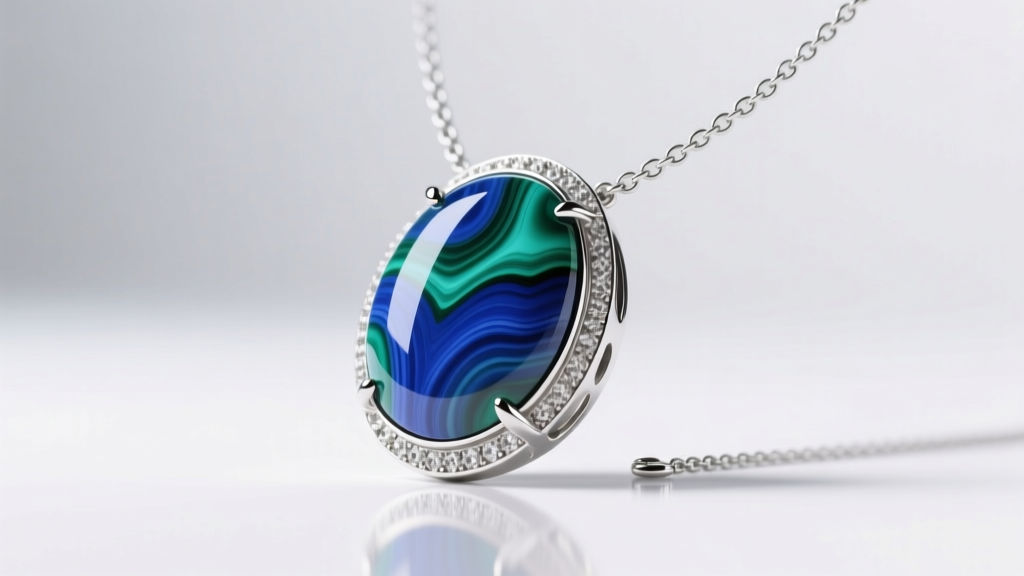
The Ultimate Jewelry Box Crystal Guide for Gem Care
Discover the best jewelry box crystal for cleansing and protecting your gemstones. Compare selenite, amethyst, and quartz properties for optimal care.

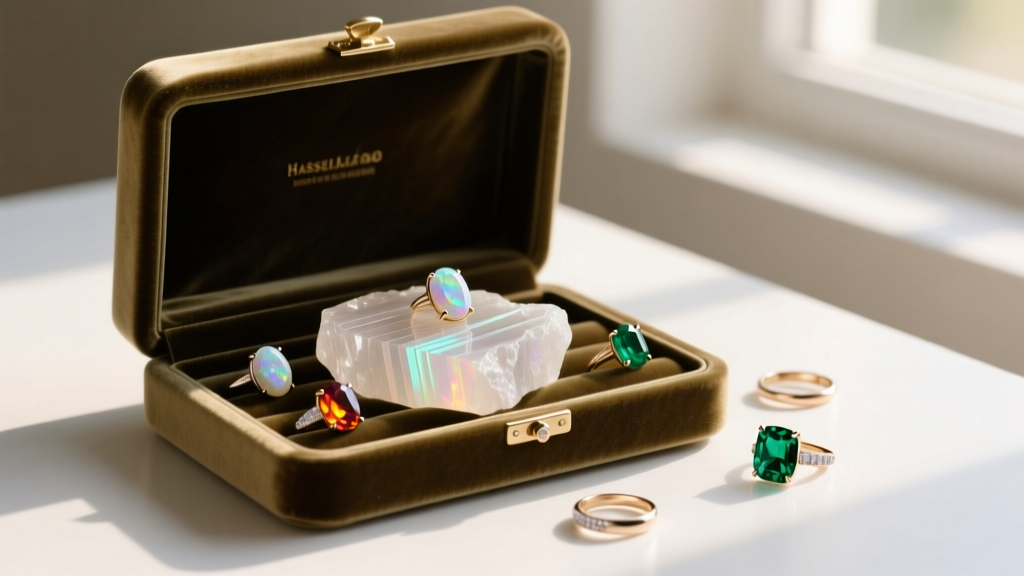
The Role of a Jewelry Box Crystal in Gemstone Care
When curating a fine jewelry collection, storage is rarely just about physical protection; it is also about energetic maintenance and material preservation. The concept of the jewelry box crystal has evolved from a niche metaphysical trend into a sophisticated practice embraced by gemologists and holistic collectors alike. By intentionally placing specific mineral specimens inside your storage environment, you can create a microclimate that cleanses, grounds, and protects your precious gems. However, not all crystals are created equal, and placing the wrong mineral next to a delicate gemstone can result in catastrophic physical damage.
As a gemological best practice, selecting the right jewelry box crystal requires a deep understanding of mineralogy, specifically Mohs hardness, cleavage planes, moisture sensitivity, and chemical stability. In this comprehensive guide, we compare the top crystals used for jewelry storage, analyzing their physical properties and energetic profiles to help you build the ultimate protective environment for your collection.
Material Comparison: Top Crystals for Your Jewelry Box
Choosing a base crystal for your jewelry box depends heavily on the types of gems you own. A diamond and sapphire collection requires vastly different storage considerations than a collection of organic gems like pearls, coral, and amber.
Selenite: The Energetic Eraser
Selenite (a crystalline variety of gypsum) is arguably the most popular jewelry box crystal due to its reputation for self-cleansing and clearing stagnant energy. From a material science perspective, selenite is incredibly soft, rating at a mere 2 on the Mohs Hardness Scale. It possesses perfect cleavage, meaning it can easily flake or shed microscopic dust.
Best For: Hard, non-porous gemstones like diamonds, rubies, and sapphires that need energetic resetting without the risk of being scratched by the selenite itself.
Warning: Never use raw selenite as a base for pearls, turquoise, or opals. The microscopic gypsum dust will embed itself into the porous nacre or matrix of these stones, causing irreversible dullness and structural degradation over time.
Amethyst: The Protective Transmuter
Amethyst is a purple variety of quartz, rating a robust 7 on the Mohs scale. It is highly prized for its ability to transmute negative energy and protect against environmental stressors. Because it shares the same chemical composition as clear quartz (silicon dioxide), it is physically stable and does not shed dust or degrade in normal humidity levels.
Best For: Everyday wear jewelry, silver pieces prone to tarnishing (amethyst is believed to slow energetic oxidation), and mixed-gemstone boxes where a universally safe hardness is required.
Warning: Amethyst is highly susceptible to photodegradation. If your jewelry box has a glass top and sits in direct sunlight, the UV rays will bleach the amethyst into a pale, chalky white within months, compromising its structural integrity and aesthetic value.
Clear Quartz: The Amplifying Base
Also rating a 7 on the Mohs scale, clear quartz is the ultimate programmable storage crystal. Unlike selenite, which clears energy, clear quartz amplifies the inherent properties of the stones resting upon it. This makes it an excellent jewelry box crystal for high-vibration stones like moldavite, phenacite, or rare collector-grade tourmalines.
Best For: High-value investment pieces and rare collector gems where maintaining the stone's natural resonance is the primary goal.
Black Obsidian: The Grounding Shield
Obsidian is a naturally occurring volcanic glass. While it lacks a crystalline structure (it is an amorphous solid), it is a staple in protective jewelry storage. Rating between 5 and 5.5 on the Mohs scale, it is softer than quartz but harder than organic gems. It is exceptionally dense and provides a heavy, grounding base for large statement pieces.
Best For: Heavy metal jewelry, large cabochons, and pieces worn during high-stress environments that require energetic grounding before being stored away.
Physical Properties and Jewelry Safety Matrix
To practice safe gemological storage, you must treat your jewelry box crystals as active materials that interact with your collection. The following table outlines the critical physical properties you must consider before lining your jewelry box with these minerals.
| Crystal Type | Mohs Hardness | Moisture Sensitivity | UV / Light Risk | Safe to Store With | Avoid Storing With |
|---|---|---|---|---|---|
| Selenite (Raw) | 2.0 | High (Water-soluble) | None | Diamonds, Corundum | Pearls, Opals, Turquoise |
| Amethyst (Tumbled) | 7.0 | None | High (Fades in UV) | Most metals, Quartz, Beryl | Direct Sunlight Exposure |
| Clear Quartz (Points) | 7.0 | None | None | Almost all hard gems | Soft organics (if sharp) |
| Black Obsidian (Slabs) | 5.0 - 5.5 | None | None | Silver, Gold, Cabochons | Diamonds (will scratch obsidian) |
Gemological Incompatibilities: When Crystals Attack
The most common mistake collectors make is assuming all "natural" materials play well together. According to Mindat's mineralogical database, the chemical and physical interactions between storage crystals and stored gems can be destructive if ignored.
- The Opal Dehydration Risk: Opals contain between 3% and 21% water within their silica structure. Storing opals in an airtight jewelry box with highly desiccating minerals or in environments with zero humidity can cause "crazing" (a network of fine cracks). While quartz and obsidian are safe, ensure your jewelry box maintains a stable 40-50% humidity level.
- The Pearl Abrasion Hazard: Pearls rate a mere 2.5 on the Mohs scale. If you use raw, unpolished selenite or rough quartz clusters as your jewelry box crystal base, the microscopic friction will scratch the pearl's delicate nacre layers. Always use polished slabs or silk-wrapped tumbled stones when storing organics.
- Galvanic Corrosion with Metals: If your jewelry box crystal is slightly damp (a common issue with selenite in humid climates), storing silver or copper jewelry directly against it can accelerate tarnishing and galvanic corrosion. Always ensure your storage crystals are bone-dry before introducing precious metals.
Strategic Layering and Arrangement Techniques
How you arrange your jewelry box crystal is just as important as the material you choose. Proper layering ensures energetic benefits without compromising physical safety.
The Silk Barrier Method
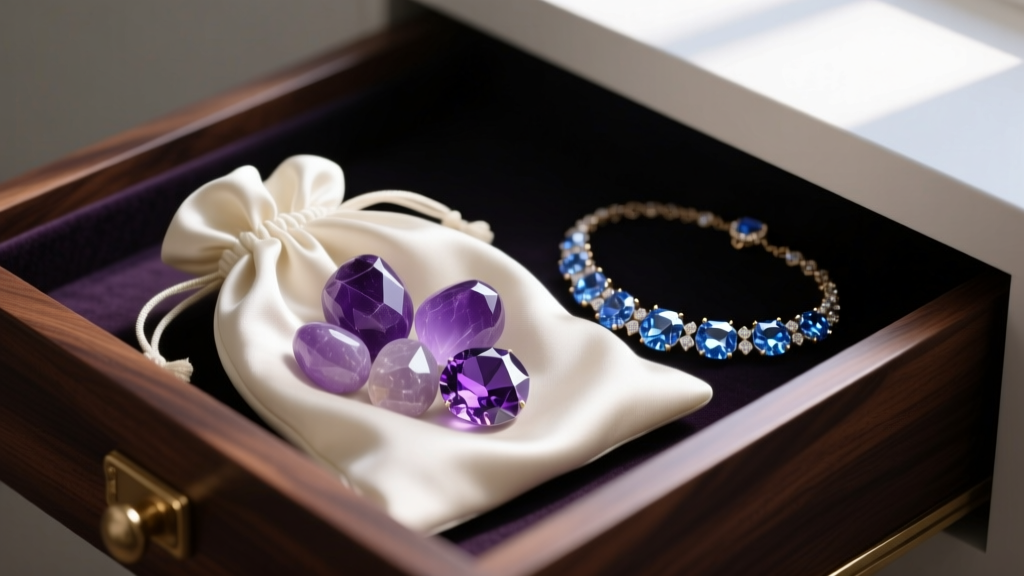
For mixed collections containing both hard gems (like sapphires) and soft organics (like amber), use the silk barrier method. Place tumbled amethyst or clear quartz inside small, unbleached silk pouches. The silk allows energetic transmission while providing a physical buffer that prevents the Mohs 7 quartz from scratching the Mohs 2.5 amber. This technique is highly recommended by the Gemological Institute of America (GIA) for separating varying hardness levels in shared storage.
The Slab Base Technique
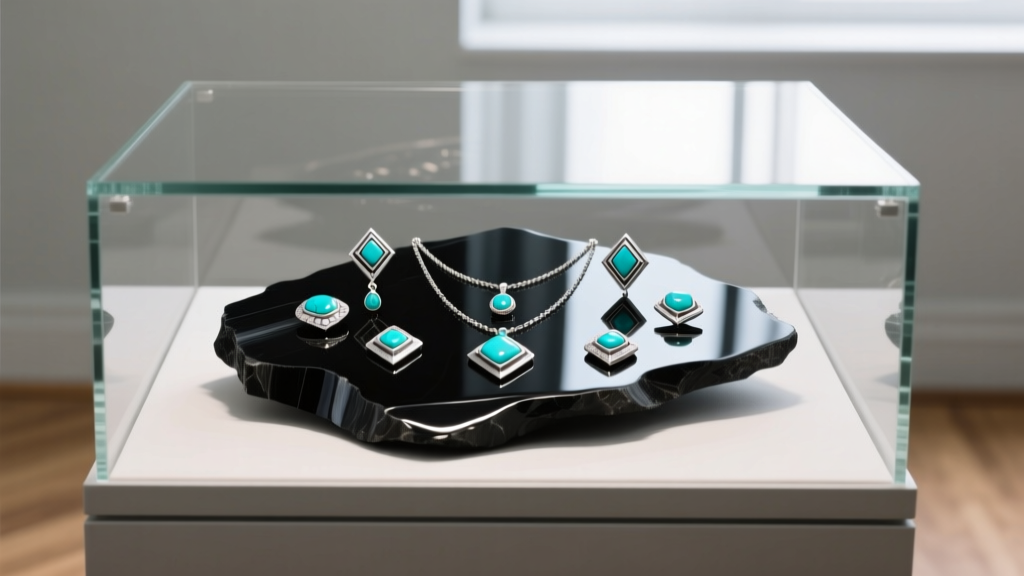
For display-style jewelry boxes or open valets, use polished obsidian or selenite slabs as the foundational base. A 10mm to 15mm thick polished slab provides a flat, scratch-free surface. Ensure the edges of the slab are beveled so that delicate prongs on rings or necklaces do not catch and bend when sliding the jewelry across the surface.
Maintenance and Cleansing Your Storage Crystals
Your jewelry box crystal absorbs the energetic residue of the items it protects. Over time, these base crystals become saturated and require maintenance to remain effective.
For Selenite: Never use water to cleanse selenite, as it will dissolve the surface polish and create a chalky residue. Instead, use sound cleansing (like a singing bowl placed near the box) or smudging with ethically sourced palo santo. Replace selenite slabs every 18 to 24 months, as they naturally become brittle and prone to flaking over time.
For Quartz and Amethyst: These can be safely washed with lukewarm water and a mild, non-chemical soap every three months. Dry them completely with a microfiber cloth before returning them to the jewelry box to prevent moisture transfer to your metal jewelry. To reset their energetic properties, place them under the light of a full moon, avoiding direct midday sunlight to prevent thermal shock or UV fading.
Final Verdict: Building Your Custom Storage Ecosystem
There is no single "best" jewelry box crystal; the ideal choice depends entirely on your collection's material composition. If your collection is dominated by diamonds, platinum, and hard corundum, a raw selenite base offers unparalleled energetic clearing. If you curate a diverse mix of vintage silver, soft turquoise, and delicate pearls, polished black obsidian and silk-wrapped tumbled amethyst provide the safest, most protective environment. By respecting the Mohs scale and understanding mineral chemistry, you can transform your jewelry storage from a simple container into an active, protective vault that preserves both the physical brilliance and the energetic integrity of your most treasured pieces.