How to Clean and Care for Gemstone Jewelry: An Expert Mohs Guide
Learn exactly how to clean and care for gemstone jewelry using the Mohs scale and porosity data. Expert technical guide for safe stone maintenance.

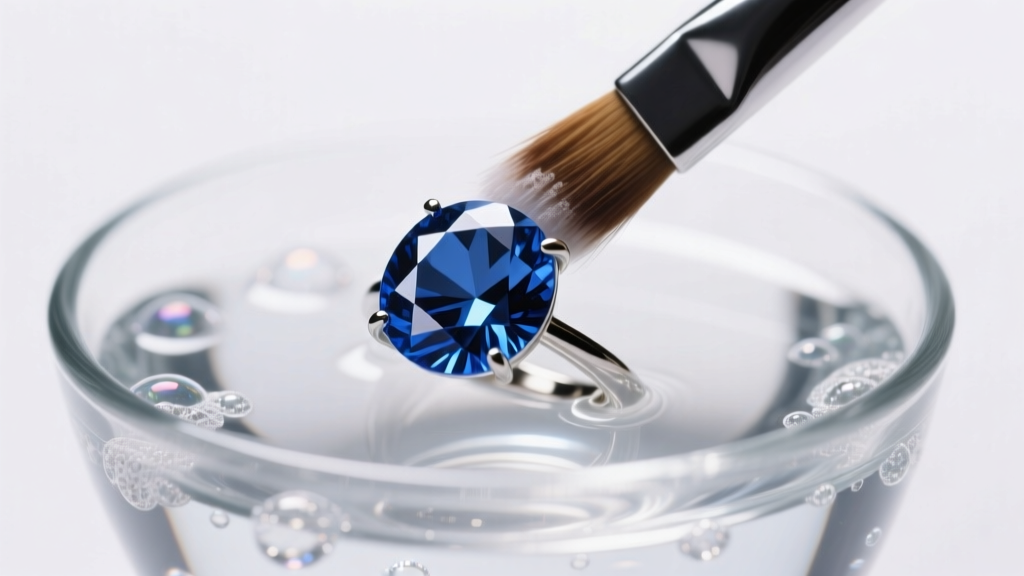
Understanding how to clean and care for gemstone jewelry requires moving beyond generic advice and into the realm of mineralogy. The most common mistake collectors and everyday wearers make is treating all gemstones with the same mechanical and chemical protocols used for diamonds. A diamond is a monolithic carbon crystal with exceptional hardness and no true porosity; an emerald is a heavily included beryl that is routinely fracture-filled with oils and resins. Applying ultrasonic cavitation to the latter will result in catastrophic, irreversible damage.
In this expert deep dive, we deconstruct the physics of gemstone degradation, analyzing the intersection of the Mohs hardness scale, crystalline cleavage planes, and microscopic porosity to provide a definitive, scientifically grounded maintenance framework.
The Physics of Gemstone Degradation: Hardness vs. Toughness
To properly maintain gemstone jewelry, one must first distinguish between hardness and toughness. The Mindat.org database and standard gemological curricula define hardness strictly as a material's resistance to scratching, measured on the Mohs scale. However, the Mohs scale is ordinal, not linear. The jump in absolute hardness between Corundum (Mohs 9) and Diamond (Mohs 10) is vastly greater than the jump between Calcite (Mohs 3) and Fluorite (Mohs 4).
Toughness, conversely, refers to a stone's resistance to breaking, chipping, or cleaving. This is dictated by the stone's internal crystal lattice structure. For example, Jadeite (Mohs 6.5-7) possesses a highly interlocking fibrous crystalline structure, giving it exceptional toughness—far exceeding that of a Diamond (Mohs 10), which has perfect octahedral cleavage planes that make it vulnerable to shattering if struck precisely along those axes.
Expert Insight: Never assume a high Mohs rating guarantees durability during cleaning. Topaz ranks an impressive 8 on the Mohs scale, yet it possesses perfect basal cleavage. Subjecting Topaz to rapid temperature changes (thermal shock) in a steam cleaner can cause the stone to cleave perfectly in half.
The Porosity Factor: Why Water Destroys Certain Crystals
Porosity dictates how liquids, oils, and chemical surfactants interact with a gemstone's surface and subsurface fissures. Many popular gemstones are not single, flawless crystals but rather microcrystalline aggregates or naturally fractured stones.
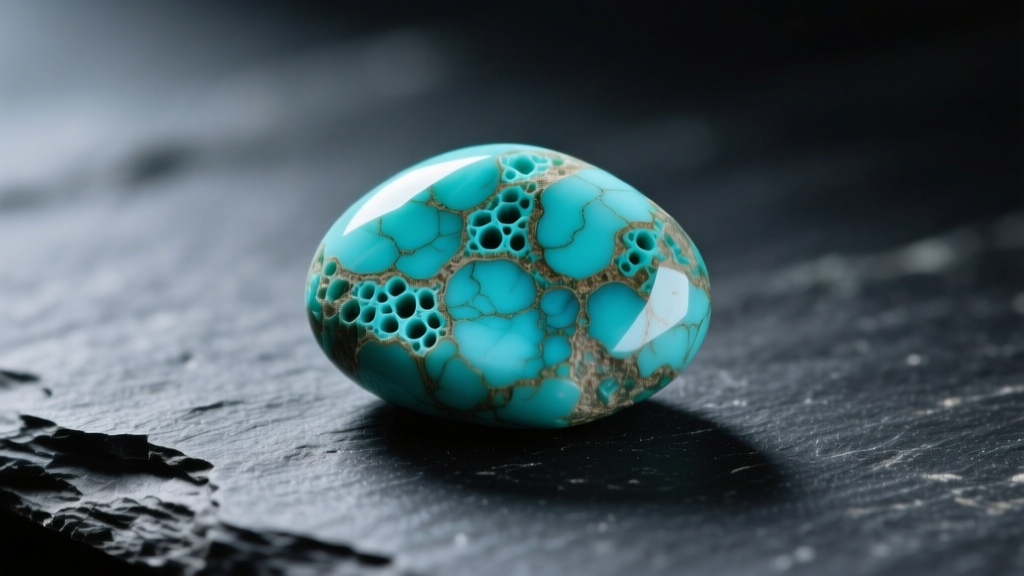
Stones like Turquoise, Lapis Lazuli, and Malachite are highly porous. Turquoise is a hydrous phosphate of copper and aluminum. When exposed to harsh chemicals, ultrasonic cleaners, or even prolonged contact with the natural acids in human sweat and cosmetics, the copper ions can oxidize or alter, shifting the stone's vibrant sky-blue hue to a dull, muddy green. Furthermore, organic gems like Pearls and Coral are composed of calcium carbonate, which readily dissolves when exposed to mildly acidic cleaning solutions or even the low pH of certain tap water sources.
Treatment Vulnerabilities
The modern gem trade relies heavily on clarity enhancements. According to the Gemological Institute of America (GIA), up to 90% of commercial emeralds are treated with cedar oil or synthetic resins (like Opticon) to mask surface-reaching fractures. Immersing an oiled emerald in warm water with a degreasing dish soap will strip the oil from the fissures, instantly revealing a spiderweb of white fractures and drastically reducing the stone's market value and optical clarity.
Ultrasonic and Steam Cleaners: A Technical Risk Assessment
Ultrasonic cleaners utilize high-frequency sound waves (typically 20-40 kHz) to create microscopic cavitation bubbles in a liquid solvent. When these bubbles collapse against the surface of the jewelry, they release localized shockwaves and momentary spikes in temperature reaching thousands of degrees Kelvin.
- Safe for: Diamonds, Rubies, and Sapphires (Corundum) that are unheated and unfractured.
- Fatal for: Emeralds (strips oils/resins), Opals (causes crazing via micro-vibrations and heat), Tanzanite (induces cleavage fracturing), and any stone with liquid inclusions or internal stress fractures.
Steam cleaners pose a dual threat: thermal shock and high-pressure injection. Rapid heating and cooling cause differential expansion within the crystal lattice. If a stone has internal inclusions (e.g., a 'halo' fracture in a sapphire), the expanding trapped liquid will exert outward pressure, shattering the stone from the inside out.
Stone-by-Stone Care Matrix: Cleaning Protocols by Gem Type
The following matrix provides exact, technical cleaning protocols based on gemological properties. Always consult this before applying any mechanical or chemical cleaning method.
| Gemstone | Mohs / Toughness | Porosity & Treatments | Approved Cleaning Method | Critical Risks to Avoid |
|---|---|---|---|---|
| Emerald | 7.5-8 / Fair | High (Fracture-filled with oils/resins) | Lukewarm distilled water, pH-neutral soap, microfiber cloth. | Ultrasonic, steam, heat, harsh detergents, acids. |
| Opal (Hydrophane) | 5.5-6.5 / Poor | High (Contains 3-21% water) | Dry polishing cloth only. Occasional damp wipe. | Immersion, ultrasonic, heat, extreme dry environments. |
| Ruby / Sapphire | 9 / Excellent | Low (Unless heavily included/fractured) | Ultrasonic, steam, mild ammonia solutions. | Thermal shock on heavily included stones; hydrofluoric acid. |
| Tanzanite | 6.5-7 / Poor | Low (Perfect cleavage in one direction) | Lukewarm soapy water, soft bristle brush, gentle agitation. | Ultrasonic, steam, sudden temperature changes, hard impacts. |
| Turquoise | 5-6 / Fair | High (Microcrystalline aggregate) | Dry, soft untreated cloth. Mild damp wipe if necessary. | Chemicals, ultrasonic, prolonged water exposure, cosmetics. |
Formulating Safe DIY Cleaning Solutions
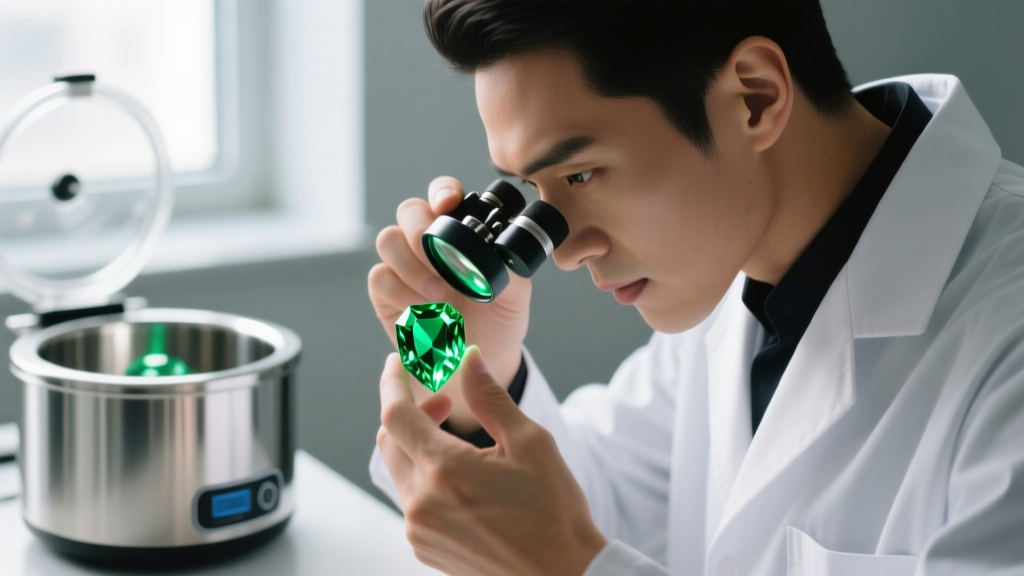
When mechanical agitation is unsafe, chemical surfactants must do the heavy lifting. The ideal DIY cleaning solution for the vast majority of gemstones (excluding organics and highly porous stones) relies on a pH-neutral surfactant suspended in distilled water.
The Expert Formulation:
- Base: Distilled water (avoid tap water, as dissolved calcium and magnesium will leave hard water deposits that etch soft stones like fluorite or calcite over time).
- Surfactant: A few drops of pH-neutral, dye-free, and lotion-free dish soap (e.g., Dawn Free & Clear). Avoid soaps with added moisturizers, which leave a hydrophobic film on the stone's pavilion, killing its light return and brilliance.
- Agitation: Use a baby toothbrush or a specialized extra-soft brass-bristle brush. Brass is softer than most gemstones but harder than gold and silver, allowing it to dislodge sebum and dead skin cells from the prong settings without scratching the stone's table or crown.
- Drying: Never air-dry. Use a lint-free microfiber cloth or a specialized jewelry blower to force water out from beneath the gallery and setting.
Advanced Storage and Environmental Controls
Proper care extends far beyond the cleaning basin; environmental degradation is a silent destroyer of gemstone jewelry. The American Gem Society (AGS) emphasizes that improper storage accounts for a significant percentage of preventable gemstone damage.
UV Degradation and Fading
Certain chromophores (the elements responsible for a gem's color) are highly unstable under prolonged ultraviolet exposure. Amethyst, Kunzite, and Rose Quartz will visibly fade and turn brownish-gray if left in direct sunlight or stored in UV-permeable display cases. These stones must be stored in opaque, light-blocking environments.
Humidity Control for Opals and Pearls
While most stones prefer dry environments, Opals and Pearls require specific humidity levels. Opals stored in arid environments (or inside airtight safes with silica gel desiccants) will lose their structural water, leading to 'crazing'—a network of fine, irreversible surface cracks. Conversely, Pearls stored in airtight plastic bags will dehydrate and crack; they require ambient moisture and should be worn regularly or stored with a damp cotton ball in a breathable linen pouch to maintain their nacreous luster.
By respecting the unique mineralogical properties of each stone, you ensure that your gemstone jewelry retains its optical brilliance, structural integrity, and financial value for generations.


