Abalone Jewelry Buying Guide: How to Spot Quality Shells & Settings
Discover what to look for when buying abalone jewelry. Learn about shell grading, stabilization, ethical sourcing, and the best settings for durability.

Understanding Abalone: The Organic Gemstone
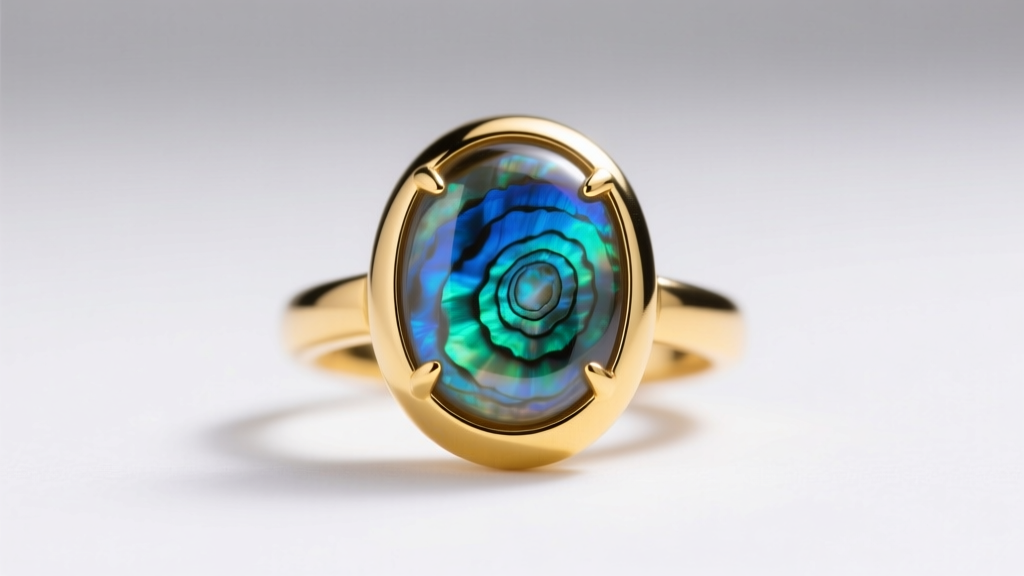
Unlike traditional mineral gemstones formed deep within the earth's crust, abalone is an organic gem. Harvested from marine gastropod mollusks, the material used in jewelry is the iridescent inner layer of the shell, known as nacre or mother-of-pearl. While pearls are also formed from nacre, abalone offers a flat, swirling canvas of electric blues, vivid greens, and flashes of crimson. However, buying abalone jewelry requires a fundamentally different approach than buying diamonds or sapphires. With a Mohs hardness rating of just 2.5 to 4.0, abalone is exceptionally brittle and prone to delamination. This guide will equip you with the technical knowledge to evaluate shell quality, understand structural stabilization, and select settings that ensure your jewelry survives daily wear.
The 4 Pillars of Abalone Quality
When evaluating high-end abalone jewelry, gemologists and master jewelers look at four distinct characteristics. The market is flooded with low-grade, chalky shells, making it vital to know what constitutes a premium specimen.
1. Color Play and Orient
The value of abalone is dictated by its 'orient'—the iridescent play of color caused by the microscopic hexagonal platelets of aragonite diffracting light. The most prized specimens, particularly New Zealand Paua (Haliotis iris), exhibit deep, saturated electric blues and vivid greens, punctuated by rare flashes of copper, pink, or crimson. Avoid stones that appear predominantly chalky white, muddy brown, or lack dynamic color shifts when tilted under direct light.
2. Nacre Thickness and Density
Thicker nacre layers produce deeper, more three-dimensional color pools. In premium cabochons, the nacre should not look like a thin, painted veneer. High-density nacre also resists micro-scratching slightly better than porous, low-density shells harvested from warmer, faster-growing environments.
3. The Cut and Dome Profile
Because the shell is naturally curved, cutting a perfectly flat, solid piece of abalone large enough for a statement ring is nearly impossible without wasting 80% of the material. Therefore, premium cabochons are cut with a gentle dome (low to medium cabochon profile) to maximize the natural curvature and color depth of the shell.
The Truth About Stabilization: Doublets and Triplets
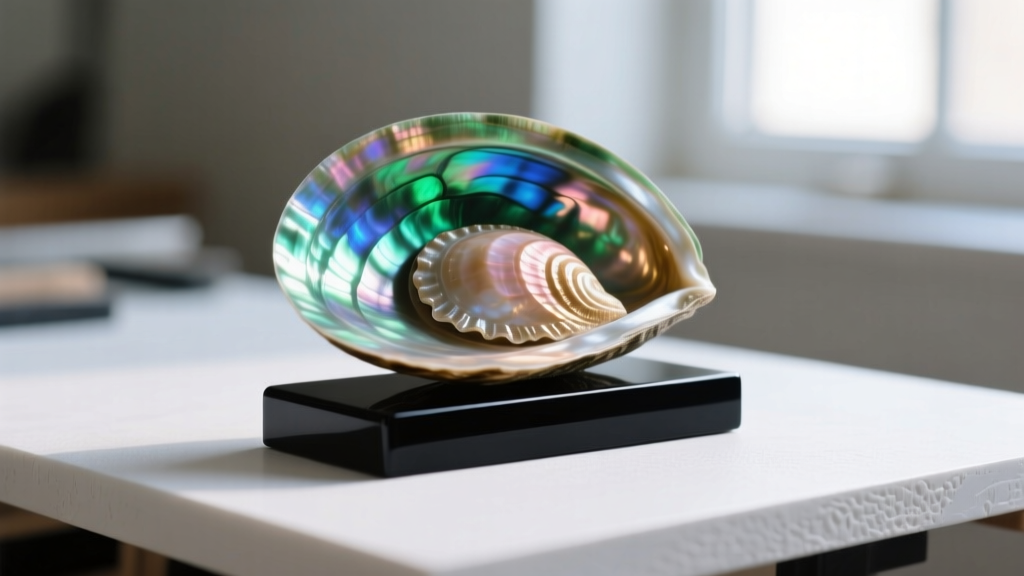
The most misunderstood aspect of buying abalone jewelry is stabilization. Many consumers mistakenly believe that 'doublet' or 'backed' abalone is a sign of a fake or low-quality stone. In reality, stabilization is an industry necessity and a mark of structural integrity.
Abalone shells are incredibly thin and curved. Slicing them into flat veneers for jewelry yields pieces that are often less than 1.5 millimeters thick. If set directly into metal without backing, the pressure of daily wear, temperature changes, and minor impacts will cause the shell to shatter or crack along its natural growth lines.
Expert Insight: A high-quality abalone doublet consists of a premium, ethically sourced shell veneer bonded to a stable substrate—usually black onyx, dark glass, or a high-grade aerospace epoxy. The dark backing is intentional; it acts as a light absorber that dramatically amplifies the neon orient of the translucent nacre above it. According to the GIA's Gem Encyclopedia on Organic Gems, composite assembly is standard practice for fragile organic materials to ensure wearability.
What to look for: Inspect the side profile of the stone. The bonding line between the shell and the backing should be completely seamless, with no visible glue seepage, air bubbles, or hazy gaps. If the jeweler claims a large, flat, 5mm-thick abalone cabochon is '100% solid natural shell,' be highly skeptical; it is likely a synthetic imitation or heavily reconstructed shell dust.
Ethical Sourcing and Species Identification
Overharvesting has devastated wild abalone populations globally. As a conscious buyer in 2026, verifying the origin of your abalone jewelry is just as important as assessing its beauty. The Convention on International Trade in Endangered Species (CITES) heavily monitors or bans the export of several wild species.
| Species / Origin | Color Profile | Sustainability & Sourcing Status | Market Availability |
|---|---|---|---|
| New Zealand Paua (H. iris) | Electric blue, vivid green, crimson flashes | Gold standard. Strictly quota-managed by the NZ Ministry for Primary Industries. Highly sustainable. | High (Premium Tier) |
| US Red Abalone (H. rufescens) | Deep brick red, coral, muted greens | Wild populations are critically endangered. Commercial wild harvesting is largely banned in California. | Extremely Low (Vintage only) |
| Farmed Australian Abalone | Pale green, silver, soft pinks | Aquaculture farmed. Sustainable, but shells are often thinner and colors less saturated than wild Paua. | Medium (Commercial Tier) |
Buying Tip: Always ask the retailer for the species name and country of origin. Reputable jewelers will proudly advertise 'Genuine New Zealand Paua' and provide CITES documentation if exporting internationally.
Metallurgy and Setting Mechanics: Protecting the Shell
Because abalone lacks the crystalline cleavage of diamonds and the sheer toughness of jade, it is highly susceptible to point-stress fractures. The metal setting you choose dictates the lifespan of the jewelry.
Why Bezel Settings are Non-Negotiable
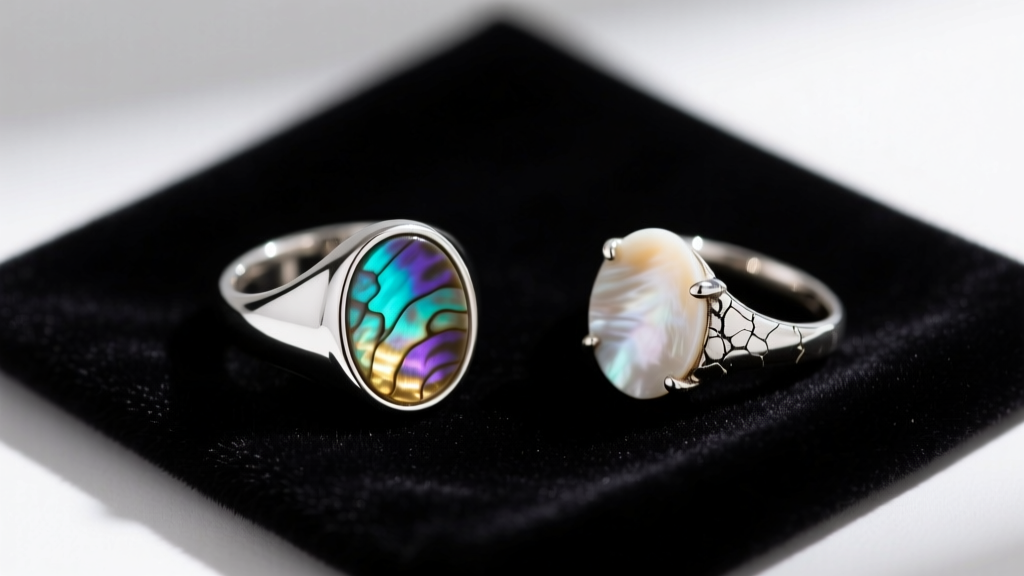
For abalone rings and bracelets—pieces subject to high impact—a full bezel setting is mandatory. A bezel wraps a continuous rim of metal (preferably 14k/18k gold or platinum) entirely around the perimeter of the shell. This protects the vulnerable edges from chipping and applies even, distributed pressure during the setting process.
The Danger of Prong Settings
Prong settings concentrate immense clamping pressure onto four to six microscopic points on the shell's edge. Over time, thermal expansion and contraction of the metal will cause the prongs to bite into the nacre, resulting in micro-fractures that eventually spider-web across the entire cabochon. Avoid prong-set abalone rings at all costs. If you must buy a prong-set pendant, ensure the prongs are wide, flat, and apply minimal tension.
Pricing Tiers: What to Expect in 2026
Understanding the pricing matrix prevents you from overpaying for commercial-grade shells or underestimating the craftsmanship of artisan pieces.
- Tier 1: Mass Market ($20 - $60) - Features thin, low-grade shell veneers with muddy coloration, backed by cheap dyed epoxy. Usually set in sterling silver with thin, easily dented bezels. Common in tourist shops and fast-fashion outlets.
- Tier 2: Premium Commercial ($80 - $250) - Genuine New Zealand Paua with excellent blue/green color play. Properly stabilized with high-grade resin or onyx. Set in heavy sterling silver or 10k gold with secure, well-finished bezels.
- Tier 3: Artisan & Haute Joaillerie ($350 - $1,500+) - Master-cut, extra-thick Paua cabochons with rare crimson/copper flashes. Set in 18k gold or platinum. Often features custom-carved bezels, diamond melee accents, and seamless doublet construction. Sourced from certified sustainable fisheries.
Care and Maintenance: Preventing Delamination
Abalone requires a strict, conservative care regimen. The most common failure mode in abalone jewelry is not scratching, but delamination—the separation of the shell veneer from its backing.
- Never Use Ultrasonic Cleaners: The high-frequency cavitation bubbles generated by ultrasonic cleaners will violently shake the microscopic aragonite platelets, causing internal fracturing and instantly dissolving the epoxy bond of doublets.
- Avoid Acetone and Harsh Solvents: Nail polish remover, alcohol, and commercial jewelry dips will melt the cyanoacrylate and epoxy resins used in stabilization. The stone will turn cloudy and lift from the bezel.
- The Only Safe Cleaning Method: Use a soft, lint-free microfiber cloth dampened with lukewarm water and a drop of pH-neutral dish soap. Gently wipe the surface and dry immediately. Store in a soft pouch away from harder gemstones to prevent surface abrasion.
Final Verdict
Abalone jewelry is a masterclass in organic beauty, but it demands an informed buyer. By prioritizing New Zealand Paua, embracing high-quality doublet stabilization, insisting on full bezel settings, and strictly avoiding ultrasonic cleaning, you can secure a vibrant, iridescent heirloom that will maintain its structural integrity and electric color play for decades.


