Azurite Malachite Jewelry: 2026 Style & Trend Guide
Discover 2026 trends in azurite malachite jewelry. Learn styling tips, hardness care, bezel setting necessities, and pricing for this blue-green gem.
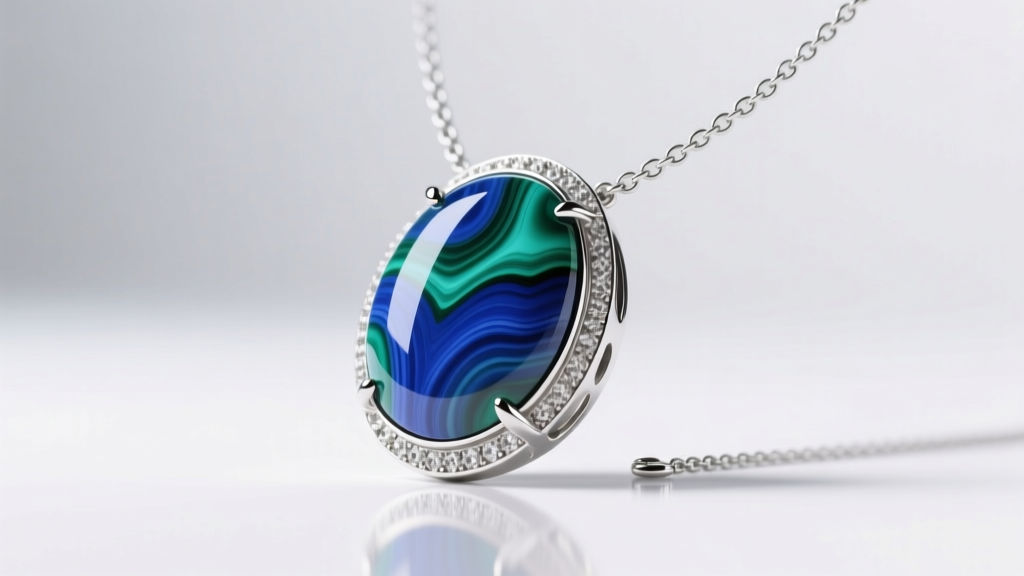
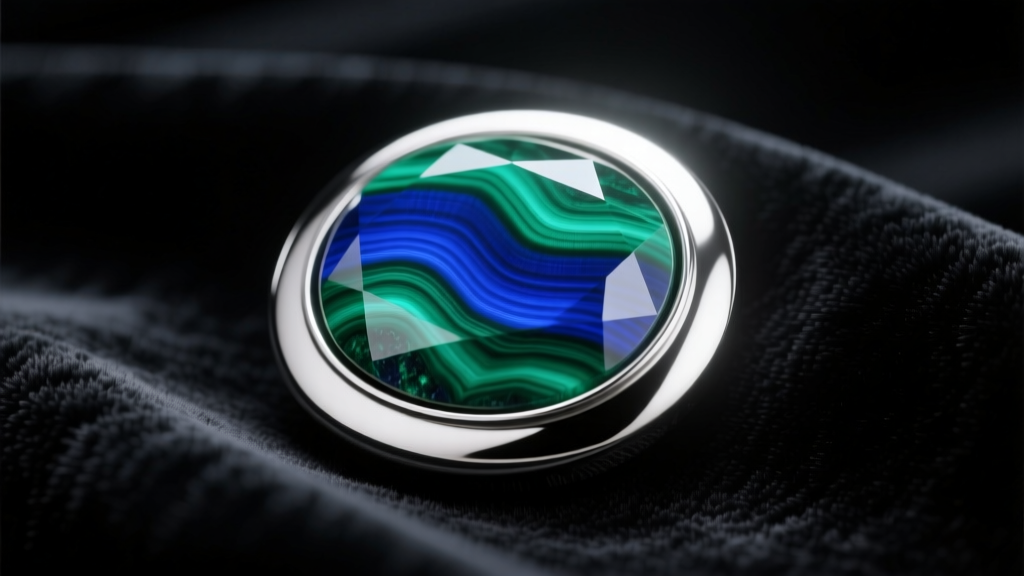
Azurite-malachite is one of the most visually arresting materials in the gemological world. Characterized by its striking, concentric banding of deep azure blue and vibrant botryoidal green, this copper carbonate mineral has transitioned from a niche collector's stone to a mainstream staple in high-end artisan jewelry. As we navigate the 2026 jewelry landscape, azurite malachite jewelry is experiencing a massive resurgence, driven by a cultural shift toward organic maximalism and grounded, earth-centric aesthetics. However, designing, purchasing, and wearing this stone requires a nuanced understanding of its physical limitations and chemical properties.
The 2026 Resurgence: Why Azurite-Malachite is Dominating
In 2026, the jewelry industry is moving away from the ultra-minimalist, micro-pave trends of the early 2020s. Consumers are gravitating toward 'statement earth' pieces—jewelry that feels ancient, tactile, and inherently unique. Azurite-malachite perfectly encapsulates this desire. Because no two cabochons share the exact same ratio of blue azurite to green malachite, each piece is a one-of-a-kind geological fingerprint.
Earthy Maximalism and the 'Dark Botanical' Aesthetic
The 'Dark Botanical' aesthetic, which pairs rich, moody jewel tones with raw or semi-polished natural elements, has heavily influenced 2026 runway collections. Designers are pairing the deep blues and greens of azurite-malachite with oxidized sterling silver, blackened brass, and 18k yellow gold with matte finishes. This stone is no longer relegated to simple wire-wrapped pendants; it is being featured in heavy, architectural cuff bracelets, oversized cocktail rings, and asymmetrical ear cuffs that mimic the sprawling, organic growth patterns of the mineral itself.
Gemological Reality Check: What You Must Know Before Buying
Before investing in azurite malachite jewelry, it is critical to understand the mineral's physical properties. Azurite and malachite are both copper carbonates, but they form under slightly different environmental conditions. According to the Mindat mineralogical database, azurite is the more fragile of the two, while malachite is slightly more stable but highly porous.
| Property | Azurite-Malachite | Turquoise (Stabilized) | Chrysocolla |
|---|---|---|---|
| Mohs Hardness | 3.5 - 4.0 | 5.0 - 6.0 | 2.5 - 3.5 |
| Specific Gravity | 3.7 - 3.9 | 2.6 - 2.9 | 2.0 - 2.4 |
| Porosity | Moderate to High | Low (if stabilized) | High |
| Primary Vulnerability | Acids, Heat, Scratching | Chemicals, Dehydration | Extreme Fragility |
| 2026 Trend Status | High (Statement Pieces) | Steady (Southwest/Boho) | Niche (Artisan Only) |
With a Mohs hardness of just 3.5 to 4.0, azurite-malachite is exceptionally soft. It can be easily scratched by a copper coin or even dust (which contains quartz particles at a hardness of 7). This makes it entirely unsuitable for everyday wear in high-impact jewelry like rings or tennis bracelets, but ideal for pendants, earrings, and brooches.
Setting & Metal Pairings: Engineering for a Soft Stone
The failure rate of poorly engineered azurite-malachite jewelry is high. Because the stone is soft and possesses distinct cleavage planes, it cannot withstand the pressure of traditional prong settings. If you are evaluating a piece or commissioning a custom design, the setting engineering is just as important as the stone's visual appeal.
The Bezel Mandate and Gauge Specifics
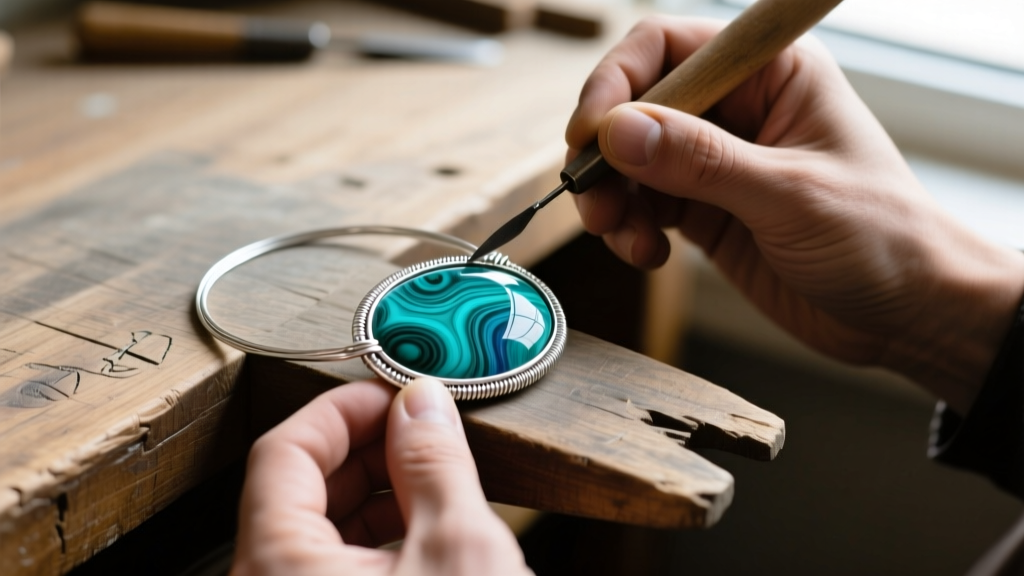
A full bezel setting is not just a stylistic choice for azurite-malachite; it is an absolute structural mandate. The bezel protects the fragile edges of the cabochon from chipping. For artisan jewelers, the choice of bezel wire is critical. We recommend using 22-gauge or 20-gauge fine silver (.999 pure) rather than sterling silver (.925). Fine silver is significantly softer and requires less downward force to burnish over the stone, drastically reducing the risk of cracking the azurite during the setting process.
Furthermore, the Gemological Institute of America (GIA) notes that copper-bearing stones can be sensitive to certain metal alloys. Avoid setting azurite-malachite in white gold or platinum if the setting requires excessive heat or harsh chemical pickling, as the acids used in the pickling process can react with the copper carbonate and dull the stone's surface.
Pricing Tiers: From Rough-Cut to Haute Joaillerie
The market for azurite malachite jewelry in 2026 is segmented by the quality of the banding and the level of craftsmanship. 'High-blue' specimens (where the deep azure dominates the pale green) command a premium, as pure azurite is rarer than malachite.
- Raw/Rough Slabs & Simple Wire-Wraps ($20 - $60): Often found at artisan markets. These pieces use unpolished or roughly tumbled stones. While beautiful, the porous nature of the raw stone makes it highly susceptible to absorbing skin oils and lotions.
- Standard Calibrated Cabochons in Sterling Silver ($80 - $250): The sweet spot for commercial artisan jewelry. These feature highly polished, dome-shaped stones with symmetrical banding, set in standard 925 sterling silver bezels.
- Custom-Cut, High-Blue Specimens in 18k Gold ($400 - $1,500+): Reserved for high-end boutique designers. These pieces utilize freeform, custom-cut stones with exceptional color contrast, often paired with matte 18k yellow gold and accent diamonds or tsavorite garnets.
Care & Wearability: Avoiding the 'Green Skin' Effect
The most common complaint regarding copper-bearing jewelry is the verdigris reaction—where the copper in the stone reacts with the acidity and moisture of the wearer's skin, leaving a green stain. While malachite dust is toxic if inhaled (a concern only for lapidaries cutting the stone), polished azurite-malachite jewelry is perfectly safe to wear. However, the chemical reaction with skin acids is a genuine wearability issue.
Expert Troubleshooting: If you are designing or buying an azurite-malachite ring or cuff that sits directly against the skin, ensure the setting features a closed back or a sealed metal backing plate. This physical barrier prevents skin acids from reaching the copper carbonate, entirely eliminating the green skin effect and protecting the stone's polish from degrading over time.
Cleaning Protocols
Never use ultrasonic cleaners, steamers, or commercial jewelry dips on azurite-malachite. The high-frequency vibrations of an ultrasonic cleaner can cause internal fractures to propagate, splitting the stone along its banding lines. Chemical dips will strip the polish and react with the copper. The only approved cleaning method is a gentle wipe with a slightly damp, lint-free microfiber cloth, followed by immediate drying.
Final Verdict: How to Integrate It Into Your 2026 Wardrobe
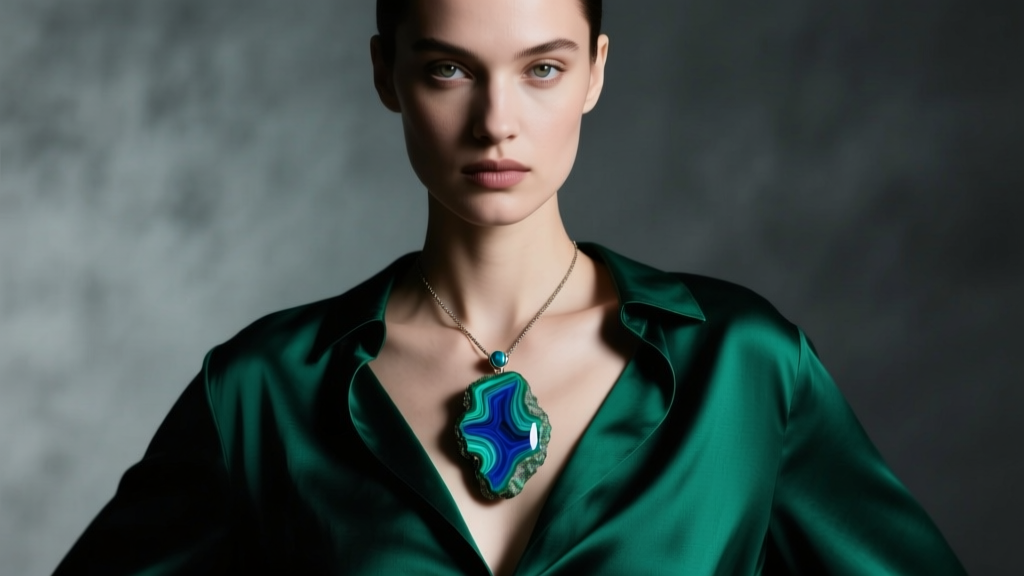
Azurite malachite jewelry is a masterclass in natural contrast. For 2026, the most sophisticated way to style this stone is to let it serve as the focal point of an otherwise muted, textured outfit. Pair a heavy, high-blue azurite-malachite pendant with raw silk, linen, or fine-gauge merino wool in shades of charcoal, mustard, or deep plum. By respecting its gemological limitations—insisting on proper bezel settings, closed backs, and gentle care—you can ensure that this stunning geological artifact remains a cornerstone of your jewelry collection for decades to come.


