Mystic Topaz Jewelry: Coating Properties & Gemstone Comparisons
Explore the material science of mystic topaz jewelry. Compare its PVD titanium coating, durability, and pricing against aura quartz and labradorite.

The Optical Physics and Material Science of Mystic Topaz
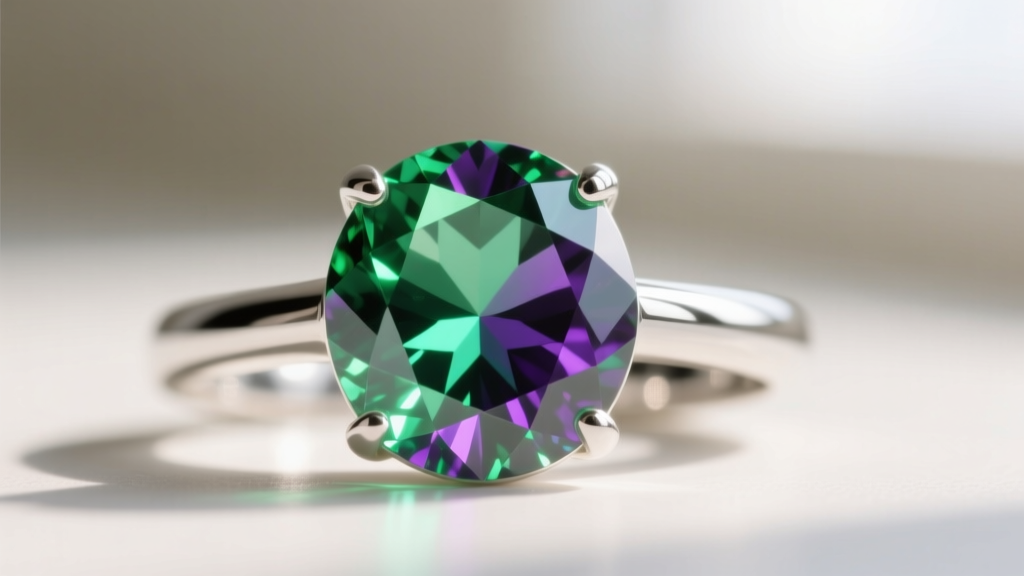
When evaluating mystic topaz jewelry, it is crucial to understand that the stone's mesmerizing rainbow effect is not a product of natural crystal lattice inclusions, but rather a triumph of modern gemological engineering. Mystic topaz begins its life as a completely colorless, natural white topaz. The iridescence is achieved through a process known as Physical Vapor Deposition (PVD), sometimes broadly categorized under Chemical Vapor Deposition (CVD) in commercial literature.
During PVD, the cut and polished topaz is placed inside a high-vacuum chamber. Pure titanium is vaporized using an electron beam or plasma arc, and the titanium atoms settle onto the surface of the gemstone, forming an ultra-thin metallic film. This coating is typically applied only to the pavilion (the bottom facets) of the stone, leaving the crown (the top) as natural, uncoated topaz.
Thin-Film Interference Explained
The kaleidoscopic colors are generated by thin-film interference. The titanium layer is precisely controlled to a thickness of roughly 30 to 50 nanometers. When white light enters the crown of the topaz, travels through the stone, and hits the titanium layer, some light reflects off the top boundary of the metal film, while some passes through and reflects off the bottom boundary. These two light waves recombine and interfere with one another. Constructive interference amplifies specific wavelengths—yielding the vivid greens, purples, and golds characteristic of high-grade mystic topaz jewelry.
Durability Analysis: Mohs Hardness vs. Coating Vulnerability
A common misconception in the jewelry trade is that mystic topaz inherits the full durability of its base stone without caveat. According to the Gemological Institute of America (GIA), natural topaz ranks at an 8 on the Mohs scale of mineral hardness. However, evaluating mystic topaz requires a dual-layer approach to durability.
- Base Stone Hardness (Mohs 8): The colorless topaz core is highly resistant to scratching from everyday environmental dust (which contains quartz, Mohs 7).
- Coating Hardness: While titanium nitride films are exceptionally hard, a 50-nanometer layer is microscopically thin. Abrasive friction against the pavilion can wear through the coating, exposing the colorless stone beneath.
- Perfect Basal Cleavage: As noted by Mindat.org, topaz possesses perfect basal cleavage. This means a sharp impact at the wrong angle can cause the stone to split cleanly along its crystallographic planes, instantly destroying both the gem and the coating.
"The primary failure mode in mystic topaz jewelry is not surface scratching of the crown, but rather coating delamination on the pavilion caused by improper ultrasonic cleaning or mechanical impact against the setting's culet."
Material Comparison: Mystic Topaz vs. Iridescent Alternatives
To contextualize the value and material properties of mystic topaz jewelry, we must compare it to other coated and naturally iridescent gemstones frequently used in similar aesthetic applications. The International Gem Society provides extensive data on how these materials behave in daily wear.
| Material Property | Mystic Topaz | Aura Quartz | Mystic Quartz | Natural Labradorite |
|---|---|---|---|---|
| Base Mineral | Topaz (Silicate) | Quartz (Silicate) | Quartz (Silicate) | Feldspar |
| Coating Material | Titanium (PVD) | Gold/Platinum/Titanium | Titanium (PVD) | None (Natural Schiller) |
| Mohs Hardness | 8 | 7 | 7 | 6 - 6.5 |
| Refractive Index | 1.61 - 1.64 | 1.54 - 1.55 | 1.54 - 1.55 | 1.56 - 1.57 |
| Cleavage Risk | High (Perfect Basal) | None (Conchoidal Fracture) | None (Conchoidal Fracture) | Perfect (Two Directions) |
| Avg. Price (Per Carat) | $20 - $60 | $10 - $30 | $15 - $40 | $30 - $100+ |
Key Takeaways from the Data
While Aura Quartz and Mystic Quartz share the same titanium or precious metal coating technologies, their quartz base (Mohs 7) makes them slightly more susceptible to surface scratching over years of daily wear compared to the topaz base. However, quartz lacks the dangerous basal cleavage of topaz, meaning it is less likely to shatter if dropped. Labradorite offers natural iridescence (labradorescence) without the risk of coating delamination, but its lower hardness (6-6.5) requires significantly more protective settings.
Setting Styles & Metal Pairings for Maximum Longevity
Because the titanium coating is applied to the pavilion, the structural design of the jewelry setting dictates the lifespan of the stone's color. Exposed pavilions in high-prong settings are vulnerable to friction against the skin, clothing, and accidental impacts.
Recommended Setting Architectures
- Full Bezel Settings: The gold or platinum rim entirely encircles the girdle and protects the lower pavilion from lateral impacts. This is the gold standard for mystic topaz rings.
- Channel Settings: Ideal for mystic topaz tennis bracelets or eternity bands, channel walls shield the sides and bottom of the stones from abrasive contact.
- V-Prongs for Fancy Cuts: If using pear, marquise, or princess cuts, V-prongs must be used at the points. Topaz is notoriously prone to chipping at sharp corners due to its cleavage planes.
Metal Considerations
Because the stone's coating reflects a wide spectrum of colors, neutral metals like platinum, white gold, and rhodium-plated sterling silver allow the gemstone's optics to take center stage. Yellow gold can create a warm secondary reflection that alters the perceived color balance of the stone, occasionally muting the cooler blue and green wavelengths.
Critical Care Protocols: Preventing Coating Delamination
The most frequent cause of ruined mystic topaz jewelry is improper cleaning. The bond between the silicate base and the titanium film is strong, but it is not impervious to specific environmental stressors.
- NEVER Use Ultrasonic Cleaners: The high-frequency acoustic cavitation creates microscopic shockwaves in the cleaning solution. These shockwaves can exploit the topaz's basal cleavage, causing internal fractures, and can literally peel the 50nm coating off the pavilion.
- Avoid Steam Cleaning: Rapid thermal expansion and contraction can break the bond between the metal oxide layer and the stone.
- Chemical Exposure: Remove mystic topaz jewelry before swimming in chlorinated pools or using household bleach. Prolonged exposure to harsh alkalines can degrade the titanium layer over time.
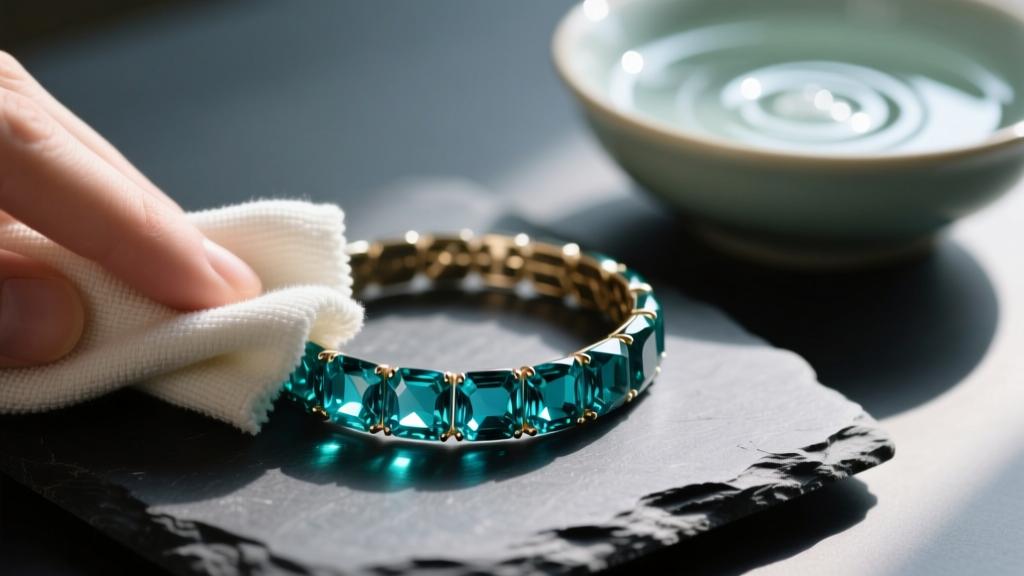
The Correct Cleaning Method: Use lukewarm water, a drop of pH-neutral dish soap, and a highly soft microfiber cloth. Gently wipe the crown of the stone. If the pavilion is accessible, dab it gently—do not rub the bottom facets aggressively.
Market Authentication: Spotting Glass Imitations
As the popularity of iridescent jewelry grows, so does the market for cheap imitations. Unscrupulous vendors sometimes sell coated glass or cubic zirconia (CZ) as "mystic topaz." Here is how gemologists differentiate the real material from fakes:
- Thermal Conductivity: Topaz is an excellent thermal conductor. When pressed against the sensitive skin of your cheek or lower lip, real topaz will feel distinctly, almost shockingly, cold and will remain cool for several seconds. Glass and CZ will warm to your body temperature almost instantly.
- 10x Loupe Inspection: Examine the stone under magnification. Glass imitations will frequently contain perfectly spherical gas bubbles and curved striae (swirl marks) from the manufacturing process. Natural topaz will never contain spherical bubbles; instead, you may see two-phase inclusions (liquid and gas) or straight growth lines.
- Weight Discrepancy: Topaz has a specific gravity of 3.49 to 3.57, making it noticeably heavier than quartz (2.65) and significantly heavier than most optical glasses.
By understanding the precise material science, optical physics, and structural vulnerabilities of the PVD titanium coating, collectors and consumers can confidently purchase, wear, and preserve their mystic topaz jewelry for decades. It remains one of the most striking intersections of natural geology and human engineering in the modern gemstone market.


