The Beginner's Guide to Buying and Caring for Malachite Jewelry
Discover everything you need to know about malachite jewelry. Learn how to spot fakes, understand safety precautions, and properly care for your pieces.

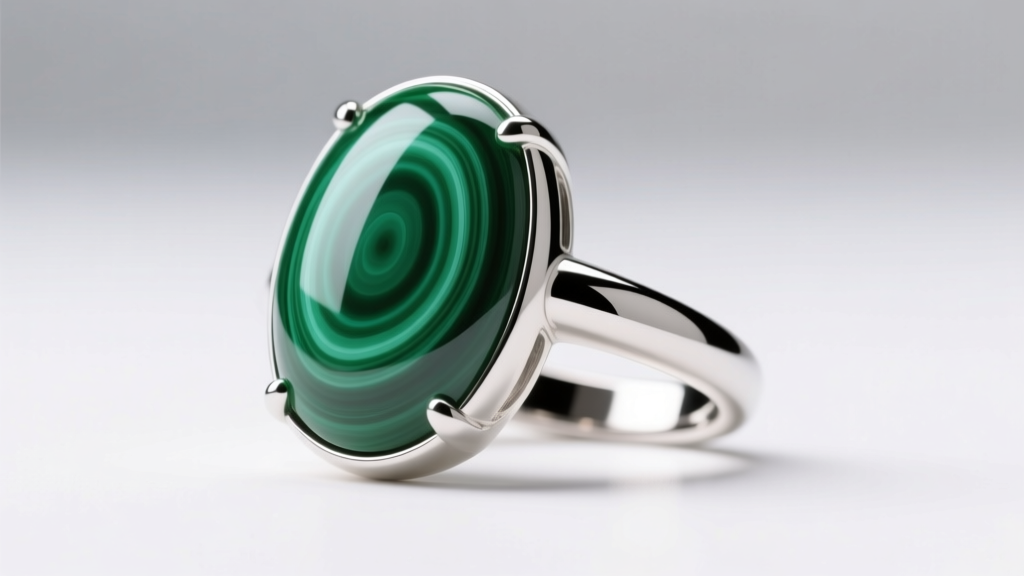
With its mesmerizing, velvety green bands and rich historical significance, malachite jewelry has captivated collectors and fashion enthusiasts for centuries. However, beneath its striking beauty lies a gemstone that requires specific knowledge to buy, wear, and maintain properly. As we navigate the gemstone market in 2026, the surge in popularity of opaque, earthy crystals has led to an influx of both stunning natural pieces and convincing synthetics.
Whether you are eyeing a vintage statement ring or a modern minimalist pendant, understanding the geological and chemical realities of this stone is crucial. This comprehensive guide will walk you through everything a beginner needs to know about malachite jewelry, from identifying authentic specimens to navigating the often-misunderstood safety concerns surrounding copper-based minerals.
What Makes Malachite So Special?
Malachite is a copper carbonate hydroxide mineral, with the chemical formula Cu2CO3(OH)2. It forms in the oxidized zones of copper deposits, often appearing alongside azurite, goethite, and calcite. According to the Mindat mineral database, the presence of copper is what gives malachite its signature vivid green hue, ranging from pale mint to deep, almost black-green.
Historically, the Ural Mountains in Russia were the premier source of high-grade malachite, yielding massive blocks that were used to carve entire columns and fireplaces in imperial palaces. Today, the most significant commercial deposits are found in the Democratic Republic of the Congo and Zambia. The stone is prized not just for its color, but for its unique banding patterns, which can appear as concentric rings, jagged stripes, or sweeping, eye-like formations.
Real vs. Fake Malachite: A Buyer's Checklist
Because high-quality natural malachite is becoming increasingly scarce and expensive, the market is flooded with imitations. Dyed howlite, dyed agate, glass, and reconstituted malachite dust are common substitutes. Here is how to ensure your malachite jewelry is authentic.
Visual Banding and Pattern Analysis
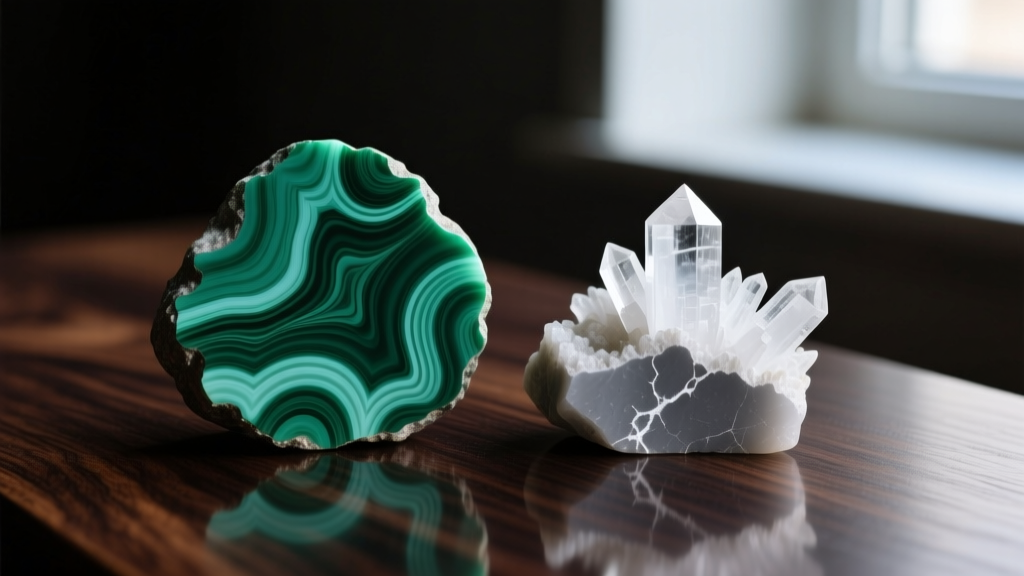
Natural malachite features organic, fluid, and sometimes unpredictable banding. The lines may vary in thickness, blur into one another, or form sharp, jagged geometric shapes. Fakes, particularly dyed agate or glass, often exhibit overly uniform, perfectly parallel lines or stamped concentric circles that look artificial. If the pattern looks like it was painted on or lacks depth, proceed with caution.
The Weight and Temperature Test
Malachite is a dense mineral with a specific gravity of 3.6 to 4.0. This means it feels noticeably heavier than glass, plastic, or resin-based imitations of the same size. Additionally, like most natural stones, authentic malachite feels cool to the touch and takes a moment to warm up against your skin. Glass and plastic will feel closer to room temperature immediately.
The Reconstituted Trap
Reconstituted malachite is made by grinding up low-grade malachite scraps, mixing them with epoxy resin, and pressing them into blocks. While it contains real malachite, the resin alters the stone's density, luster, and value. Reconstituted pieces often have a slightly plastic-like sheen and lack the sharp, crisp banding transitions found in solid, natural cabochons.
The Safety Factor: Is Malachite Jewelry Toxic?
One of the most common questions beginners ask is whether malachite jewelry is toxic. The short answer is: polished malachite is safe to wear, but raw malachite requires strict precautions.
Because malachite contains high levels of copper, inhaling its dust (which is why lapidaries and miners wear respirators) can cause heavy metal toxicity. However, once the stone is cut, shaped, and polished to a high gloss, the copper is locked within the stable mineral matrix. The Gemological Institute of America (GIA) notes that properly finished malachite poses no danger to the wearer during normal use.
Expert Warning: Never wear raw, unpolished malachite, or polished pieces with deep cracks and chips, while swimming, showering, or engaging in heavy exercise. Water, chlorine, and acidic sweat can slowly break down the copper carbonate, potentially causing skin irritation or degrading the stone.
Durability and Daily Wear: The Mohs Scale Reality
Malachite is a relatively soft and fragile gemstone. It ranks between 3.5 and 4.0 on the Mohs hardness scale, making it highly susceptible to scratching, chipping, and abrasion. It also has perfect cleavage in one direction, meaning a hard knock against a table or doorframe can easily split the stone.
To understand how it compares to other popular opaque gemstones, review the durability chart below:
| Gemstone | Mohs Hardness | Water Safety | Daily Wear Suitability |
|---|---|---|---|
| Malachite | 3.5 - 4.0 | Poor (Avoid prolonged exposure) | Low (Best for pendants/earrings) |
| Turquoise | 5.0 - 6.0 | Moderate (Porous, avoid chemicals) | Moderate (Requires protective bezels) |
| Jade (Jadeite) | 6.5 - 7.0 | Excellent | High (Very tough, resists chipping) |
| Lapis Lazuli | 5.0 - 6.0 | Poor (Contains calcite/pyrite) | Moderate |
Because of its softness, malachite is best suited for jewelry pieces that do not endure heavy impact, such as pendants, earrings, and brooches. If you choose a malachite ring, ensure it is set in a deep, protective bezel setting rather than exposed prongs, and reserve it for occasional wear rather than daily use.
How to Clean and Store Malachite (Without Ruining It)
Improper cleaning is the fastest way to destroy a beautiful piece of malachite jewelry. The stone is highly sensitive to acids, heat, and sudden temperature changes. Follow these strict care protocols to preserve your jewelry:
- No Ultrasonic Cleaners: The high-frequency vibrations will easily shatter or fracture malachite, especially if it has natural internal fissures.
- No Steam or Hot Water: Heat can cause the stone to crack or alter its color. Steam can also strip away any protective wax or resin coatings applied by the lapidary.
- No Commercial Jewelry Dips: Liquid silver or gold cleaners contain harsh chemicals and mild acids that will instantly eat away at the surface of the copper carbonate, leaving it dull, pitted, and permanently damaged.
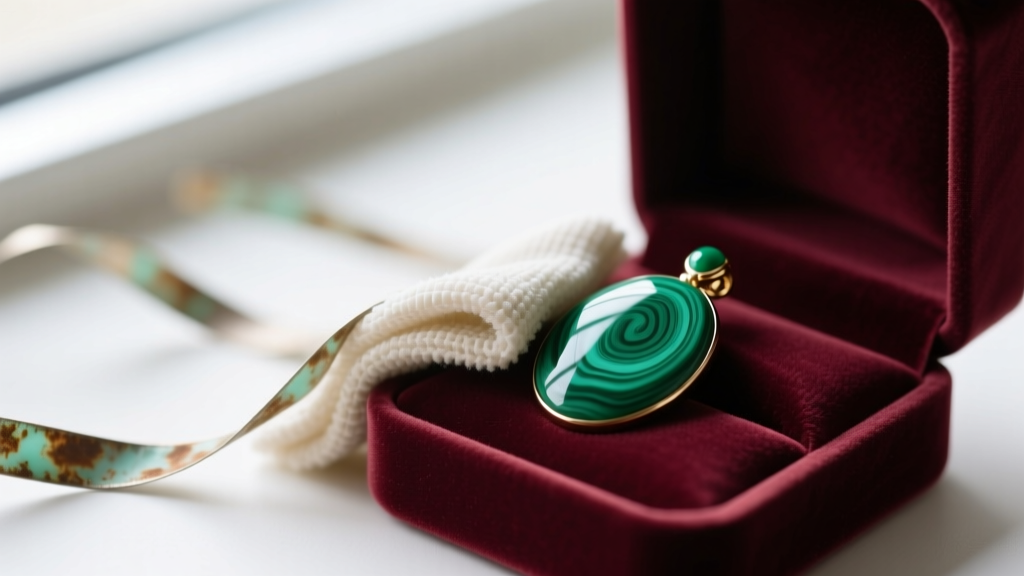
- The Dry Cloth Method: To clean malachite, simply wipe it gently with a dry, clean, ultra-soft microfiber cloth. If it is heavily soiled, use a barely damp cloth and dry it immediately.
- Proper Storage: Store malachite jewelry in a soft velvet pouch or a separate compartment in your jewelry box. If stored loose with harder stones like quartz, topaz, or diamonds, the malachite will become severely scratched.
Pricing Guide: What Should You Actually Pay?
The price of malachite jewelry varies wildly based on the quality of the stone, the complexity of the banding pattern, and the metal used in the setting. Here is a general pricing framework for the current market:
- Reconstituted or Dyed Imitations ($10 - $35): Often found in fast-fashion outlets or mass-market online stores. These are not investment pieces and lack the energetic and geological authenticity of natural stone.
- Standard Natural Cabochons in Silver ($50 - $150): The most common tier for authentic malachite jewelry. Expect sterling silver settings with nice, though perhaps common, parallel or wavy banding patterns.
- Premium Grade with Rare Patterns ($200 - $500): Pieces featuring highly sought-after 'bullseye' patterns, velvet malachite (fibrous, chatoyant needles), or intricate geometric banding, usually set in high-quality silver or 14k gold vermeil.
- Collector and Vintage Pieces ($800+): Antique Russian malachite, vintage designer pieces (such as mid-century Mexican silver), or modern masterworks set in solid 18k gold with diamond accents.
Final Thoughts for New Collectors
Malachite jewelry is a stunning, conversation-starting addition to any collection, provided you respect its physical limitations. By learning to identify authentic banding, protecting the stone from moisture and hard impacts, and cleaning it with a gentle touch, your malachite pieces will retain their lush, velvety green beauty for decades. Approach your purchase with an informed eye, and you will secure a piece of earth's copper-rich history that is truly one of a kind.


