Troubleshooting Inexpensive Gemstone Jewelry Fading
Discover how to troubleshoot inexpensive gemstone jewelry fading, clouding, and metal reactions with expert cleaning and restoration tips.

The Hidden Costs of Budget Stones: Why They Fade and Crack
Building a diverse jewelry collection on a budget is entirely possible, but inexpensive gemstone jewelry comes with a unique set of structural and chemical vulnerabilities. When you purchase budget-friendly pieces (typically in the $10 to $40 range), you are rarely buying untreated, gem-grade minerals. Instead, you are often acquiring highly porous stones that have been dyed, fracture-filled, or surface-coated to mimic premium gems. According to the GIA Gemstone Treatment Guide, treatments like dyeing and resin impregnation are standard industry practices for lower-grade materials, but they drastically alter how the stone reacts to daily wear.
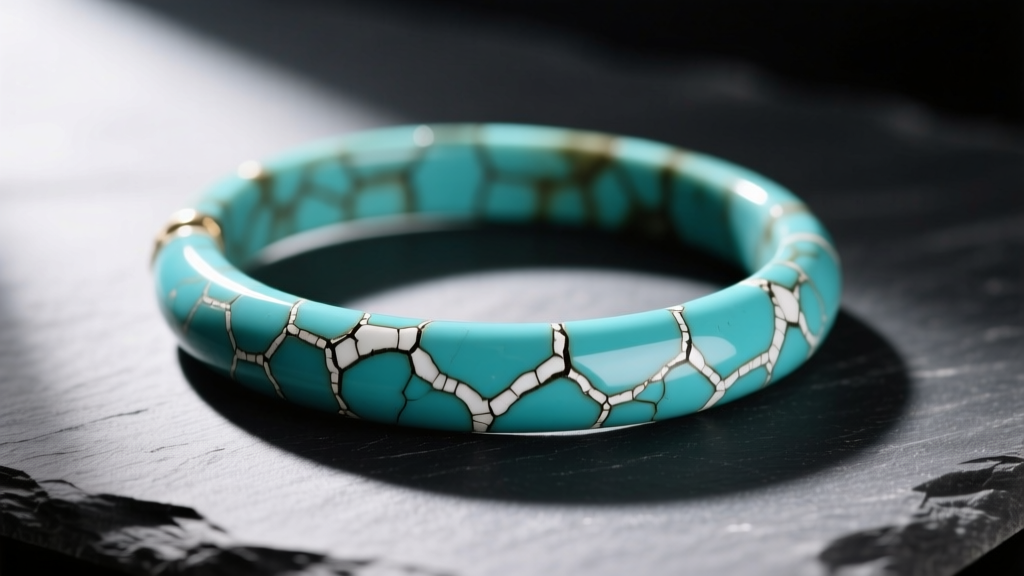
The most common failure modes in budget gemstones are not physical shattering, but chemical degradation. Dyed howlite masquerading as turquoise will bleed when exposed to the acidic pH of human sweat. Fracture-filled quartz will turn milky and opaque when the internal resin degrades under UV exposure or thermal shock. Furthermore, the base metal settings—often composed of zinc alloys, brass, or nickel-silver—can trigger severe contact dermatitis or oxidize rapidly, staining the stone and your skin. Troubleshooting these issues requires a shift from standard jewelry care to specialized chemical management.
Diagnostic Chart: Identifying Your Gemstone's Failure Mode
Before attempting any restoration, you must accurately diagnose the underlying cause of the damage. Use this troubleshooting matrix to identify what is happening to your budget gems.
| Symptom | Likely Culprit | Common Stones Affected | Immediate Action |
|---|---|---|---|
| Color transferring to skin/clothes | Water-soluble surface dye leaching | Howlite, Agate, Jade, Lapis Lazuli | Isolate piece; do not wear until sealed |
| Internal cloudiness or white webbing | Resin/lead-glass fracture filling degradation | Quartz, Ruby, Emerald, Opalite | Stop ultrasonic cleaning; avoid heat |
| Chalky white residue in crevices | Soap scum and dead skin trapped in porous matrix | Turquoise, Malachite, Coral | Dry brush with soft baby toothbrush |
| Green/black skin staining | Galvanic corrosion of copper/brass alloys | Any stone set in unsealed base metal | Remove immediately; clean skin with soap |
Step-by-Step Troubleshooting for Common Issues
Once you have identified the failure mode, you can apply targeted solutions to salvage the piece. Avoid generic jewelry dips and ultrasonic cleaners, which will instantly destroy treated budget stones.
Issue 1: Dyed Stones Bleeding or Fading (Howlite, Agate)
Manufacturers frequently use porous howlite (Mohs hardness 3.5) and dye it blue to imitate turquoise, or dye it red to mimic carnelian. Because the dye only penetrates the outer layers of the stone's porous matrix, friction, lotions, and sweat will cause the color to bleed. The Fix: First, confirm the dye is leaching by rubbing a cotton swab lightly dampened with acetone (nail polish remover) on an inconspicuous area, like the back of a bead. If color transfers, the stone is dyed. To stop the bleeding and lock in the remaining color, you must seal the stone. Clean the jewelry gently with a barely damp cloth and let it dry completely for 24 hours. Apply a thin, even coat of a specialized jewelry sealant like ProtectaClear or a high-quality clear polyurethane. Avoid standard clear nail polish, as it yellows and chips rapidly against body heat. Allow the sealant to cure for 48 hours before wearing.
Issue 2: Cloudy or Hazy Surface Residue (Quartz, Topaz)
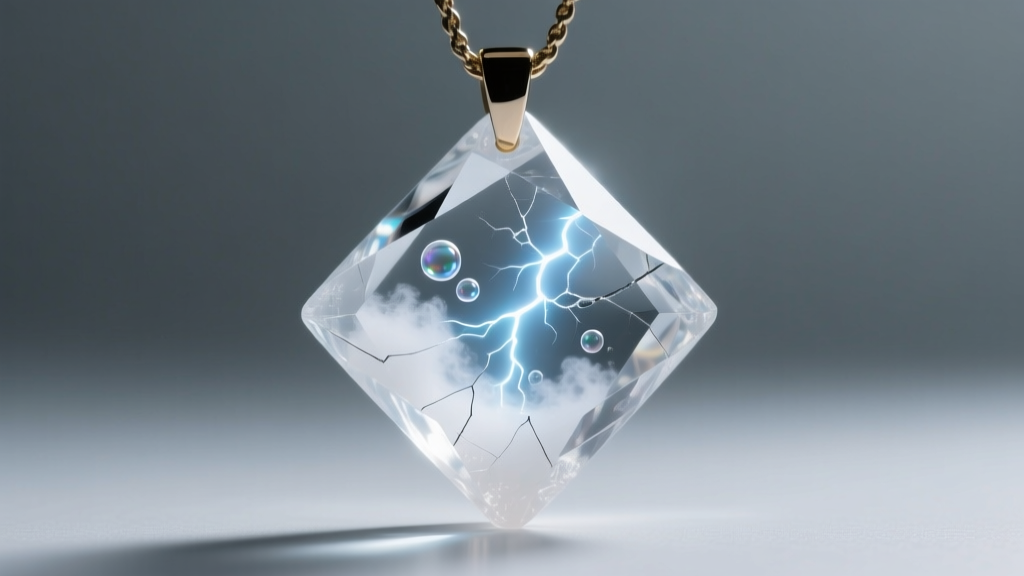
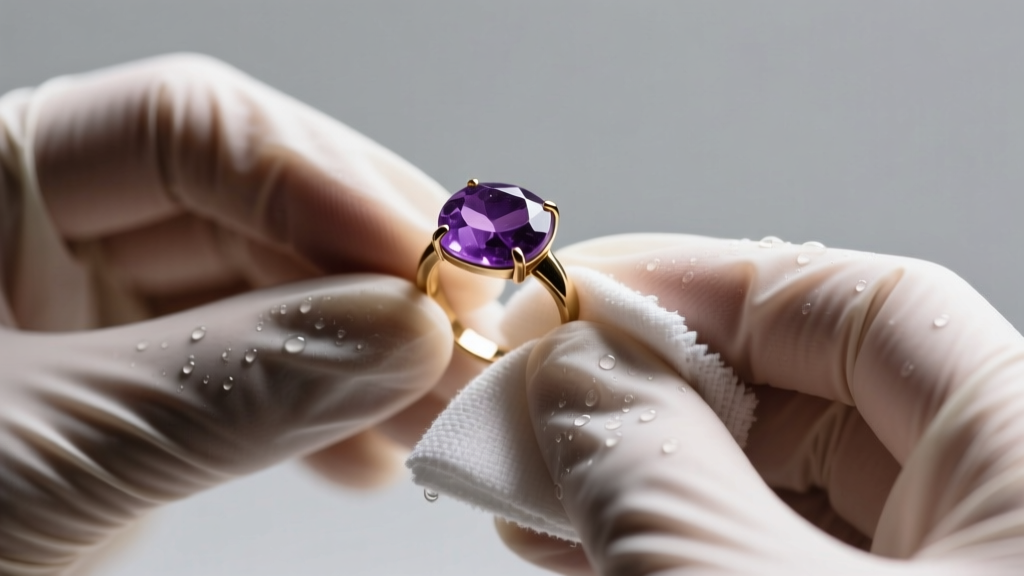
Budget quartz and topaz are often heavily included and fracture-filled with resin or lead glass to improve clarity. Over time, exposure to hand sanitizers, perfumes, and body oils creates a stubborn, hazy film that makes the stone look dead. Furthermore, thermal shock from hot water can cause the internal filling to expand at a different rate than the host quartz, creating microscopic internal fractures that look like white webbing. The Fix: Never use ultrasonic cleaners or steamers on budget stones; the cavitation bubbles will literally shatter the internal resin fillings. Instead, create a lukewarm bath using distilled water and a single drop of pH-neutral dish soap (like Dawn Platinum). Soak the piece for exactly three minutes—no longer, to prevent water from seeping into the setting and rusting the base metal prongs. Gently agitate the stone with a super-soft baby toothbrush, rinse under a slow stream of cool distilled water, and immediately pat dry with a lint-free microfiber cloth.
Issue 3: Green Skin and Metal Allergies (Base Metal Settings)
Inexpensive gemstone jewelry is rarely set in sterling silver or gold. It is typically set in brass, copper alloys, or "Tibetan silver" (which contains no actual silver and is primarily zinc, copper, and nickel). When the copper in these alloys reacts with the salts and acids in your sweat, it creates copper chloride, which absorbs into the skin and leaves a stubborn green or black stain. Nickel can also trigger severe allergic contact dermatitis. The Fix: You cannot change the metallurgical composition of the setting, but you can create a physical barrier. Thoroughly clean the inside of the ring band or the back of the pendant with rubbing alcohol to remove existing oils and oxidation. Once dry, paint the interior surfaces that touch your skin with a layer of ProtectaClear or a dedicated skin-shield coating. Reapply this barrier every 3 to 6 months, depending on wear frequency. If the piece is a ring and the prongs are made of 20-gauge brass wire that is bending and scratching the stone, use nylon-jaw pliers to gently squeeze the prongs back into place, being careful not to crack the treated gemstone.
Preventative Care Framework for Porous Budget Gems
Troubleshooting is reactive; a robust care framework is proactive. To maximize the lifespan of inexpensive gemstone jewelry, you must mitigate environmental stressors before they cause irreversible damage.
- The "Last On, First Off" Rule: Budget stones are highly susceptible to chemical aerosols. Always put your jewelry on after applying perfume, hairspray, and lotion, and take it off before showering or washing dishes. The alcohol and emulsifiers in cosmetics will strip dyes and degrade resin coatings.
- Climate-Controlled Storage: Porous stones like dyed turquoise and malachite can absorb ambient moisture, leading to internal cracking or mold growth in the setting. Store these pieces in airtight ziplock bags with a small silica gel desiccant packet to maintain a dry microclimate.
- Anti-Tarnish Interception: To prevent the base metal settings from oxidizing and staining the porous stones they hold, store the jewelry alongside anti-tarnish strips (such as 3M Anti-Tarnish Strips) or in a Pacific Silvercloth pouch. These materials absorb sulfur compounds from the air before they can react with the copper and zinc in the alloy.
When to Retire vs. Restore: A Cost-Benefit Analysis
Not all damage is worth fixing. Because the FTC Jewelry Guides require disclosure of treatments, you can often research the exact nature of your stone to determine its baseline value. When troubleshooting, apply this simple economic framework:
Restore the piece if: The stone is structurally intact (no deep cracks or missing chunks), the color fading is superficial, or the issue is limited to surface oxidation on the metal setting. The cost of a sealant ($15) or a polishing cloth ($8) is justified to extend the life of a beloved aesthetic piece.
Retire the piece if: The stone exhibits deep structural fractures, the resin filling has completely turned opaque yellow, or the base metal prongs have corroded to the point of snapping. Attempting to re-set a degraded, fracture-filled stone will almost certainly result in the gem crumbling under the pressure of the setting tools. In these cases, safely recycle the metal components and discard the compromised stone.
Expert Insight: "The biggest mistake consumers make with budget jewelry is treating it like fine jewelry. Inexpensive gemstones are essentially composite materials held together by chemical treatments. Respect their chemical limitations, and they will serve your style beautifully for years."