How to Shop Authentically at a Jade & Art Jewelry Gift Shop
Learn how to evaluate authenticity, spot jade treatments, and select artisan pieces when visiting a specialized jade & art jewelry gift shop.

Introduction: Navigating the Curated Retail Landscape
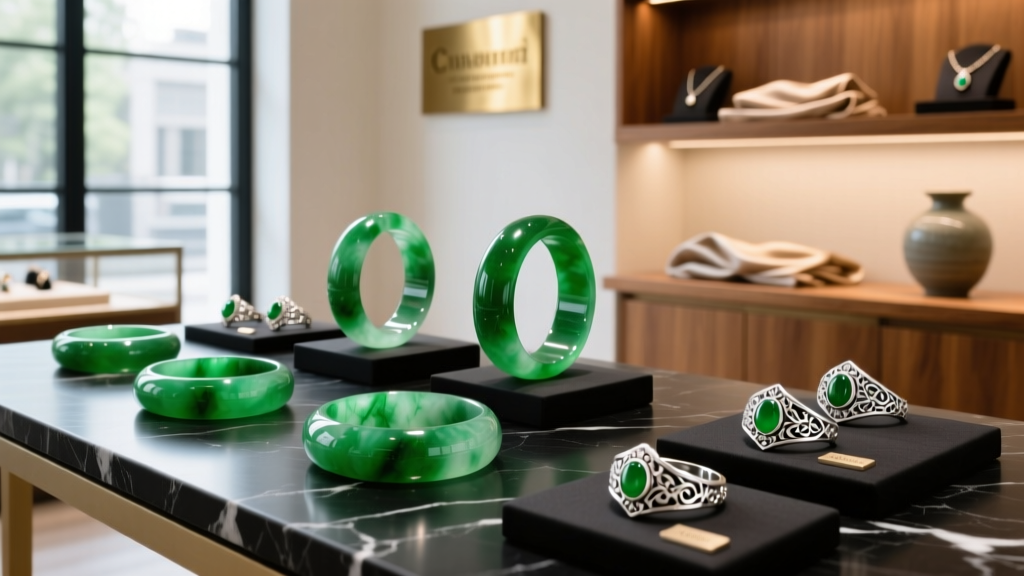
Stepping into a specialized jade & art jewelry gift shop is a vastly different experience from browsing a conventional mall jeweler. In the 2026 retail landscape, these curated spaces blend gemological heritage with bespoke metalwork, offering pieces that are as much about cultural significance as they are about wearable art. However, the intersection of rare gemstones and artisan craftsmanship requires a discerning eye. Whether you are seeking a translucent imperial jadeite cabochon or a hand-forged silver pendant featuring carved nephrite, knowing how to evaluate the inventory is critical. This step-by-step guide will equip you with the gemological frameworks and artisan evaluation techniques needed to shop confidently, ensuring your investment is both authentic and structurally sound.
Step 1: Distinguishing Jadeite from Nephrite in Retail Settings
The term "jade" is a commercial umbrella that covers two distinct metamorphic minerals: jadeite and nephrite. A reputable jade & art jewelry gift shop will explicitly label which mineral is being sold, as their value propositions and physical properties differ drastically.
Mineralogical Breakdown
- Jadeite (Pyroxene Group): Prized for its vivid colors and higher translucency. It has a specific gravity of 3.30–3.36 and a refractive index (RI) of approximately 1.66. The most valuable variant, "Imperial Jade," exhibits a semi-transparent, emerald-like green driven by chromium traces. Myanmar (Burma) and Guatemala remain the premier sources for gem-grade jadeite.
- Nephrite (Amphibole Group): Known for its extreme toughness due to a fibrous, interlocking crystalline structure. It has a lower specific gravity (2.90–3.03) and an RI of roughly 1.62. Nephrite colors are generally more muted—ranging from spinach green to mutton-fat white—and it is heavily sourced from China, Canada, and New Zealand.
Actionable Tip: When examining pieces in the shop, pick up the jewelry. Jadeite will feel noticeably heavier and denser in the hand compared to nephrite or glass imitations of the exact same dimensions. Furthermore, tap two jadeite bangles together gently; untreated jadeite produces a high-pitched, resonant chime, whereas nephrite yields a duller, deeper thud.
Step 2: The ABCs of Jade Treatments (What Shops Must Disclose)
The most critical aspect of buying jade is understanding its treatment history. The Gemological Institute of America (GIA) and global gemological laboratories categorize jade into three primary treatment tiers. A high-end jade & art jewelry gift shop should transparently disclose these treatments, as they affect both the stone's durability and its market value.
| Grade | Treatment Process | Durability & Value Impact | Identification Clues |
|---|---|---|---|
| Type A | Completely natural; only cut, polished, and occasionally treated with traditional plum wax. | Highest value. Excellent durability. Will last generations without structural degradation. | Natural inclusions, fibrous interlocking structure visible under magnification. Resonant acoustic chime. |
| Type B | Bleached with strong acids to remove brown/yellow impurities, then impregnated with polymer resin to restore structural integrity. | Significantly lower value. Poor long-term durability; resin yellows and degrades under UV light and heat. | Surface pitting visible under a 10x loupe. Waxy luster rather than vitreous. Dull acoustic sound. |
| Type C | Dyed to enhance or alter color (often green or lavender). Usually combined with acid bleaching (Type B+C). | Lowest value. Color fades over time when exposed to sunlight and cosmetics. | Dye concentrates along grain boundaries and micro-fractures, visible as "spidery" networks under magnification. |
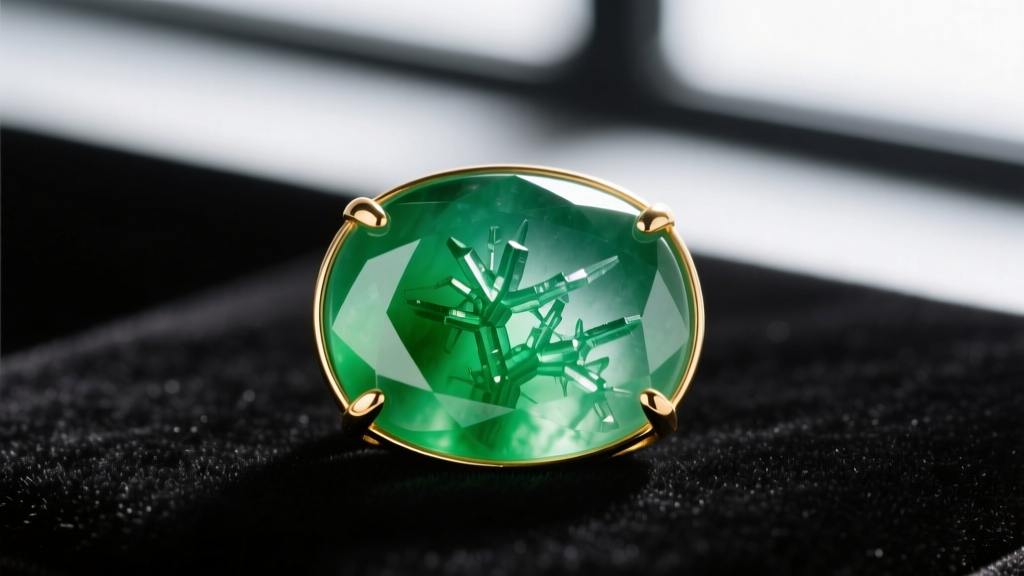
Actionable Tip: Always carry a 10x triplet loupe when visiting the shop. Inspect the surface of the jade for the "orange peel" effect or micro-pitting, which are hallmark signs of acid bleaching (Type B). If the shop cannot guarantee a stone is Type A, request a lab report before purchasing.
Step 3: Evaluating the "Art" in Art Jewelry
The "art jewelry" designation implies that the metalwork and setting are not mass-produced via rubber mold casting. Instead, these pieces are hand-fabricated, often utilizing specialized techniques that elevate the jade. Here is how to evaluate the craftsmanship of the metalwork surrounding the gemstone.
Setting Architecture and Stone Protection
Jade is tough, but it is not impervious to chipping, particularly at the edges of a cabochon or the delicate points of a carving. Look for bezel settings or heavy prong work that fully protects the stone's girdle. Avoid tension settings for jade, as the continuous pressure can induce internal stress fractures over time.
The Closed-Back Warning
Be highly suspicious of closed-back bezel settings in a jade & art jewelry gift shop. While some artisan jewelers use closed backs to protect the skin from rough stone backs, in the jade trade, a closed back is frequently used to hide foil backing, dye patches, or the tell-tale surface pitting of Type B polymer treatments. If the piece is high-ticket, insist on an open-back setting or a setting with a removable backing to allow for proper gemological inspection.
Hallmarks and Metal Purity
Authentic art jewelry will bear precise hallmarks. Look for stamps like 750 (18k gold), 925 (sterling silver), or 950 (platinum). Artisan pieces often also feature a maker's mark or a tiny stamped signature of the metalsmith, verifying its bespoke origin.
Step 4: Verifying Provenance and Certifications
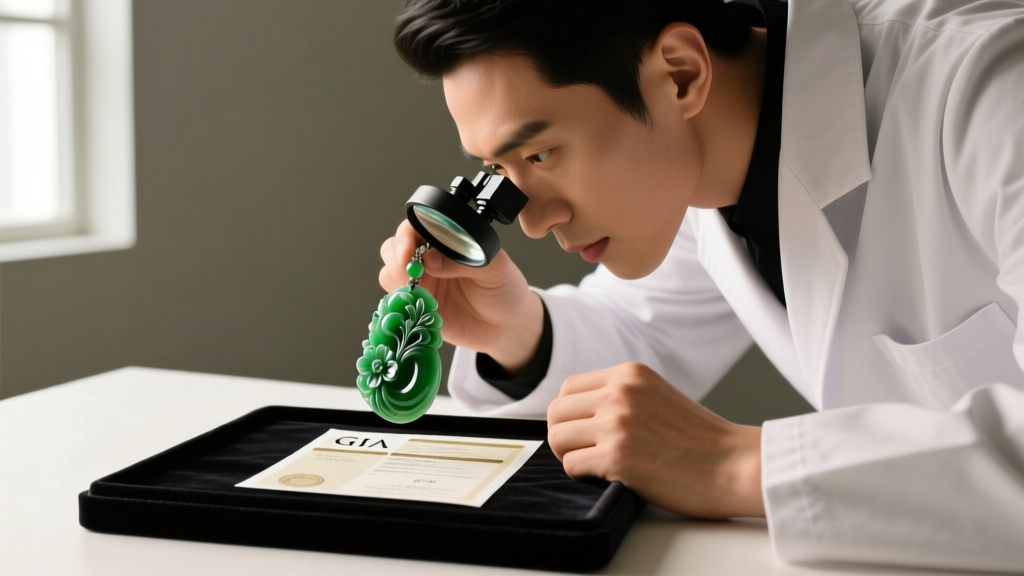
In 2026, the secondary market is flooded with sophisticated synthetic simulants and undisclosed treated stones. Relying solely on the shop's verbal assurance is a financial risk. According to the Federal Trade Commission (FTC) Jewelry Guides, sellers are legally required to disclose any treatment that significantly affects the value or durability of a gemstone. However, enforcement relies on consumer vigilance.
Acceptable Lab Reports
When purchasing a piece valued over $1,000, demand a certificate from a recognized, independent gemological laboratory. Acceptable authorities include:
- GIA (Gemological Institute of America): The global gold standard for identifying jadeite vs. nephrite and detecting polymer/dye treatments.
- Mason-Kay: A highly respected US-based lab specializing specifically in jade authentication and grading.
- NGTC (National Gemological Training Centre of China): The premier authority for nephrite and jadeite originating from Asian markets.
Actionable Tip: Verify the certificate number on the issuing lab's official website while still standing in the shop. Ensure the weight and dimensions on the certificate match the physical piece in your hand to rule out certificate swapping.
Step 5: Care and Maintenance Post-Purchase
Once you have successfully sourced your piece, proper maintenance is required to preserve both the stone and the artisan metalwork. The care protocol depends entirely on the treatment grade you purchased.
Cleaning Protocols
- Type A Jade: Safe to clean with warm water, a mild dish soap, and a soft-bristled baby toothbrush. Can withstand brief ultrasonic cleaning, though manual cleaning is always preferred to protect delicate artisan prongs.
- Type B & C Jade: NEVER use an ultrasonic cleaner or steam cleaner. The high-frequency vibrations and heat will shatter the compromised internal structure and melt or cloud the polymer resin. Clean only with a damp, soft microfiber cloth.
Storage and Wear
Jade should be stored separately from diamonds, sapphires, and rubies. While jade is tough (resistant to breaking), it has a Mohs hardness of 6.5 to 7, meaning harder gems will easily scratch its polished surface. Store your artisan jade pieces in individual silk pouches or lined jewelry boxes to maintain their vitreous luster.
Conclusion
Shopping at a dedicated jade & art jewelry gift shop is a rewarding pursuit that bridges geological marvels with human artistry. By understanding the mineralogical differences between jadeite and nephrite, rigorously checking for ABC treatments, scrutinizing the structural integrity of the metalwork, and demanding independent lab certifications, you transition from a casual browser to an informed collector. Armed with these step-by-step protocols, you can confidently acquire heirloom-quality pieces that will retain their beauty, value, and structural integrity for generations to come.


