Troubleshooting Cloudy and Faded Amethyst Jewelry Stones
Learn how to diagnose and fix cloudy, scratched, or faded amethyst jewelry stones with our expert troubleshooting guide and care framework.

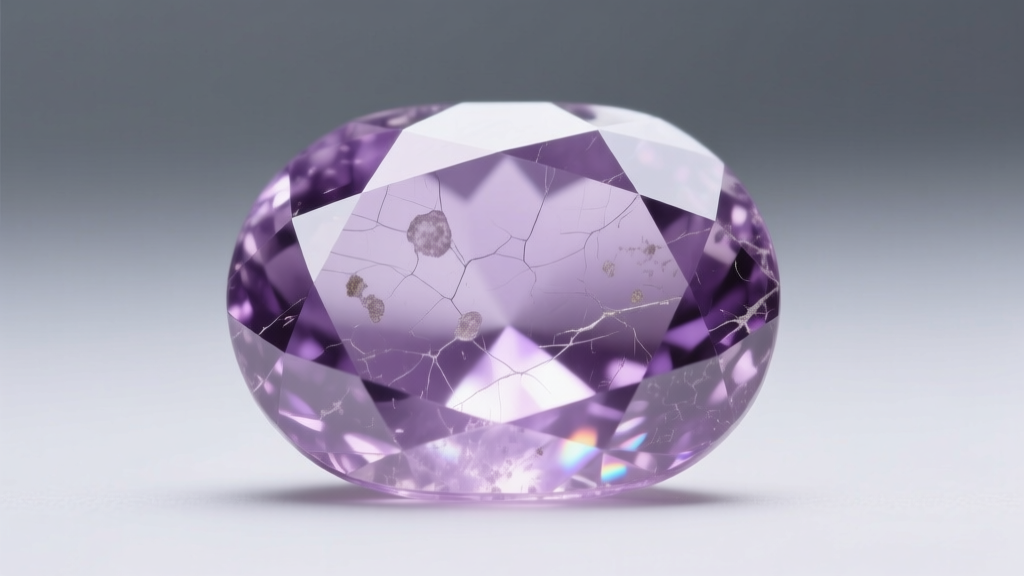
Amethyst has been a cornerstone of gemology and jewelry design for centuries, prized for its deep violet hues, exceptional clarity, and relative affordability. However, as any seasoned lapidary or master jeweler will tell you, maintaining the pristine condition of amethyst jewelry stones requires far more than just wiping them with a microfiber cloth. When your favorite violet gems begin to look cloudy, pale, or structurally compromised, diagnosing the root cause is critical to saving the piece. This comprehensive troubleshooting guide dives deep into the material science of amethyst, offering actionable, professional-grade solutions for the most common degradation issues encountered in daily wear.
The Mineralogy Behind Amethyst Vulnerabilities
To effectively troubleshoot damage, you must first understand the stone's atomic structure. Amethyst is a macrocrystalline variety of quartz (SiO2). Its signature purple coloration is not inherent to the quartz lattice itself but is the result of trace amounts of iron (Fe3+) that have been naturally irradiated by gamma rays in the earth's crust over millions of years. This specific geological origin story, detailed extensively by Mindat, is exactly what makes amethyst jewelry stones vulnerable to specific environmental factors. With a Mohs hardness of 7, it is durable enough for rings and bracelets, but it lacks the toughness of jadeite or the chemical stability of corundum (sapphire). Recognizing these inherent material limits is the first step in professional jewelry care.
Diagnosing Color Fading and Heat Damage
The most heartbreaking issue owners face is the gradual lightening of the stone's purple hue. If your amethyst jewelry stones are turning pale, developing a washed-out grayish tint, or shifting toward a brownish-yellow, you are likely witnessing photochromic degradation or thermal alteration.
The UV Fading Phenomenon
Prolonged exposure to ultraviolet (UV) light destabilizes the electron hole centers associated with the iron impurities responsible for the purple color. Leaving your jewelry on a sunny windowsill or wearing it daily in high-UV environments (like high-altitude hiking) will cause irreversible fading. Unlike some organic gems that can be re-oiled or dyed, the fading of amethyst is a permanent structural shift at the atomic level. There is no DIY fix or chemical bath that can restore the color.
Thermal Alteration (The Citrine Shift)
Amethyst is highly sensitive to heat. Exposure to temperatures above 300°C to 400°C will permanently alter the stone's color to yellow, orange, or brown—effectively turning it into citrine or prasiolite. If a bench jeweler used a high-temperature torch too close to your stone during a ring resizing or prong retipping without using a heat-shield compound like Kool Jool, the heat damage is permanent. The only viable fix for a severely faded or heat-damaged stone is complete replacement.
Surface Cloudiness and Micro-Scratches
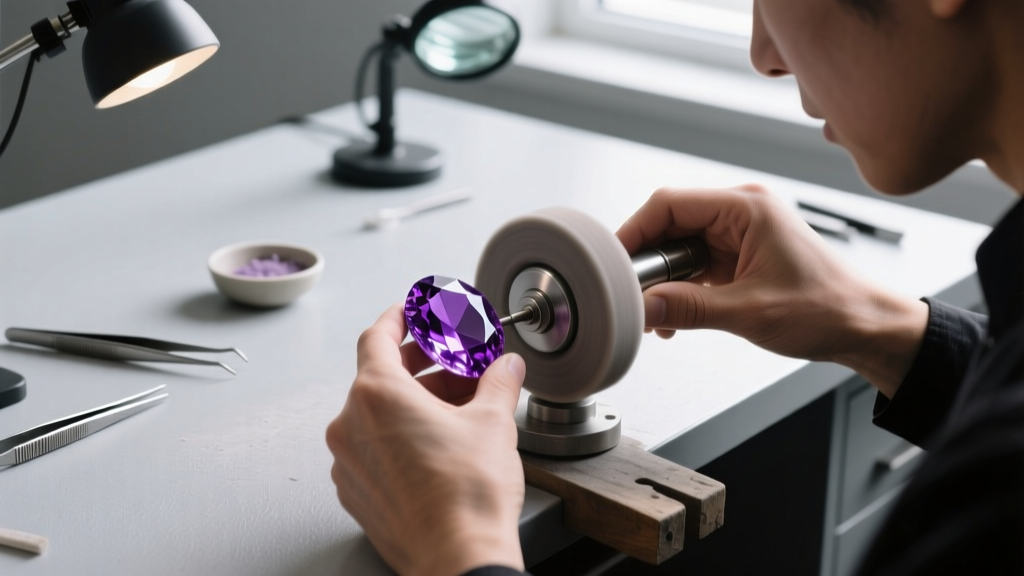
If the stone's color remains vibrant but the surface looks cloudy, dull, or 'milky', the issue is almost certainly surface abrasion. While a Mohs 7 rating suggests good scratch resistance, it is a common misconception that amethyst is scratch-proof. Household and environmental dust contains microscopic particles of airborne quartz (which is also a 7 on the Mohs scale). Over years of daily wear, repeatedly wiping dust off your amethyst jewelry stones creates a dense network of micro-scratches. These microscopic grooves scatter light before it can enter and reflect out of the pavilion, resulting in a cloudy appearance.
The Lapidary Fix: Cerium Oxide Polishing
Surface cloudiness can be fully corrected through professional lapidary polishing. A jeweler must remove the stone from its setting to avoid damaging the metal or trapping polishing compounds in the prongs. The standard industry protocol involves using a polishing lap (typically tin, lead, or a modern synthetic equivalent) charged with cerium oxide (CeO2) powder and water. This specific rare-earth compound is the absolute industry standard for polishing quartz-family gems, yielding a flawless optical finish. Avoid DIY tumblers or rotary polishing kits; they are highly ineffective on faceted stones and will round off the crisp facet junctions, destroying the gem's optical geometry.
The Ultrasonic Trap and Chemical Sensitivities
Many well-meaning owners drop their jewelry into ultrasonic cleaners, only to pull out a fractured stone. While solid, flawless quartz can technically withstand ultrasonic vibrations, the vast majority of commercial amethyst jewelry stones contain internal stress fractures, liquid inclusions, or 'tiger stripe' growth patterns. The high-frequency cavitation bubbles created by ultrasonic cleaners violently expand these microscopic fissures, causing the stone to shatter or develop visible internal cracks.
| Cleaning Method | Safety for Amethyst | Professional Notes |
|---|---|---|
| Ultrasonic Cleaner | High Risk | Avoid entirely if stone has any visible inclusions or fractures. |
| Steam Cleaner | Moderate Risk | Thermal shock can crack stones; avoid sudden temperature changes. |
| Warm Soapy Water | Safe | Use mild dish soap and a soft baby toothbrush. Rinse thoroughly. |
| Ammonia-Based Cleaners | Safe | Safe for the stone, but can degrade porous metal settings over time. |
Prong Pressure and Conchoidal Fractures
Amethyst lacks true cleavage (the tendency to break along specific crystallographic planes like diamond or topaz), but it exhibits conchoidal fracture, meaning it breaks with smooth, curved surfaces similar to glass. This makes it highly susceptible to point-impact chipping and pressure-induced cracking. If you notice a chip near the girdle or a crack radiating inward from a prong, the setting was likely applied with excessive torque.
When setting amethyst jewelry stones, jewelers must use specialized setting burs to carve precise, level seats in the prongs. If a prong is simply pushed over the stone without a proper seat, the localized pressure will exceed the amethyst's tensile strength. This often results in a delayed fracture that may appear weeks or even months after the setting was completed, leaving the owner confused as to why the stone 'suddenly' broke.
The 2026 Synthetic Amethyst Complication
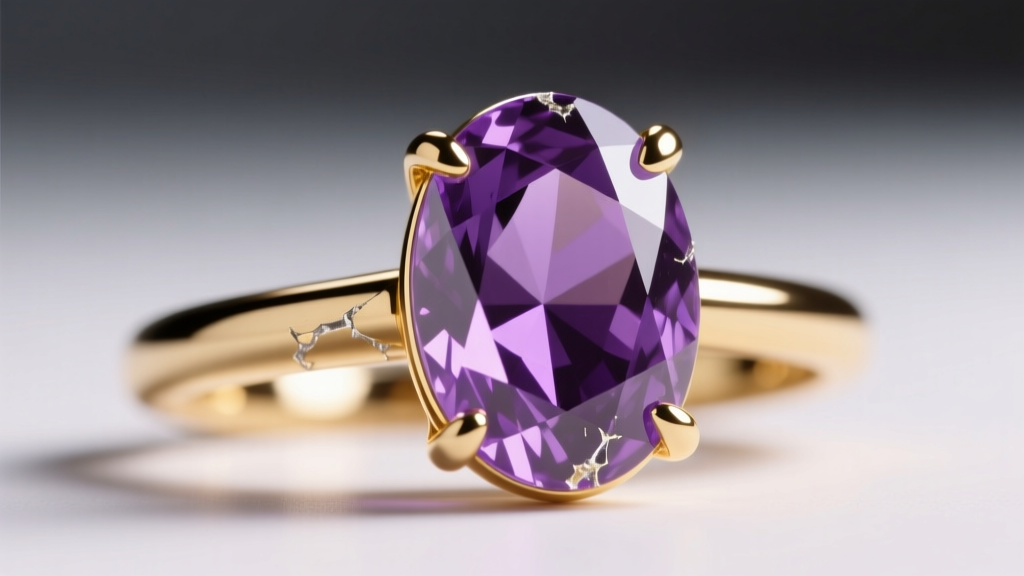
As of 2026, the market is heavily saturated with hydrothermal synthetic amethyst. Lab-grown stones are virtually indistinguishable from natural stones to the naked eye and share the exact same physical properties (Mohs 7, specific gravity 2.65). However, a common troubleshooting issue is that synthetic stones often lack natural 'tiger stripe' inclusions and instead show 'bread crumb' inclusions or perfectly uniform color zoning. If a stone is suspiciously flawless and deeply saturated, it may be lab-grown. While synthetics respond to polishing and cleaning exactly like natural stones, their market value is a fraction of natural gems. It is critical to verify the origin of your stone via a gemological lab before paying for expensive lapidary restoration or custom resetting.
Preventative Care Framework
To ensure the longevity of your amethyst jewelry stones, implement the following professional care protocols:
- UV Mitigation: Store amethyst pieces in a closed, opaque jewelry box or a velvet pouch. Never leave them on a dresser near a sunlit window.
- Thermal Awareness: Always remind your bench jeweler that the piece contains amethyst before any soldering or resizing work. Require the use of thermal protection paste.
- Proper Storage: Because quartz scratches quartz, never store multiple amethyst pieces loosely together in a single compartment. Keep them separated in soft, individual fabric slots.
- Wear Sequencing: Put your amethyst jewelry on after applying cosmetics, perfumes, and hairsprays. While amethyst is resistant to mild acids, the abrasive particulates in some cosmetics can accelerate surface clouding.
By understanding the specific mineralogical vulnerabilities of amethyst, you can transition from reactive damage control to proactive preservation, ensuring your violet gems remain vibrant and structurally sound for decades. For further reading on quartz varieties and their care, consult the Gemological Institute of America (GIA) educational archives.


