The Technical Guide to Black Coral Jewelry: Grading, Sourcing & Care
Master the technical nuances of black coral jewelry. Explore Antipatharia grading, CITES compliance, structural carving limits, and expert care protocols.

The Biology and Mineralogy of Antipatharia
Unlike stony corals (Scleractinia) which are primarily composed of calcium carbonate, black coral belongs to the order Antipatharia. Its skeleton is entirely proteinaceous, constructed from a complex keratin-like protein matrix known as conchiolin. This fundamental biological difference dictates every aspect of how black coral jewelry is manufactured, graded, and maintained. The material exhibits a specific gravity ranging from 1.34 to 1.40 and a refractive index of approximately 1.56, giving it a distinct, warm luster that differs sharply from the vitreous shine of calcified marine gems.
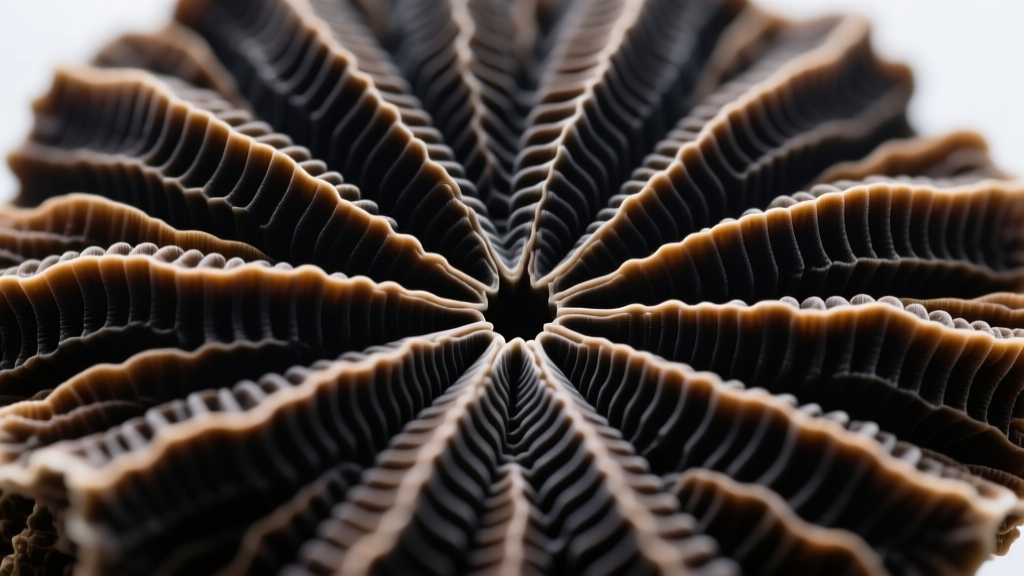
Under high magnification, the cross-section of an authentic black coral branch reveals concentric lamellae—microscopic growth rings that resemble the cross-section of a tree trunk. These rings are the primary diagnostic feature gemologists use to separate genuine Antipatharia from common organic imitations. The natural coloration is rarely a uniform jet black; it typically presents as a deep, translucent brown or olive-green at the core, graduating to a darker black toward the outer bark. According to the National Oceanic and Atmospheric Administration (NOAA), deep-sea Antipatharia colonies grow at an agonizingly slow rate of merely a few centimeters per year, making the harvest of thick, jewelry-grade branches an increasingly rare occurrence.
CITES Regulations and Ethical Sourcing Frameworks
Sourcing black coral jewelry in 2026 requires strict adherence to international conservation laws. All species of Antipatharia are listed under Appendix II of the Convention on International Trade in Endangered Species (CITES). This designation does not ban trade outright, but it mandates rigorous documentation to ensure that harvesting does not threaten the survival of the species. Jewelers and importers must secure a CITES export permit from the country of origin and a corresponding import permit from the destination country.
For antique or vintage black coral jewelry, traders must obtain a Pre-Convention Certificate, proving the piece was harvested and crafted before the species was added to the CITES appendices in the early 1980s. Failure to produce this documentation during customs inspections routinely results in the confiscation of the merchandise and severe financial penalties. The official CITES appendices database remains the definitive resource for verifying the current regulatory status of specific coral taxa before initiating any cross-border acquisition.
Technical Grading Matrix for Black Coral
The lapidary and jewelry trade evaluates black coral based on diameter, color saturation, and structural integrity. Because the material is prone to internal pitting and radial cracking, yield rates from raw branches are notoriously low. Below is the industry-standard grading matrix used by high-end organic gemstone dealers:
| Grade | Diameter | Color & Saturation | Structural Integrity | Primary Application |
|---|---|---|---|---|
| Gem (Grade A) | > 10mm | Uniform jet black; high translucency at edges | Zero pitting; no radial fractures | High-end cabochons, solid bangles, master carvings |
| Commercial (Grade B) | 6mm - 9mm | Dark brown to black; mottled core | Minor surface pitting; stable structure | Beaded strands, small inlays, standard cabochons |
| Carving (Grade C) | < 6mm | Pale brown; heavy mottling | Frequent micro-fractures; soft core | Crushed inlay, dust for pigments, composite fillers |
Differentiating Synthetics and Organic Imitations
Due to the high market value and CITES restrictions, black coral jewelry is frequently counterfeited. The most common imitation is dyed buffalo horn or dyed tortoiseshell. While these materials share a similar specific gravity and will also emit a burning hair odor when subjected to a hot point test, they lack the concentric growth rings of Antipatharia. Instead, horn exhibits longitudinal striations, and tortoiseshell shows a mottled, cloudy internal structure under magnification.
Plastic and epoxy resins are also prevalent. A thermal conductivity test instantly separates resin from conchiolin; plastic feels warm to the touch and will melt and emit an acrid, chemical smoke when tested with a heated needle. Glass imitations are easily identified by their higher specific gravity (typically > 2.4), cooler thermal conductivity, and conchoidal fracture patterns. For definitive gemological identification, the Gemological Institute of America (GIA) Gem Encyclopedia recommends utilizing a combination of magnification, specific gravity testing, and careful thermal analysis.
Lapidary and Carving Limitations
Working with black coral requires specialized lapidary techniques that diverge sharply from traditional hardstone carving. With a Mohs hardness of only 2.5 to 3.0, the material is exceptionally soft and vulnerable to scratching. More critically, its proteinaceous nature makes it highly sensitive to thermal shock. Standard high-speed diamond laps generate enough friction to carbonize the surface, leaving permanent, chalky white burn marks that cannot be polished out.
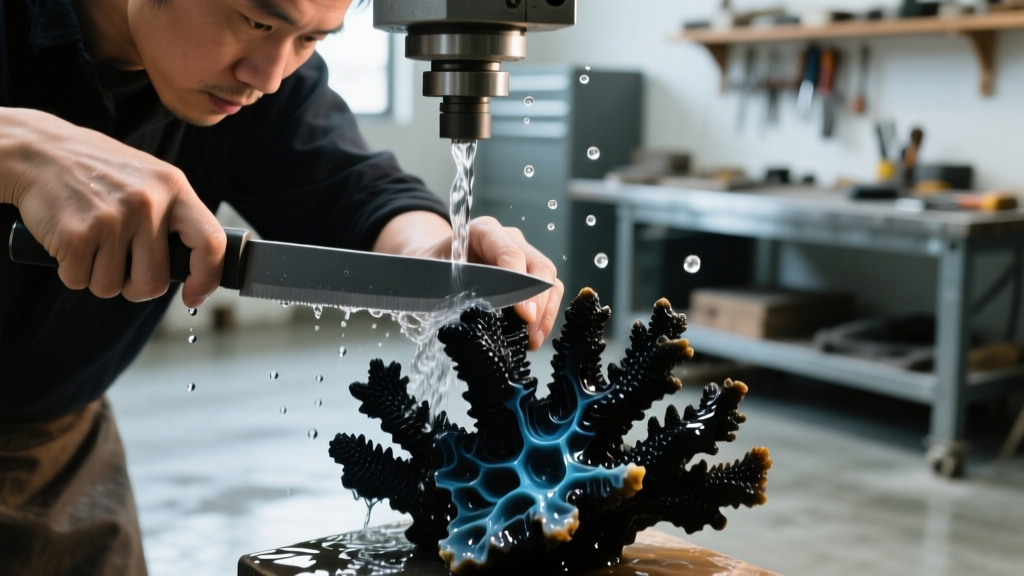
Lapidaries must utilize low-speed saws with continuous, high-volume water cooling. Sanding and polishing must be done by hand or with slow-moving felt wheels using mild abrasives like pumice or tin oxide. The final polish is typically achieved using a soft muslin wheel charged with jeweler's rouge or a specialized organic wax compound, resulting in a deep, waxy-to-resinous luster that defines premium black coral jewelry.
Structural Integrity and Setting Methodologies
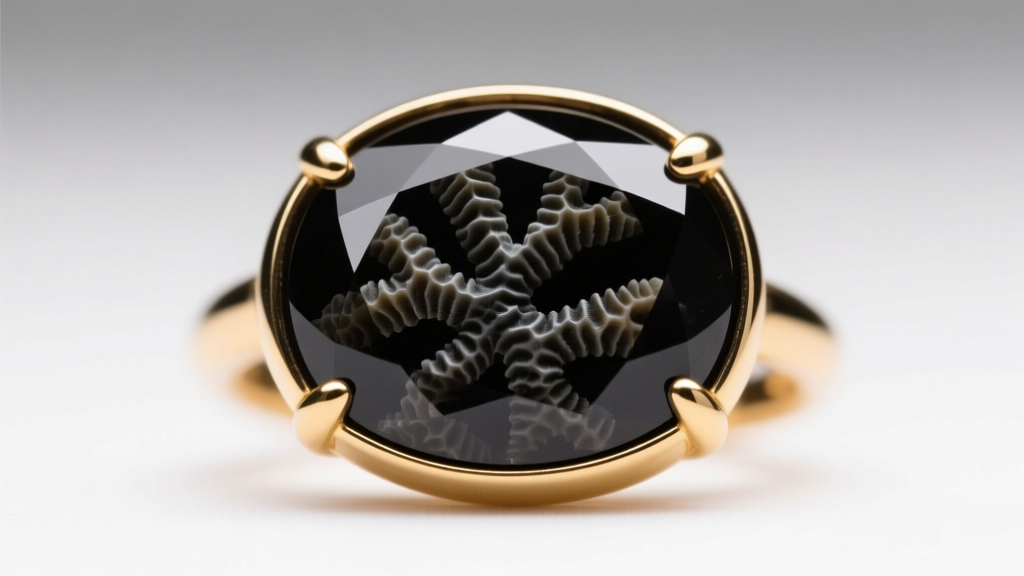
The structural vulnerabilities of Antipatharia dictate strict limitations in jewelry mounting. The material has poor tensile strength and is highly susceptible to cleavage along its longitudinal grain. Consequently, prong settings are universally condemned by master jewelers; the localized pressure exerted by a prong tip will almost certainly induce a stress fracture over time, especially when subjected to the thermal expansion and contraction of daily wear.
The only acceptable setting for black coral cabochons and carved elements is a fully supportive bezel or a flush-mount channel setting. The bezel must be fabricated with a perfectly flat bearing surface to distribute pressure evenly across the stone's base. Furthermore, jewelers must avoid using cyanoacrylate (super glue) or acidic fluxes during the setting process, as these chemicals can penetrate the microscopic pores of the coral and cause irreversible internal discoloration. A neutral, jeweler-grade two-part epoxy is the preferred adhesive for securing the stone within the bezel cup.
Advanced Care and Chemical Vulnerabilities
Proper maintenance of black coral jewelry requires an understanding of its chemical sensitivities. The conchiolin matrix is highly reactive to acids, alkalis, and volatile organic compounds. Exposure to everyday chemicals—including perfumes, hairsprays, chlorine, and even the natural acids present in human sweat—will degrade the surface polish, leaving the coral dull and chalky.
- Never use ultrasonic or steam cleaners: The high-frequency vibrations will shatter the internal lamellae, and the heat will cause thermal degradation.
- Surface cleaning: Wipe the piece gently with a microfiber cloth slightly dampened with distilled water. Dry immediately.
- Hydration maintenance: Because it is an organic material, black coral can desiccate and crack in low-humidity environments. Appraisers recommend applying a microscopic layer of food-grade mineral oil or pure jojoba oil once every 12 to 18 months to maintain the structural integrity and optical depth of the polish.
- Storage protocols: Store black coral jewelry in a soft, breathable pouch away from direct sunlight and extreme temperature fluctuations. Avoid airtight plastic bags, which can trap moisture and promote fungal growth on the organic surface.
"The preservation of black coral jewelry is as much about environmental control as it is about physical handling. Treat the conchiolin matrix as a living artifact that requires stable humidity and absolute chemical isolation." — Master Lapidary Guidelines for Organic Gemstones