How to Authenticate, Clean, and Style Green Agate Jewelry
Learn how to authenticate, clean, and style green agate jewelry. Expert steps for identifying dyed stones, safe washing, and metal pairings.

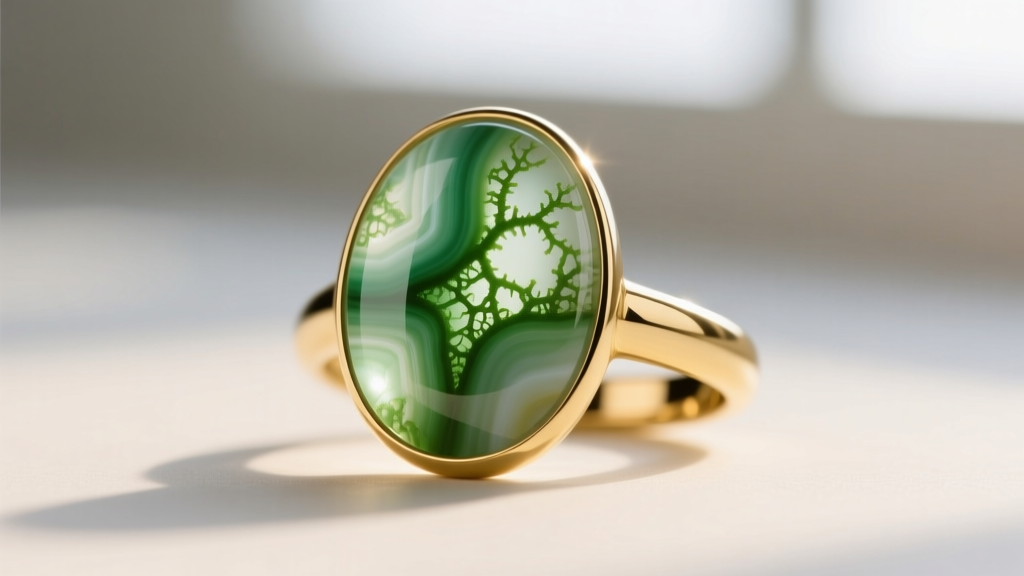
Green agate jewelry has surged in popularity, prized for its earthy tones and unique visual depth. However, the market is flooded with misleading terminology, dyed imitations, and improper care practices that can ruin these beautiful stones. As a cryptocrystalline variety of quartz, agate requires specific handling to maintain its luster and structural integrity. Whether you own a vintage moss agate brooch or a modern chrome chalcedony ring, understanding the gemological realities of your jewelry is essential.
This comprehensive guide will walk you through the exact steps to authenticate your stones, clean them without causing micro-abrasions, and style them for maximum visual impact. According to the Gemological Institute of America (GIA), agate is defined by its translucency and banded structure, but the green varieties present unique challenges and opportunities for collectors and casual wearers alike.
Step 1: Authenticating Your Green Agate Jewelry
Before you can properly care for your jewelry, you must identify exactly what you own. True, naturally occurring solid green agate is exceptionally rare. Most green agate on the market falls into one of three categories: moss agate, chrome chalcedony, or dyed gray chalcedony. Here is how to tell them apart.
The Visual and Magnification Test
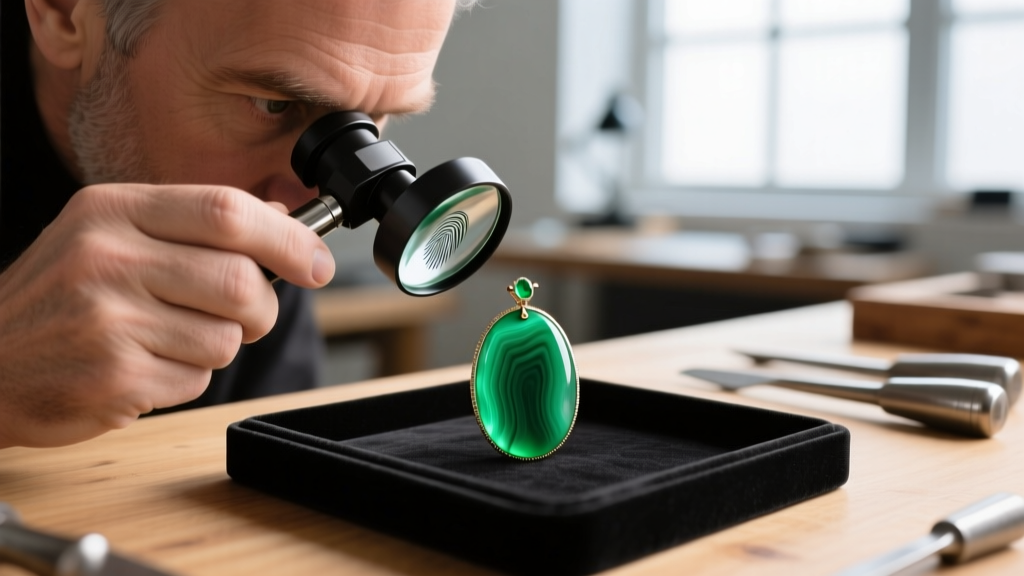
Moss agate is not technically banded agate; it is a transparent to translucent chalcedony containing green hornblende or chlorite inclusions that resemble moss. Under a 10x jeweler's loupe, these dendritic inclusions will look like distinct, branching fern patterns suspended within the stone. Conversely, if your stone is a uniform, opaque, neon or apple green with no visible internal structures, you are likely looking at dyed chalcedony.
The Acetone Swab Test for Dye
The gemstone treatment industry frequently uses chemical dyes to turn cheap, porous gray agate into vibrant green. To test for dye:
- Dip a cotton swab in pure, 100% acetone (standard nail polish remover often contains oils and conditioners that will skew results).
- Rub the swab firmly against an inconspicuous area of the stone, such as the back of a cabochon or near the setting prongs.
- If the cotton swab picks up any green or blue pigment, the stone is dyed. Natural moss agate and chrome chalcedony will not leach color.
For a deeper dive into the mineralogy of these stones, Mindat.org provides extensive data on the specific gravity (2.58-2.64) and refractive index (1.53-1.54) of natural chalcedony, which can help gemologists confirm authenticity using advanced tools.
Step 2: Proper Cleaning Techniques (Do's and Don'ts)
Agate ranks between 6.5 and 7 on the Mohs hardness scale. While this makes it relatively durable, it is still susceptible to scratching from household dust (which contains quartz particles) and thermal shock. Furthermore, if your stone is dyed, harsh chemicals will strip the color entirely.
The Safe Cleaning Protocol
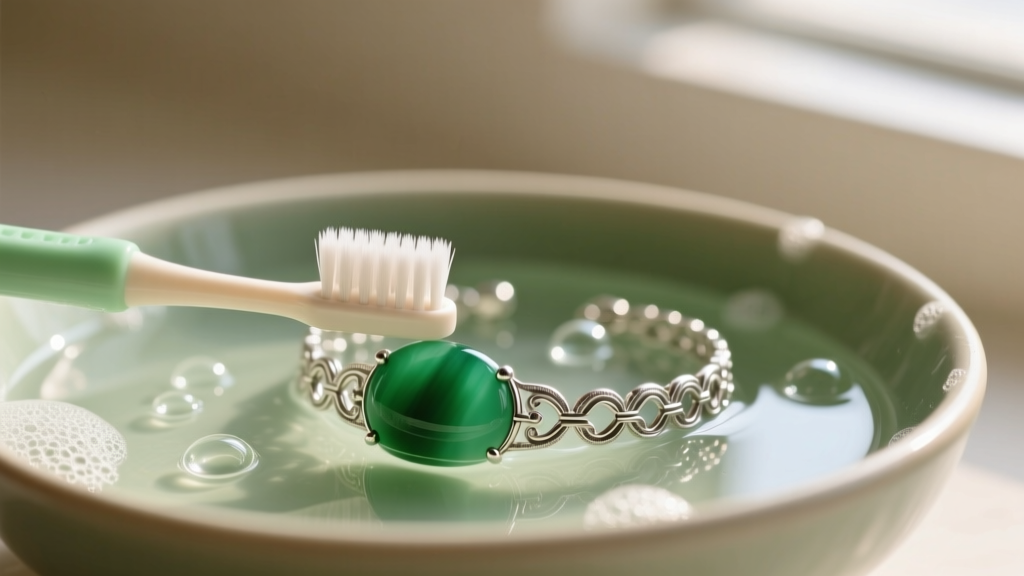
- Prepare the Solution: Fill a shallow glass bowl with lukewarm distilled water. Add two drops of pH-neutral, fragrance-free dish soap. Avoid hot water, as extreme temperature changes can cause microscopic fracturing in cryptocrystalline quartz.
- Soak Briefly: Submerge the jewelry for no more than 3 to 5 minutes. Prolonged soaking can weaken the adhesive used in certain bezel or prong settings, especially in older vintage pieces.
- Agitate Gently: Use a brand-new, ultra-soft baby toothbrush to gently sweep away debris from the back of the stone and the setting crevices. Never use stiff-bristled brushes or toothpaste, which contains abrasive silica that will dull the polish.
- Rinse and Dry: Rinse under a gentle stream of lukewarm distilled water. Pat dry immediately with a clean, lint-free microfiber cloth. Do not air dry, as this leaves hard water spots that mimic cloudiness.
Gemologist Warning: Never place green agate jewelry in an ultrasonic cleaner. The high-frequency vibrations can shatter stones with internal fractures or cause dyed stones to bleed color into the setting. Steam cleaners are equally destructive due to the sudden thermal shock.
Step 3: Daily Wear and Storage Protocols
How you wear and store your green agate jewelry dictates its lifespan. Because agate is a porous material, it can absorb oils, lotions, and perfumes, leading to a permanent cloudy appearance over time.
| Jewelry Type | Impact Risk | Recommended Setting & Wear Protocol |
|---|---|---|
| Rings | High | Bezel or semi-bezel settings in 14k gold or platinum. Remove before gym, gardening, or washing dishes. |
| Pendants | Low | Prong or bezel settings. Safe for daily wear, but put on after applying cosmetics and perfumes. |
| Earrings | Very Low | Any setting. Keep away from hairspray. Clean the posts regularly with alcohol, avoiding the stone. |
| Bracelets | Medium-High | Link styles with protective bezels. Avoid wearing on the dominant hand to prevent desk-diving scratches. |
When storing, never toss green agate into a communal jewelry box. Diamonds (10), sapphires (9), and topaz (8) will easily scratch the agate's surface. Store each piece individually in a soft flannel pouch or a lined compartment.
Step 4: Styling Green Agate with Metals and Wardrobes
Styling green agate requires an understanding of color theory and metal undertones. The stone's natural translucency and earthy inclusions make it incredibly versatile, provided you pair it correctly.
Metal Pairings
- Oxidized Sterling Silver: The dark, antique finish of oxidized silver highlights the bright green dendritic patterns in moss agate, creating a vintage, botanical aesthetic perfect for bohemian or gothic styles.
- 14k or 18k Yellow Gold: Yellow gold enhances the warm, earthy tones of green agate. This combination is ideal for minimalist, modern designs where the metal acts as a warm frame for the stone.
- Rose Gold: Rose gold provides a subtle, complementary contrast to the green hues. This pairing softens the overall look, making it highly popular for engagement rings and delicate stacking rings.
Wardrobe Integration
Green agate acts as a neutral-earth tone in a wardrobe. It pairs exceptionally well with cream, camel, navy, and charcoal gray fabrics. Avoid wearing it with loud, neon, or highly saturated synthetic colors, which can clash with the stone's organic, natural inclusions. For a cohesive look, match the opacity of your jewelry to your outfit: translucent moss agate pairs beautifully with sheer, flowing fabrics like silk and chiffon, while opaque, banded green agate complements structured materials like wool and denim.
Troubleshooting Common Green Agate Issues
Even with meticulous care, issues can arise. Here is how to troubleshoot the most common problems encountered by green agate owners:
Problem: The stone looks cloudy or milky.
Solution: This is usually caused by a buildup of skin oils and cosmetics. Repeat the safe cleaning protocol, but let the stone soak for the full 5 minutes. If the stone is dyed and the dye has degraded, cloudiness may be permanent, and the stone will need to be replaced by a lapidary.
Problem: The metal setting is tarnishing the stone's edge.
Solution: Sterling silver can tarnish, and the sulfur compounds can sometimes stain porous agate edges. Use a silver polishing cloth strictly on the metal, folding the cloth to avoid touching the stone. If staining has occurred, a professional jeweler can carefully remove the stone, polish the silver, and clean the agate with a specialized gemological solvent.
Problem: The stone feels loose in the bezel.
Solution: Agate can be sensitive to pressure. Do not attempt to push the metal bezel down yourself with pliers, as uneven pressure will snap the cabochon. Take it to a jeweler who can use a bezel roller to apply even, calculated pressure to the metal rim.
By following these precise authentication, cleaning, and styling protocols, your green agate jewelry will retain its natural beauty and structural integrity for decades. Treat these stones with the gemological respect they deserve, and they will remain a stunning, earthy staple in your collection.


