Green Quartz Jewelry: Prasiolite Properties & Comparisons
Explore the gemological properties of green quartz jewelry. Compare prasiolite to peridot and tsavorite, and learn setting and care tips.

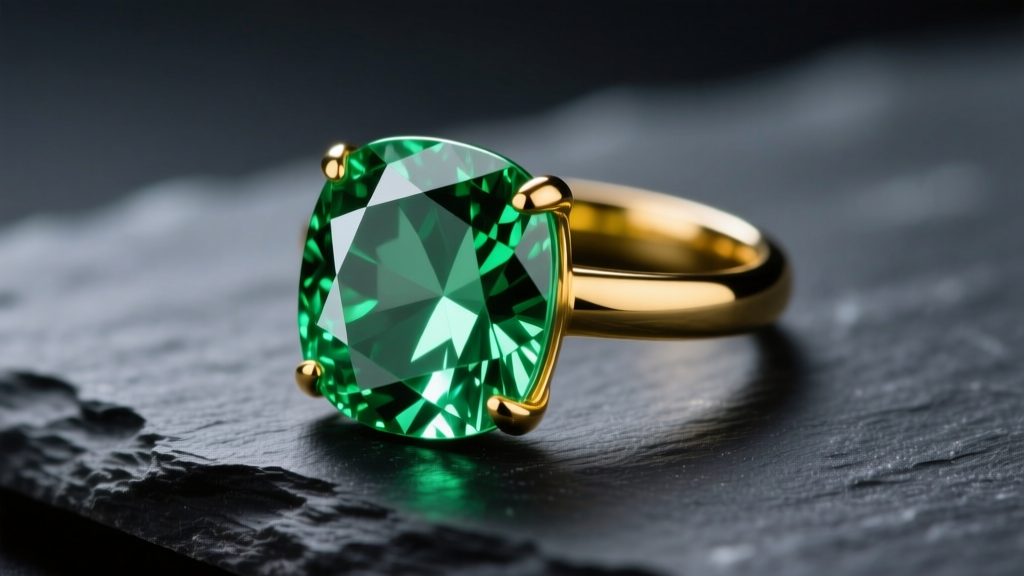
The Gemological Reality: What is Green Quartz?
When browsing the market for green quartz jewelry, consumers and jewelers alike must navigate a complex web of gemological terminology. True, naturally occurring green quartz is exceptionally rare. The vast majority of faceted green quartz available in the jewelry trade is actually prasiolite—a variety of quartz that achieves its distinctive pale to medium green hue through the heat treatment of specific amethyst deposits. According to the Gemological Institute of America (GIA), heating amethyst from certain mines, notably the Montezuma mine in Minas Gerais, Brazil, to approximately 500°C alters the iron impurities within the crystal lattice, shifting the color from purple to a soft, leek-green or olive tone.
It is crucial to distinguish prasiolite from green aventurine, which is also frequently sold under the umbrella term "green quartz." Aventurine is technically a quartzite rock containing fuchsite mica inclusions, giving it a sparkly, opaque to translucent appearance. Prasiolite, by contrast, is a macrocrystalline quartz, meaning it forms in distinct, visible crystal structures and is faceted for maximum light return, making it the superior choice for fine jewelry applications.
Crystallography and Material Properties
To understand how green quartz jewelry performs in daily wear, we must examine its physical and optical properties. As a member of the quartz family, prasiolite crystallizes in the trigonal system. It possesses a specific gravity of 2.65 and a refractive index (RI) of 1.544 to 1.553, with a low birefringence of 0.009. This relatively low RI means that while prasiolite offers a pleasing, glassy luster, it lacks the intense "fire" or dispersion seen in higher-RI stones like tsavorite garnet or zircon.
On the Mohs hardness scale, green quartz registers at a solid 7. This is a critical threshold in gemology. Airborne dust contains microscopic particles of silica (quartz), which also sits at 7 on the Mohs scale. Consequently, while green quartz is highly resistant to scratching from everyday metals and plastics, it can gradually accumulate micro-scratches over years of wear if exposed to dusty environments without proper care. Furthermore, quartz exhibits no true cleavage, meaning it will not split along flat planes if struck. However, it does have a conchoidal fracture, making the girdle and sharp pavilion facets susceptible to chipping upon hard impacts.
The Green Gemstone Comparison Matrix
How does green quartz stack up against other popular green gemstones used in jewelry design? The following table breaks down the essential metrics for jewelers and collectors comparing materials for custom pieces.
| Gemstone | Mohs Hardness | Refractive Index | Average Price (Per Carat) | Durability & Wearability |
|---|---|---|---|---|
| Prasiolite (Green Quartz) | 7.0 | 1.54 - 1.55 | $5 - $40 | Excellent; no cleavage, but UV sensitive |
| Peridot | 6.5 - 7.0 | 1.65 - 1.69 | $50 - $150 | Good; prone to scratching, sensitive to acid |
| Tsavorite Garnet | 7.0 - 7.5 | 1.74 | $500 - $2,500+ | Excellent; high brilliance, no cleavage |
| Emerald | 7.5 - 8.0 | 1.57 - 1.58 | $1,000 - $10,000+ | Poor to Fair; heavily included, brittle |
| Green Aventurine | 6.5 - 7.0 | N/A (Aggregate) | $1 - $5 | Good; tough due to interlocking structure |
Data compiled from industry wholesale pricing and the Mindat.org mineral database.
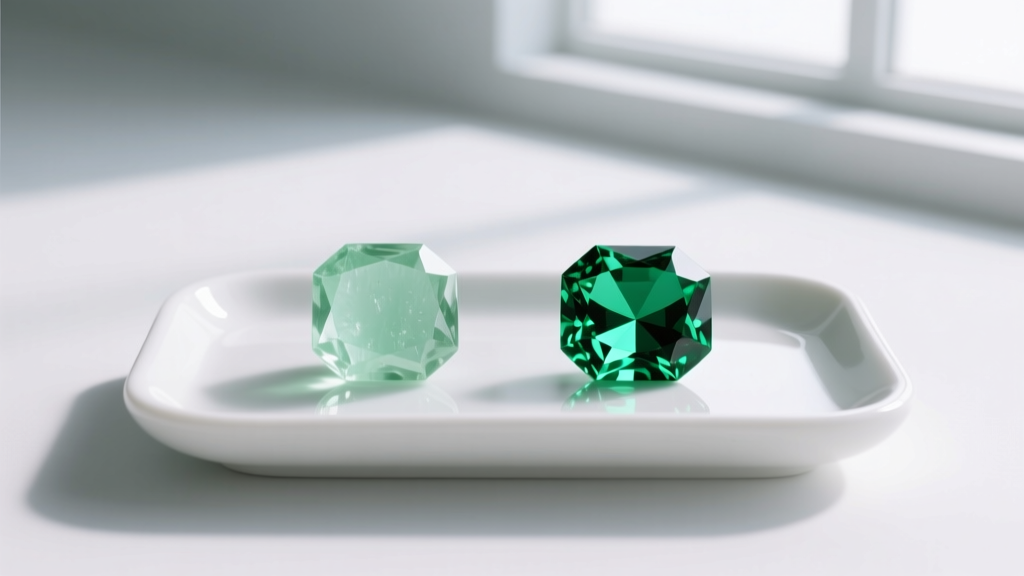
Setting Recommendations & Structural Integrity
Designing green quartz jewelry requires an understanding of the stone's structural vulnerabilities. Because prasiolite is often cut into large, elongated shapes (such as emerald cuts or elongated ovals) due to the shape of the raw heat-treated amethyst crystals, the corners of these stones are prime targets for chipping.
Prong vs. Bezel Settings
For rings intended for daily wear, a bezel setting is highly recommended. A bezel encases the entire girdle of the stone in a rim of precious metal, completely protecting the vulnerable edges from lateral impacts. If a prong setting is preferred for maximum light exposure, jewelers should opt for a six-prong configuration or utilize V-prongs at the corners of emerald and pear cuts. Standard four-prong settings leave too much of the girdle exposed to accidental knocks against countertops or steering wheels.
Metal Pairings
The soft, earthy tone of prasiolite pairs exceptionally well with warm metals. 14k or 18k yellow gold enhances the olive undertones of the stone, creating a vintage-inspired aesthetic. Rose gold is another excellent choice, as the copper alloys in the metal create a striking complementary contrast with the green hue. White gold and platinum can sometimes wash out the pale color of lower-grade prasiolite, making the stone appear grayish unless the material is a highly saturated, premium AAA grade.
Market Pricing & Sourcing in 2026
The market for green quartz jewelry remains highly accessible, but pricing varies drastically based on cut quality and color saturation. When sourcing prasiolite, buyers should be aware of the following tier structure:
- Commercial Grade ($3 - $8 per carat): These stones are typically mass-produced in overseas cutting facilities. They often feature shallow pavilions (resulting in a "window" where light leaks out the bottom) and exhibit a very pale, almost yellowish-green color. They are commonly found in mall-brand silver jewelry.
- Good to Fine Grade ($10 - $25 per carat): Better color saturation with a distinct mint or leek-green hue. Cut quality improves, with proper facet junctions and better light return. Ideal for mid-range gold jewelry.
- Precision Custom Cut ($30 - $60+ per carat): Cut by master lapidaries in the US or Europe. These stones maximize the rough material's potential, featuring optimal crown angles and deep pavilions to create a rich, velvety green appearance. Eye-clean (AAA grade) with no visible inclusions.
Compared to tsavorite garnet, which can easily exceed $1,000 per carat for stones over two carats, prasiolite offers a massive advantage for designers looking to create bold, high-carat-weight statement pieces without the prohibitive costs associated with rare garnets or emeralds.
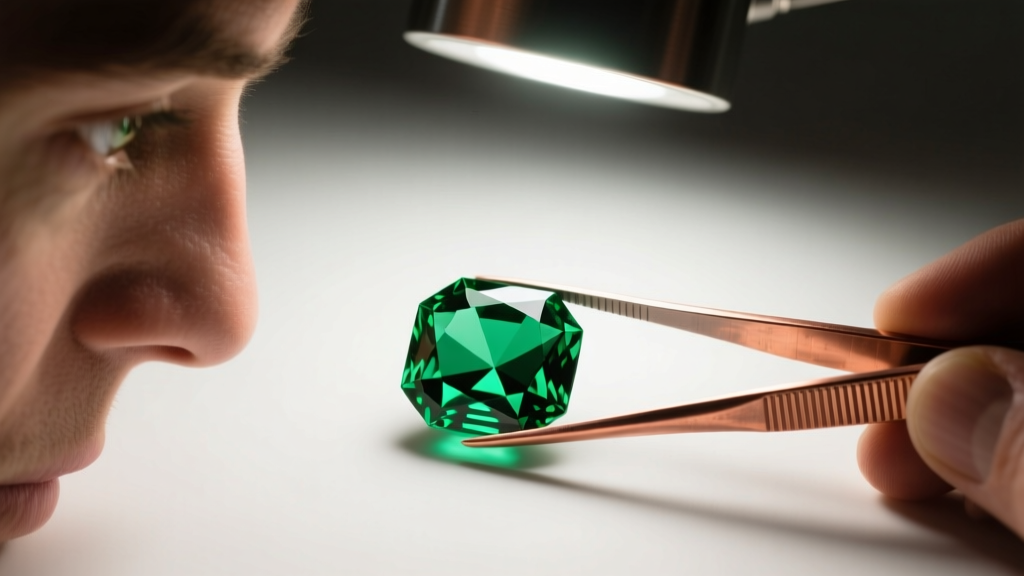
Long-Term Care & UV Degradation Risks
The most critical failure mode specific to green quartz jewelry is color fading. Because the green color center in prasiolite is the result of heat treatment altering the iron states within the quartz lattice, it can be inherently unstable when exposed to prolonged ultraviolet (UV) radiation. While wearing a prasiolite ring on a normal day will not cause immediate damage, leaving the jewelry on a windowsill in direct, intense sunlight for hundreds of hours can cause the green hue to gradually bleach out, reverting to a pale yellow or grayish tone.
Cleaning Protocols
Despite the UV risk, prasiolite is generally a durable stone to clean. Because it lacks the fracture-filling oils and resins commonly found in emeralds, green quartz can safely be cleaned using ultrasonic jewelry cleaners. However, to eliminate any risk of thermal shock—which can cause internal stress fractures if the stone has pre-existing liquid inclusions—the safest and most effective method is using warm water, a mild dish soap, and a soft-bristled toothbrush. Avoid steam cleaners, as the sudden, extreme heat can potentially alter the stone's color or cause structural damage.
By understanding the unique gemological profile of prasiolite, jewelers and consumers can confidently design, purchase, and maintain green quartz jewelry that remains beautiful and structurally sound for generations.


