How to Safely Clean and Restore Ethiopian Opal Jewelry
Learn how to safely clean, hydrate, and restore the fiery play-of-color in your Ethiopian opal jewelry with this expert step-by-step care guide.

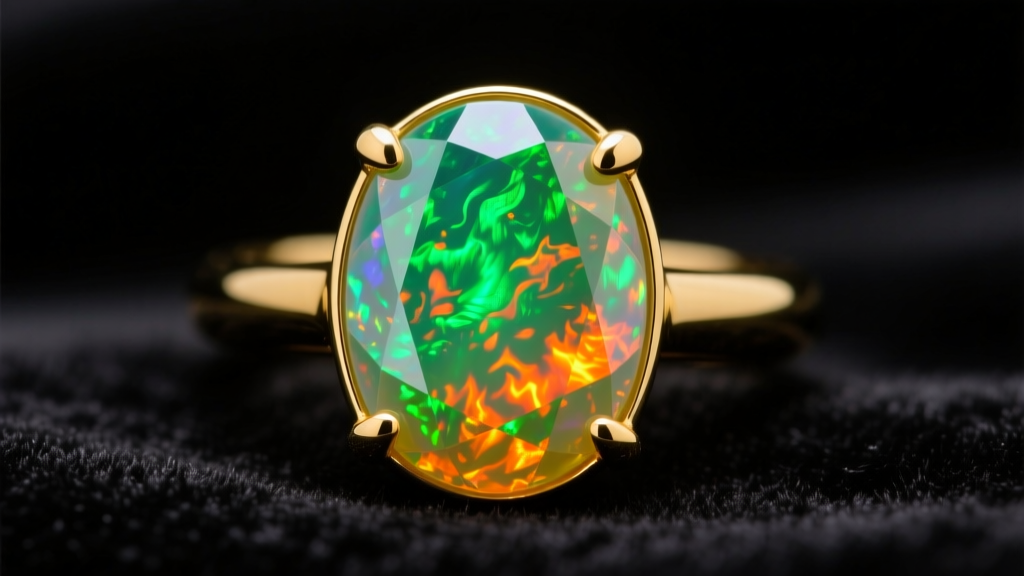
Ethiopian opals, particularly those from the Wollo (Welo) and Shewa provinces, have revolutionized the gemstone market since their major commercial emergence in 2008. Known for their breathtaking, neon play-of-color and unique translucency, they are a staple in modern gemstone collections. However, unlike their Australian counterparts, Ethiopian opals are hydrophane. This means they are highly porous and readily absorb water, oils, and chemicals, which can temporarily or permanently alter their appearance.
If your favorite piece of ethiopian opal jewelry has lost its fire, turned cloudy, or simply needs a routine cleaning, you cannot treat it like a standard diamond or sapphire. This comprehensive, step-by-step guide will teach you the exact gemological protocols for cleaning, rehydrating, and storing hydrophane opals to preserve their structural integrity and optical brilliance.
The Hydrophane Reality: Why Ethiopian Opals Demand Special Care
To properly care for ethiopian opal jewelry, you must first understand its cellular structure. According to the Gemological Institute of America (GIA), hydrophane opals possess a microscopic network of pores between their silica spheres. These pores allow the stone to absorb liquids—sometimes up to 8% to 10% of its total body weight.
When an Ethiopian opal absorbs water, the liquid fills these microscopic gaps. Because water has a refractive index (approx. 1.33) that is much closer to the silica spheres (approx. 1.45) than air (1.00), the light no longer diffracts properly. The result? The stone loses its vibrant play-of-color and appears milky, transparent, or completely 'dead.' Furthermore, the Shewa province opals (often called Mezezo opals) are notoriously prone to crazing—a network of internal fractures caused by rapid moisture loss or thermal shock. Welo opals are more stable but still require strict moisture management.
Routine Cleaning: A Step-by-Step Dry Method
For routine maintenance and the removal of surface dust or light skin oils, a dry cleaning approach is the safest method. Never submerge your ethiopian opal jewelry in tap water, which contains chlorine, fluoride, and trace minerals that can become trapped in the stone's pores and cause permanent yellowing.
Step 1: Prepare Your Workspace
Work over a soft, lint-free towel or a padded jewelry mat. Hydrophane opals rank between 5.5 and 6.5 on the Mohs hardness scale, making them susceptible to scratching and chipping if dropped on hard surfaces.
Step 2: The Microfiber Wipe
Use a clean, untreated, optical-grade microfiber cloth. Gently wipe the surface of the opal in circular motions. Do not apply heavy pressure, especially on cabochons with high domes, as the apex is the thinnest and most fragile point.
Step 3: Detailing the Setting
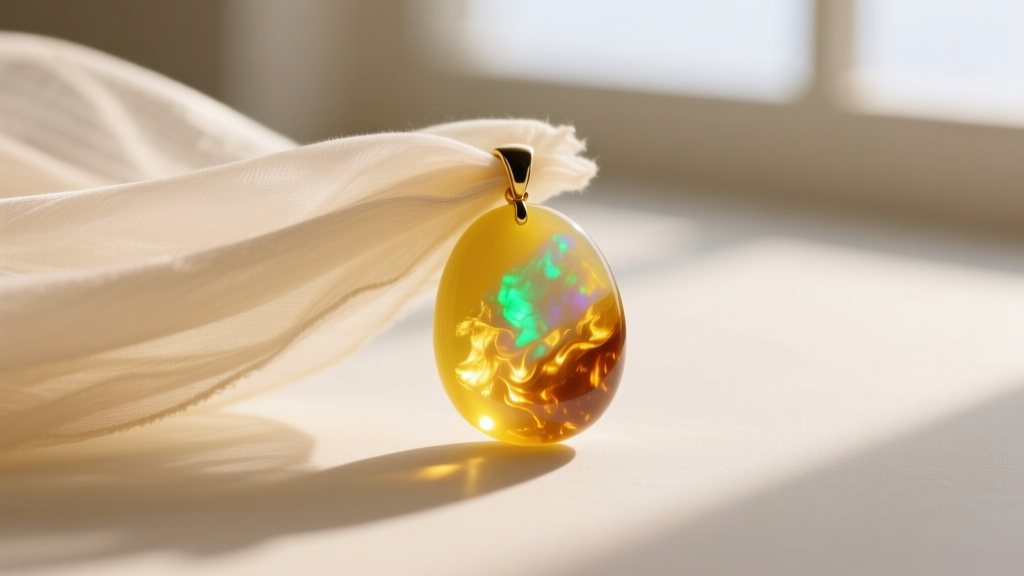
If dirt is trapped in the metal bezel or prongs surrounding the opal, use a soft-bristled makeup brush or a clean, dry camel-hair paintbrush to sweep the debris away. Never use a toothpick or metal needle, as slipping can easily scratch the opal's polished surface.
Emergency Restoration: Rehydrating and Drying a 'Dead' Opal
If your ethiopian opal jewelry has been accidentally submerged in dirty water, exposed to heavy lotions, or has lost its fire due to extreme dehydration, you must perform a controlled hydration and drying cycle. This process requires patience; rushing it will cause catastrophic thermal shock and crazing.
Step 1: The Distilled Water Soak
Fill a clean glass bowl with pure distilled water (never tap or filtered water). Submerge the opal completely. If the stone has absorbed oils or soap, the distilled water will act as a neutral solvent, slowly drawing the impurities out of the silica network. Leave it to soak for 24 to 48 hours. During this time, the opal may become completely transparent and lose all color. This is normal.
Step 2: The Slow-Dry Protocol
Remove the opal from the water and gently pat the surface dry with a microfiber cloth. Place the jewelry in a cool, dark, and draft-free environment. Do not use a hairdryer, radiator, or direct sunlight to speed up the drying process. Rapid evaporation causes the outer layers of the stone to shrink faster than the core, resulting in immediate crazing (internal cracking).
Step 3: The Waiting Period
Depending on the stone's thickness and the ambient humidity, it can take anywhere from 3 to 14 days for the water to fully evaporate from the core. As the air re-enters the microscopic pores, the refractive index differential will be restored, and the play-of-color will slowly return.
Care Matrix: Ethiopian vs. Australian Opals
Understanding the difference between global opal sources is critical for jewelers and collectors. Below is a comparative matrix outlining why care protocols must differ based on the stone's origin.
| Care Variable | Ethiopian (Welo/Shewa) Opal | Australian (Lightning Ridge) Opal |
|---|---|---|
| Porosity | High (Hydrophane, absorbs liquids) | Low (Non-porous, stable silica) |
| Water Exposure | Absorbs water, loses fire temporarily | Safe for brief washing and soaking |
| Ultrasonic Cleaners | Never (Causes immediate crazing) | Never (Risk of fracture along veins) |
| Oil & Lotion Exposure | Absorbs oils, turns yellow/brown | Wipes off easily with mild soap |
| Drying Time | Days to weeks (Must be air-dried) | Minutes (Can be towel-dried) |
Long-Term Storage and Humidity Control
How you store your ethiopian opal jewelry when it is not being worn is just as important as how you clean it. Extreme fluctuations in ambient humidity are the primary enemy of hydrophane gems.
The Ziploc Micro-Climate Method
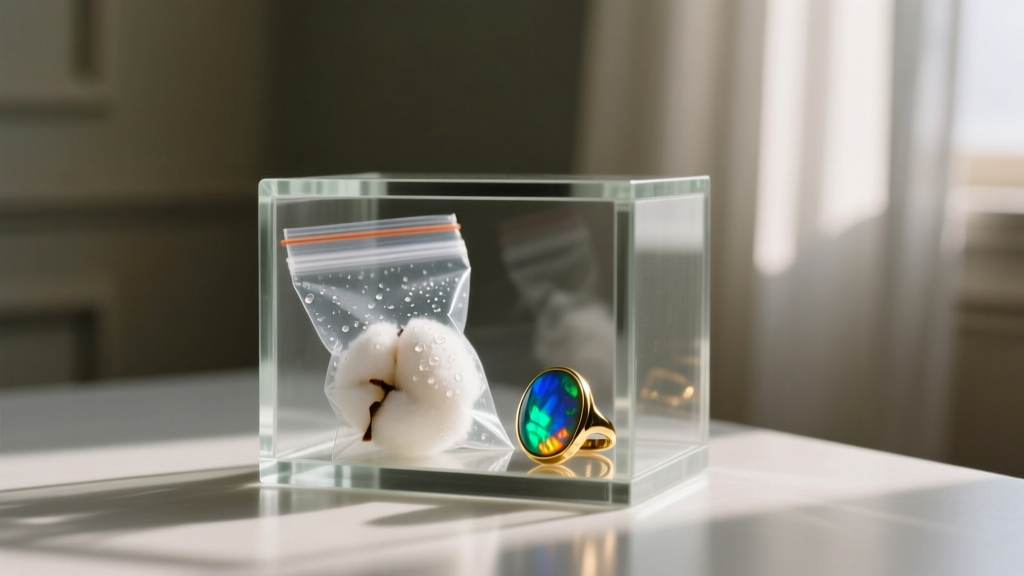
If you live in an arid climate or keep your home's heating system running constantly during winter, the ambient humidity can drop below 20%. This will slowly dehydrate your opals, increasing the risk of crazing over time. To prevent this, store your ethiopian opal jewelry in an airtight plastic bag with a slightly damp (not wet) cotton ball or a specialized jewelry humidity tab. This creates a stable micro-climate that prevents the stone from losing its internal moisture too rapidly.
Chemical Isolation
Always adhere to the 'last on, first off' rule. Put your opal jewelry on after applying perfumes, hairsprays, and lotions, and take it off before using household cleaners or washing dishes. The porous nature of Welo opals means they will act like a sponge for airborne chemicals and cosmetic oils.
Common Mistakes That Ruin Welo Opals
Even well-intentioned jewelry owners can destroy a hydrophane opal by applying standard gemstone care logic. Avoid these critical errors:
- Using Silver Dip or Jewelry Cleaners: Liquid chemical dips designed for silver or gold will be absorbed by the opal, causing irreversible chemical staining and clouding.
- Steam Cleaning: The intense heat and pressure of a jewelry steam cleaner will force water deep into the stone's core and cause immediate thermal shock, shattering the gem from the inside out.
- Wearing in Swimming Pools: Chlorine and saltwater are particularly aggressive. Salt can crystallize inside the opal's pores as the water evaporates, creating internal pressure that fractures the stone.
By respecting the unique hydrophane nature of these gems and following these meticulous, step-by-step protocols, your ethiopian opal jewelry will retain its mesmerizing play-of-color and structural integrity for generations. For further reading on gemological care standards, consult the GIA's official opal care guidelines.


