Gifting Haywood Turquoise Jewelry: 2026 Style Guide
Discover the ultimate 2026 gift guide for Haywood turquoise jewelry. Learn occasion matching, sizing, silver grades, and care tips for artisan pieces.

The Enduring Appeal of Artisan Turquoise Gifting
Gifting gemstone jewelry requires a delicate balance of understanding the recipient's personal style, the cultural weight of the stone, and the structural integrity of the piece. When it comes to Southwestern and artisan-crafted accessories, haywood turquoise jewelry has emerged as a premier choice for discerning gifters in 2026. Known for marrying high-grade, ethically sourced turquoise with heavy-gauge sterling silverwork, the Haywood artisan lineage represents a pinnacle of wearable art. Whether you are shopping for a milestone anniversary, a significant birthday, or a graduation, understanding the nuances of these pieces will elevate your gift from a simple accessory to a generational heirloom.
Turquoise has long been revered not just for its striking robin's-egg blues and deep matrix greens, but for its metaphysical associations with protection, wisdom, and grounding. However, the market is flooded with mass-produced imitations and dyed howlite. This guide will walk you through the exact specifications, occasion-matching strategies, and sizing mathematics required to confidently select and gift authentic Haywood turquoise jewelry.
Decoding the Haywood Artisan Signature
Before selecting a piece, it is crucial to understand what separates true Haywood craftsmanship from commercial tourist-trade jewelry. Authentic pieces are defined by their metallurgy and lapidary precision. When inspecting a piece, look for the following hallmarks of quality:
- Backplate Gauge: Genuine artisan cuffs and pendants utilize 14-gauge to 12-gauge .925 sterling silver backplates. This thickness ensures the piece will not warp under daily pressure and provides a substantial, premium weight.
- Bezel Construction: The bezel wire securing the cabochon should be at least 18-gauge, hand-filed, and pushed tightly against the stone's edge without any visible gaps or overlapping silver.
- Stampwork and Repoussé: Look for deep, hand-chiseled stampwork rather than shallow, machine-cast patterns. The oxidized patina should be intentionally applied to highlight these recesses, creating a striking contrast against the polished silver ridges.
According to the Gemological Institute of America (GIA), the value of turquoise is heavily dictated by its porosity, color saturation, and matrix pattern. Haywood artisans typically source from legendary, now-closed or highly restricted mines such as Kingman, Sleeping Beauty, and Number 8, ensuring the stones possess the density required for fine jewelry without excessive stabilization.
Occasion Matching: The 2026 Gifting Matrix
Matching the specific style of haywood turquoise jewelry to the recipient's milestone is critical. A heavy squash blossom necklace may overwhelm a recent college graduate, while a delicate pendant might feel insufficient for a major wedding anniversary. Use the matrix below to align the occasion with the appropriate piece and budget.
| Occasion | Recommended Piece | Stone & Matrix Profile | Estimated 2026 Price Range |
|---|---|---|---|
| 11th Wedding Anniversary | Wide Cuff Bracelet (1.5' - 2' width) | Number 8 Turquoise (Golden-brown webbed matrix) | $850 - $1,600 |
| December Birthday | Solitaire Bezel Pendant | Sleeping Beauty (Clear, matrix-free sky blue) | $250 - $450 |
| Milestone Graduation | Statement Ring (Wide Shank) | Kingman Turquoise (Deep blue with black pyrite flecks) | $400 - $750 |
| Retirement / Legacy Gift | Multi-Strand Heishi & Nugget Necklace | Mixed high-grade natural stones with silver beads | $1,200 - $2,800+ |
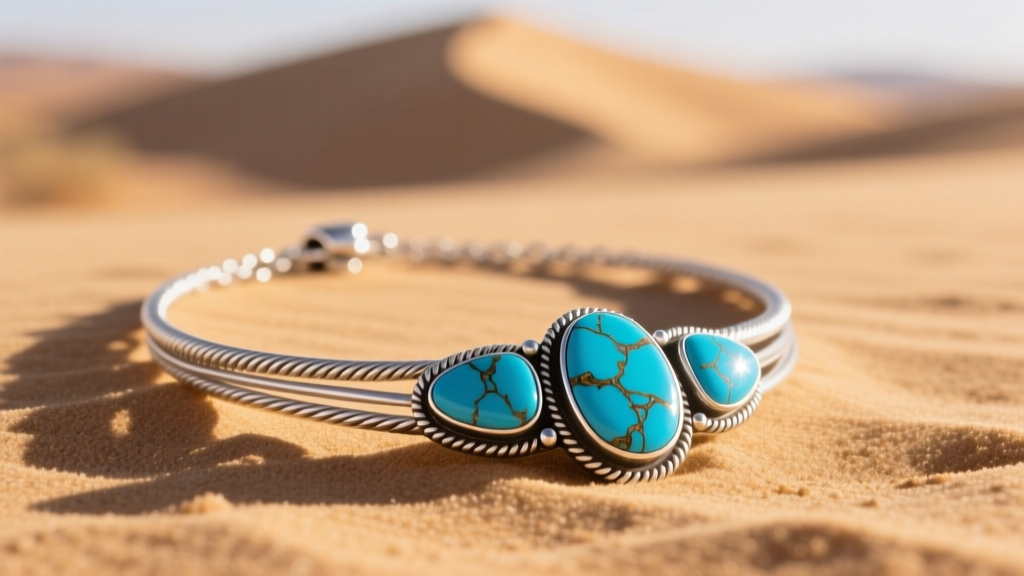
The 11th wedding anniversary is traditionally associated with turquoise, making a heavy-gauge Haywood cuff an incredibly meaningful gift. The wide surface area of a cuff allows the artisan to showcase large, spectacular cabochons that highlight the stone's natural matrix webbing.
Precision Sizing for Artisan Turquoise
One of the most common pitfalls when gifting Southwestern jewelry is incorrect sizing. Artisan turquoise pieces do not behave like standard commercial jewelry, and guessing a size often results in an unwearable gift.
The Cuff Bracelet Mathematics
Turquoise cuffs are rigid and rely on a precise fit over the wrist bones. To determine the correct size, measure the recipient's wrist at the widest point (over the ulna bone) using a flexible tailor's tape. Add exactly 1 to 1.25 inches to this measurement to account for the 'gap' at the underside of the wrist. For example, a 6.5-inch wrist requires a 7.5-inch to 7.75-inch total inner circumference (including the gap). Never attempt to bend or squeeze a heavy-gauge Haywood cuff to fit, as this can pop the stone out of its bezel or crack the cabochon.
Wide-Shank Ring Sizing
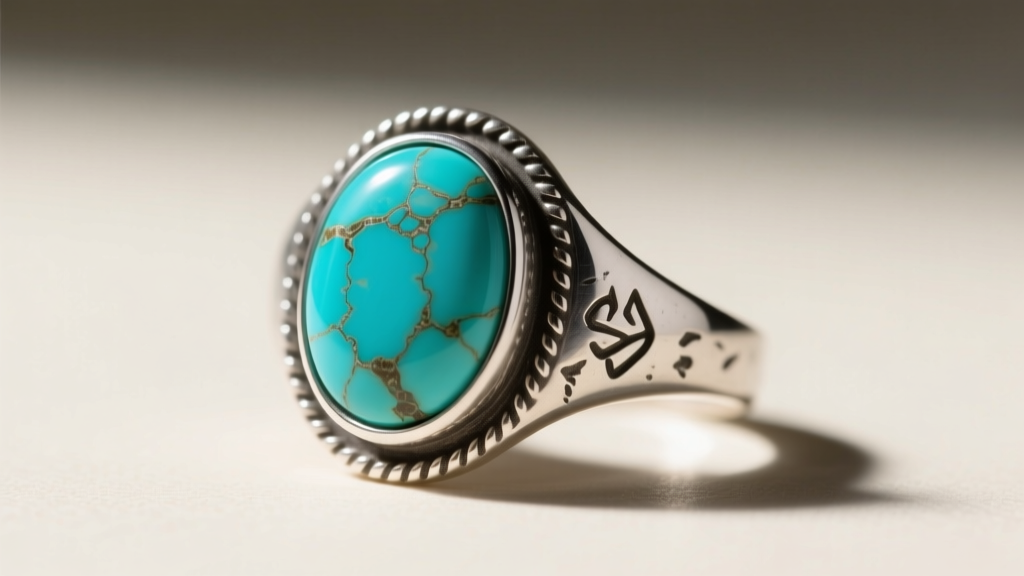
If you are gifting a turquoise ring, be aware that wide shanks (any band wider than 8mm) fit much tighter than standard wedding bands. The broader metal surface creates more friction and traps moisture against the skin. Always size up by a half-size to a full size from the recipient's standard ring size. If they wear a standard size 7, order a 7.5 or 8 for a wide-shank turquoise ring to ensure comfortable knuckle clearance.
Navigating Stone Treatments and Authenticity
As a gifter, you must be transparent about what you are buying. The Indian Arts and Crafts Association (IACA) maintains strict guidelines regarding the disclosure of gemstone treatments. While 'natural, untreated' turquoise commands the highest premium, it is also the most porous and fragile.
Pro Tip: Do not fear stabilized turquoise. Modern stabilization processes, such as the Zachery method, enhance the stone's durability and color without introducing artificial dyes or plastics, making it highly suitable for daily-wear rings and bracelets.
When purchasing haywood turquoise jewelry, request a certificate of authenticity or a detailed receipt from the gallery that explicitly states whether the stone is natural, stabilized, or reconstituted. Avoid 'block' turquoise or 'dyed howlite' entirely, as these lack the metaphysical resonance and geological history that make turquoise a meaningful gift.

The Recipient’s Care Protocol: What to Include in the Card
Turquoise is a relatively soft, porous gemstone, ranking between 5 and 6 on the Mohs hardness scale. Gifting the piece is only half the equation; equipping the recipient with the knowledge to preserve it is the other. Include a handwritten care card with your gift detailing the following rules:
- The 'Last On, First Off' Rule: Turquoise should be the last thing put on when dressing and the first thing taken off. Hairsprays, perfumes, and lotions can seep into the stone's pores, altering its color and degrading the polish over time.
- Avoid Ultrasonic Cleaners: Never clean turquoise in an ultrasonic machine or with harsh chemical silver dips. The vibrations can fracture internal faults, and the chemicals will strip the stone's natural waxy luster.
- Proper Storage: Store the piece in an anti-tarnish cloth pouch. Turquoise can be easily scratched by harder gemstones like diamonds or sapphires if tossed loosely into a jewelry box.
By presenting your gift with these care instructions, you demonstrate a level of thoughtfulness and expertise that transforms a beautiful object into a deeply considered, lifelong treasure. In 2026, as consumers increasingly value heritage, craftsmanship, and sustainability, a meticulously chosen piece of Haywood turquoise jewelry stands out as a profound expression of enduring affection.


