Beginner's Guide to Buying and Caring for Opal Jewelry
Discover everything you need to know about opal jewelry. Learn the differences between solid, doublet, and triplet opals, plus expert care tips.

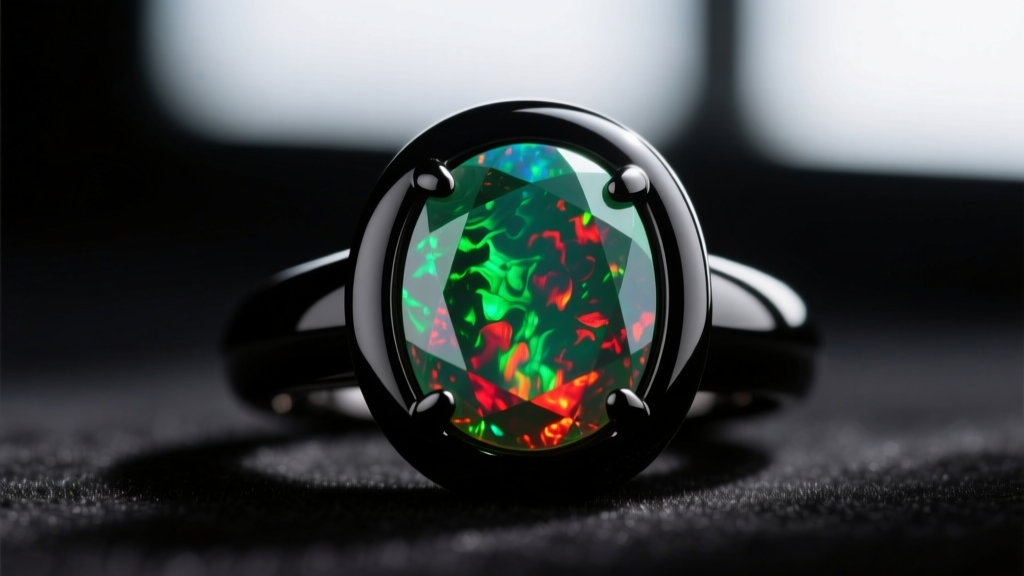
Opal jewelry has captivated collectors and casual wearers alike for centuries, renowned for its mesmerizing 'play-of-color' that seems to trap a galaxy inside a single stone. However, for beginners, navigating the world of opals can be incredibly daunting. Unlike diamonds or sapphires, opals are not evaluated on a simple 4Cs scale. Their value, durability, and care requirements fluctuate wildly based on their origin, structure, and water content. Whether you are eyeing a vintage pendant or investing in a modern engagement ring, understanding the fundamental mechanics of this unique gemstone is critical to making a smart purchase.
The Science of the Flash: Understanding Play-of-Color
Before diving into buying strategies, it is essential to understand what makes opal jewelry so visually striking. According to the Gemological Institute of America (GIA), opals are not technically minerals; they are mineraloids composed of hydrated silica. They form when silica-rich water fills cracks in rock and slowly evaporates, leaving behind microscopic spheres of silica. When light enters the stone, it bends around these tightly packed spheres, diffracting into the spectral colors we see. The size and uniformity of these spheres dictate the colors produced: larger, uniform spheres create rare red flashes, while smaller, irregular spheres produce common blues and greens.
Solid vs. Doublet vs. Triplet: The Opal Hierarchy
One of the most common pitfalls for beginners is assuming every opal on the market is a single, solid piece of stone. In reality, the market is flooded with composite opals designed to maximize yield and lower prices. Understanding the difference is vital for assessing value and durability.
| Opal Type | Composition | Durability & Care | Average Price Range |
|---|---|---|---|
| Solid Opal | 100% natural opal, cut and polished from a single rough piece. | Moderate. Safe for rings if set in bezels. Avoid harsh chemicals. | $50 to $15,000+ per carat |
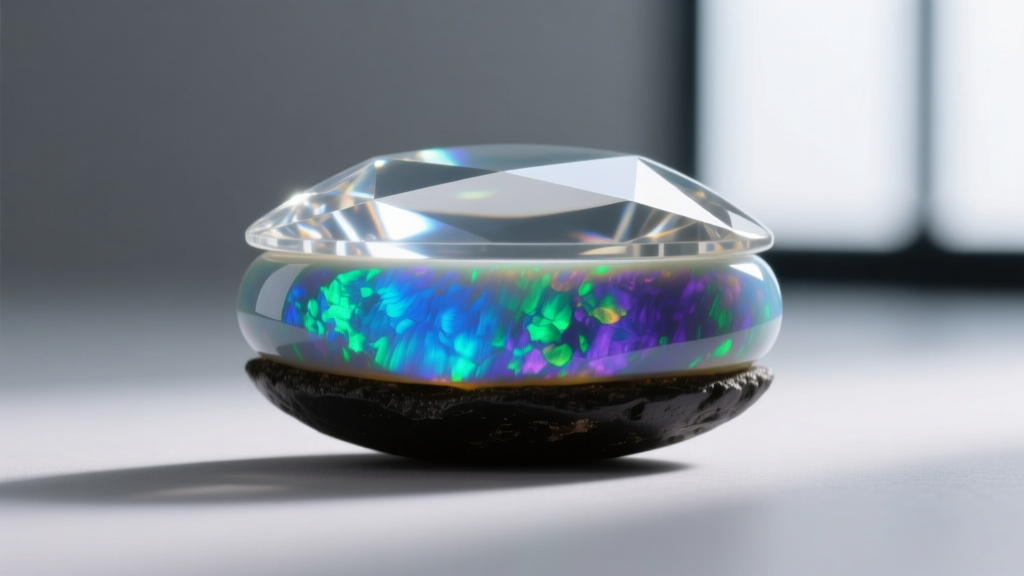
| Doublet | A thin slice of precious opal glued to a backing (usually ironstone or black potch). | Low. The glue layer can separate if submerged in water or exposed to heat. | $20 to $150 total per piece |
| Triplet | A paper-thin opal slice glued to a backing, capped with a clear quartz or glass dome. | Very Low. The clear cap protects the opal, but water will cloud the glue and ruin the stone. | $10 to $75 total per piece |
When shopping for high-end opal jewelry, always ask the jeweler for confirmation that the stone is a 'solid.' If you are buying a doublet or triplet, ensure the price reflects its composite nature, and never wear these pieces in the shower or pool.
Decoding Opal Origins: Australian vs. Ethiopian
The geographic origin of an opal drastically dictates its physical properties, stability, and market value. While opals are found globally, two sources dominate the fine jewelry market.
Australian Opals: The Industry Standard
Australia produces roughly 90% of the world's precious opals. The most prized are Black Opals from Lightning Ridge, which feature a dark body tone that acts as a canvas, making the neon play-of-color appear incredibly vivid. White or Light Opals from Coober Pedy have a milky, lighter body tone and generally command lower prices per carat. Australian opals are non-porous, meaning they are highly stable and safe for everyday wear, provided they are protected from hard knocks.
Ethiopian Welo Opals: The Hydrophane Marvel
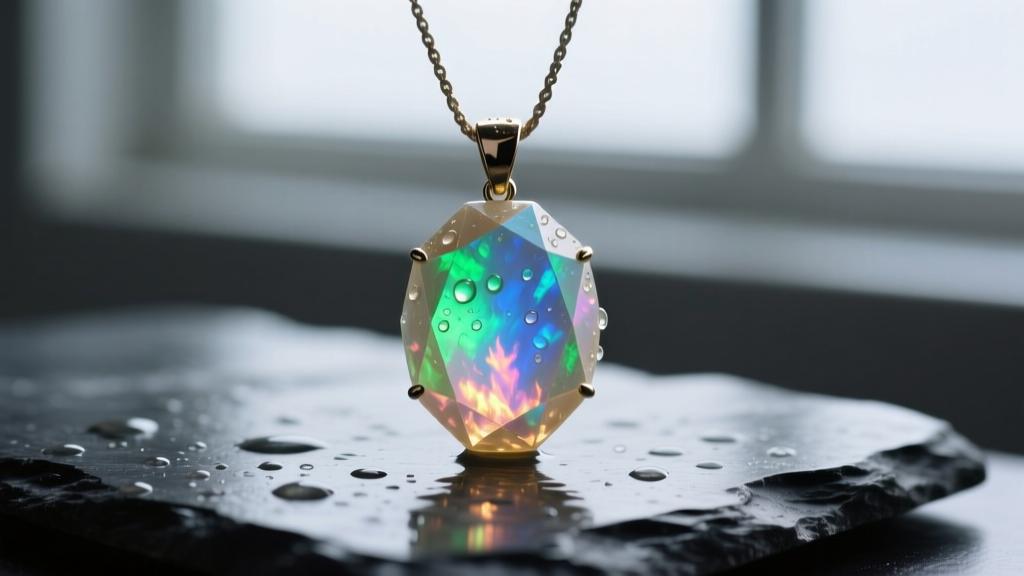
Discovered in 2008, Ethiopian Welo opals disrupted the market with their stunning transparency and intense, broad-flash color patterns. However, as noted by mineralogical databases like Mindat.org, Welo opals are 'hydrophane.' This means they are highly porous and will absorb water, oils, and lotions. If submerged, a vibrant Ethiopian opal can temporarily turn completely clear or yellow, losing its play-of-color until it slowly dries out over several weeks. They require meticulous care and are generally better suited for pendants and earrings than rings.
How to Buy Opal Jewelry: 4 Crucial Metrics
Forget the standard diamond grading reports. When evaluating solid opal jewelry, gemologists and the Opal Association of Australia rely on a specialized set of visual metrics:
- Body Tone (N1 to N9): This refers to the background color of the stone, ignoring the flash. N1-N4 (Black to Dark) are the most valuable, while N5-N9 (Light to White) are more common and affordable.
- Brightness (B1 to B5): B1 is 'Brilliant' (visible in direct sunlight), B3 is 'Bright' (standard commercial grade), and B5 is 'Dull.' Always prioritize brightness over size.
- Pattern: The arrangement of the color flashes. 'Harlequin' (broad, repeating diamond-shaped patches) is the rarest and most expensive. 'Pinfire' (tiny, uniform dots) and 'Broad Flash' (large, sweeping bands) are also highly desirable.
- Faults: Look out for 'crazing' (a network of fine cracks caused by rapid moisture loss) and 'sand' (gritty inclusions in the matrix). Avoid stones with structural cracks that reach the surface.
The Golden Rules of Opal Care and Maintenance
Opals are notoriously delicate. On the Mohs scale of mineral hardness, they rank between 5.5 and 6.5, making them softer than quartz, topaz, and everyday dust. To ensure your opal jewelry survives for generations, adhere to these strict maintenance protocols.
Expert Tip: Never store your solid opal jewelry in a safety deposit box or a dry safe for extended periods. The extremely low humidity can cause the stone's internal water content (typically 6-10%) to evaporate, leading to irreversible 'crazing' or cracking. Store them in a soft pouch with a slightly damp cotton ball if you live in an arid climate.
Setting Selection: If you are buying an opal ring, insist on a bezel setting or a heavy halo setting. Prong settings leave the edges of the cabochon exposed, and a single bump against a doorframe can chip the stone. For Ethiopian hydrophane opals, avoid rings entirely; stick to necklaces and earrings to prevent contact with hand sanitizers and soaps.
Cleaning: Never use ultrasonic cleaners, steam cleaners, or chemical jewelry dips. The vibrations can shatter internal fractures, and chemicals will destroy the stone's polish. Simply wipe solid Australian opals with a soft, damp microfiber cloth. For Ethiopian opals, use only a dry, soft brush to remove dust.
Final Thoughts for First-Time Buyers
Purchasing opal jewelry is an exercise in appreciating organic art. No two stones will ever share the exact same fingerprint of color, making your piece entirely unique. By prioritizing solid stones over composites, understanding the hydrophane risks of Ethiopian gems, and selecting protective bezel settings, you can confidently build an opal collection that remains vibrant and structurally sound for a lifetime. Always request high-resolution videos in varied lighting conditions before buying online, as studio lighting can easily mask poor brightness or structural faults.


