A Beginner's Guide to Buying and Wearing Quartz Jewelry
Learn how to identify real quartz jewelry, understand its Mohs hardness, and choose the best metal settings for everyday wear in this beginner's guide.

The Mineral Anatomy: Understanding Quartz
Quartz is the most abundant mineral on Earth's crust, composed of silicon dioxide (SiO2). Despite its prevalence, quartz jewelry spans a massive spectrum of quality, value, and durability. For beginners, the sheer volume of options can be overwhelming. To make informed purchasing decisions, you must first understand how gemologists classify this mineral family.
Quartz is divided into two primary categories based on crystal structure:
- Macrocrystalline: Varieties with visible, distinct crystal structures (e.g., Amethyst, Citrine, Smoky Quartz, Rose Quartz). These are typically faceted or cut into smooth cabochons.
- Cryptocrystalline (Microcrystalline): Varieties where the crystals are too small to be seen without high magnification (e.g., Chalcedony, Agate, Jasper, Onyx). These are almost exclusively cut into cabochons or carved into beads.
According to the Gemological Institute of America (GIA), all quartz varieties share a baseline Mohs hardness of exactly 7 and a specific gravity of 2.65. However, their market value and jewelry applications vary wildly based on inclusions and color saturation.
| Variety | Classification | Color Cause | Avg. Commercial Price (Per Carat) |
|---|---|---|---|
| Rock Crystal | Macrocrystalline | Colorless (Pure SiO2) | $5 - $15 |
| Rose Quartz | Macrocrystalline | Titanium / Iron / Manganese | $2 - $10 |
| Smoky Quartz | Macrocrystalline | Natural Gamma Irradiation | $10 - $30 |
| Rutilated Quartz | Macrocrystalline | Gold Rutile (TiO2) Needles | $50 - $150+ |
| Chrysoprase | Cryptocrystalline | Nickel Inclusions | $20 - $60 |
Real vs. Fake: An Authentication Framework
Because clear and rose quartz are relatively inexpensive to produce synthetically or imitate with glass, the market is flooded with fakes. When shopping for quartz jewelry, rely on these three gemological testing methods rather than visual guesswork.
1. The Thermal Conductivity Test
Natural quartz is a poor conductor of heat compared to glass and resin. If you press a genuine quartz cabochon against your cheek or the inside of your wrist, it will feel distinctly cool to the touch and will take several seconds to warm up to your body temperature. Glass and plastic imitations will feel room-temperature or warm almost immediately.
2. Inclusion and Bubble Analysis
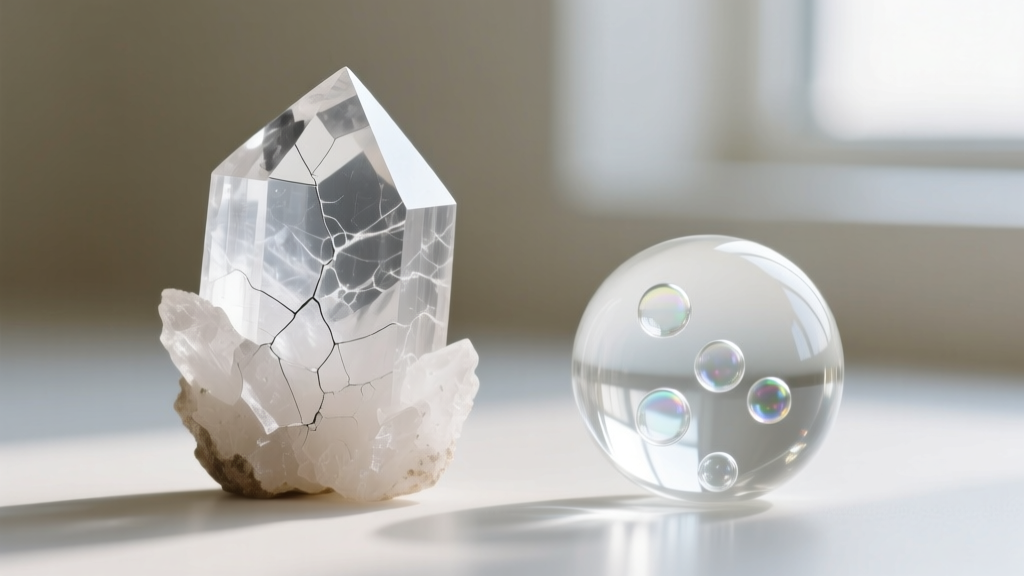
Using a 10x jeweler's loupe, examine the interior of the stone. Glass imitations frequently contain spherical air bubbles created during the melting process. Natural quartz will never contain perfectly round bubbles. Instead, you may see angular fluid inclusions, feather-like internal fractures, or mineral needles. As noted by the Mindat Mineral Database, natural rutile needles in rutilated quartz will show sharp, metallic, angular striations, whereas fake inclusions look soft and melted.
3. Refractive Index (RI) Verification
For advanced beginners purchasing high-value rutilated or phantom quartz, ask the jeweler for the Refractive Index reading. Natural quartz has a consistent RI of 1.544 to 1.553. Standard jewelry glass sits around 1.50. This data point is impossible to fake and provides absolute certainty.
Strategic Setting Selection for Longevity
While a Mohs hardness of 7 makes quartz suitable for daily wear, it is not impervious to damage. The most common failure mode for quartz rings is not striking a hard surface, but rather environmental micro-abrasion. Airborne dust contains microscopic particles of silica (quartz). Over years of daily wear, wiping dust off your ring will cause micro-scratches that dull the polish. To mitigate this, the metal setting must be chosen strategically.
- Bezel Settings (Highly Recommended): A full or semi-bezel metal rim protects the girdle (the widest edge of the stone) from chipping if dropped. This is mandatory for heavily included stones like rutilated or tourmalinated quartz, where internal needles create structural weak points.
- Prong Settings (Use with Caution): While prongs allow more light to enter faceted smoky or citrine quartz, they leave the girdle exposed. If you choose a prong-set quartz ring, ensure it has at least six prongs and a low-profile gallery to prevent snagging.
- Metal Pairings: Quartz pairs exceptionally well with 14k or 18k yellow gold, which enhances the warmth of citrine and the contrast of smoky quartz. For rose quartz, 14k rose gold or rhodium-plated sterling silver provides the best aesthetic harmony.
Popular Varieties and Their Best Jewelry Applications
Rose Quartz: The Cabochon Standard
Rose quartz is rarely transparent enough for faceting. High-quality rose quartz jewelry features smooth, domed cabochons that exhibit a soft, cloudy translucency. When cut en cabochon with a high dome, premium rose quartz can display asterism (a star-like reflection caused by microscopic rutile fibers). Look for stones with a saturated, even pink hue, avoiding those with chalky white zoning.
Smoky Quartz: Faceted Elegance
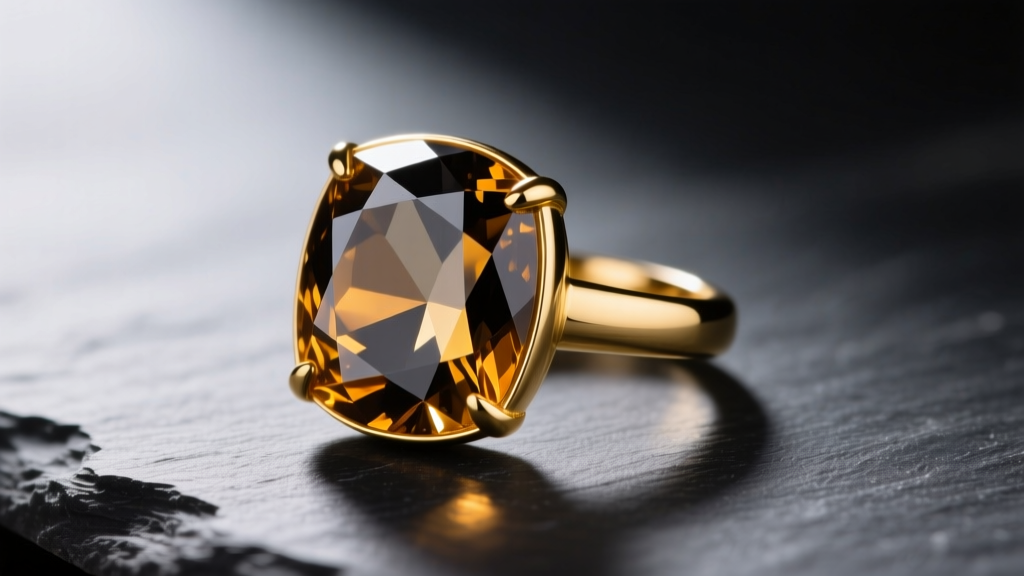
Smoky quartz ranges from a light, champagne brown to a deep, opaque chocolate. The best smoky quartz jewelry utilizes precision step-cuts or emerald cuts. These faceting styles maximize the stone's natural brilliance and highlight the rich, earthy tones without making the stone look muddy. Avoid stones that appear completely black unless they are intentionally carved into beads.
Rutilated Quartz: The Collector's Choice
Rutilated quartz contains striking needles of golden, red, or black rutile. The most valuable specimens feature dense, parallel, golden needles (often called "Venus hair"). Because the rutile inclusions have a slightly different hardness (Mohs 6 to 6.5) than the host quartz, the surface can pit during polishing. Always buy rutilated quartz jewelry from lapidaries who use specialized diamond paste polishing techniques to ensure a flat, scratch-free dome.
Care Protocols: What to Avoid
Proper maintenance is critical to preserving the optical clarity of your quartz jewelry. The International Gem Society warns against using ultrasonic cleaners for included quartz varieties. The high-frequency vibrations can cause internal fractures to expand, literally shattering a rutilated or heavily included stone from the inside out.
The Safe Cleaning Method:
- Fill a bowl with lukewarm water and a few drops of mild, phosphate-free dish soap.
- Soak the jewelry for 5 to 10 minutes to loosen skin oils and lotions.
- Gently brush the back of the stone (the pavilion) with a soft-bristled baby toothbrush. Dirt accumulation behind the stone is the primary cause of lost brilliance.
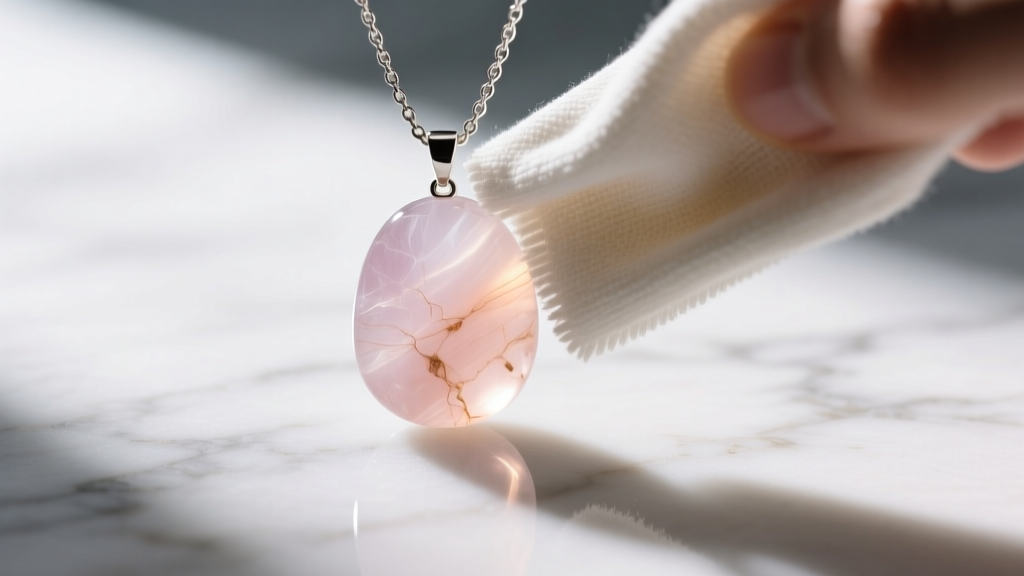
- Rinse under lukewarm running water and pat dry with a lint-free microfiber cloth.
Final Thoughts for the Aspiring Collector
Quartz jewelry offers an incredible entry point into the world of gemology. By understanding the mineral's structural properties, demanding proper authentication, and selecting protective metal settings, you can build a collection that is both visually stunning and built to last a lifetime. Start with a versatile smoky quartz pendant or a bezel-set rose quartz ring, and gradually explore the fascinating world of included and cryptocrystalline varieties as your expertise grows.


