Expert Care and Cleaning for Citrine Gemstone Jewelry
Learn expert cleaning methods, safe storage tips, and daily maintenance routines to keep your citrine gemstone jewelry vibrant and completely scratch-free.

The Mohs Scale Reality: Understanding Citrine's Durability
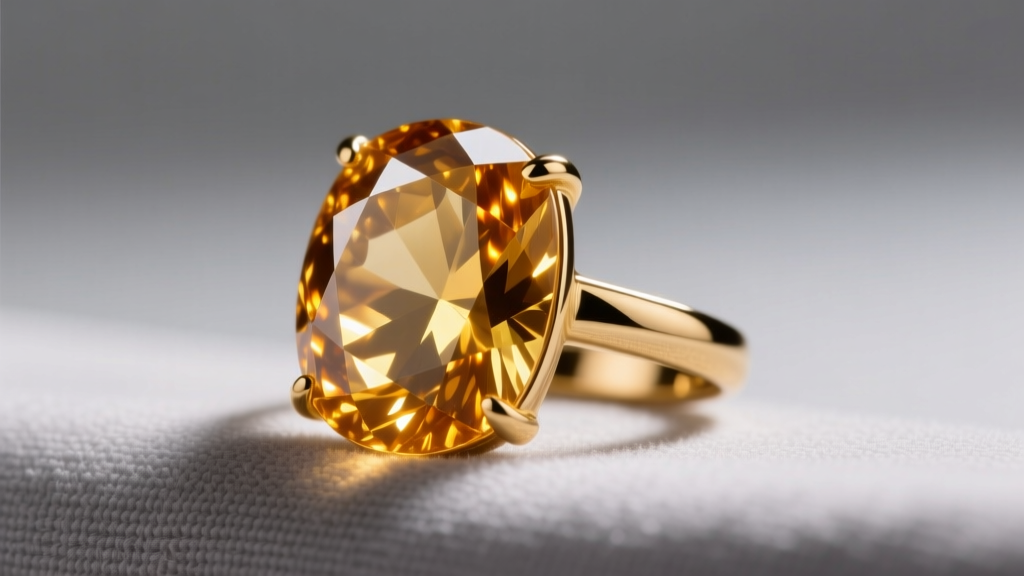
Citrine is celebrated for its warm, sun-kissed hues ranging from pale champagne to deep Madeira orange. However, to properly maintain citrine gemstone jewelry, you must first understand its physical limitations. Citrine is a variety of quartz, placing it at a 7 on the Mohs scale of mineral hardness. While a 7 is considered 'hard' in gemological terms, it is not invincible.
The critical E-E-A-T insight here involves environmental dust. Airborne dust contains microscopic quartz particles (hardness 7) and occasionally harder silicates. If you wipe your citrine jewelry with a dry cloth without rinsing it first, you are essentially rubbing abrasive quartz dust across the surface of your stone. Over time, this causes a network of micro-scratches that dulls the gem's polish and reduces its optical brilliance. Proper care always begins with a liquid rinse to lift these abrasive particles away before any physical contact is made.
Step-by-Step Cleaning Protocol for Citrine
Routine cleaning is essential to remove sebum, lotions, and environmental grime that accumulate on the pavilion (bottom) of the stone, blocking light return. Follow this precise, gemologist-approved protocol to safely clean your pieces at home.
What You Need
- Distilled or filtered lukewarm water: Tap water can contain hard mineral deposits that leave cloudy spots.
- pH-neutral liquid dish soap: Avoid harsh detergents, bleach, or ammonia-based cleaners.
- Extra-soft baby toothbrush: Standard adult toothbrushes often have medium or hard bristles that can scratch the metal setting or the stone's girdle.
- Lint-free microfiber cloth: Never use paper towels or tissues, as they contain wood fibers capable of micro-scratching polished quartz.
The 5-Minute Soak and Brush Method
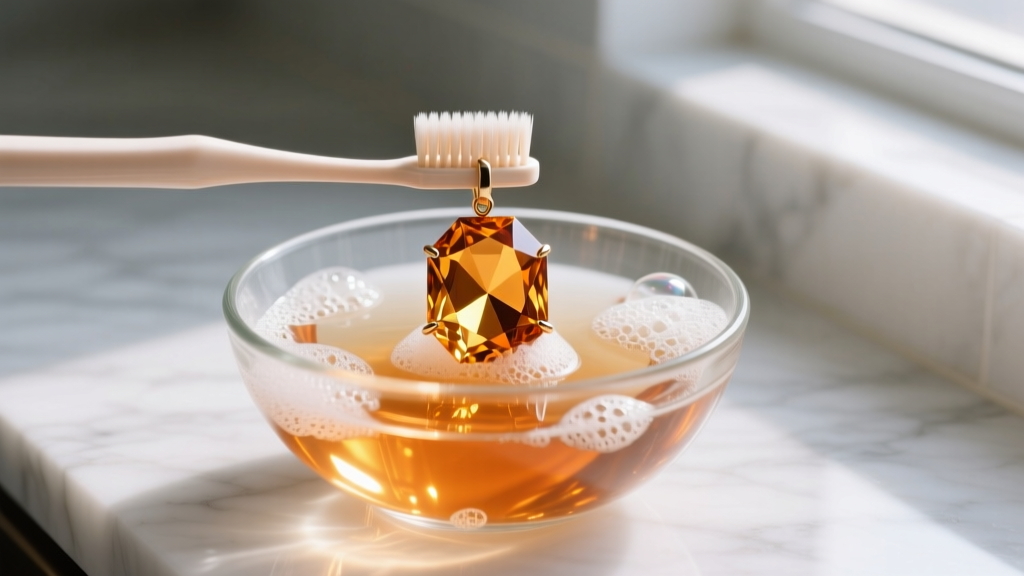
Begin by mixing a few drops of pH-neutral soap into a bowl of lukewarm distilled water. Submerge your citrine gemstone jewelry and let it soak for exactly three to five minutes. This loosens hardened oils trapped beneath the setting. Next, take your extra-soft baby toothbrush and gently agitate the water around the stone, paying special attention to the pavilion and the areas where the prongs meet the girdle. Rinse thoroughly under a gentle stream of lukewarm water, ensuring the drain is securely plugged. Finally, pat the piece dry with your microfiber cloth and allow it to air-dry completely before storing.
The Danger Zone: Chemical and Thermal Hazards
Not all cleaning methods are created equal. While citrine is relatively stable, certain modern jewelry cleaning technologies and household chemicals pose severe risks to both the stone and its metal setting. According to the Gemological Institute of America (GIA), sudden temperature changes and harsh acids are the primary enemies of quartz-family gems.
| Cleaning Method | Safety for Citrine | Gemologist Notes & Risks |
|---|---|---|
| Warm Soapy Water | Highly Safe | The gold standard for home cleaning. Use lukewarm, not hot, water. |
| Ultrasonic Cleaners | Conditionally Safe | Safe only for untreated, fracture-free stones. High-frequency vibrations can shatter stones with internal liquid inclusions or fractures. |
| Steam Cleaners | Unsafe | Avoid completely. The sudden thermal shock from high-pressure steam can cause internal fracturing or alter heat-treated stones. |
| Chemical Dips | Unsafe | Silver dips and chlorine bleach will aggressively tarnish or pit the gold/silver settings and can etch the stone's polish. |
Identifying Treatments: Fracture-Filled Citrine
A crucial aspect of modern gemstone care is understanding how your specific stone has been treated. While natural, untreated citrine is quite durable, a significant portion of commercial citrine on the market is clarity-enhanced. Fracture-filled citrine has been infused with a colorless resin or glass-like substance to hide internal fissures and improve transparency.
If your citrine is fracture-filled, the standard ultrasonic and warm water rules no longer apply. Heat and chemicals will melt or cloud the filler, permanently ruining the stone's appearance. To identify fracture-filled stones, look for a 'flash effect'—a rainbow-like iridescence inside the stone when tilted under a bright light. If you suspect your jewelry is clarity-enhanced, restrict your cleaning to a simple wipe with a damp, untreated microfiber cloth and consult a professional jeweler for deep cleaning.
Storage and Environmental Hazards
How you store your citrine gemstone jewelry is just as important as how you clean it. Because citrine is a 7 on the Mohs scale, it will easily be scratched by harder gemstones such as topaz (8), corundum/sapphire/ruby (9), and diamond (10). Conversely, citrine will scratch softer stones like opal, pearl, and turquoise.

The UV Fading Myth vs. Reality
A common misconception in the crystal community is that citrine will rapidly fade if exposed to sunlight. In reality, natural citrine (colored by trace amounts of iron) is highly stable under normal UV exposure. However, much of the citrine sold today is actually amethyst that has been heat-treated to achieve its golden color. While this heat treatment is permanent and stable under normal wear, prolonged, extreme UV exposure (such as leaving the jewelry on a car dashboard in peak summer) can cause subtle color shifts over many years. Furthermore, extreme ambient heat can cause thermal expansion in the metal setting, potentially loosening the prongs. As the American Gem Society (AGS) recommends, always store fine jewelry in a cool, dark, and dry environment when not in use.
Routine Setting and Prong Maintenance
The gemstone is only half the equation; the metal setting requires equal attention. Citrine is frequently set in 14k or 18k yellow gold to enhance its warm tones. However, gold is a malleable metal. Prongs that secure the citrine can wear down, bend, or catch on fabrics over time.
Implement a bi-annual maintenance schedule. Every six months, use a 10x jeweler's loupe to inspect the prongs. Look for flat spots on the tips of the prongs (indicating metal loss) or gaps between the prong and the stone's girdle. If your citrine is set in a bezel, check the metal rim to ensure it is tightly folded over the edge of the stone. Catching a loose prong early prevents the catastrophic loss of your gemstone. If you notice any lifting or movement, cease wearing the piece immediately and take it to a certified bench jeweler for a quick retipping or tightening service.
Conclusion
Maintaining the fiery brilliance of your citrine gemstone jewelry does not require expensive equipment or harsh chemicals. By respecting its position on the Mohs scale, avoiding thermal shock, and utilizing a gentle, consistent cleaning routine, you ensure that your jewelry remains as vibrant as the day you acquired it. Treat your citrine with the specific, informed care it demands, and it will continue to radiate its signature golden warmth for a lifetime.