Beginner's Guide to Authentic Turquoise Trail Jewelry
Discover the ultimate beginner's guide to turquoise trail jewelry. Learn to identify natural stones, matrix patterns, and authentic Native American silverwork.

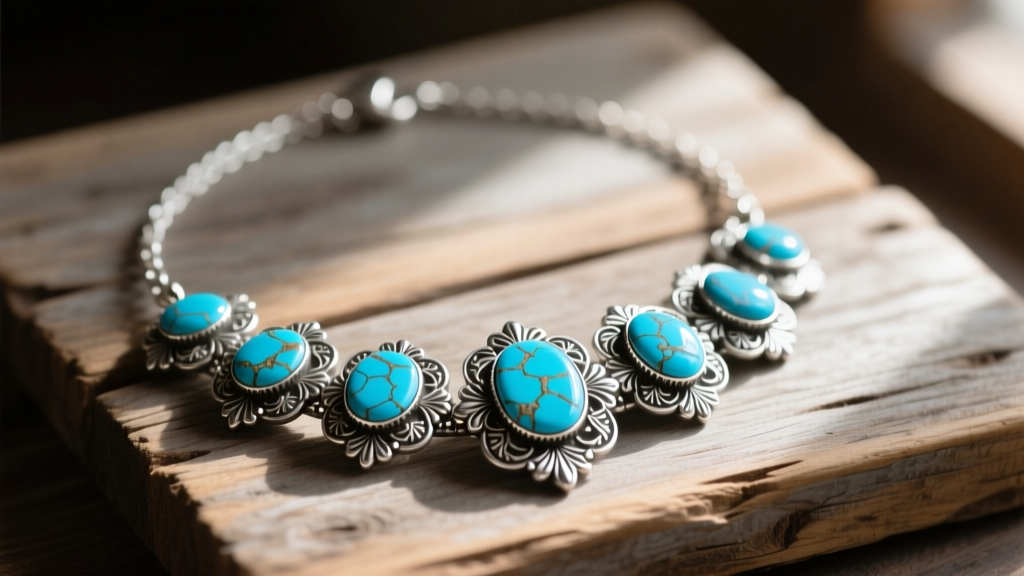
Stretching across 52 miles of New Mexico’s high desert, the Turquoise Trail (Highway 14) is more than just a National Scenic Byway; it is the historic artery of North American gemstone mining and indigenous artistry. For beginners stepping into the world of Southwestern adornment, navigating the galleries, trading posts, and roadside stands between Albuquerque and Santa Fe can feel overwhelming. How do you distinguish a museum-grade heirloom from a mass-produced souvenir?
In 2026, as the global supply of high-grade natural turquoise continues to shrink following the closures of legendary mines like Sleeping Beauty, understanding the nuances of turquoise trail jewelry is essential for both collectors and casual buyers. This guide will decode the geology, metallurgy, and market realities of the trail, equipping you with the expertise to buy with absolute confidence.
What Exactly is Turquoise Trail Jewelry?
The term 'turquoise trail jewelry' refers to pieces crafted by Native American artisans—predominantly Navajo (Diné), Zuni, and Santo Domingo Pueblo silversmiths—that feature turquoise mined from or historically traded along the New Mexico corridor. The epicenter of this heritage is the Cerrillos Hills, home to the oldest turquoise mines on the continent, worked by indigenous peoples centuries before European contact.
Authentic trail jewelry is characterized by a marriage of local geology and traditional metalsmithing. According to New Mexico True, the cultural landscape of this byway is defined by generations of families who have passed down both mining claims and silversmithing techniques. When you purchase a piece directly from an artisan along the trail, you are not just buying a gemstone; you are acquiring a fragment of living Southwestern history, often featuring heavy-gauge sterling silver and stones that carry the distinct, earthy signatures of the local landscape.
Decoding the Stone: Natural vs. Stabilized Turquoise
The most critical lesson for any beginner is understanding turquoise treatments. Because turquoise is a relatively soft, porous mineral (ranking 5 to 6 on the Mohs scale), rough material is often treated to survive the cutting and polishing process. The Gemological Institute of America (GIA) notes that stabilization is an industry-wide practice, but transparency is what separates fine jewelry from tourist trinkets.
| Treatment Type | Description | Market Acceptance | Value Impact |
|---|---|---|---|
| Natural | Untreated; cut and polished directly from high-grade rough. | Highly Prized by Collectors | Premium (10x+ base value) |
| Stabilized | Infused with clear epoxy or resin under pressure to harden the stone. | Industry Standard (Acceptable) | Moderate (Retains value if disclosed) |
| Dyed | Color enhanced using artificial dyes during the stabilization process. | Low / Controversial | Low (Must be heavily discounted) |
| Reconstituted | Turquoise dust and scrap bonded with resin to form blocks. | Avoid for Fine Jewelry | Very Low (Considered imitation) |
As a rule of thumb, stabilization is perfectly acceptable and necessary for softer stones, provided the artisan discloses it. However, if a vendor claims a vivid, flawless, deep-blue stone is 'natural' but prices it under $100, proceed with extreme caution.
The Matrix Matters: Reading the Webbing
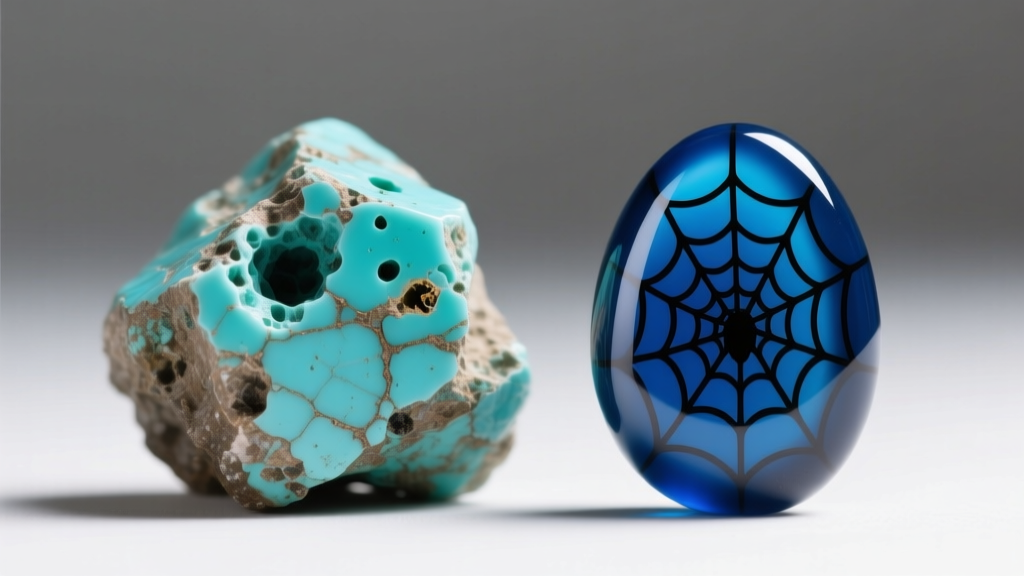
The 'matrix' is the host rock that remains embedded in the turquoise. Far from being a flaw, the matrix is the gemstone’s fingerprint. Along the Turquoise Trail, you will frequently encounter Cerrillos turquoise, which is famous for its warm, sky-to-robin-egg blue color set against a striking brown or black limonite matrix.
- Spiderweb Matrix: A delicate, net-like pattern of host rock. Highly sought after, especially when the webbing is tight and symmetrical.
- Pyrite Flecks: Tiny, metallic gold specks often found in Nevada turquoise (like Number 8), which sometimes makes its way to high-end trail traders.
- Matrix-Free: Stones with no visible host rock. While Sleeping Beauty was famous for this, its 2012 closure means matrix-free natural stones command astronomical prices today.
When examining a piece, use a jeweler's loupe. Natural matrix will show depth, varying opacity, and organic, jagged edges where it meets the blue copper-aluminum phosphate. Dyed or fake matrix often looks like uniform, painted-on lines sitting on the surface.
Silver Settings and Craftsmanship Hallmarks
The stone is only half the story; the silverwork is where the artisan’s voice truly emerges. Authentic turquoise trail jewelry is almost exclusively set in .925 Sterling Silver. Look for the '.925' or 'Sterling' stamp, usually located on the inside of a ring band or the back of a pendant.
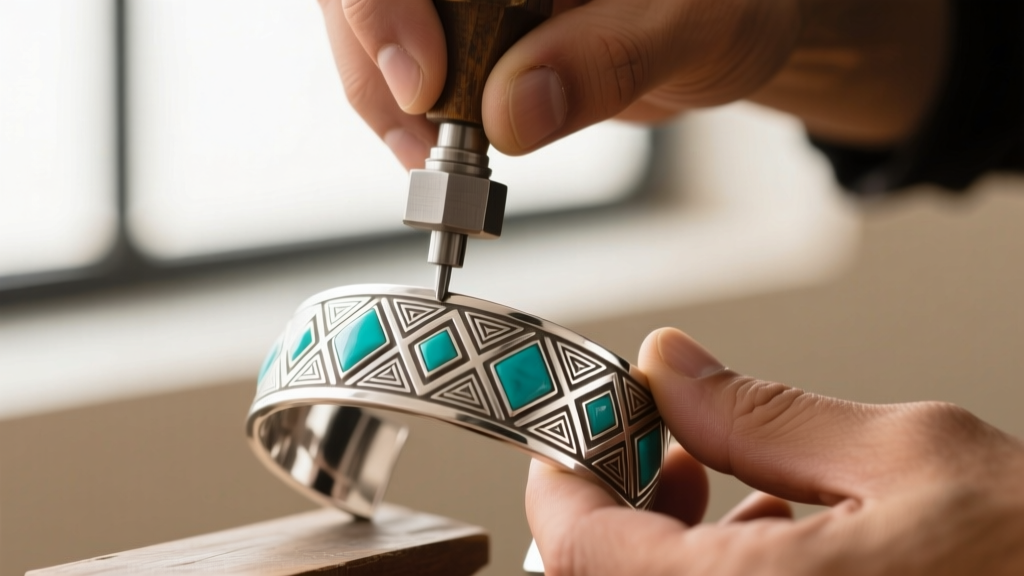
Beyond the purity stamp, examine the construction techniques:
Sweat Soldering and Bezels
High-quality Native American silversmithing utilizes 'sweat soldering' to attach the silver bezel (the rim holding the stone) to the backplate. Run your fingernail along the inside of the bezel; it should feel completely seamless. If you feel a ridge or see excess glue, the piece is likely a commercial import rather than a trail-crafted original.
Stamp Work vs. Tufa Casting
Navajo artists are renowned for intricate steel stamp work, using individual hand-struck tools to create geometric patterns in the silver. Conversely, tufa casting involves pouring molten silver into a mold carved from volcanic tufa stone, resulting in a distinct, slightly porous, and heavily textured finish that pairs beautifully with rustic, unpolished turquoise nuggets.
A Beginner’s Pricing Guide for the Trail
Pricing turquoise trail jewelry requires an understanding of weight, treatment, and artist provenance. In the current 2026 market, silver spot prices and turquoise scarcity have pushed baseline costs upward. Here is a realistic pricing framework for authentic, artisan-made pieces:
- Small Stud Earrings (Stabilized, simple bezel): $45 – $90
- Medium Pendant (Natural, visible matrix, stamp work): $150 – $350
- Heavy Cuff Bracelet (14+ gauge silver, large natural cabochon): $400 – $1,200+
- Squash Blossom Necklace (Multi-stone, traditional Naja pendant): $1,500 – $5,000+
Pro Tip: Always ask for the artist’s name and tribal affiliation. Reputable galleries along Highway 14 will provide a written receipt detailing the stone's origin (e.g., 'Natural Cerrillos'), the treatment status, and the silversmith's hallmark.
'True turquoise trail jewelry is an investment in indigenous sovereignty and geological rarity. Never haggle with an artisan over the price of natural stones; the earth does not yield its treasures easily, and the hands that shape them carry generations of knowledge.' — Master Silversmith Proverb, adapted from Pueblo trading traditions.
Care and Maintenance for Desert Stones
Turquoise is a hydrous phosphate, meaning it contains water and is highly sensitive to its environment. To protect your investment, adopt a strict care regimen. Because the stone is porous, it will absorb oils, lotions, and chemicals, which can alter its color over time, turning vibrant blues into dull greens.
The Golden Rules of Turquoise Care:
- Put it on last: Apply perfumes, hairsprays, and lotions before donning your jewelry.
- Never use ultrasonic cleaners: The high-frequency vibrations and harsh chemical baths will fracture the stone and strip away any stabilizing resins.
- Polish only the silver: Use a dry, untreated silver polishing cloth. Avoid liquid silver dips, which can permanently stain the turquoise matrix.
- Store in a breathable environment: Keep pieces in a soft cloth pouch rather than an airtight plastic bag, which can trap moisture and cause the silver to tarnish aggressively against the stone.
By understanding the geology of the Cerrillos hills, the metallurgy of Navajo silverwork, and the ethics of stone stabilization, you are now equipped to explore the Turquoise Trail not just as a tourist, but as an informed custodian of Southwestern heritage.


