How Do You Clean Turquoise Jewelry Safely? A Beginner's Guide
Learn how do you clean turquoise jewelry without damaging this porous stone. Discover safe methods, what to avoid, and expert care tips for lasting shine.


The Delicate Beauty of Turquoise: Why It Needs Special Care
Turquoise is one of the most historically significant and visually striking gemstones in the world, revered for its captivating sky-blue to deep green hues. However, if you have ever wondered how do you clean turquoise jewelry without ruining its vibrant color, you are not alone. Unlike diamonds or sapphires, turquoise is a relatively soft, highly porous hydrous phosphate of copper and aluminum. This unique chemical composition makes it incredibly susceptible to damage from water, chemicals, heat, and even the natural oils on your skin.
As a beginner in gemstone care, it is crucial to understand that the cleaning methods you use for your gold or diamond pieces will almost certainly destroy your turquoise. According to the Gemological Institute of America (GIA), turquoise ranks between 5 and 6 on the Mohs scale of hardness, meaning it can be easily scratched by everyday dust (which contains quartz, ranking at 7). Furthermore, its porosity means it acts like a microscopic sponge, absorbing liquids and chemicals that can permanently alter its color and structural integrity.
Identifying Your Turquoise: Natural vs. Stabilized
Before you begin cleaning, you must identify what type of turquoise you own. The cleaning protocol changes drastically depending on the stone's treatment.
Natural, Untreated Turquoise
Natural turquoise is completely unaltered. It is highly porous and will naturally change color over time as it absorbs oils from your skin, lotions, and environmental pollutants. While some collectors love this "patina," others prefer the original bright blue. Water exposure can cause natural turquoise to swell slightly, leading to micro-fractures, especially if the stone has a heavy matrix (the brown or black host rock veins).
Stabilized Turquoise
Because natural turquoise is often too soft to be cut and polished, over 90% of the turquoise on the market today is stabilized. This process involves subjecting the stone to pressure while infusing it with a clear epoxy or plastic resin. Stabilization hardens the stone and locks in its color, making it more resistant to oils and water. However, harsh chemicals like acetone or alcohol can dissolve the resin, leaving the stone looking cloudy and ruined.
Imitation Turquoise (Dyed Howlite or Magnesite)
Cheaper jewelry often features howlite or magnesite dyed to look like turquoise. If you expose these stones to water, alcohol, or commercial jewelry cleaners, the blue dye will literally bleed off, revealing the stark white stone underneath.
Step-by-Step: How Do You Clean Turquoise Jewelry Safely?
When it comes to the actual cleaning process, less is always more. Follow this gentle, dry-first approach recommended by the GIA Gem Care guidelines to safely remove dirt and oils.
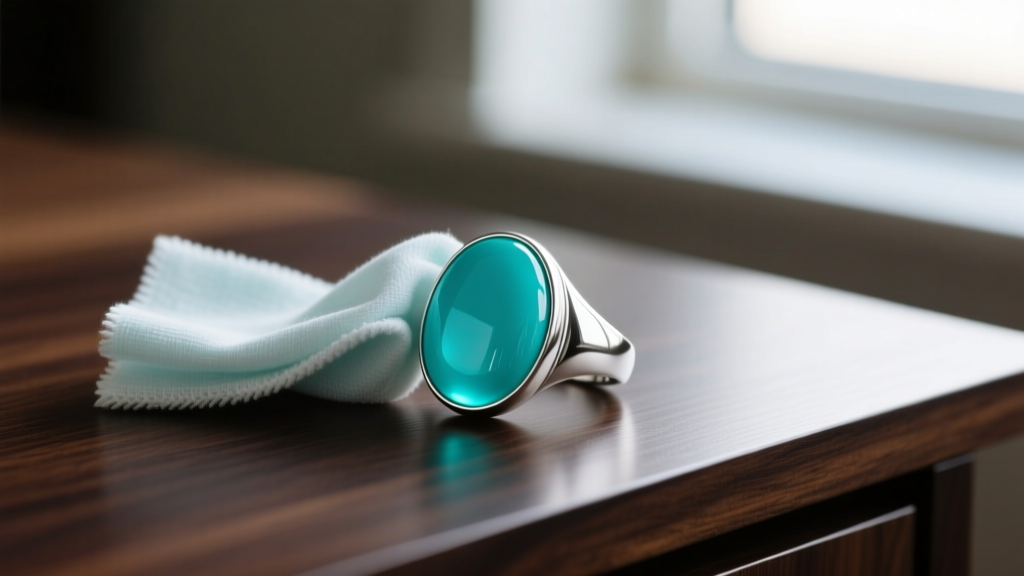
Step 1: The Dry Dusting Method
For routine maintenance and light dust, avoid liquids entirely.
- Use a Soft Brush: Take a clean, dry, soft-bristled brush (a baby hairbrush or a dedicated horsehair jewelry brush works perfectly). Gently sweep away dust from the surface of the stone and the crevices of the metal setting.
- Wipe with Microfiber: Use an untreated, lint-free microfiber cloth to gently buff the surface of the turquoise. This removes surface oils and restores the stone's natural waxy luster without the need for moisture.
Step 2: The Damp Wipe (For Stubborn Grime on Stabilized Stones)
If your stabilized turquoise has accumulated stubborn dirt that a dry brush cannot remove, you can use a minimal amount of moisture.
- Dampen a Cloth: Lightly dampen a corner of a soft cotton cloth with distilled water. Never use tap water, as the chlorine and dissolved minerals can leave microscopic deposits on the stone.
- Wipe Gently: Quickly wipe the surface of the stone. Do not let the water pool or sit on the turquoise.
- Dry Immediately: Instantly dry the stone completely with the dry side of the cloth. Leaving any moisture on the stone or in the metal setting can lead to water spots or metal tarnish.
The "Never Do This" List: Fatal Turquoise Cleaning Mistakes
To protect your investment, you must avoid the common cleaning traps that ruin porous gemstones. Bench jewelers see the aftermath of these mistakes daily.
- Never Use Ultrasonic Cleaners: The high-frequency sound waves and heat generated by ultrasonic machines can easily shatter turquoise, especially if it has natural inclusions or a heavy matrix. The cleaning solutions used in these machines will also strip the stone's polish.
- Never Use Steam Cleaners: Sudden temperature changes (thermal shock) and pressurized steam will cause turquoise to crack and discolor instantly.
- Avoid Commercial Silver Dips: Liquid silver cleaners (like Tarn-X) contain harsh acids, such as thiourea. If these liquids touch your turquoise, they will etch the surface, leaving permanent, dull white burn marks that cannot be polished out.
- Keep Away from Acetone and Alcohol: Nail polish remover and rubbing alcohol will degrade the epoxy used in stabilized turquoise and strip the dye from imitation stones.
Jeweler's Insight: "The most common tragedy we see at the bench is a customer dropping a beautiful vintage Navajo turquoise squash blossom necklace into a commercial silver dip to clean the tarnished metal. The acid eats into the porous turquoise in seconds, permanently ruining a priceless heirloom."
Cleaning the Silver or Gold Settings Around Your Turquoise
The biggest challenge in learning how do you clean turquoise jewelry is dealing with the metal setting. Turquoise is most commonly set in sterling silver, which tarnishes (oxidizes) quickly. Since you cannot submerge the piece in a silver dip, you must clean the metal with surgical precision.
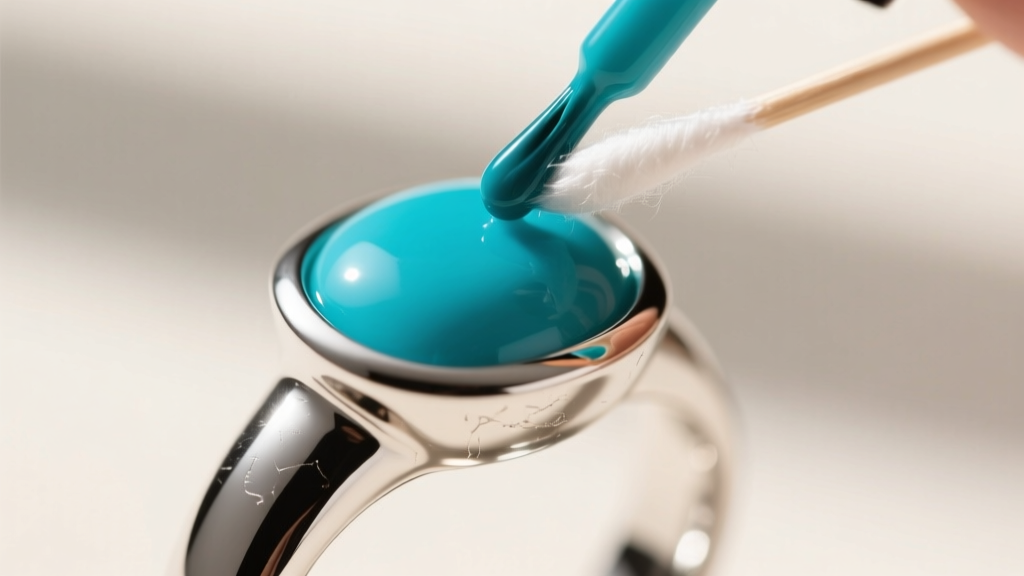
The Precision Swab Technique
To polish tarnished silver bezels and shanks without touching the stone:
- Dip a cotton swab (Q-tip) into a small amount of high-quality silver polish paste (like Wright's Silver Cream).
- Carefully apply the polish only to the tarnished silver, keeping the swab at least a millimeter away from the turquoise.
- Use a dry cotton swab to buff the silver to a shine.
- Finally, use a slightly damp cloth to wipe away any residual polish from the metal, ensuring none of the moisture or polish transfers to the stone.
Alternatively, you can use a treated silver polishing cloth. Fold the cloth so you have a small, precise edge, and carefully rub the silver. Never drag the treated cloth across the surface of the turquoise, as the micro-abrasives in the cloth will scratch the stone's polish.
Long-Term Storage and Maintenance Framework
Proper storage is just as important as proper cleaning. Turquoise is easily scratched by harder gemstones and can be damaged by extreme environmental conditions. Use the table below to guide your storage habits.
| Storage Factor | Best Practice (Do) | Common Mistake (Don't) |
|---|---|---|
| Environment | Store in a cool, dry, dark place away from direct sunlight. | Leave on a sunny windowsill or in a humid bathroom. |
| Separation | Keep in individual soft cloth pouches or lined jewelry boxes. | Toss into a communal jewelry box where diamonds or quartz can scratch it. |
| Wear Order | Put turquoise jewelry on after applying makeup, perfume, and hairspray. | Spray perfume directly onto the neck/chest while wearing a turquoise necklace. |
| Activity | Remove before swimming (chlorine/salt), showering, or doing dishes. | Wear turquoise rings while washing hands or applying hand sanitizer. |
Conclusion
Understanding how do you clean turquoise jewelry safely is all about respecting the stone's natural fragility. By abandoning harsh chemicals, ultrasonic machines, and soaking methods in favor of gentle dry brushing and precision metal polishing, you can ensure your turquoise remains vibrant for generations. Whether you own a modern stabilized cabochon ring or a vintage natural turquoise heirloom, treating this porous gemstone with the specialized care it demands will preserve its captivating color and historical charm.