How to Make Gemstone Jewelry: A Wire-Wrapping Masterclass
Learn how to make gemstone jewelry with our expert wire-wrapping guide. Discover wire gauges, tool essentials, and step-by-step stone setting techniques.

The Art and Engineering of Wire-Wrapped Gemstones
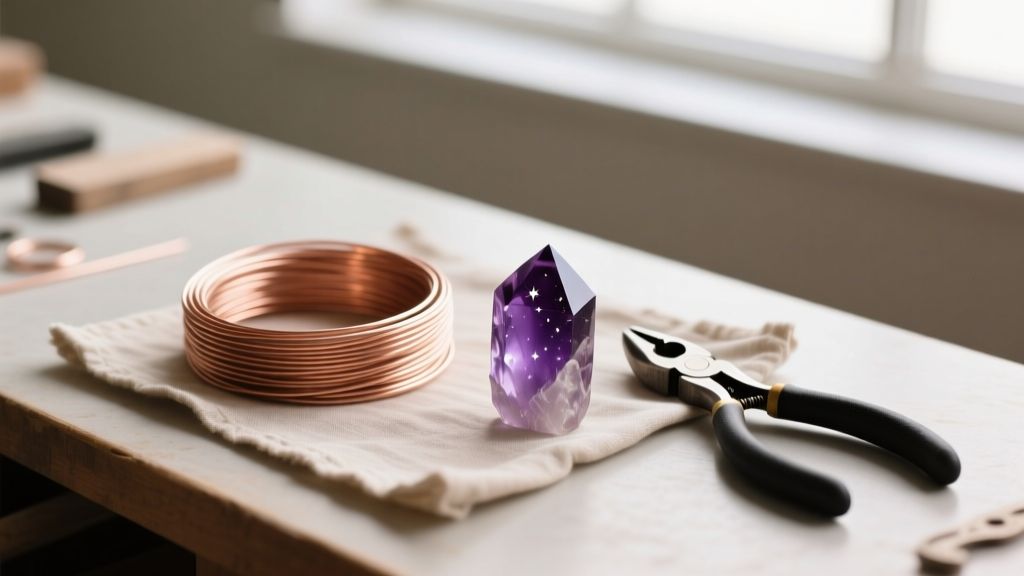
Learning how to make gemstone jewelry without the need for expensive soldering torches or casting equipment begins with mastering wire wrapping. This ancient technique relies on mechanical tension, friction, and structural weaving to secure stones. In 2026, wire wrapping has evolved from a rudimentary craft into a highly respected lapidary art form, favored by independent jewelers for its ability to showcase raw, uncalibrated crystals and delicate faceted briolettes alike. However, the margin for error is slim. Incorrect wire temper, improper gauge selection, or excessive tension can result in marred metal or shattered gemstones. This masterclass provides the exact metallurgical specs, tool requirements, and step-by-step frameworks needed to engineer durable, professional-grade wire-wrapped jewelry.
Essential Tools and Metallurgical Specifications
Before selecting your stones, you must understand your metal. Jewelry wire is categorized by gauge (thickness) and temper (hardness). According to Rio Grande, a leading precious metals supplier, temper dictates how the wire behaves under stress.
- Dead Soft: Highly malleable. Ideal for weaving, coiling, and wrapping around stones. It work-hardens as you manipulate it, eventually becoming brittle if overworked.
- Half-Hard: Offers a balance of malleability and structural integrity. Best for creating jump rings, ear wires, and the main structural frames of a pendant.
- Full-Hard: Extremely stiff and springs back when bent. Rarely used in stone wrapping due to the high tension it exerts on fragile gems.
Wire Gauge Reference Chart
| Gauge (AWG) | Diameter (mm) | Temper Recommendation | Primary Use Case |
|---|---|---|---|
| 28-Gauge | 0.32mm | Dead Soft | Weaving, micro-coiling, securing thin bails |
| 24-Gauge | 0.51mm | Dead Soft / Half-Hard | Threading briolettes, binding structural frames |
| 20-Gauge | 0.81mm | Half-Hard | Structural cages, ear wires, heavy-duty jump rings |
| 16-Gauge | 1.29mm | Half-Hard | Clasps, thick bangles, heavy pendant bails |
Pro Tip: Always use nylon jaw pliers when straightening half-hard sterling silver or gold-filled wire. Standard steel chain-nose pliers will leave permanent gouges in precious metals, ruining the finish before you even begin wrapping.
Selecting Gemstones: The Mohs Scale and Failure Modes
Not all crystals can withstand the mechanical pressure of wire wrapping. The Gemological Institute of America (GIA) utilizes the Mohs scale of mineral hardness to classify scratch resistance, but toughness (resistance to breaking) is equally critical.
High-Risk Stones (Avoid as a beginner): Fluorite (Mohs 4), Selenite (Mohs 2), and raw Opal (Mohs 5.5). These stones have distinct cleavage planes or high water content. The localized pressure of a 20-gauge wire pulling tight will cause them to cleave or crack instantly.
Ideal Starter Stones: Raw Quartz (Mohs 7), Agate (Mohs 7), Jade (Mohs 6.5 but exceptionally high toughness due to interlocking fibrous structure), and faceted Onyx or Sapphire briolettes.
Step-by-Step: The Classic Top-Drilled Briolette Wrap
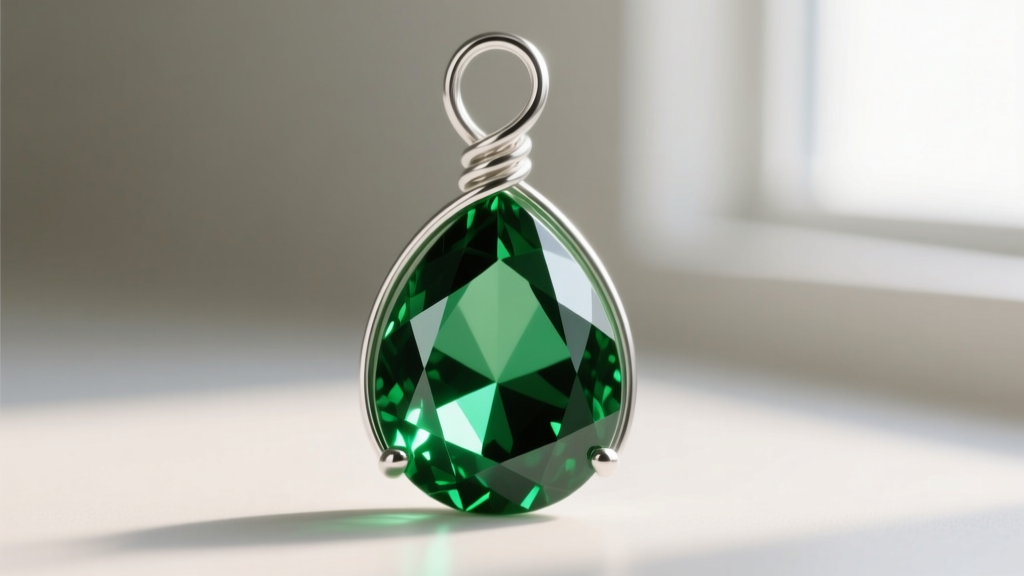
The briolette wrap is the foundational technique for teardrop-shaped, top-drilled faceted stones. This method creates a secure, articulated bail that allows the stone to swing freely and catch the light.
Materials Needed
- 1x Top-drilled gemstone briolette (approx. 10mm - 15mm)
- 6 inches of 24-gauge dead-soft wire (Argentium silver recommended for tarnish resistance)
- Flush cutters, chain-nose pliers, and round-nose pliers
The Execution
- Thread and Align: Pass the 24g wire through the stone's hole. Pull it through until you have a short tail (about 1.5 inches) on one side and a long tail (4.5 inches) on the other.
- Create the Stem: Bend both wires straight up, flush against the top of the stone. Pinch them together tightly using your chain-nose pliers directly above the drill hole.
- Form the Bail: Take the long tail and wrap it tightly around the short tail three times, moving upward to create a neat, stacked coil. This forms the base of your bail.
- The Loop: Use your round-nose pliers to bend the remaining long tail backward over the top of the coil, creating a loop for your chain to pass through.
- Secure and Trim: Wrap the excess wire down the stem, tightly coiling over the initial wraps. Use flush cutters to snip the wire as close to the stem as possible, then use the chain-nose pliers to gently squeeze the cut end flat against the stem so it doesn't snag on clothing.
Step-by-Step: The Tension-Based Raw Crystal Cage
Raw, undrilled crystals require a structural cage that relies on geometry and tension rather than holes. This method is perfect for raw tourmaline, emerald clusters, or quartz points.
Materials Needed
- 1x Raw crystal point or rough stone (approx. 1.5 inches long)
- Two 12-inch pieces of 20-gauge half-hard wire
- 3 feet of 28-gauge dead-soft weaving wire
The Execution
- Bind the Frame: Lay the two 20g wires parallel to each other. Using the 28g weaving wire, bind them together tightly at the exact center with 5-6 wraps.
- Splay the Basket: Bend the four ends of the 20g wires outward to form a cross or 'X' shape. Place your raw stone in the center. Bring the wires up around the sides of the stone.
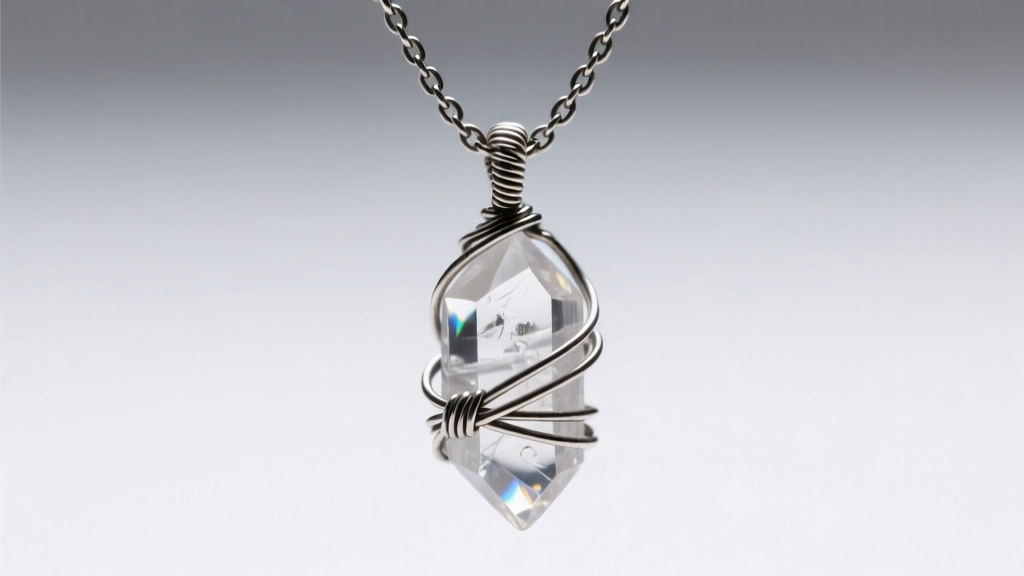
- Establish Tension Points: Identify the natural indentations or 'waists' of the raw crystal. Seat the 20g wires into these grooves. Use the 28g wire to weave horizontal 'belts' around the vertical frame wires, locking the stone in place.
- Crown and Bail: Gather all four wires at the top of the stone. Bind them tightly together with the 28g weaving wire to form a solid neck. Bend two of the wires into a bail loop, and trim and tuck the remaining two wires into the weave.
Pro Tips for Tension Management and Work-Hardening
"The most common failure mode in wire wrapping is not the wire breaking, but the wire work-hardening to the point of brittleness while under tension against a stone, causing it to snap and scratch the gem."
To prevent this, you must understand work-hardening. Every time you bend, kink, or pull dead-soft wire, its crystalline structure compresses, making it harder and more brittle. If you are weaving 28g wire and it suddenly feels stiff and resistant, stop. You must anneal the wire (heat it with a torch until dull red and quench it) or start with a fresh piece. Never force stiff wire against a gemstone.
Furthermore, when pulling structural wires tight against a stone, use a leather or felt barrier between your pliers and the wire. If your pliers slip, the steel teeth will bite into your silver frame and, worse, chip the edge of your gemstone.
Sourcing and Pricing Guide for 2026
Building a profitable or cost-effective hobby requires smart sourcing. Here is what you should expect to pay for premium materials in the current market:
- Argentium Silver Wire: Expect to pay between $1.80 and $2.50 per foot for 20-gauge half-hard. It costs roughly 15% more than traditional sterling silver but contains germanium, making it highly resistant to tarnish—a massive selling point for jewelry buyers.
- 14k Gold-Filled Wire: Priced around $3.00 to $4.50 per foot. Ensure you are buying "14/20" gold-filled (meaning 1/20th of the total weight is 14k gold), not gold-plated, which will rub off during the wrapping process.
- Gemstones: Avoid big-box craft stores, which often sell dyed or glass-filled stones at a 300% markup. Source directly from lapidaries at regional gem and mineral shows, or verified online wholesalers like GemSelect, where a high-quality 15mm faceted onyx briolette will cost between $3.00 and $6.00, compared to $15.00+ at retail.
Final Thoughts on Craftsmanship
Mastering how to make gemstone jewelry via wire wrapping is an exercise in patience and precision. By respecting the Mohs hardness of your stones, selecting the correct wire temper, and executing clean, flush cuts, you elevate your work from amateur craft to fine artisan jewelry. Practice your tension on inexpensive copper wire and raw agates before moving to precious metals and faceted gems, and your structural integrity will be flawless.