Troubleshooting Turquoise Jewelry From India: Fakes, Fading & Fixes
Discover how to authenticate, clean, and troubleshoot common issues with turquoise jewelry from India, from dyed howlite fakes to silver tarnish.

The Allure and the Pitfalls of Indian Turquoise
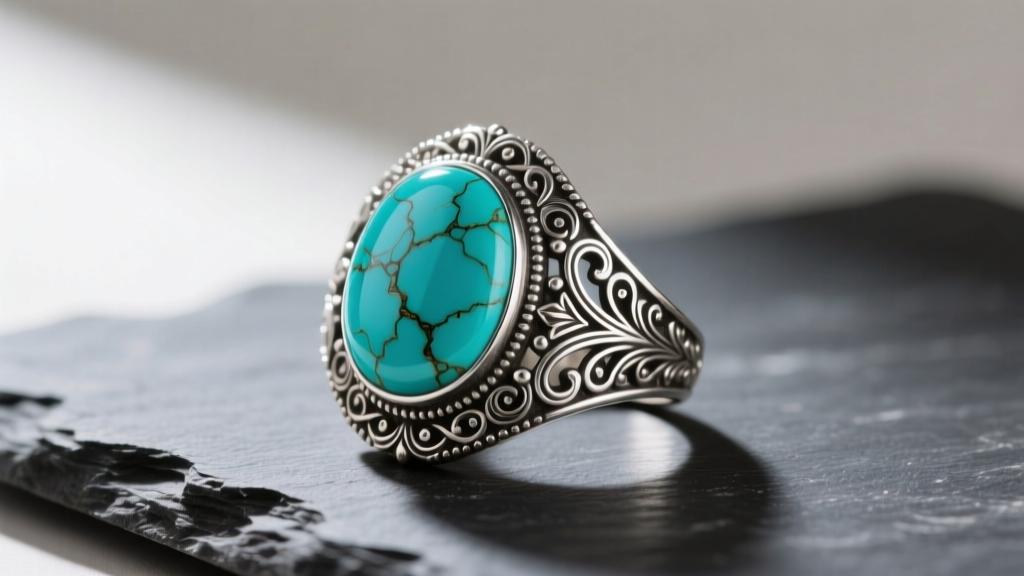
The global bohemian and artisan jewelry markets have long been captivated by the intricate silverwork and vibrant gemstones originating from Rajasthan and Gujarat. When shopping for turquoise jewelry from India, buyers are often drawn to the elaborate filigree settings, heavy oxidized silver contrasts, and the striking blue-green hues of the stones. Jaipur, in particular, is a global hub for gemstone cutting and setting, importing rough turquoise from Iran, Afghanistan, and the American Southwest to be crafted into stunning statement pieces.
However, the massive demand for these bohemian staples has led to a saturated market riddled with treated stones, outright imitations, and improper care practices that ruin porous gems. Whether you are a vintage collector, a wholesale buyer, or a consumer who just inherited a heavy Jaipur-crafted cuff, troubleshooting the authenticity and structural integrity of your piece is essential. This guide provides a gemological and practical framework for identifying fakes, reversing silver tarnish without damaging the stone, and addressing stabilization failures common in imported artisan jewelry.
Problem 1: Spotting Dyed Howlite and Reconstituted Fakes
The most frequent issue buyers face with mass-exported Indian turquoise is the substitution of genuine stone with dyed howlite, magnesite, or reconstituted turquoise dust. Because natural, high-grade turquoise is expensive and increasingly scarce, some overseas manufacturers use porous white minerals, dye them blue, and stamp them into silver bezels.
The Acetone and Magnification Tests
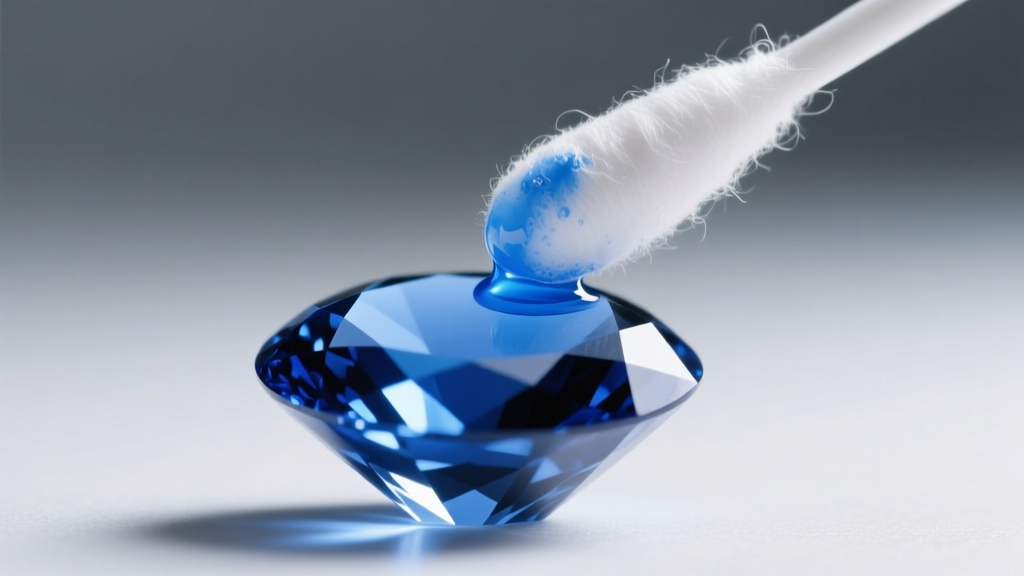
To troubleshoot suspected dyed howlite, you need 100% pure acetone (standard nail polish remover often contains oils and conditioners that will skew results) and a cotton swab. Rub the acetone-dipped swab firmly along the edge of the stone or in an inconspicuous crevice of the matrix. If the cotton turns blue, you are dealing with a surface dye. According to the Gemological Institute of America (GIA), dye concentrations in howlite are often trapped in the stone's natural porous channels, which under a 10x jeweler's loupe will look like tiny blue spiderwebs rather than natural brown or black mineral inclusions.
| Feature | Natural Turquoise | Dyed Howlite / Magnesite | Reconstituted (Block) |
|---|---|---|---|
| Mohs Hardness | 5.0 - 6.0 | 3.5 (Howlite) / 4.0 (Magnesite) | 2.0 - 4.0 (Epoxy dependent) |
| Matrix (Veins) | Deep, varied, organic patterns | Superficial, uniform, dye-heavy | Blocky, unnatural, glued seams |
| Acetone Test | No color transfer | Blue dye transfers to cotton | Rarely transfers (sealed in resin) |
| Thermal Reaction | No odor when heated slightly | No odor | Smells like burning plastic/epoxy |
Problem 2: The "Green Skin" and Tarnished Silver Dilemma
A common complaint regarding turquoise jewelry from India involves the metal settings. Authentic Jaipur artisans typically use genuine 925 sterling silver, often employing an intentional oxidation process (antiquing) to darken the crevices and highlight the intricate floral or geometric filigree. However, cheaper export lots may use "Tibetan silver" or alpaca, which are copper-nickel-zinc alloys containing zero actual silver.
Troubleshooting Skin Discoloration
If your finger or wrist turns green, it is not the turquoise causing the reaction. Turquoise does contain copper, but the copper is locked within the aluminum phosphate crystal structure. The green residue is almost always caused by the copper alloy in the silver setting reacting with the acids, salts, and lotions on your skin. If a magnet sticks firmly to the clasp or band, or if the metal lacks a "925" hallmark, you are likely dealing with a base metal alloy. To prevent this, coat the inside of the ring or cuff with a thin layer of clear jewelry guard or micro-crystalline wax.
Safe Cleaning Protocols for Indian Silver-Turquoise Pieces
Cleaning heavily tarnished Indian silver settings is a major troubleshooting hurdle because commercial silver dips and ultrasonic cleaners will destroy the turquoise. Ultrasonic waves can cause internal fracturing (crazing) in porous gems, while harsh chemical dips will strip the natural oils from the turquoise, turning it a dull, chalky green.
- Isolate the Stone: Use painter's tape to carefully mask off the turquoise cabochon, exposing only the silver bezel and filigree.
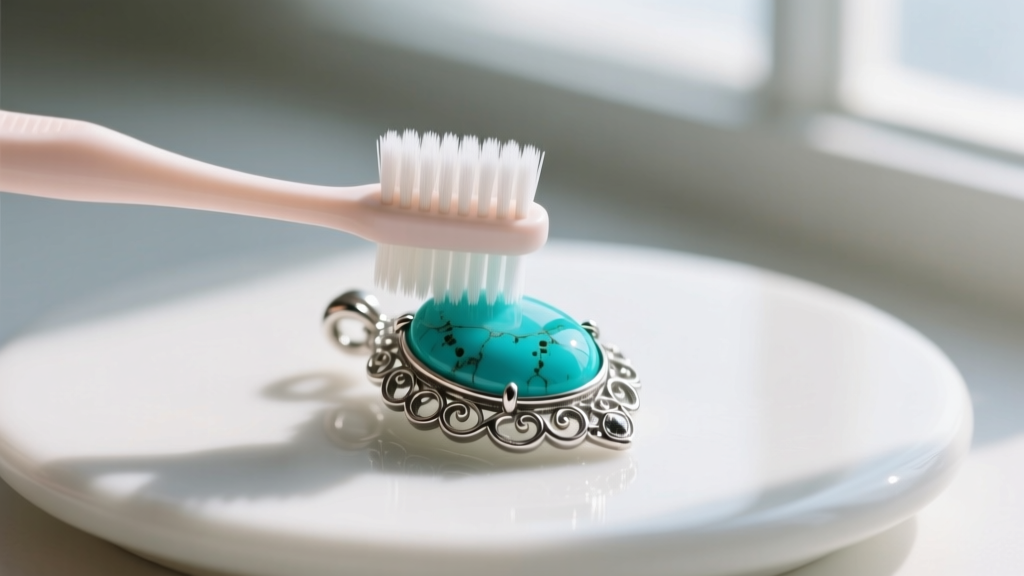
- Mild Agitation: Mix a few drops of phosphate-free dish soap (like Dawn) into lukewarm water. Dip a soft-bristled baby toothbrush into the solution and gently scrub the silver.
- Targeted Polishing: For stubborn tarnish in the silver crevices, use a dry, tightly woven silver polishing cloth. Avoid liquid polishes entirely.
- Dry Thoroughly: Moisture trapped between the silver backing and the porous stone can cause the turquoise to degrade or the adhesive to fail. Use a microfiber cloth and a hairdryer on the "cool" setting to ensure the piece is bone-dry.
For more comprehensive guidelines on maintaining precious metal settings without damaging adjacent gemstones, refer to the care standards published by The Silver Institute.
Problem 3: Chalky Turquoise and Stabilization Failures
Because natural, gem-grade turquoise is quite rare, the vast majority of turquoise on the global market—including stones set in high-end Indian silver—is stabilized. Stabilization is a legitimate lapidary process where a porous, "chalky" turquoise is infused with a clear epoxy resin or polymer under pressure. This hardens the stone, deepens the color, and makes it durable enough for jewelry.
Identifying Peeling and Clouding
The problem arises when low-grade manufacturing uses poor-quality resins or inadequate vacuum chambers. If your turquoise is developing a cloudy, white film just beneath the surface, or if the top layer feels like it is peeling away from the matrix, the stabilization has failed. This is often accelerated by exposure to UV light, high heat, or harsh cosmetics.
Expert Insight: Never attempt to "re-oil" a stabilized turquoise stone. While untreated, natural turquoise from historical Persian or Native American sources was sometimes treated with animal fats or oils to enhance color, applying oil to a modern resin-stabilized stone will trap dirt in the microscopic surface pores, creating a permanent, muddy appearance.
When to Seek Professional Lapidary Intervention
If your stone has suffered severe stabilization failure or surface scratching, DIY fixes will only worsen the damage. A professional lapidary can carefully remove the stone from its silver bezel, sand down the damaged top layer using progressive wet-sanding pads (from 400 up to 3000 grit), and re-polish it using a cerium oxide slurry. They can then re-set the stone, often tightening the Indian silver bezel wire which may have stretched over time.
Sourcing Framework: Buying Authentic Pieces in 2026
If you are actively sourcing turquoise jewelry from India for retail or personal collections, implementing a strict vetting framework is non-negotiable. The market has evolved, and sophisticated fakes now mimic the Zachery treatment (a non-polymer method that enhances turquoise without adding plastics).
- Demand Origin Documentation: Reputable Jaipur exporters should be able to disclose the rough origin of their stones (e.g., Kingman, Sleeping Beauty, or Neyshabur). Vague answers like "natural earth-mined" are red flags.
- Inspect the Bezel Construction: High-quality Indian artisan pieces feature hand-pushed bezels where the silver is tightly folded over the stone's edge. Mass-produced fakes often use cast bezels with visible gaps, which are then filled with clear glue that yellows over time.
- Verify the Hallmark: Look for the "925" stamp alongside an artisan or factory maker's mark. Be highly skeptical of pieces labeled "Tibetan Silver" or "Alpaca" if they are being sold at sterling silver price points.
Conclusion
Owning and sourcing turquoise jewelry from India offers a beautiful intersection of vibrant gemology and masterful silversmithing. However, the porous nature of the stone and the complexities of the global supply chain demand a proactive, educated approach. By mastering the acetone test, adhering to strict, non-chemical cleaning protocols, and understanding the realities of stone stabilization, you can preserve the integrity and beauty of these stunning artisan pieces for decades to come.


