Rainbow Obsidian Jewelry: Properties, Durability & Stone Comparisons
Discover the physical properties of rainbow obsidian jewelry. Compare its durability, Mohs hardness, and pricing against labradorite, onyx, and tourmaline.

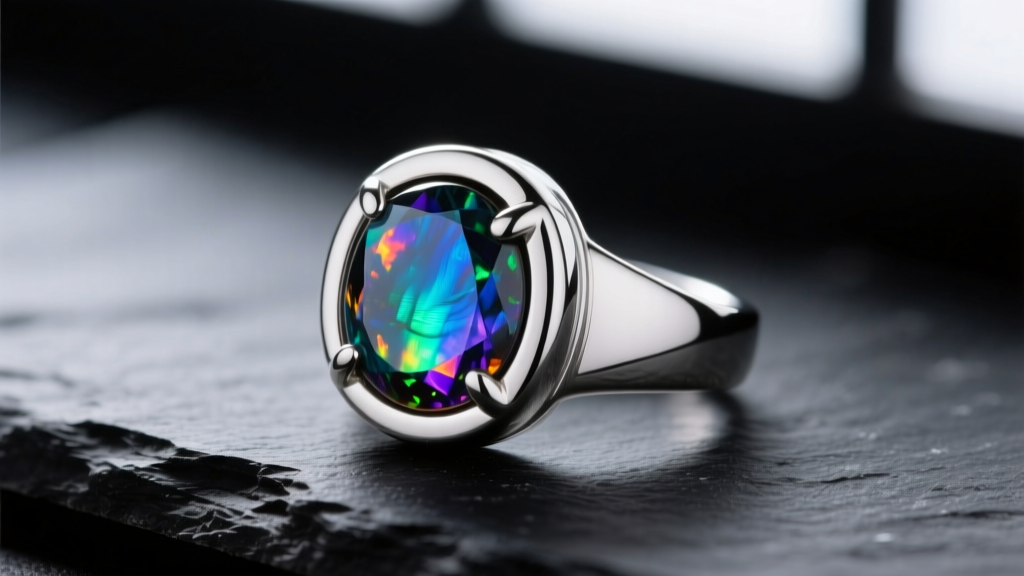
The Gemological Reality of Rainbow Obsidian
When evaluating rainbow obsidian jewelry from a material science perspective, it is crucial to understand that obsidian is not a traditional crystal. It is an amorphous volcanic glass, formed when felsic lava cools so rapidly that atoms are unable to arrange themselves into a crystalline lattice. The mesmerizing iridescent bands of green, purple, gold, and blue that give "rainbow" obsidian its name are not the result of light diffraction through a crystal structure, as seen in opals. Instead, this optical phenomenon is caused by nanoscale inclusions of magnetite or hedenbergite, alongside microscopic gas bubbles trapped in microscopic layers during the lava's rapid cooling phase.
According to the Gemological Institute of America (GIA), obsidian typically exhibits a refractive index (RI) of 1.48 to 1.51 and a specific gravity (SG) ranging from 2.35 to 2.60. This relatively low specific gravity means that a 20-carat rainbow obsidian cabochon will feel noticeably lighter than a similarly sized piece of black onyx or hematite, a key tactile identifier for gemologists and experienced collectors.
Physical Properties and Durability Metrics
The primary concern for any jeweler or consumer considering rainbow obsidian for daily wear is its structural integrity. On the Mohs scale of mineral hardness, obsidian sits at a 5.0 to 5.5. This places it slightly harder than a steel knife blade but significantly softer than quartz (7.0) or topaz (8.0). Consequently, rainbow obsidian is highly susceptible to scratching from everyday environmental dust, which contains microscopic quartz particles.
The Conchoidal Fracture Risk
Because it lacks a crystalline structure, obsidian has no true cleavage planes. However, it exhibits a pronounced conchoidal fracture—meaning it breaks with smooth, curved, shell-like surfaces that are incredibly sharp. While this property made obsidian prized for ancient surgical scalpels and arrowheads, it is a significant liability in modern jewelry. A sharp impact against a hard surface, such as a granite countertop or a metal door handle, will not merely chip the stone; it can cause a catastrophic, clean fracture that splits the cabochon entirely.
"Jewelers must treat obsidian similarly to opal or amber. The absence of a crystalline lattice means there is no internal shock absorption. Pressure points from traditional prong settings are a recipe for shattered stones." — Master Lapidary & Gemological Frameworks.
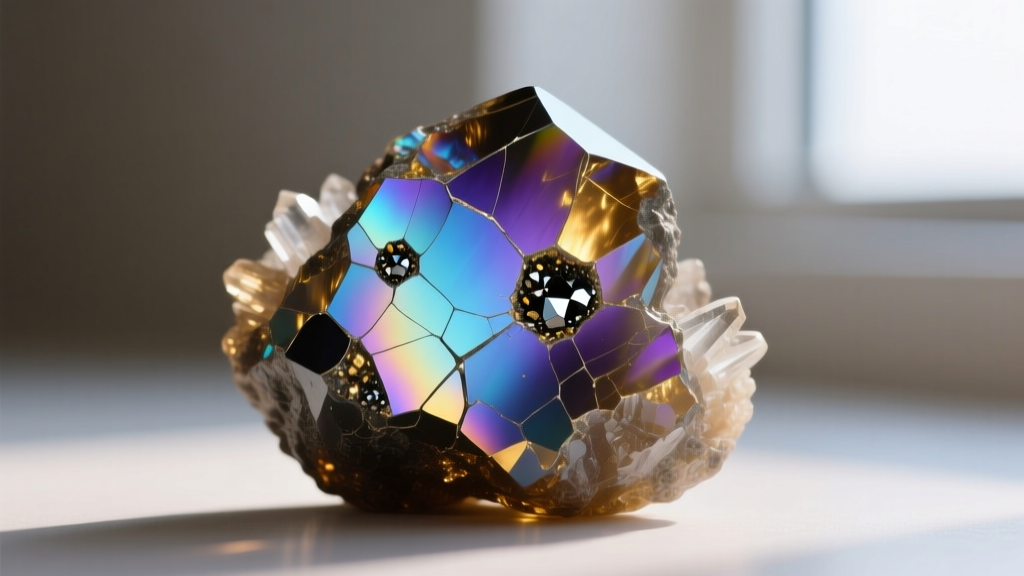
Material Comparison: Rainbow Obsidian vs. Dark Alternatives
For consumers drawn to the dark, moody aesthetic of black gemstones with a flash of color, rainbow obsidian is often cross-shopped with labradorite, black onyx, and black tourmaline. Below is a technical comparison of their physical properties to help determine the best material for specific jewelry applications.
| Material | Mohs Hardness | Crystal Structure | Fracture / Cleavage | Daily Wear Viability |
|---|---|---|---|---|
| Rainbow Obsidian | 5.0 - 5.5 | Amorphous (Glass) | Conchoidal Fracture | Moderate (Requires protective bezel) |
| Labradorite | 6.0 - 6.5 | Triclinic (Feldspar) | Perfect Cleavage (2 planes) | High (Susceptible to hard knocks) |
| Black Onyx | 6.5 - 7.0 | Trigonal (Quartz) | Uneven / Conchoidal | Very High (Excellent for rings) |
| Black Tourmaline | 7.0 - 7.5 | Trigonal | Uneven / Poor Cleavage | Very High (Durable for all jewelry) |
Scratch Resistance and Longevity
If scratch resistance is your primary metric, black onyx and black tourmaline vastly outperform rainbow obsidian. Tourmaline's 7.5 hardness ensures it will remain polished for decades of daily wear. Labradorite, while famous for its "labradorescence" (which is visually similar to the rainbow flash of obsidian but caused by light interference in twinning planes), suffers from perfect cleavage, making it prone to internal fracturing if dropped. Rainbow obsidian sits in a middle ground: it won't cleave internally like labradorite, but its soft surface requires meticulous care to maintain its high-gloss polish.
Jewelry Setting Engineering for Volcanic Glass
The structural vulnerabilities of rainbow obsidian dictate strict limitations on how it should be set in metal. The choice of setting directly correlates to the lifespan of the jewelry piece.
Why Prong Settings are a Critical Failure Point
Prong settings rely on localized pressure points to grip the girdle of a gemstone. Because obsidian is an amorphous glass, applying concentrated pressure via metal prongs creates immense internal tension. Temperature fluctuations—which cause the metal to expand and contract at a different rate than the glass—can easily cause the stone to crack right at the prong line. Furthermore, prong settings leave the majority of the stone's surface and edges exposed to lateral impacts.
The Mandate for Bezel and Flush Settings
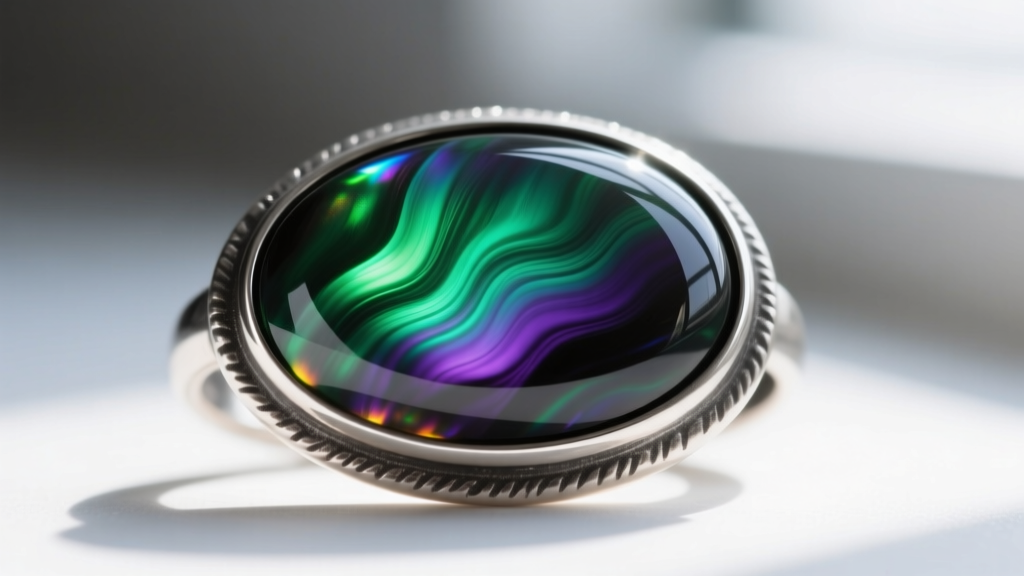
For rainbow obsidian rings and bracelets, a full bezel setting is non-negotiable. A well-engineered bezel wraps a continuous wall of metal (typically sterling silver or 14k gold) entirely around the stone's perimeter. This metal rim acts as a shock absorber, taking the brunt of any lateral impacts and protecting the fragile edges from chipping. When evaluating vintage or artisan rainbow obsidian jewelry, always inspect the bezel wall thickness; a flimsy, paper-thin bezel will bend upon impact, transferring the shock directly to the glass and causing it to shatter.
Market Pricing, Authenticity, and Sourcing
Rainbow obsidian is an abundant material, which keeps its price point highly accessible compared to precious gems. However, the market is flooded with synthetic glass imitations.
Pricing Tiers
- Loose Cabochons: High-quality, heavily banded rainbow obsidian cabochons typically range from $15 to $60, depending on the vibrancy of the color bands and the precision of the lapidary cut.
- Finished Silver Jewelry: Sterling silver rings and pendants featuring genuine rainbow obsidian generally retail between $45 and $150. Pieces utilizing oxidized silver to contrast with the dark stone are particularly popular.
- Gold and Designer Settings: When set in 14k or 18k gold, or featured in high-end artisan designs, prices can range from $250 to $800, driven entirely by the metal weight and craftsmanship rather than the stone's intrinsic value.
Identifying Authentic Rainbow Obsidian
According to mineralogical databases like Mindat.org, natural obsidian often contains flow banding and microscopic crystallites. To distinguish genuine rainbow obsidian from man-made iridescent glass, look for natural asymmetry. Synthetic glass often features perfectly uniform, concentric, or overly vibrant "swirls" that look painted on. Genuine rainbow obsidian displays organic, layered flow lines that follow the natural cooling patterns of the lava, and the iridescent flash is usually only visible at specific angles under direct, focused light.
Care, Maintenance, and Ultrasonic Warnings
Proper maintenance is critical to preserving the optical properties and structural integrity of rainbow obsidian jewelry. The amorphous nature of the stone makes it highly reactive to certain cleaning methods.
- Never Use Ultrasonic Cleaners: The high-frequency vibrations of an ultrasonic cleaner will easily shatter obsidian, especially if the stone has any microscopic internal fractures or natural gas bubble inclusions.
- Avoid Steam Cleaning: Sudden thermal shock from steam can cause the glass to crack instantly.
- Chemical Sensitivity: While obsidian is generally resistant to mild acids, it is highly vulnerable to alkaline solutions and hydrofluoric acid. Avoid exposing the stone to harsh household cleaners, bleach, or abrasive jewelry dips, which can permanently etch the surface and destroy the mirror-like polish required to see the rainbow flash.
- Routine Cleaning: Use only lukewarm water, a drop of mild dish soap, and a microfiber cloth. Dry immediately to prevent water spots from dulling the visual depth of the stone.
Final Verdict for Jewelry Buyers
Rainbow obsidian jewelry offers an unparalleled, moody aesthetic at a highly accessible price point. However, it demands respect for its physical limitations. By prioritizing heavy bezel settings, avoiding prong-based rings, and committing to gentle, manual cleaning routines, collectors can safely enjoy the iridescent beauty of volcanic glass for decades. For those seeking a similar dark, flashy aesthetic with higher impact resistance for an active lifestyle, black labradorite or dark sapphire remain the superior gemological alternatives.


