Guatemalan Jade Jewelry: Troubleshooting Fakes and Flaws
Learn how to authenticate Guatemalan jade jewelry, spot dyed fakes, and troubleshoot common setting flaws with our expert gemological guide.

The Resurgence and the Counterfeit Crisis
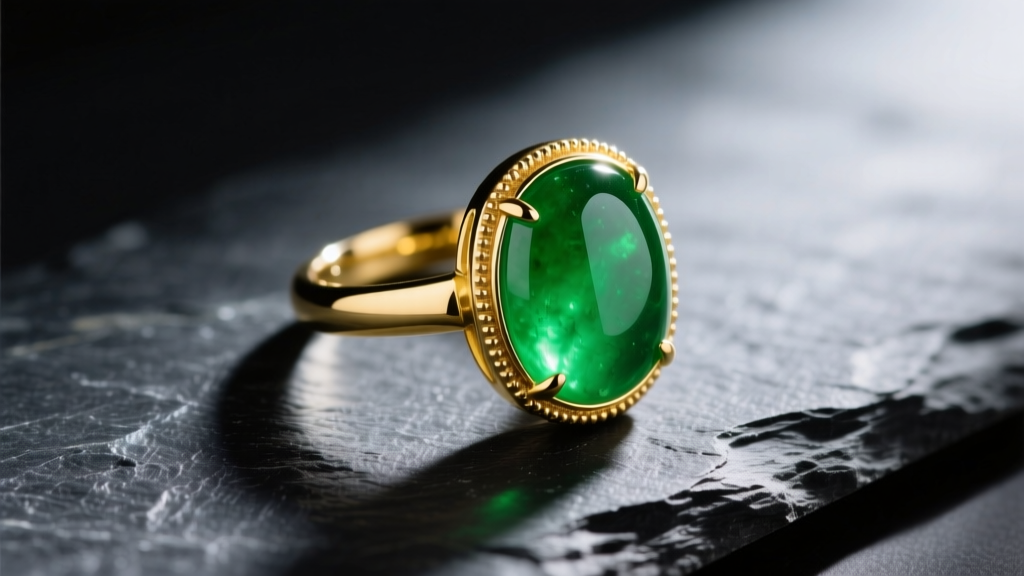
As we navigate the 2026 gemstone market, the resurgence of Mesoamerican artifacts has pushed Guatemalan jade jewelry into the global spotlight. Sourced primarily from the Motagua River valley, this jadeite (not nephrite) was the sacred stone of the Maya. However, this surge in demand has triggered a parallel rise in sophisticated counterfeits, misidentified stones, and structurally compromised settings. Whether you are evaluating a vintage piece from Antigua or a modern bespoke ring, troubleshooting the authenticity and structural integrity of Guatemalan jade requires a precise, gemological approach.
Diagnostic Framework: Identifying Authentic Guatemalan Jadeite
The most common problem collectors face is distinguishing genuine Guatemalan jadeite from dyed quartz, green nephrite, or serpentine. Guatemalan jadeite possesses specific optical and physical properties that serve as your primary troubleshooting markers.
The Hydrostatic Specific Gravity Test
Visual inspection is notoriously unreliable for jade. The definitive at-home troubleshooting step is measuring Specific Gravity (SG). Genuine Guatemalan jadeite has an SG ranging from 3.25 to 3.36. To test this, you need a digital pocket scale, a wire basket, and distilled water.
- Weigh the dry stone in the air (Weight A).
- Suspend the stone in water using the wire basket, ensuring it does not touch the sides or bottom (Weight B).
- Calculate SG using the formula:
SG = Weight A / (Weight A - Weight B).
If your result is around 2.60, you are holding dyed chalcedony. If it is 2.95, it is likely nephrite (often mislabeled as Guatemalan). Only a reading in the 3.25+ range confirms jadeite.
Spotting Type B and Type C Treatments
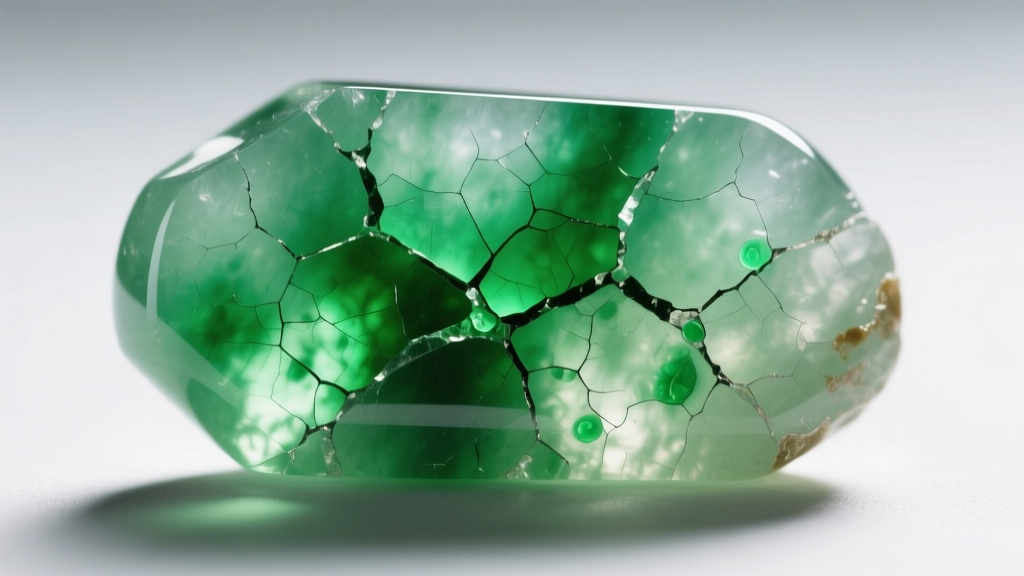
The market classifies jade into three treatment tiers. Troubleshooting these requires understanding how chemical alterations affect the stone's matrix.
| Jade Type | Treatment Process | Troubleshooting Marker | Market Value Impact |
|---|---|---|---|
| Type A | Untreated (traditional plum juice waxing only) | Inert under UV light; natural color banding | Highest (Investment grade) |
| Type B | Bleached with acid, then polymer-impregnated | Chalky blue-white fluorescence under Long-Wave UV (365nm) | Severely diminished |
| Type C | Chemically dyed to mimic Imperial Green | Dye concentrates in microscopic fractures; fades over 3-5 years | Negligible (Costume grade) |
Expert Insight: Guatemalan jadeite naturally occurs in striking colors like 'Maya Blue' (caused by titanium and iron) and 'Cosmic Black'. Fakers often dye pale gray jadeite blue to mimic Maya Blue. Always cross-reference blue stones with a Chelsea Color Filter; dyed stones will often transmit a stark red or pink hue, whereas natural Maya Blue remains inert or greenish.
Troubleshooting Structural Flaws in Jade Settings
Jadeite is renowned for its toughness (resistance to breaking due to its interlocking granular structure), but it only ranks 6.5 to 7 on the Mohs scale for hardness (resistance to scratching). This dichotomy creates unique setting failures that jewelers must troubleshoot.
The Prong Failure Mode
Guatemalan jade cabochons are exceptionally dense and heavy. A common flaw in mass-market jade jewelry is the use of standard four-prong settings. Over time, the heavy stone shifts, wearing down the interior of the prongs until the stone pops out. Furthermore, prongs concentrate impact pressure on single points of the stone, which can cause cleavage if the jade is dropped.
The Bezel Solution and Lip Tolerances
For heavy Guatemalan jade, a full bezel is mandatory. However, a poorly executed bezel will chip the stone's girdle. When troubleshooting or commissioning a setting, ensure the jeweler uses a deep bezel with a minimum 0.5mm interior lip. The stone should sit on a hidden wax or polymer cushion inside the bezel to absorb kinetic shock. According to the Gemological Institute of America (GIA), proper setting geometry is critical to preserving the structural integrity of heavy jadeite cabochons over decades of wear.
Solving the Porosity and Care Dilemma
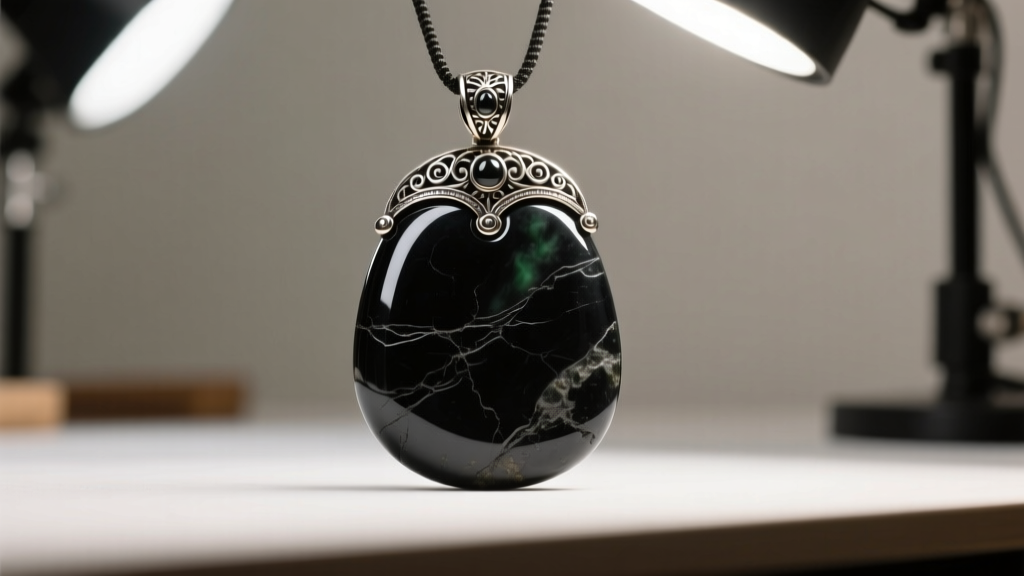
A frequent consumer complaint is that their jade jewelry has suddenly become dull, cloudy, or cracked. This is almost always a care failure rather than a stone defect.
- The Ultrasonic Trap: Never put Guatemalan jade in an ultrasonic cleaner. The high-frequency vibrations will shatter the polymer bonds in Type B jade, causing the stone to literally crumble into a cloudy mess.
- The Heat Shock Flaw: Jadeite is sensitive to sudden thermal changes. Leaving a jade ring on a dashboard in the sun and then washing your hands in cold water can induce internal stress fractures.
- The Chemical Degradation: Household bleach and harsh cosmetics will eat away at the natural wax polish of Type A jade and destroy the surface resin of Type B jade. Clean your pieces only with lukewarm distilled water, a drop of pH-neutral dish soap, and a microfiber cloth.
Sourcing Verification: Avoiding Tourist Trap 'Jade'
When purchasing directly from sources in Guatemala, particularly in Antigua or around Lake Atitlan, buyers frequently encounter 'New Jade' (serpentine) or 'Transvaal Jade' (grossular garnet) sold as authentic. To troubleshoot sourcing risks, always demand a laboratory report from a reputable institution for any piece priced over $500. As noted in the GIA's research on Mayan jade history, the cultural significance of the stone makes it a prime target for opportunistic misrepresentation in tourist markets.
Look for established lapidaries like Jadesa, which have historically provided authenticated, ethically mined Guatemalan jadeite with verifiable provenance. If a vendor cannot provide a specific gravity reading or a return policy contingent on third-party lab verification, walk away.
Final Gemological Verdict
Troubleshooting Guatemalan jade jewelry is an exercise in applied physics and chemistry. By relying on hydrostatic weighing, UV fluorescence testing, and enforcing strict bezel-setting tolerances, you can confidently navigate the market. Authentic Guatemalan jadeite is a geological marvel and a piece of living history; protecting your investment requires moving beyond visual assumptions and embracing rigorous gemological diagnostics.


