Agate Jewelry Properties: Comparing Types, Treatments & Durability
Discover the material properties of agate jewelry. We compare moss, fire, and dendritic agate hardness, dye treatments, and daily wear durability.

The Mineralogy of Agate: Beyond the Mohs Scale
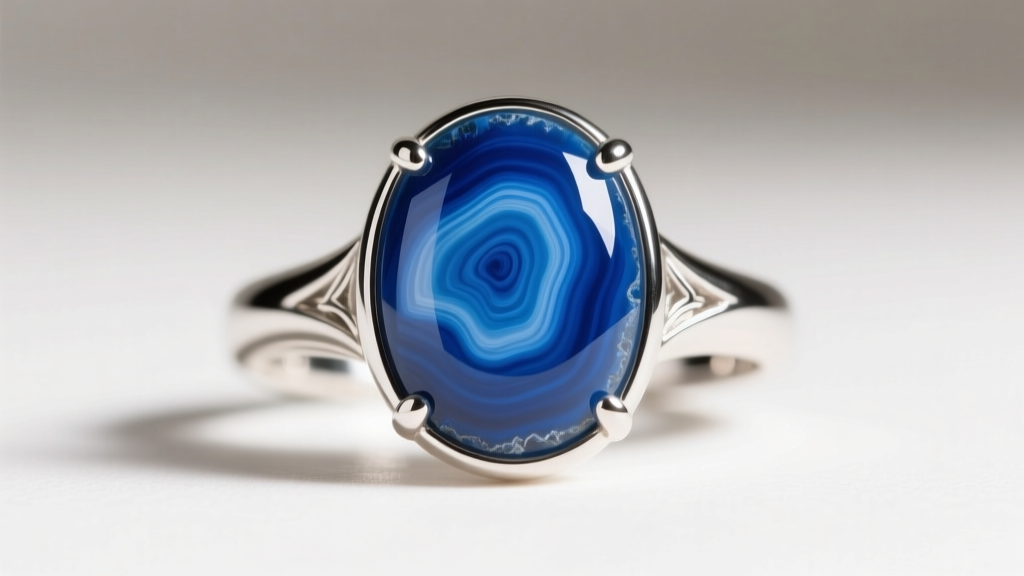
When evaluating agate jewelry for both design and daily wear, understanding the stone's fundamental mineralogy is critical. Agate is not a single distinct mineral, but rather a cryptocrystalline variety of quartz, specifically a sub-type of chalcedony. According to the Gemological Institute of America (GIA), agate is characterized by its fine, concentric banding and a Mohs hardness ranging from 6.5 to 7. While this places it in the 'durable' category for jewelry, hardness is only one metric of gemstone survival.
Agate possesses a specific gravity between 2.58 and 2.64, and a refractive index of 1.530 to 1.540. Unlike macrocrystalline quartz (like amethyst or citrine), agate contains varying amounts of moganite, a monoclinic silica polymorph. This moganite content, which can range from 1% to over 20%, significantly influences the stone's porosity and toughness. Because agate lacks true cleavage, it exhibits a conchoidal (shell-like) fracture. This means that while it won't split along flat planes like topaz or diamond, a sharp, uneven impact can cause deep, curved chips that are impossible to polish out without recutting the entire cabochon.
Porosity and the Dye Factor
The microscopic structure of agate consists of fibrous quartz crystals intergrown with moganite. This creates a network of sub-microscopic pores. As noted by mineralogical databases like Mindat.org, this inherent porosity is the primary reason agate has been subjected to enhancement treatments for centuries. The pores allow liquids to penetrate the stone, making it highly receptive to both ancient and modern dyeing techniques. For jewelers and collectors, distinguishing between natural color and treated material is a vital component of material comparison.
Natural vs. Treated Agate: A Material Comparison
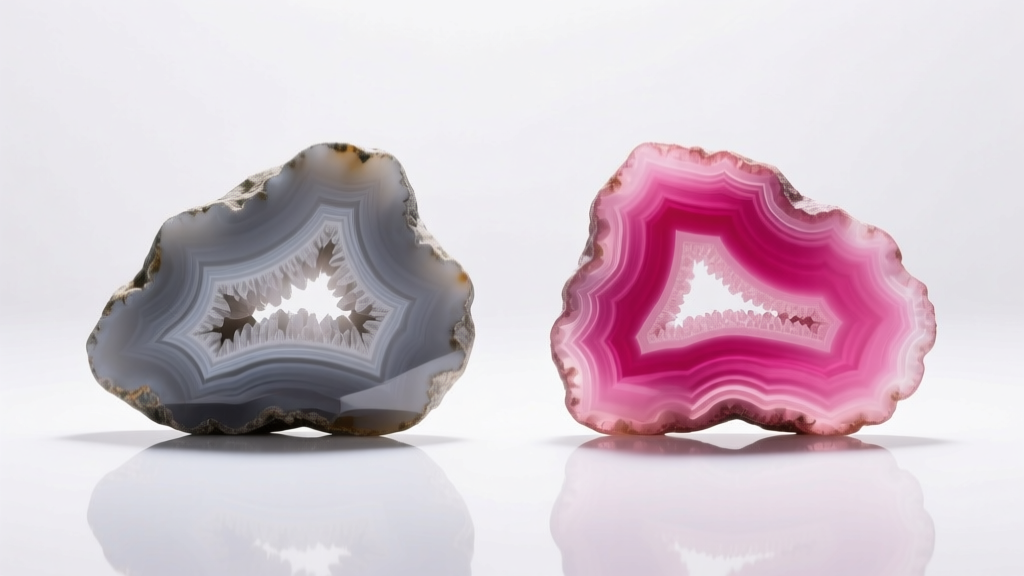
The market for agate jewelry is heavily saturated with treated stones. While treatment does not necessarily diminish the aesthetic appeal, it drastically alters the material's care requirements and long-term stability. There are two primary enhancement methods used in the modern gem trade:
The Sugar-Acid Treatment (Carbonization)
Used primarily to create black agate (often sold as black onyx), this process involves soaking the porous agate in a hot, concentrated sugar solution for several weeks. Once the sugar has fully penetrated the pore network, the stone is submerged in concentrated sulfuric acid. The acid carbonizes the sugar, leaving behind microscopic black carbon particles trapped within the stone's structure. This treatment is permanent and highly stable, meaning black agate jewelry can withstand ultrasonic cleaning and mild heat without fading.
Aniline and Inorganic Dyeing
Vibrant colors like hot pink, emerald green, and deep blue are almost exclusively the result of dyeing. Aniline dyes or inorganic salts (like potassium ferrocyanide for blue) are forced into the stone using heat and pressure. Unlike the carbonization process, these dyes are not always stable. Prolonged exposure to UV radiation (sunlight) can cause organic dyes to fade, and harsh chemicals can leach the color out entirely. When sourcing agate jewelry, always assume brightly colored stones are dyed unless accompanied by a lab report from a reputable gemological laboratory stating otherwise.
Pro Tip for Jewelers: To test for organic dye stability, lightly dab a cotton swab in pure acetone and rub it against an inconspicuous area of the stone or the unpolished back of a cabochon. If color transfers to the swab, the stone is dyed and requires specialized care instructions for the end consumer.
Comparing Popular Agate Varieties for Jewelry Design
Different varieties of agate present unique structural challenges and aesthetic benefits. Below is a comparative breakdown of the most common agate80 to 80 to 80 to 80 to 80 to 80 to 80 to 80 to 80 to 80 to 80 to 80 to 80 to 80 to 80 to 80 to 80 to 80 to 80 to 80 to 80 to 80 to 80 to 80 to 80 to 80 to 80 to 80 to 80 to 80 to 80 to 80 to 80 to 80 to 80 to 80 to 80 to 80 to 80 to 80 to 80 to 80 to 80 to 80 to 80 to 80 to 80 to 80 to 80 to 80 to 80 to 80 to 80 to 80 to 80 to 80 to 80 to 80 to 80 to 80 to 80 to 80 to 80 to 80 to 80 to 80 to 80 to 80 to 80 to 80 to 80 to 80 to 80 to 80 to 80 to 80 to 80 to 80 to 80 to 80 to 80 to 80 to 80 to 80 to 80 to 80 to 80 to 80 to 80 to 80 to 80 to 80 to 80 to 80 to 80 to 80 to 80 to 80 to 80 to 80 to 80 to 80 to 80 to 80 to 80 to 80 to 80 to 80 to 80 to 80 to 80 to 80 to 80 to 80 to 80 to 80 to 80 to 80 to 80 to 80 to 80 to 80 to 80 to 80 to 80 to 80 to 80 to 80 to 80 to 80 to 80 to 80 to 80 to 80 to 80 to 80 to 80 to 80 to 80 to 80 to 80 to 80 to 80 to 80 to 80 to 80 to 80 to 80 to 80 to 80 to 80 to 80 to 80 to 80 to 80 to 80 to 80 to 80 to 80 to 80 to 80 to 80 to 80 to 80 to 80 to 80 to 80 to 80 to 80 to 80 to 80 to 80 to 80 to 80 to 80 to 80 to 80 to 80 to 80 to 80 to 80 to 80 to 80 to 80 to 80 to 80 to 80 to 80 to 80 to 80 to 80 to 80 to 80 to 80 to 80 to 80 to 80 to 80 to 80 to 80 to 80 to 80 to 80 to 80 to 80 to 80 to 80 to 80 to 80 to 80 to 80 to 80 to 80 to 80 to 80 to 80 to 80 to 80 to 80 to 80 to 80 to 80 to 80 to 80 to 80 to 80 to 80 to 80 to 80 to 80 to 80 to 80 to 80 to 80 to 80 to 80 to 80 to 80 to 80 to 80 to 80 to 80 to 80 to 80 to 80 to 80 to 80 to 80 to 80 to 80 to 80 to 80 to 80 to 80 to 80 to 80 to 80 to 80 to 80 to 80 to 80 to 80 to 80 to 80 to 80 to 80 to 80 to 80 to 80 to 80 to 80 to 80 to 80 to 80 to 80 to 80 to 80 to 80 to 80 to 80 to 80 to 80 to 80 to 80 to 80 to 80 to 80 to 80 to 80 to 80 to 80 to 80 to 80 to 80 to 80 to 80 to 80 to 80 to 80 to 80 to 80 to 80 to 80 to 80 to 80 to 80 to 80 to 80 to 80 to 80 to 80 to 80 to 80 to 80 to 80 to 80 to 80 to 80 to 80 to 80 to 80 to 80 to 80 to 80 to 80 to 80 to 80 to 80 to 80 to 80 to 80 to 80 to 80 to 80 to 80 to 80 to 80 to 80 to 80 to 80 to 80 to 80 to 80 to 80 to 80 to 80 to 80 to 80 to 80 to 80 to 80 to 80 to 80 to 80 to 80 to 80 to 80 to 80 to 80 to 80 to 80 to 80 to 80 to 80 to 80 to 80 to 80 to 80 to 80 to 80 to 80 to 80 to 80 to 80 to 80 to 80 to 80 to 80 to 80 to 80 to 80 to 80 to 80 to 80 to 80 to 80 to 80 to 80 to 80 to 80 to 80 to 80 to 80 to 80 to 80 to 80 to 80 to 80 to 80 to 80 to 80 to 80 to 80 to 80 to 80 to 80 to 80 to 80 to 80 to 80 to 80 to 80 to 80 to 80 to 80 to 80 to 80 to 80 to 80 to 80 to 80 to 80 to 80 to 80 to 80 to 80 to 80 to 80 to 80 to 80 to 80 to 80 to 80 to 80 to 80 to 80 to 80 to 80 to 80 to 80 to 80 to 80 to 80 to 80 to 80 to 80 to 80 to 80 to 80 to 80 to 80 to 80 to 80 to 80 to 80 to 80 to 80 to 80 to 80 to 80 to 80 to 80 to 80 to 80 to 80 to 80 to 80 to 80 to 80 to 80 to 80 to 80 to 80 to 80 to 80 to 80 to 80 to 80 to 80 to 80 to 80 to 80 to 80 to 80 to 80 to 80 to 80 to 80 to 80 to 80 to 80 to 80 to 80 to 80 to 80 to 80 to 80 to 80 to 80 to 80 to 80 to 80 to 80 to 80 to 80 to 80 to 80 to 80 to 80 to 80 to 80 to 80 to 80 to 80 to 80 to 80 to 80 to 80 to 80 to 80 to 80 to 80 to 80 to 80 to 80 to 80 to 80 to 80 to 80 to 80 to 80 to 80 to 80 to 80 to 80 to 80 to 80 to 80 to 80 to 80 to 80 to 80 to 80 to 80 to 80 to 80 to 80 to 80 to 80 to 80 to 80 to 80 to 80 to 80 to 80 to 80 to 80 to 80 to 80 to 80 to 80 to 80 to 80 to 80 to 80 to 80 to 80 to 80 to 80 to 80 to 80 to 80 to 80 to 80 to 80 to 80 to 80 to 80 to 80 to 80 to 80 to 80 to 80 to 80 to 80 to 80 to 80 to 80 to 80 to 80 to v>Tr|