Red Onyx Jewelry Buying Guide: What to Look For in 2026
Discover the truth behind red onyx jewelry in 2026. Learn how to spot dyed stones, avoid calcite imitations, and choose the right settings.

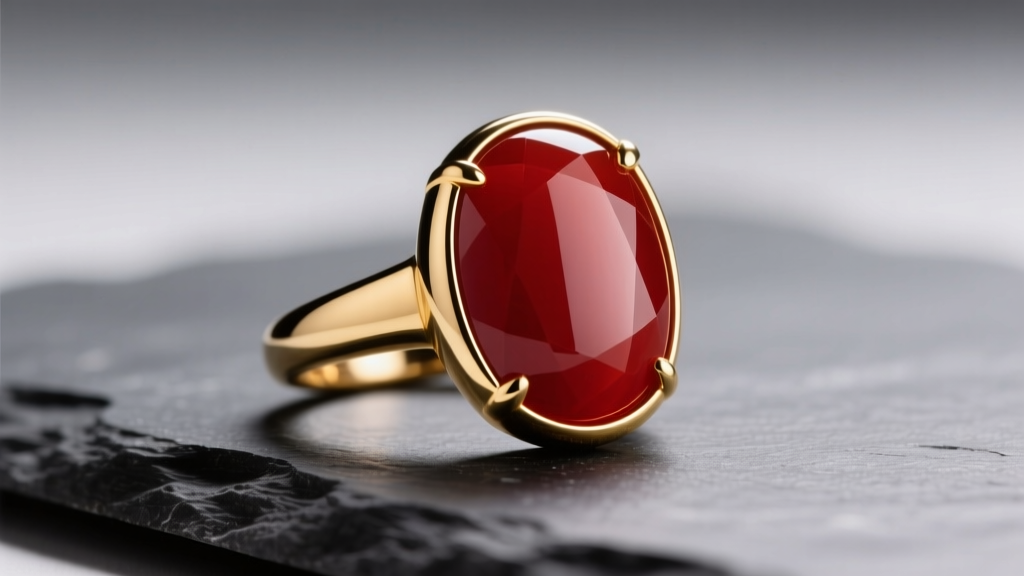
The allure of deep crimson gemstones has driven a massive surge in demand for red onyx jewelry over the past few years. Its glassy luster, rich opacity, and striking visual weight make it a favorite for both statement cocktail rings and minimalist everyday pendants. However, the commercial gemstone market is rife with misnomers, synthetic imitations, and undisclosed treatments. If you are shopping for red onyx in 2026, understanding the mineralogical reality of this stone is the difference between investing in a durable, beautiful piece of jewelry and overpaying for dyed limestone.
This comprehensive buying guide cuts through the marketing jargon. We will explore the gemological truth of red onyx, provide actionable frameworks for identifying imitations, and detail the exact setting specifications you need to ensure your jewelry lasts a lifetime.
The Mineralogical Reality: Natural vs. Treated Red Onyx
To shop intelligently, you must first understand what onyx actually is. According to mineralogical databases like Mindat, true onyx is a parallel-banded variety of chalcedony (a microcrystalline quartz), most classically characterized by alternating black and white layers. Natural, untreated red onyx is virtually non-existent in the commercial gem market.
When you see vibrant "red onyx" in a jewelry display, you are almost universally looking at dyed agate or dyed carnelian. The Gemological Institute of America (GIA) notes that chalcedony is highly porous, making it an ideal candidate for chemical color enhancement. The process typically involves soaking the gray or pale agate in an aniline dye or a sugar solution followed by sulfuric acid carbonization to achieve deep reds, blacks, or greens.
Is Dyed Chalcedony a Bad Thing?
Not necessarily. Dyeing chalcedony is an accepted, centuries-old practice in the gem trade. However, ethical jewelers must disclose this treatment. The issue arises when retailers market dyed agate as "natural red onyx" to inflate the price. As a buyer, you should expect to pay for the craftsmanship and the metal, not a premium for a "rare natural red" stone that does not exist in nature.
The Calcite Trap: Identifying Imitations
The most critical pitfall when buying red onyx jewelry is confusing dyed chalcedony with dyed calcite or marble. Many mass-produced, low-cost jewelry items and tourist-shop carvings labeled as "red onyx" are actually dyed calcite. Calcite is a completely different mineral with vastly inferior physical properties.
- Hardness: Chalcedony (true onyx base) ranks 6.5 to 7 on the Mohs scale, making it highly resistant to everyday scratches. Calcite ranks a mere 3, meaning it will scratch if bumped against a copper coin or a glass surface.
- Temperature: Quartz-based chalcedony feels distinctly cold to the touch and takes longer to warm up in your hand. Calcite and marble warm up almost instantly.
- Acid Sensitivity: Calcite reacts violently to mild acids. A drop of lemon juice or vinegar will etch and dull a calcite "onyx" stone instantly, while chalcedony will remain completely unaffected.
Buyer Action: Always ask the jeweler for the specific mineral name. If the price is suspiciously low (under $20 for a large stone) and the seller cannot confirm it is quartz/chalcedony, assume it is calcite and avoid it for everyday wear.
Evaluating Settings and Metal Pairings
Because commercial red onyx is dyed chalcedony, it lacks the cleavage planes of stones like topaz or diamond, meaning it won't split cleanly if struck. However, it is brittle and can chip or fracture along its bands if subjected to hard impacts. The setting you choose dictates the stone's longevity.
Bezel vs. Prong Settings
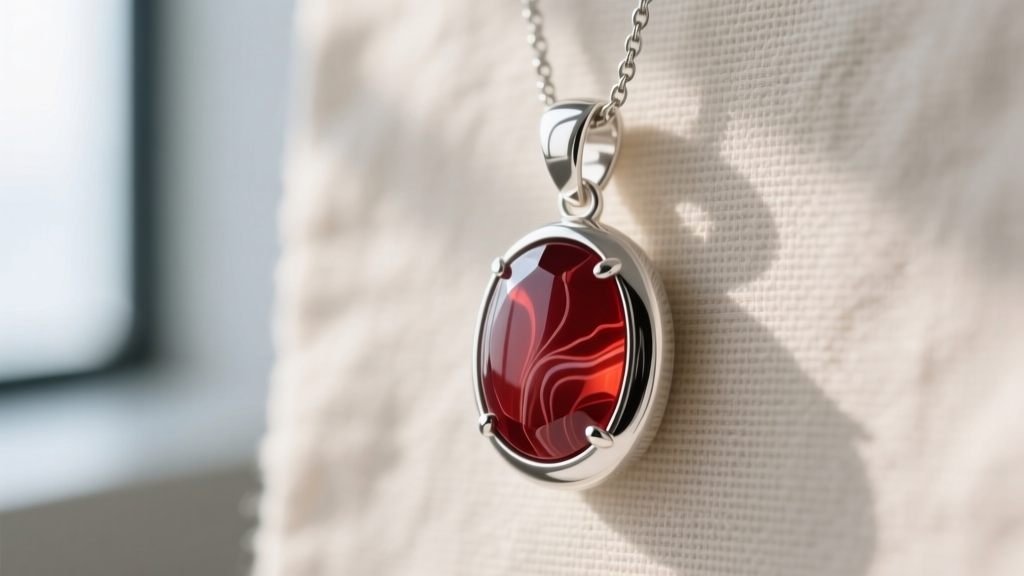
For red onyx cabochons, a full bezel setting is the gold standard. A bezel wraps a continuous ribbon of metal around the entire girdle (edge) of the stone, protecting the most vulnerable points from chipping. Prong settings, while allowing more light into transparent gems, leave the edges of opaque cabochons exposed and prone to snagging and cracking.
Metal Thickness and Gauge
If you are purchasing a red onyx ring intended for daily wear, pay close attention to the metal shank. Sterling silver is a popular pairing due to its high contrast with the deep red stone, but silver is soft. Ensure the ring shank is at least 1.8mm thick and 1.5mm wide to prevent the band from bending and popping the stone out of its bezel. For 14k yellow or rose gold, which offers a warmer, more luxurious contrast to the crimson hues, a 1.5mm thickness is sufficient due to the alloy's superior tensile strength.
2026 Market Pricing Matrix
Understanding the fair market value of red onyx jewelry prevents you from overpaying for treated stones. Below is a realistic pricing matrix for the 2026 market, assuming standard commercial-grade dyed chalcedony (not fine, un-dyed carnelian).
| Jewelry Type | Metal | Stone Size | Expected Price Range (USD) |
|---|---|---|---|
| Minimalist Pendant | 925 Sterling Silver | 10mm - 15mm | $35 - $85 |
| Statement Cocktail Ring | 925 Sterling Silver | 20mm+ Cabochon | $90 - $180 |
| Everyday Bezel Ring | 14k Solid Yellow Gold | 8mm - 12mm | $350 - $650 |
| Hoop Earrings (Inlay) | 14k Solid Rose Gold | Custom Inlay | $400 - $800 |
Note: If a retailer is charging over $1,000 for a standard silver and red onyx piece, you are paying for a brand name markup, not intrinsic gemstone rarity.
Care, Maintenance, and Color Preservation
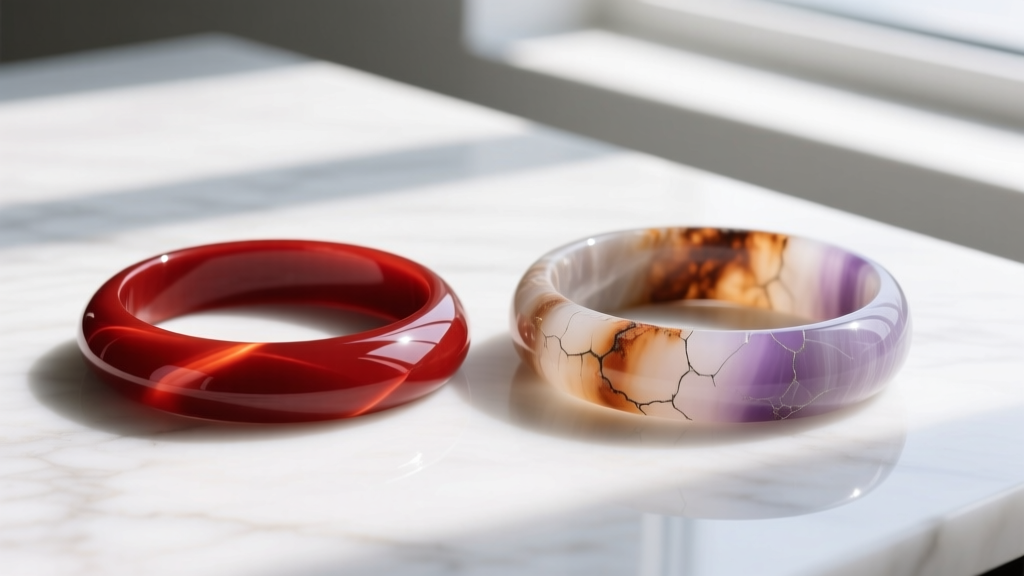
The most significant vulnerability of dyed red onyx jewelry is color stability. The aniline dyes used to achieve that deep crimson hue are susceptible to UV degradation and thermal shock. To maintain the vibrancy of your jewelry, you must adopt a specific care regimen.
What to Avoid
- Ultrasonic Cleaners: The high-frequency vibrations can fracture the internal bands of the chalcedony, and the heat generated in the fluid can cause the red dye to bleed or turn muddy brown.
- Steam Cleaning: Extreme heat will permanently alter the dye structure. Never let a jeweler steam-clean your red onyx.
- Prolonged Sun Exposure: Leaving dyed agate on a sunny windowsill for months will result in noticeable fading. Store your jewelry in a dark, lined box when not in use.
Proper Cleaning Protocol
To clean your red onyx jewelry, use only lukewarm water, a drop of mild, dye-free dish soap, and a baby-soft toothbrush. Gently brush the back of the stone (where dirt and skin oils accumulate) and the metal setting. Rinse thoroughly and dry immediately with a microfiber cloth. Do not let water pool in the bezel cup, as prolonged moisture trapped against the metal can cause oxidation that stains the porous edges of the stone.
Styling and Metaphysical Associations
Beyond its physical properties, red onyx holds significant weight in crystal healing communities. It is heavily associated with the Root Chakra, believed to provide grounding energy, emotional stamina, and protection against negative external influences. Whether you subscribe to these metaphysical properties or simply appreciate the stone's bold aesthetic, red onyx is a powerful styling tool.
Because the stone is opaque and highly saturated, it acts as a visual anchor. In 2026, the prevailing trend is to pair deep red chalcedony with warm, textured metals like hammered 14k gold or oxidized sterling silver. It complements autumn and winter wardrobes beautifully, providing a striking contrast against navy, charcoal, and cream fabrics. For a modern, architectural look, seek out geometric cuts—such as hexagons or elongated emerald cuts—set in low-profile, bezel-wrapped designs that blend ancient lapidary traditions with contemporary minimalism.


