Turquoise Jewelry with Black Dress: A Complete Buying Guide
Discover how to choose and style turquoise jewelry with a black dress. Learn about stone grades, metal pairings, and neckline matching in our expert guide.

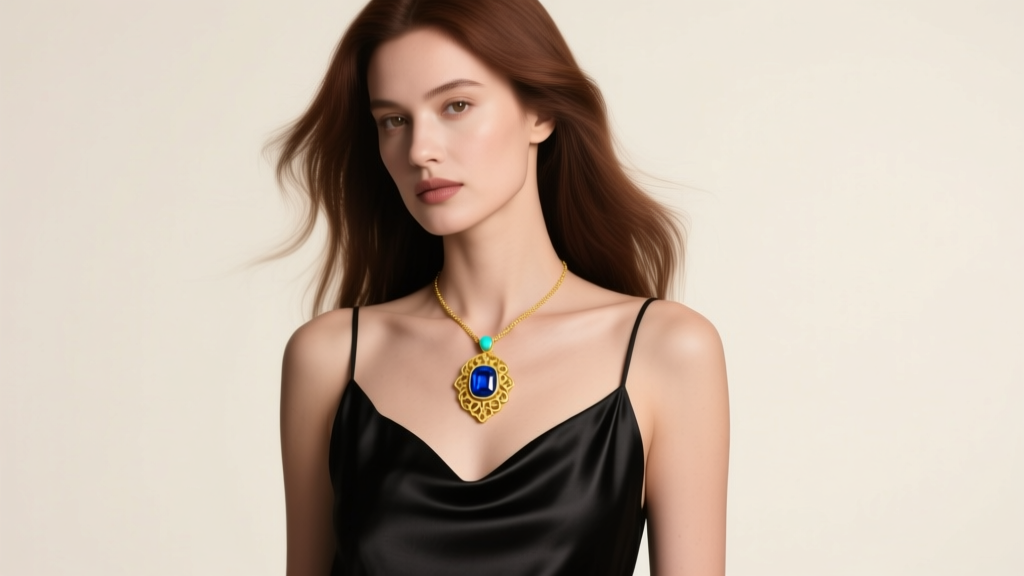
The Allure of Turquoise Against Black: Why It Works
The little black dress (LBD) is the undisputed cornerstone of evening wear, offering a sleek, neutral canvas that allows accessories to take center stage. When it comes to making a striking visual impact, pairing turquoise jewelry with a black dress is a masterclass in color theory. The vivid cyan, robin's egg blue, and deep green hues of natural turquoise create a high-contrast, luminous effect against the light-absorbing void of black fabric. Unlike diamonds or clear crystals that rely on light refraction, turquoise offers an opaque, saturated pop of color that reads beautifully across dimly lit rooms and evening galas. However, not all turquoise is created equal. The market is flooded with treated stones, dyed imitations, and poorly matched settings. This comprehensive buying guide will walk you through the exact specifications, grades, and styling metrics you need to curate a high-end turquoise collection specifically tailored for black evening wear.
Decoding Turquoise Grades: What to Buy for Evening Wear
When shopping for fine jewelry to wear with formal black attire, the grade and origin of the turquoise dictate both the aesthetic and the investment value. Natural, untreated turquoise is increasingly rare, with only about 3% to 5% of mined material being hard enough to be cut and polished without stabilization. For evening wear, you want stones with a high polish and rich saturation. Here is a breakdown of the premier turquoise varieties and their current market positioning.
| Turquoise Variety | Matrix Profile | Treatment Status | Avg. Price (Per Carat) | Best For Black Dress Style |
|---|---|---|---|---|
| Sleeping Beauty | None (Clean Blue) | Often Stabilized | $2 - $8 | Sleek, modern, minimalist LBDs |
| Kingman | Golden/Brown Web | Natural / Stabilized | $5 - $15 | Classic, bold statement pieces |
| Royston | Heavy Brown/Green | Natural | $10 - $25+ | Earthy, bohemian evening gowns |
| Bisbee | Smoky Black/Red | Natural (Rare) | $15 - $40+ | High-end luxury, rare collector |
For a sophisticated, modern look, Sleeping Beauty turquoise from Arizona is ideal. Its lack of matrix (the host rock veining) gives it a uniform, striking blue that mimics high-end lapis or custom enamel work. Conversely, if your black dress has a bohemian or vintage cut, the heavy, dark matrix of Bisbee or Royston turquoise adds a necessary organic texture that prevents the jewelry from looking like costume plastic.

Metal Matters: Silver vs. Gold Settings for Black Dresses
The metal setting acts as the bridge between the vibrant stone and the dark fabric. Choosing the right metal is critical for controlling the formality of the piece.
- 18k Yellow Gold: The ultimate luxury pairing. Yellow gold warms up the cool tones of the turquoise and creates a triadic color contrast (blue, gold, black) that screams high fashion. A bezel-set turquoise pendant in 18k gold elevates the stone from Southwestern casual to red-carpet ready.
- Sterling Silver (High Polish): Classic and crisp. A mirror-polished silver setting reflects ambient light, creating a halo effect against the black dress. This is best for geometric, Art Deco-inspired turquoise pieces.
- Blackened/Oxidized Silver: For an edgy, gothic, or avant-garde black dress silhouette, oxidized silver blends seamlessly into the dark fabric, making the turquoise appear as though it is floating directly on the skin or dress.
- Rose Gold: A contemporary choice. The pinkish hue of rose gold plays beautifully against the green-leaning turquoise varieties (like Royston), offering a romantic, softer contrast to a harsh black backdrop.
Neckline Matching: Choosing the Right Silhouette
The architecture of your black dress dictates the exact millimeter length and volume of the turquoise jewelry you should buy. A mismatch in scale can ruin the proportions of an evening look.
The V-Neck and Plunge
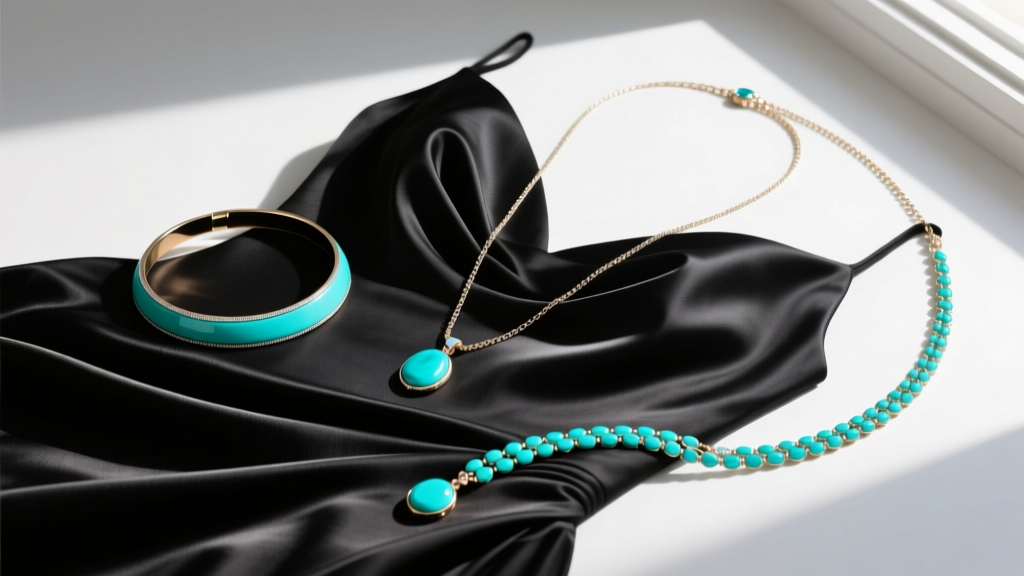
A V-neckline requires a pendant that mirrors the angle of the dress. Opt for an 18-inch to 20-inch Y-necklace or a single, elongated turquoise drop. Avoid wide, horizontal turquoise collars, as they will visually clash with the vertical lines of the V-neck and shorten the torso.
Strapless and Sweetheart
This neckline leaves the collarbone and upper chest entirely bare, demanding volume. A 14-inch to 16-inch multi-strand turquoise choker or a heavy, graduated turquoise collar works perfectly here. The opacity of the stones will beautifully break up the expanse of black fabric and bare skin.
Halter and High-Neck
Because the neck is already covered by fabric, necklaces will look cluttered. Instead, bypass necklaces entirely and invest in dramatic turquoise drop earrings (2 to 3 inches in length) or stack substantial turquoise cocktail rings on the index and middle fingers to draw the eye downward.
Spotting Fakes: Treated vs. Natural Turquoise
When spending premium prices on fine jewelry, you must know how to identify imitations. According to the Gemological Institute of America (GIA), the most common turquoise simulants are dyed howlite and magnesite. These are cheap, white, porous stones injected with blue dye to mimic turquoise. To spot them, look closely at the matrix; in dyed howlite, the dye often pools in the natural cracks, creating dark, unnatural spiderwebbing that looks like ink bleeding into paper.
Additionally, be aware of the Zachery treatment, a proprietary method that enhances the color and reduces porosity without using polymers or waxes. While accepted in some high-end circles, it must be disclosed by the seller. Reconstituted turquoise—essentially turquoise dust mixed with epoxy resin and dyed—is another material to avoid for formal evening wear, as it lacks the depth, luster, and thermal properties of a solid cabochon. Always request a disclosure report from the jeweler, and when in doubt, seek pieces verified by the American Gem Trade Association (AGTA) guidelines.
Care and Maintenance for Evening Pieces
Turquoise is a porous, relatively soft gemstone, ranking between 5 and 6 on the Mohs hardness scale. This makes it highly susceptible to damage from the very products used to prepare for an evening out. The GIA's care guidelines explicitly warn against exposing turquoise to cosmetics, perfumes, and hairsprays. The chemicals in these products can seep into the stone's microscopic pores, causing the vibrant blue to dull or turn an ugly greenish-yellow over time.
The Golden Rule of Evening Wear: Your turquoise jewelry must be the absolute last thing you put on after your dress, makeup, and perfume are completely set, and the very first thing you take off when you return home. Never clean turquoise in an ultrasonic cleaner or with steam; the vibrations can fracture the stone, and the heat can melt the wax or resin used in stabilized stones. Simply wipe the cabochon gently with a soft, damp microfiber cloth and let it air dry before storing it in a tarnish-resistant pouch away from harder gemstones like diamonds or sapphires that could scratch its surface.
Final Verdict: Building Your Capsule Collection
Pairing turquoise jewelry with a black dress is an exercise in intentional contrast. To build a versatile evening capsule, start with a high-grade, matrix-free Sleeping Beauty pendant set in 18k yellow gold for modern, minimalist gowns. Follow this by acquiring a heavily webbed Kingman turquoise statement cuff in polished sterling silver for structured, architectural black dresses. By prioritizing natural stones, understanding the interplay of metal tones, and strictly matching necklace lengths to your dress's neckline, you transform the classic LBD from a safe fallback into a canvas for world-class gemstone artistry.