Expert Care and Cleaning Tips for Citrine Crystal Jewelry
Learn expert care, cleaning, and maintenance tips for citrine crystal jewelry. Protect your golden gem from fading, scratches, and chemical damage.

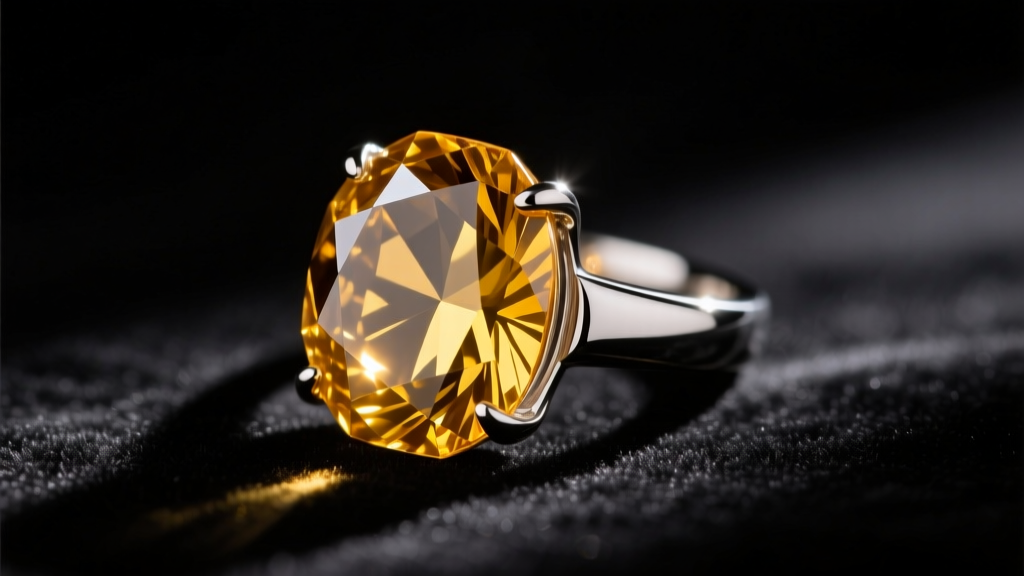
Citrine, with its warm, sun-kissed hues ranging from pale lemon to deep Madeira, is a staple in gemstone collections. However, maintaining the brilliant luster and structural integrity of citrine crystal jewelry requires more than a quick wipe with a cloth. As a variety of quartz, citrine possesses specific physical and chemical properties that dictate how it should be cleaned, stored, and worn. Whether you own a delicate 14k gold citrine pendant or a bold sterling silver cocktail ring, understanding the mineral's vulnerabilities is the first step toward lifelong preservation.
Understanding Citrine's Durability and Vulnerabilities
On the Mohs scale of mineral hardness, citrine ranks at a 7. While this makes it relatively durable and suitable for everyday wear, it is not impervious to damage. A hardness of 7 means that while citrine can easily scratch softer materials like silver or gold, it can be readily scratched by harder gems such as topaz (8), sapphire (9), and diamond (10). Storing your citrine crystal jewelry loosely in a communal jewelry box is a guaranteed way to accumulate micro-scratches that will eventually cloud the stone's faceted brilliance.
Furthermore, citrine lacks true cleavage, meaning it does not split along distinct planes like diamonds or emeralds. However, natural citrine often contains liquid inclusions or internal stress fractures. Subjecting the stone to sudden temperature changes—a phenomenon known as thermal shock—can cause these internal fractures to expand, leading to catastrophic cracking. According to the Gemological Institute of America (GIA), warm, soapy water is consistently the safest cleaning method precisely because it avoids the thermal shock associated with steam or ultrasonic cleaners.
The Safest Cleaning Methods for Citrine Crystal Jewelry
To safely remove accumulated sebum, lotions, and environmental dust from your citrine crystal jewelry, follow this precise, gemologist-approved protocol:
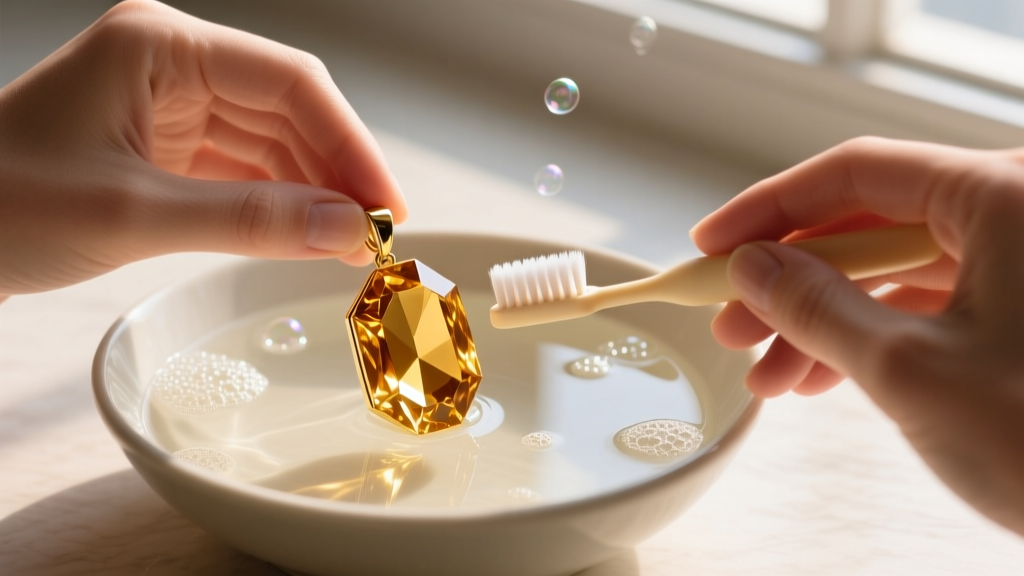
- Prepare the Solution: Mix 1 part pH-neutral dish soap (such as original Dawn) with 10 parts lukewarm water. The water temperature should be between 85°F and 95°F (29°C - 35°C). Avoid hot tap water, which can trigger thermal shock.
- Soak Briefly: Submerge the jewelry for exactly 10 to 15 minutes. This loosens debris trapped beneath the gallery or prongs without degrading any potential fracture-fillings or adhesives used in the setting.
- Gentle Agitation: Use a brand-new, extra-soft baby toothbrush to gently sweep the back of the stone (the pavilion). Dirt accumulation here drastically reduces light return and makes the citrine appear muddy.
- Rinse and Dry: Rinse under a gentle stream of lukewarm water, ensuring the drain is plugged. Pat dry with a lint-free microfiber cloth, avoiding paper towels which can contain wood pulp fibers capable of micro-scratching the polish.
What to Avoid: Chemicals and Ultrasonic Risks
Many commercial jewelry cleaners are highly alkaline or contain harsh solvents that can degrade the metal settings or dull the polish of the quartz. Below is a definitive guide to cleaning agents and methods you must avoid.
| Cleaning Method / Agent | Safety for Citrine | Reasoning & Risk Factors |
|---|---|---|
| Ultrasonic Cleaners | UNSAFE | High-frequency vibrations can shatter stones with liquid inclusions or internal stress fractures. |
| Steam Cleaners | UNSAFE | Localized heat exceeding 150°F can cause thermal shock and alter the stone's color. |
| Bleach / Chlorine | UNSAFE | Chlorine aggressively attacks the alloys in 14k/18k gold and sterling silver, weakening prongs. |
| Ammonia-Based Cleaners | CAUTION | Can degrade rhodium plating on white gold settings and leave a filmy residue on quartz. |
| Lukewarm Soapy Water | SAFE | Gently lifts oils without risking thermal, chemical, or vibrational damage. |
It is also vital to remove citrine crystal jewelry before entering swimming pools or hot tubs. The chlorine used in water treatment will rapidly corrode the copper and zinc alloys present in gold and silver settings, potentially causing the prongs to fail and the stone to fall out.
Protecting Citrine from Light and Heat Damage
One of the most closely guarded secrets in the gem trade is that the vast majority of commercial citrine on the market is actually amethyst or smoky quartz that has been heat-treated to achieve its golden color. As noted by mineralogical databases like Mindat.org, natural citrine is quite rare. Because the color of heat-treated citrine is the result of altered iron impurities within the quartz lattice, it is generally stable. However, prolonged, direct exposure to intense ultraviolet (UV) light—such as leaving your jewelry on a sunny windowsill for months—can cause the color to fade or shift into an unappealing pale yellow.
To prevent UV damage and environmental degradation, store your citrine crystal jewelry in a UV-blocking jewelry box or an opaque, anti-tarnish pouch. If your piece is set in 925 sterling silver, include a silica gel packet and a 3M anti-tarnish strip in the storage container. Silver sulfide tarnish is highly corrosive and can transfer to the surface of the stone over time, requiring professional polishing to remove safely.
Setting-Specific Maintenance and Prong Care
The longevity of your citrine crystal jewelry depends just as much on the metal setting as it does on the gemstone itself. Citrine is frequently cut into large, bold shapes like emerald cuts or ovals, which require substantial prong support.
Inspecting Prongs and Bezels
Every six months, perform a visual and tactile inspection of your ring or pendant. Run a piece of silk fabric or a cotton swab over the prongs. If the cotton snags, it indicates that a prong has lifted or worn thin. Because citrine is relatively heavy compared to synthetic stones, the tension on the setting's gallery can cause prongs to pull away from the girdle of the stone over years of daily wear.
When to See a Professional Jeweler
If your citrine crystal jewelry features a channel setting or intricate pave diamonds surrounding the center stone, avoid aggressive at-home brushing. The bristles can loosen the microscopic beads holding the accent diamonds. In these cases, rely on a professional jeweler who can clean the piece under a microscope, check the structural integrity of the shank, and safely polish the metal without subjecting the citrine to harmful ultrasonic vibrations.
Expert Insight: Never use a toothpick or metal needle to dig hardened dirt out from under a citrine stone. Quartz is brittle at its edges, and applying point-pressure to the girdle can easily chip the stone, drastically reducing its carat weight and value.
By adhering to these meticulous care, maintenance, and cleaning protocols, your citrine crystal jewelry will retain its vibrant, sunlit fire and structural perfection for generations. Treat the stone with the respect its geological journey demands, and it will remain a flawless centerpiece in your collection.