Investing in Blackjack Turquoise Jewelry: Value & Pricing Guide
Discover how to evaluate blackjack turquoise jewelry. Learn pricing tiers, matrix grading, stabilization methods, and investment value for collectors.

The Allure of the Blackjack Mine: Why Collectors Pay a Premium
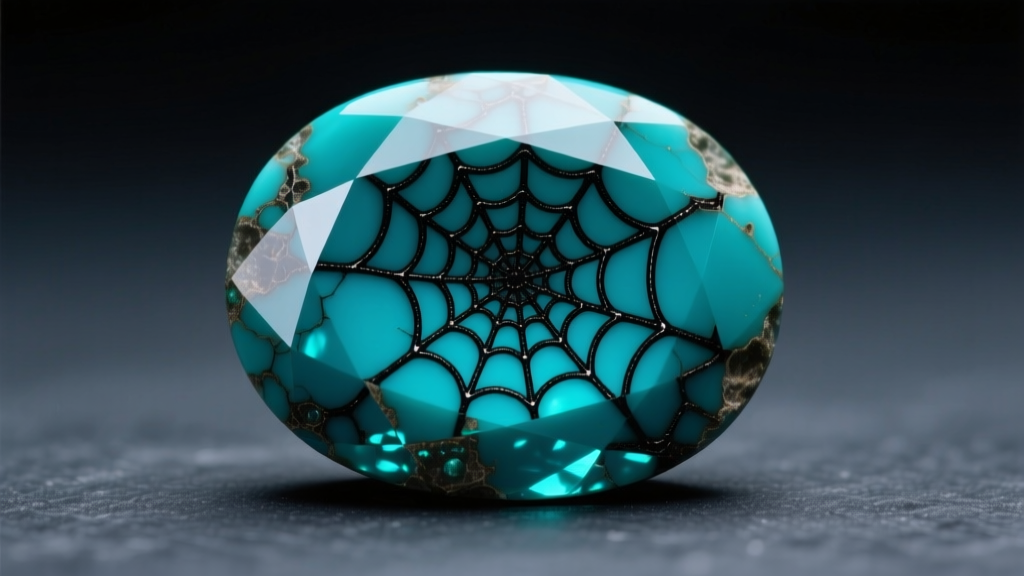
When navigating the secondary and artisan markets for Native American and contemporary gemstone jewelry, few names command as much immediate respect as the Blackjack mine. Located near Tonopah, Nevada, the Blackjack mine was active primarily from the 1960s through the 1980s before its depletion and subsequent closure. Today, evaluating blackjack turquoise jewelry requires a nuanced understanding of geological scarcity, artisan craftsmanship, and market demand. Because the mine is no longer producing, every natural, high-grade cabochon set in a piece of jewelry is essentially a finite resource, driving a robust secondary market for collectors and investors alike.
Unlike the sky-blue, matrix-free stones often associated with Persian or Sleeping Beauty turquoise, Blackjack is celebrated for its intense, moody character. The stones typically exhibit a deep, saturated blue-green to forest-green body color, heavily laced with a dark brown to jet-black matrix. This matrix is composed of iron pyrite and limonite, which not only provides the stone's signature 'spiderweb' or 'splotch' aesthetic but also acts as a natural reinforcing web, allowing some of the harder Blackjack material to be cut and polished without stabilization. According to the Gemological Institute of America (GIA), the presence and aesthetic distribution of this host rock matrix is a primary driver of value in American turquoise markets, provided the stone maintains structural integrity.
Grading Blackjack Turquoise: Matrix, Hardness, and Color
To accurately assess the budget and value of any piece of blackjack turquoise jewelry, you must first grade the stone itself. Gemologists and master silversmiths evaluate Blackjack turquoise across three critical vectors:
1. Color Saturation and Tone
The most prized Blackjack stones feature a 'royal blue' or deep 'blue-green' hue that appears almost wet when polished. Stones that lean too heavily into pale green or yellowish-green are considered lower grade. The depth of color is directly tied to the copper and iron content in the earth where the stone formed. High-grade stones will maintain their deep coloration under both natural sunlight and warm indoor lighting without appearing washed out.
2. Matrix Distribution and Contrast
The black or dark brown webbing is the hallmark of Blackjack. However, not all matrix patterns are valued equally. A tight, intricate 'spiderweb' pattern that contrasts sharply against a vivid blue background commands the highest premium. Conversely, a heavy, muddy matrix that obscures the blue color, or a matrix that is crumbly and structurally compromised, significantly lowers the stone's value. The matrix should feel smooth and flush with the turquoise when you run your fingernail across the cabochon.
3. Hardness and the Mohs Scale
Natural, untreated gem-grade Blackjack turquoise typically registers between 5.5 and 6.5 on the Mohs hardness scale. This is crucial because it dictates whether the stone could be set in jewelry without undergoing chemical stabilization. Stones that fall below a 5.0 are considered 'chalk' turquoise; they are too porous and brittle to be cut into cabochons without the use of epoxy resins. As noted by Encyclopedia Britannica, the porosity of turquoise makes it highly susceptible to environmental damage, which is why hardness is a non-negotiable metric for natural stone valuation.
Market Pricing: What You Should Actually Pay
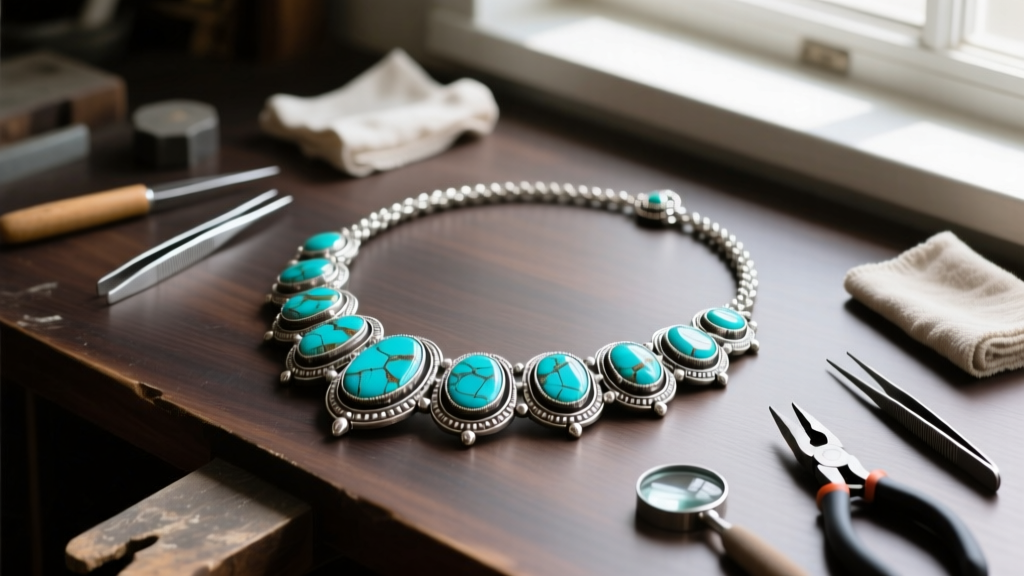
Pricing blackjack turquoise jewelry is not a one-size-fits-all endeavor. The value is a composite of the stone's grade, the carat weight, and the metallurgical craftsmanship of the setting. Below is a structured breakdown of current market pricing tiers to help you assess whether a piece is fairly valued or overpriced.
| Grade & Form | Estimated Price Range (USD) | Value Drivers & Notes |
|---|---|---|
| High Gem Grade (Loose Cabochon) | $15 - $35+ per carat | Natural, untreated, Mohs 6+, tight black spiderweb matrix, deep blue-green color. |
| Mid Grade (Loose Cabochon) | $5 - $12 per carat | Natural, some chalky spots, heavier brown matrix, good color but less contrast. |
| Stabilized (Finished Ring) | $150 - $450 | Epoxy-treated stone set in solid sterling silver with traditional stampwork. |
| High-End Artisan (Squash Blossom) | $2,500 - $8,000+ | Multiple natural, high-grade stones set by a recognized Navajo or Zuni master silversmith. |
When purchasing finished jewelry, remember that you are paying for the silversmith's labor. A heavy-gauge (e.g., 14-gauge or 12-gauge) sterling silver shank with hand-chiseled sawtooth bezels and intricate repoussé work will add hundreds of dollars to the base value of the piece. Always weigh the silver content and assess the quality of the solder joints.
Stabilized vs. Natural: The Value Impact on Blackjack
One of the most common pitfalls for novice buyers is misunderstanding stabilization. Approximately 85% to 90% of all turquoise mined globally requires some form of stabilization to be used in jewelry. Because Blackjack turquoise often forms in highly fractured veins, much of the material extracted was chalky and required treatment.
The Epoxy Vacuum Process
Standard stabilization involves placing the porous rough stone into a vacuum chamber and infusing it with a clear, hardening epoxy resin. This process does not alter the color; it simply binds the chalky material together, raising its hardness to a workable level and allowing it to take a high polish. Stabilized Blackjack is still genuine turquoise, but it should be priced 40% to 60% lower than a natural, untreated stone of similar visual appearance.
Color-Enhanced and Zachery Treatments
If a seller claims a stone is 'natural' but the color looks unnaturally vibrant or uniform, be wary of dye treatments or the Zachery method (a proprietary potassium/sodium silicate treatment that enhances color and reduces porosity). While the Zachery treatment is highly regarded and difficult to detect without advanced lab equipment, it must be disclosed. A Zachery-treated Blackjack stone holds good value for wearability but lacks the raw investment premium of a completely untreated, gem-grade natural stone.
Red Flags: Spotting Fakes and Overpriced Imitations
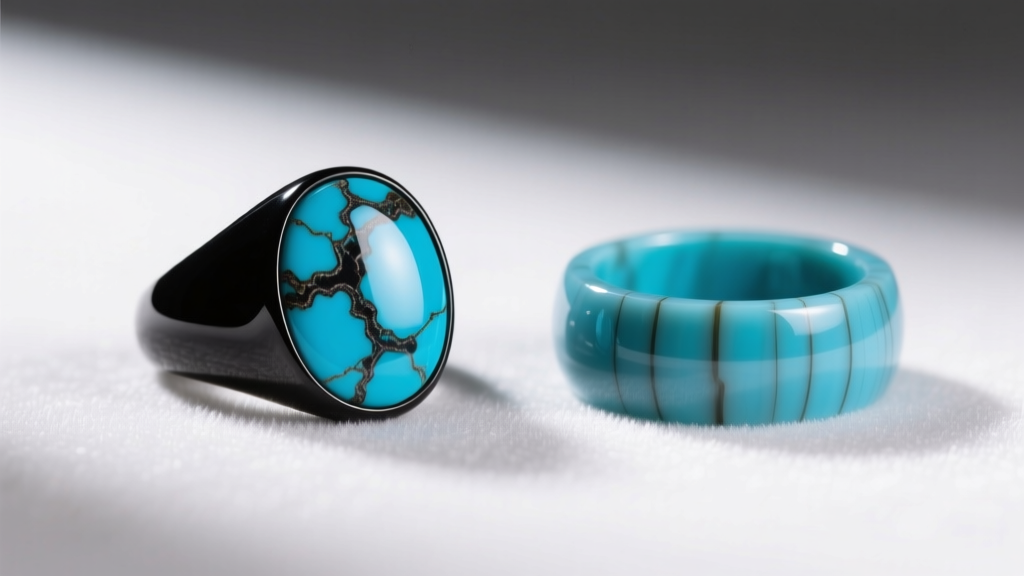
The high market value of blackjack turquoise jewelry has inevitably attracted counterfeiters. When conducting your budget assessment, keep an eye out for these common imitations:
- Dyed Howlite and Magnesite: These are naturally white or gray, highly porous stones that are dyed blue or green and injected with black epoxy to simulate the Blackjack matrix. Under a 10x jeweler's loupe, you will see the dye concentrating in the natural cracks of the stone, and the 'matrix' will look like painted surface veins rather than deep, structural host rock.
- Block Turquoise: This is essentially turquoise dust mixed with plastic resins and dyes, molded into blocks, and then cut into cabochons. It lacks the natural crystalline structure and will feel unusually light and warm to the touch compared to genuine stone.
- Reconstituted Stone: Similar to block turquoise but marketed deceptively. If the price of a large, heavily webbed Blackjack squash blossom necklace seems too good to be true (e.g., under $300), it is almost certainly reconstituted or entirely synthetic.
Care and Maintenance to Preserve Resale Value
To protect your investment and maintain the resale value of your blackjack turquoise jewelry, rigorous care protocols are required. Turquoise is a hydrous phosphate of copper and aluminum, making it highly reactive to chemicals and environmental stressors.
Never use ultrasonic jewelry cleaners, steam cleaners, or commercial silver dips on turquoise jewelry. The harsh chemicals and high-frequency vibrations can fracture the stone or strip the polish from the matrix.
Instead, clean your jewelry using a soft, lint-free microfiber cloth and, if necessary, a barely damp cloth with mild, non-detergent soap. Always put your turquoise jewelry on after applying perfumes, lotions, and hairsprays, and remove it before swimming in chlorinated pools or doing household chores. Prolonged exposure to direct, intense sunlight can also cause the moisture within the stone to evaporate over decades, potentially leading to color fading or surface crazing (a network of fine cracks). Store your pieces individually in soft cloth pouches to prevent the silver settings from scratching the stone's polish.
Ultimately, investing in blackjack turquoise jewelry is about appreciating a closed-chapter of American mining history. By focusing on verifiable matrix patterns, understanding the reality of stabilization, and paying for true artisan metallurgy, you can build a collection that holds both profound aesthetic appeal and enduring financial value.


