Turquoise Jewelry Cookies: A Beginner's Style & Buying Guide
Discover everything about turquoise jewelry cookies. Learn how to identify authentic coin beads, understand stabilization, and style these trendy gems.

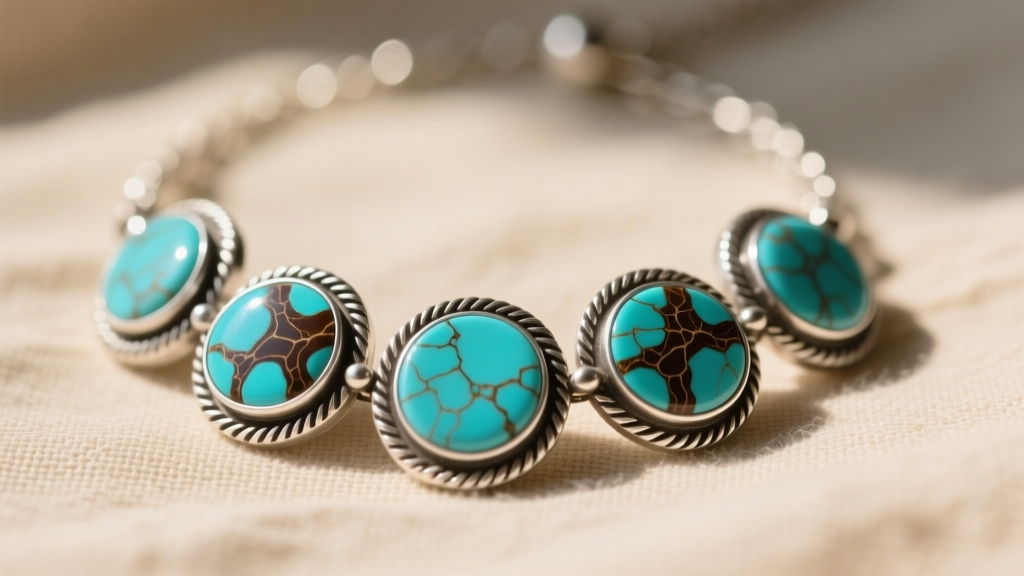
What Exactly Are Turquoise Jewelry Cookies?
If you are stepping into the world of gemstone beading, bohemian accessories, or Southwestern jewelry, you have likely encountered the term turquoise jewelry cookies. To the untrained eye, the phrase might sound like a whimsical dessert, but in the gem and jewelry trade, "cookies" refers to a very specific and highly sought-after stone cut.
Turquoise cookies are flat, round, disc-shaped beads or pendants. Unlike perfectly spherical roundels or uniform heishi beads, cookies are typically cut to retain a slightly irregular, organic edge, resembling a rustic, bite-sized biscuit or a thick coin. They are usually polished on the top and bottom but may feature rough, unpolished edges that highlight the natural matrix (the host rock) of the stone. This cut is incredibly popular for statement necklaces, layered bracelet stacks, and artisan wire-wrapped pendants because it maximizes the surface area of the stone's vibrant color and intricate webbing while maintaining a lightweight, comfortable profile against the skin.
The Anatomy of a Turquoise Cookie
Understanding the anatomy of these unique gemstone discs is crucial for any beginner looking to make informed purchases. A high-quality turquoise cookie is defined by three main characteristics:
- The Matrix: This is the remnants of the host rock (often limonite or sandstone) that creates the beautiful brown, black, or golden webbing within the blue or green stone. In cookie cuts, the matrix is usually left highly visible on the flat faces.
- The Profile: A true "cookie" is generally 2mm to 6mm thick and ranges from 10mm to 30mm in diameter. The edges are often softly beveled to prevent chipping, a common issue with flat-cut porous gems.
- The Polish: While the flat faces are polished to a high gloss to reveal the stone's true color, the outer rim is frequently left matte or lightly tumbled to give it that signature rustic, earthy aesthetic.
Natural vs. Stabilized: The Great Cookie Debate
One of the most important concepts to grasp when shopping for turquoise jewelry cookies is the difference between natural and stabilized stones. According to the Gemological Institute of America (GIA), turquoise is a relatively soft and porous mineral, ranking between 5 and 6 on the Mohs hardness scale. Because cookies are cut into flat, wide discs, they are structurally more prone to snapping or cracking under pressure than thick, spherical beads.
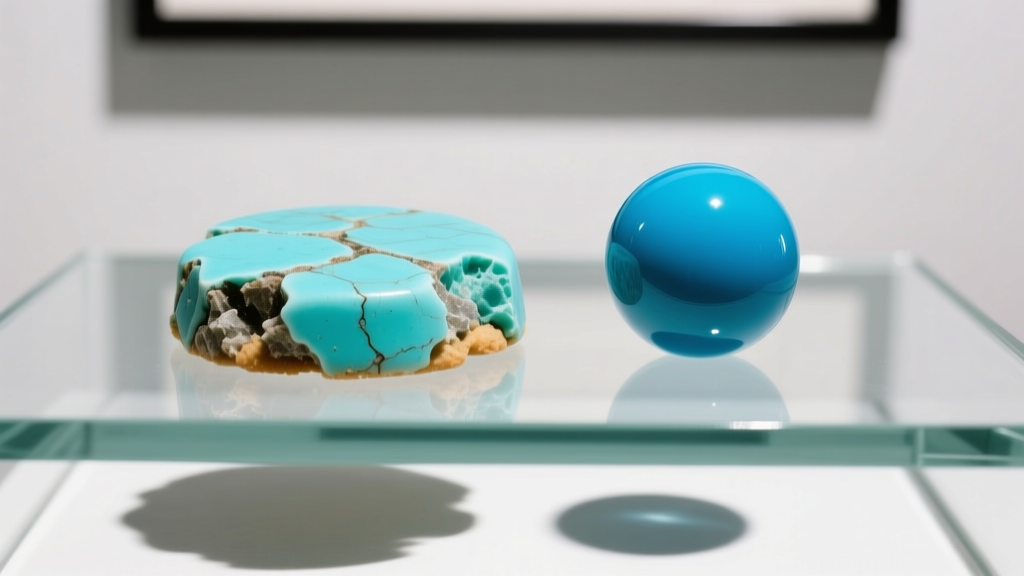
Stabilized Turquoise Cookies
To combat the fragility of the stone, roughly 90% of the turquoise on the commercial market undergoes stabilization. This is a legitimate and widely accepted industry practice where the porous stone is subjected to a vacuum or pressure chamber, forcing a clear epoxy resin or polymer into the microscopic pores of the gem. This process hardens the stone, making it durable enough to be cut into thin, flat cookies without shattering. Stabilization also locks in the color, preventing the stone from absorbing oils and turning green over time. If you are buying turquoise cookies for everyday bracelet stacks, stabilized is actually the recommended choice for longevity.
Natural, Untreated Turquoise Cookies
Natural turquoise cookies are cut from high-grade, densely packed rough material that is hard enough to be shaped without chemical reinforcement. These are rare, expensive, and highly prized by collectors. However, they require meticulous care, as the porous nature of untreated turquoise means it will absorb skin oils, lotions, and environmental pollutants, which can permanently alter its color from a bright sky blue to a dark, muddy green.
How to Spot Fake Turquoise Cookies
Because the flat, wide surface of a cookie bead requires a large amount of rough material, fakes are unfortunately common. Unscrupulous vendors often sell dyed howlite, magnesite, or even reconstituted turquoise dust glued together with resin as genuine stones. Here is how you can protect yourself:
- The Visual Inspection: Look closely at the webbing. In genuine turquoise, the matrix is organic and random. In dyed howlite, the "webbing" is actually the natural grey veining of the howlite taking up the dye, which often looks unnaturally dark, uniform, or spider-web-like. Furthermore, dye tends to pool in the cracks; use a jeweler's loupe to see if the color is concentrated in the crevices.
- The Acetone Test: If you suspect a stone is dyed, lightly dab a cotton swab in nail polish remover (acetone) and rub an inconspicuous area of the cookie's edge. If blue or green color transfers to the swab, the stone is dyed and likely not genuine turquoise.
- The Price Reality Check: Genuine turquoise is mined in limited quantities. If you find a strand of large, perfectly matched, vibrant blue turquoise cookies selling for $15, you are almost certainly looking at dyed magnesite or block turquoise (a synthetic mixture of plastic and stone dust).
For deeper mineral identification and properties, Mindat.org provides comprehensive geological data on authentic turquoise formations and their specific gravity, which can help advanced buyers verify their stones.
Pricing Guide: What Should You Pay?
Pricing for turquoise jewelry cookies varies wildly based on the mine of origin (such as Sleeping Beauty, Kingman, or Royston), the treatment, and the size of the disc. Below is a general market framework to help you budget effectively.
| Turquoise Grade | Average Price (Per 15mm Cookie) | Durability | Best Use |
|---|---|---|---|
| Natural, High-Grade | $25 - $60+ | Moderate (Prone to color shift) | High-end pendants, collector pieces |
| Stabilized (Genuine) | $5 - $18 | High (Resistant to oils/chipping) | Everyday bracelets, beaded necklaces |
| Zachery Treated | $12 - $30 | High (Enhanced without plastics) | Premium artisan jewelry |
| Imitation / Dyed Howlite | $0.20 - $1.50 | High (But lacks gem value) | Fast fashion, costume jewelry |
Styling Your Turquoise Cookies for Everyday Wear

The beauty of the cookie cut lies in its versatility. Because of their flat profile, turquoise jewelry cookies sit flush against the skin, making them incredibly comfortable for stacking. Here are three beginner-friendly styling frameworks:
- The Southwestern Stack: Pair 10mm stabilized turquoise cookies with oxidized sterling silver spacers and a braided leather cord. The flat discs will align neatly, creating a cohesive, cuff-like appearance on the wrist without the bulk of round beads.
- The Bohemian Lariat: Use larger, 25mm irregular turquoise cookies as the focal point of a Y-necklace. Wire-wrap the top of the cookie with raw brass or copper wire, allowing the natural, unpolished edges of the stone to take center stage.
- The Minimalist Pendant: Select a single, high-grade natural turquoise cookie with heavy golden matrix. Set it in a simple, bezel-cast 14k gold pendant. The flat surface area of the cookie allows the intricate webbing to be appreciated from across the room, acting as a wearable piece of art.
Care and Maintenance for Porous Gems
Even if your turquoise cookies are stabilized, they still require mindful care to maintain their polish and structural integrity. Turquoise is highly sensitive to harsh chemicals. Always apply your perfumes, hairsprays, and lotions before putting on your turquoise jewelry.
To clean your turquoise cookies, never use ultrasonic cleaners, steamers, or commercial jewelry dips. The vibrations can shatter the flat discs, and the chemicals will strip the polish or damage the epoxy resin. Instead, simply wipe the stones gently with a soft, damp, lint-free microfiber cloth after wearing them to remove everyday skin oils and environmental dust. Store your turquoise pieces in a soft pouch away from harder gemstones like diamonds or sapphires, which can easily scratch the surface of your beautiful turquoise cookies.