Vintage Lapis Jewelry: Material Properties & Origin Guide
Discover the material properties, origin grades, and authentication tips for vintage lapis jewelry. Compare Afghan, Chilean, and synthetic stones.

The Mineralogy of Lapis Lazuli in Vintage Pieces
When evaluating vintage lapis jewelry, the first crucial concept for collectors and gemologists to grasp is that lapis lazuli is not a single mineral, but a complex metamorphic rock. According to the Mindat.org mineralogical database, its striking blue hue is primarily derived from lazurite (a tectosilicate), which typically comprises 25% to 40% of the stone's total volume. The remaining matrix is a variable cocktail of calcite (white streaks), pyrite (metallic gold flecks), sodalite, hauyne, and diopside.
This composite nature dictates the physical properties of vintage pieces. Lapis lazuli registers between 5 and 6 on the Mohs hardness scale, making it softer than quartz or beryl. Its specific gravity ranges from 2.7 to 2.9, depending heavily on the concentration of heavy pyrite inclusions. For antique jewelry collectors, understanding this mineralogical recipe is essential, as the ratio of lazurite to calcite and pyrite directly influences both the historical provenance and the modern market valuation of a piece.
Origin Comparison: Afghan vs. Chilean vs. Russian Vintage Lapis
The geographic origin of the rough material heavily influences the aesthetic and value of vintage lapis jewelry. Historically, the supply chain for lapis lazuli was restricted to a few key global deposits, each leaving a distinct visual fingerprint on the jewelry of different eras.
| Origin | Color Profile | Inclusions & Matrix | Typical Vintage Era | Market Premium |
|---|---|---|---|---|
| Afghan (Badakhshan) | Deep Royal / Midnight Blue | Sparse Pyrite, No Calcite | Victorian, Art Deco | Highest (40-60% above base) |
| Chilean (Andes) | Lighter Azure / Blue-Green | Prominent Calcite Webbing | 1970s Boho, Mid-Century | Base (Standard pricing) |
| Russian (Lake Baikal) | Intense Violet-Blue | Heavy, Veined Pyrite | Mid-Century, 1980s Estate | Moderate (10-20% premium) |
Afghan Lapis: Mined in the Sar-e-Sang district of Badakhshan for over 6,000 years, this material is the gold standard. High-end Victorian and Art Deco jewelers favored Afghan lapis for its uniform, deep royal blue color and lack of dulling calcite matrices. Pieces featuring this grade command the highest premiums at auction today.
Chilean Lapis: Often featuring a lighter blue tone with distinct white calcite mottling, Chilean material became highly prevalent in the mid-20th century, particularly in 1970s bohemian and tourist-trade jewelry. While beautiful, the calcite inclusions make the stone more porous and vulnerable to acid etching over decades of wear.
Russian Lapis: Sourced near Lake Baikal, this variety is characterized by its rich, sometimes violet-tinged blue and heavy, web-like pyrite veining. It is frequently seen in mid-century European estate jewelry and offers a striking, high-contrast alternative to the Afghan standard.
Authenticating Vintage Lapis vs. Synthetics and Imitations
As the demand for antique gemstone jewelry surges, the market has become saturated with imitations. Authenticating vintage lapis jewelry requires moving beyond simple visual inspection and applying a structured decision framework based on material science.
The "Pyrite Distribution" Framework
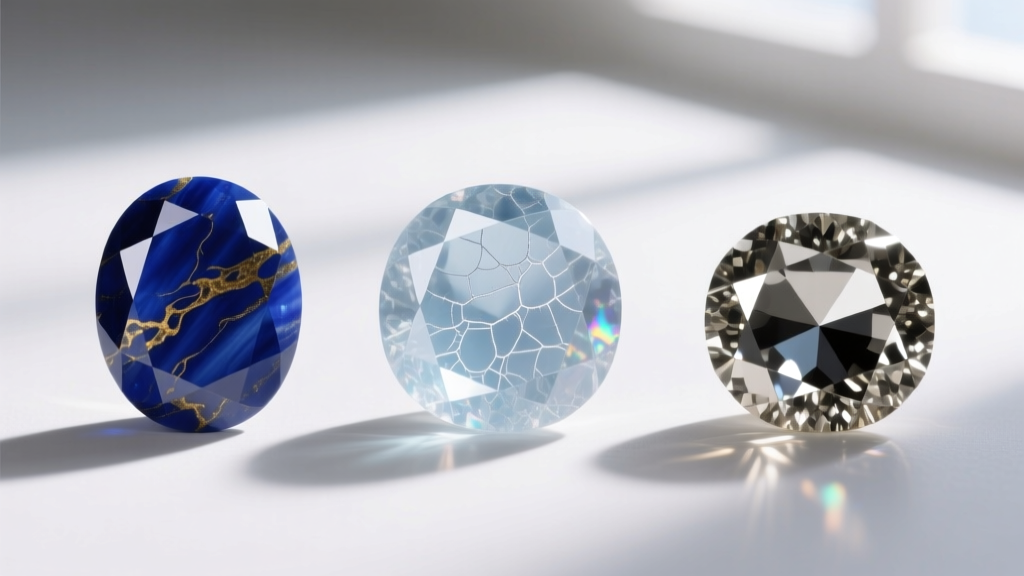
Natural lapis lazuli features pyrite inclusions that are angular, randomly distributed, and vary in size. In the 1970s, the market saw the introduction of Gilson synthetic lapis. While chemically similar, Gilson lapis lacks natural pyrite; instead, it often incorporates iron sulfide particles that appear too uniform, rounded, or artificially scattered. If a 1980s vintage piece features perfectly spaced, identically sized "gold flecks," it is highly likely to be synthetic.
Distinguishing Sodalite and Dyed Imitations
Sodalite is the most common natural imitator. While it shares a similar blue hue, sodalite lacks pyrite entirely and possesses a lower specific gravity (2.15–2.29), making it feel noticeably lighter in the hand than a comparably sized lapis cabochon. Furthermore, dyed howlite or jasper was frequently used in cheap vintage costume jewelry. The Acetone Test is definitive here: applying a cotton swab dipped in pure acetone to an inconspicuous area of a dyed stone will lift the artificial color, whereas natural lazurite is completely impervious to acetone.
Expert Tip: According to the Gemological Institute of America (GIA), natural lapis lazuli may exhibit a weak, mottled fluorescence under long-wave UV light due to its calcite content. If a stone shows zero fluorescence but has prominent white webbing, it may be a dyed composite or synthetic.
Structural Vulnerabilities and Care for Vintage Settings
The composite mineralogy of lapis lazuli creates unique structural vulnerabilities, particularly in antique settings. Because lapis is a rock with varying hardness levels (hard pyrite, soft calcite, medium lazurite), it polishes unevenly and is highly susceptible to differential wear.
- The Ultrasonic Ban: Never place vintage lapis jewelry in an ultrasonic cleaner. The high-frequency vibrations can easily shatter the stone along natural calcite cleavage planes or cause micro-fractures in the lazurite matrix.
- Chemical Porosity: Lapis is highly porous. Decades of exposure to skin oils, modern hand sanitizers, and perfumes can degrade the stone's polish, leaving a dull, chalky appearance. Calcite inclusions are particularly vulnerable to mild acids, which can etch the white webbing over time.
- Foil Backing Dangers: Many Victorian and Edwardian lapis pieces were set in closed-back bezels with colored foil backings to enhance the blue saturation. Water ingress will destroy this foil, causing the stone to appear dead or greenish. These pieces must only be cleaned with a dry, soft microfiber cloth.
- Prong Wear: Because lapis is relatively soft (Mohs 5-6), the metal prongs in antique rings will slowly wear away the stone's girdle over decades of friction. Always check the interior edges of the cabochon for chipping or excessive rounding before purchasing vintage lapis rings.
Market Valuation and Pricing Tiers for Collectors
The valuation of vintage lapis jewelry in the current market is dictated by the intersection of origin, era, and setting integrity. Based on data from antique jewelry appraisers and historical archives like Lang Antiques University, collectors can expect the following pricing tiers for authenticated, well-preserved pieces:
Victorian & Edwardian (1837–1910): Typically set in yellow gold with intricate repoussé work or seed pearl halos. High-quality Afghan lapis in these eras is rare, as the material was expensive to import. Expect to pay between $1,200 and $4,500 for authenticated, undamaged rings and brooches, with a steep premium for intact foil backings.
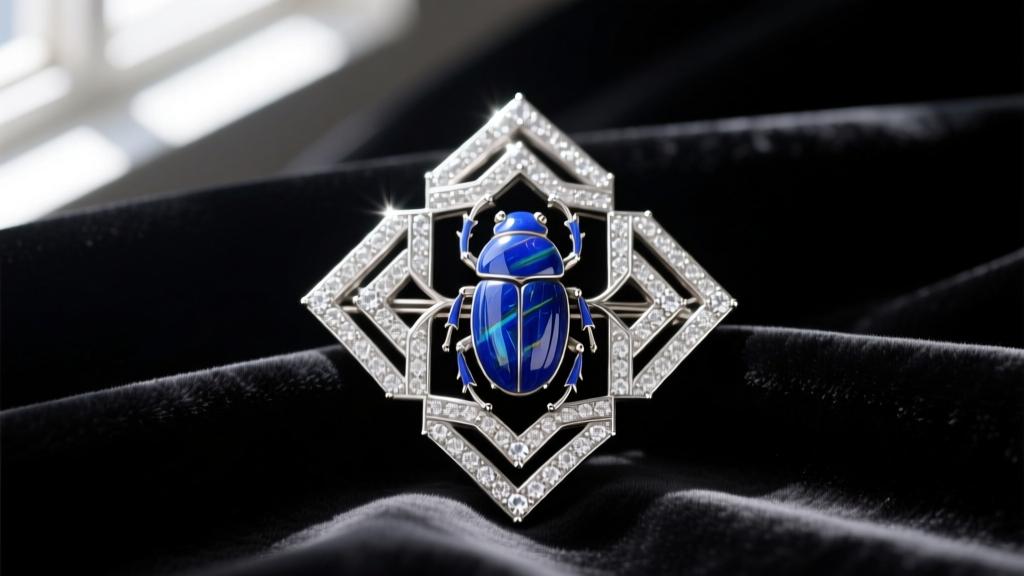
Art Deco (1920–1935): The golden age of lapis lazuli in fine jewelry. Designers like Cartier and Boucheron utilized carved Afghan lapis (often in scarab or lotus motifs) paired with platinum, onyx, and diamonds. These are the most highly coveted pieces, with signed or attributed Art Deco lapis bracelets and clips regularly fetching $5,000 to $25,000+ at auction.
Mid-Century & 1970s Retro (1950–1985): Characterized by bold, sculptural yellow gold settings and larger, often Chilean or Russian cabochons. While less historically revered than Art Deco, these pieces offer excellent entry points for collectors, with pricing generally ranging from $300 to $1,500, depending heavily on the gold weight and the presence of designer hallmarks.
By understanding the precise mineralogy, geographic origins, and structural quirks of lapis lazuli, collectors can confidently navigate the vintage market, separating genuine historical treasures from synthetic imitations and ensuring their pieces survive for another century of wear.


