Where to Buy Real Jade Jewelry: Expert Sourcing Guide
Discover where to buy real jade jewelry safely. Compare nephrite vs jadeite, understand Type A, B, and C treatments, and learn expert verification tips.

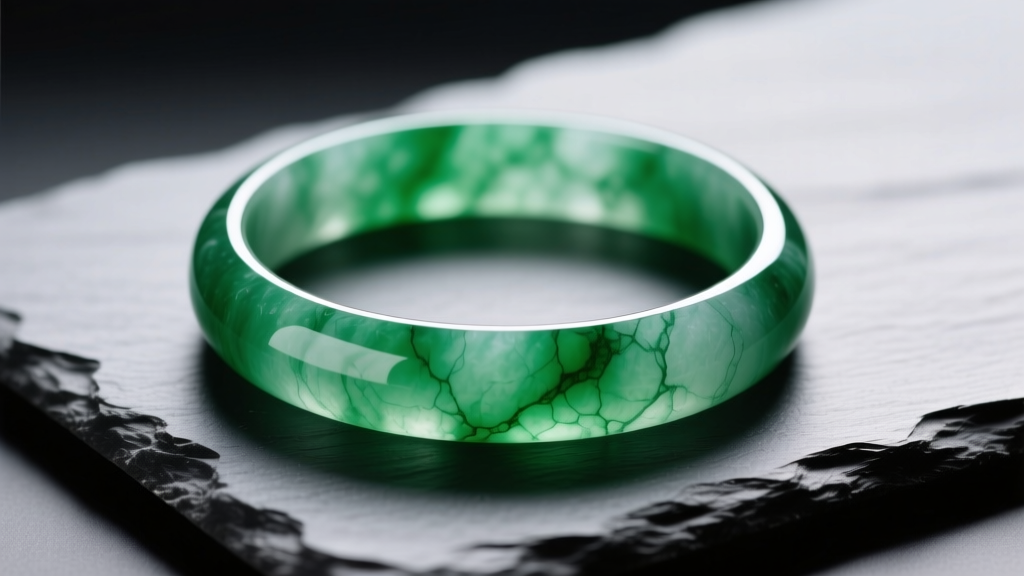
The global market for jade is notoriously complex. As we navigate the jewelry landscape in 2026, advancements in synthetic simulants, glass composites, and sophisticated polymer treatments have made it increasingly difficult for the untrained eye to distinguish authentic stones from clever imitations. If you are wondering where to buy real jade jewelry, the answer requires more than just finding a reputable storefront; it demands a fundamental understanding of jade mineralogy, treatment classifications, and gemological verification. This guide provides the material comparisons and actionable sourcing frameworks you need to invest in authentic jade with absolute confidence.
Nephrite vs. Jadeite: Understanding the Two "Real" Jades
Before you can determine where to source authentic pieces, you must understand what you are actually buying. The term "jade" is a commercial umbrella that covers two entirely distinct silicate minerals: Nephrite and Jadeite. While both are prized in jewelry, their chemical compositions, physical properties, and market values differ drastically.
Chemical and Physical Divergence
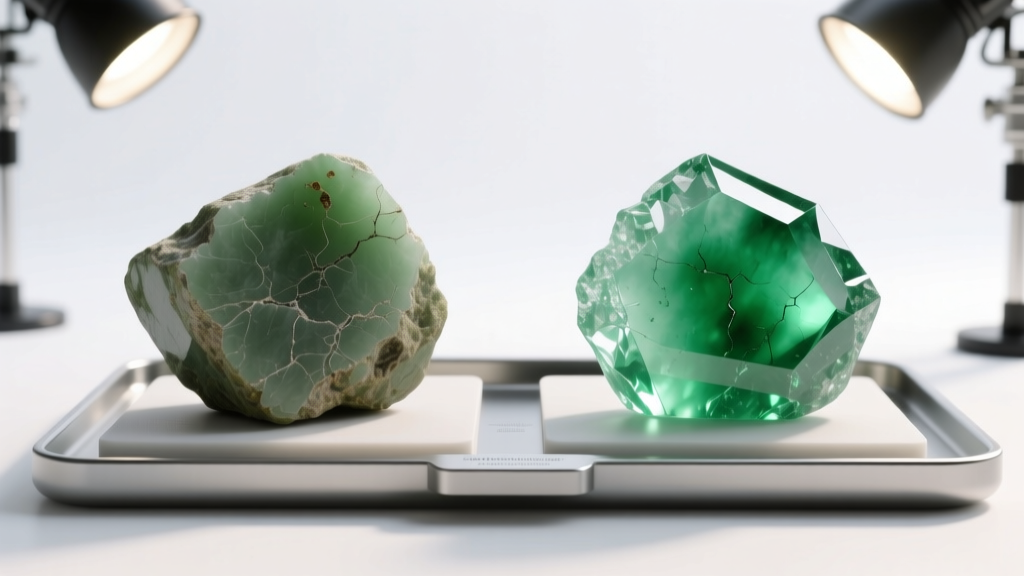
Nephrite is a calcium magnesium iron silicate, characterized by a fibrous, interlocking crystal structure that makes it exceptionally tough—historically used for tools and weapons. It registers between 6.0 and 6.5 on the Mohs hardness scale and has a specific gravity of 2.90 to 3.03. Nephrite is typically found in muted tones: spinach green, mutton fat white, and various earthy browns. The most famous historical source is Hetian, China.
Jadeite, a sodium aluminum silicate, features a granular crystal structure. It is slightly harder (6.5 to 7.0 on the Mohs scale) and denser, with a specific gravity of 3.30 to 3.38. Jadeite is the source of the highly coveted "Imperial Green" and vibrant lavender hues. Myanmar (Burma) remains the premier source for gem-quality jadeite, though Guatemala produces striking black and green varieties.
The ABCs of Jade Treatments: Why Provenance Matters
When researching where to buy real jade jewelry, you will inevitably encounter the industry's A, B, and C classification system. This system does not denote quality grades; rather, it defines the level of chemical and physical manipulation the stone has undergone. According to the Gemological Institute of America (GIA), only Type A jade is considered completely natural and holds long-term investment value.
| Classification | Treatment Process | Market Value & Stability | Detection Method |
|---|---|---|---|
| Type A | Completely natural. May have a traditional surface beeswax polish. | Highest. Stable over time. Investment grade. | FTIR Spectroscopy (no polymer peaks). |
| Type B | Acid-bleached to remove brown/yellow impurities, then vacuum-impregnated with polymer resin. | Low. Resin yellows and degrades over 5-10 years. | UV Fluorescence (glows under LWUV); FTIR Spectroscopy. |
| Type C | Chemically dyed to enhance or create green/lavender colors. | Very Low. Color fades rapidly when exposed to sunlight and heat. | Chelsea Filter; Magnification (dye concentrates in fractures). |
| Type B+C | Both acid-bleached/polymer-filled AND dyed. | Negligible. Considered a total imitation of natural jade. | Combination of UV, FTIR, and magnification. |
Expert Warning: In the modern market, Type B and C jades are frequently sold at tourist traps and unregulated online marketplaces as "natural Burmese Jade." Always demand a gemological report from a recognized laboratory (such as GIA, Gubelin, or SSEF) for any jadeite piece priced above $1,000.
Where to Buy Real Jade Jewelry: Vetting the Source
Knowing the material properties is only half the battle; knowing where to transact is the other. The safest avenues for purchasing authentic, untreated jade depend heavily on your budget and the specific type of jade you seek.
1. Specialized Jade Importers and Dealers
For high-quality jadeite and nephrite, specialized dealers are your safest bet. Companies like Mason-Kay, one of the premier jade importers in North America, provide in-house gemological testing and explicit transparency regarding treatments. These dealers maintain direct relationships with cutters in Myanmar and China, ensuring the chain of custody is secure and the stones are accurately graded.
2. Major Auction Houses
If you are hunting for investment-grade Imperial Jadeite (translucent, emerald-green jadeite that can fetch upwards of $10,000 to $50,000+ per carat), major auction houses like Sotheby's and Christie's are the gold standard. Their jewelry departments employ rigorous vetting processes, and every lot is accompanied by laboratory reports confirming Type A status and natural origin.
3. Direct Sourcing (Proceed with Extreme Caution)
Many buyers attempt to purchase jade directly from markets in Myanmar, Yunnan (China), or Guatemala. While prices can be lower, the risk of purchasing Type B/C stones or outright glass simulants is astronomically high for foreigners. In 2026, synthetic glass composites engineered to match the exact specific gravity (3.33) and refractive index (1.66) of jadeite are prevalent in unregulated street markets. Unless you are traveling with portable FTIR and refractometer equipment, direct street sourcing is highly discouraged.
Actionable Verification Checklist for Buyers
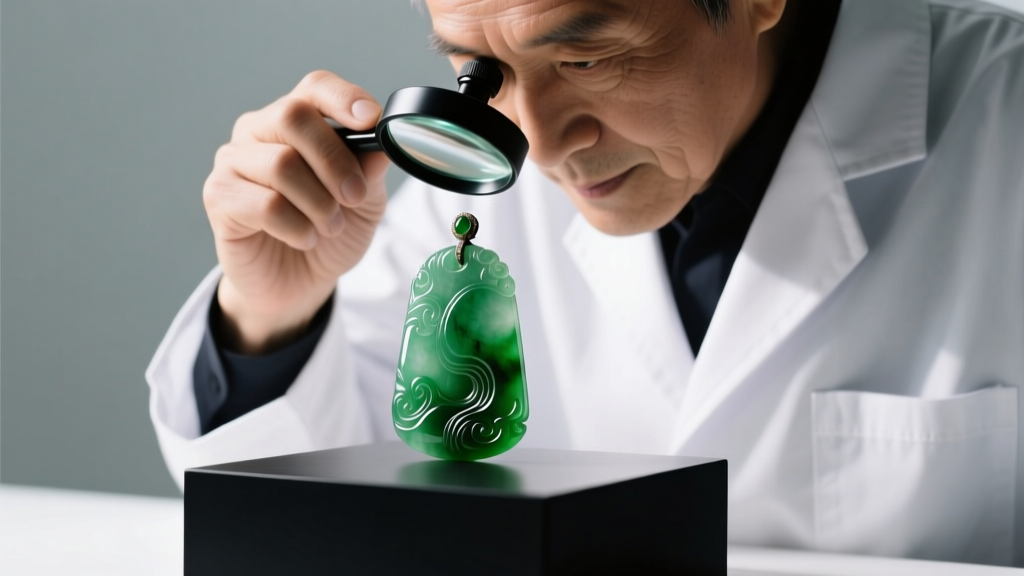
When evaluating a piece of jade jewelry in person, use this gemological checklist to filter out immediate fakes before committing to a purchase:
- The Temperature Test: Real jade (both nephrite and jadeite) has high thermal inertia. It should feel noticeably cold to the touch and take several seconds to warm up when held in your palm. Glass and plastic simulants warm up almost instantly.
- The Scratch Test (Use Caution): Jadeite (Mohs 6.5-7) will easily scratch standard glass (Mohs 5.5). However, this test is destructive and should never be used on finished jewelry. Instead, rely on non-destructive optical tests.
- Refractive Index (RI) Spot Reading: Using a gemological refractometer, jadeite will yield a point reading of approximately 1.66, while nephrite will read between 1.60 and 1.63. Common simulants like serpentine (bowenite) will read much lower, around 1.56.
- Magnification Inspection: Using a 10x triplet loupe, examine the surface of the stone. Type B jade often exhibits a "spiderweb" or "cracked mud" surface texture caused by acid etching. Furthermore, if you see dye concentrating in the microscopic fractures between crystal grains, you are looking at Type C jade.
- UV Fluorescence: Shine a long-wave ultraviolet (LWUV) light on the stone. Natural Type A jadeite is generally inert (though some white nephrite may show a faint glow). Type B jade, due to the polymer resin used to fill it, will typically fluoresce with a strong, chalky blue-white glow.
Final Thoughts on Sourcing Authentic Jade
Ultimately, knowing where to buy real jade jewelry comes down to prioritizing gemological transparency over superficial bargains. The allure of a vibrant, translucent green bangle at a fraction of the market price is almost always a red flag for polymer-impregnated or dyed material. By understanding the distinct properties of nephrite and jadeite, recognizing the dangers of B and C treatments, and restricting your purchases to vendors who provide verifiable laboratory reports, you can build a collection of authentic jade that will endure for generations.