Is 18k White Gold Jewelry Better Than Platinum? Metal Properties
Discover the metallurgical differences between 18k white gold jewelry and platinum. Compare alloy compositions, durability, and long-term wear.

When investing in fine jewelry, the choice of metal dictates not only the aesthetic but the structural longevity, maintenance requirements, and long-term value of the piece. For decades, buyers have debated the merits of platinum versus white gold. However, not all white gold is created equal. Understanding the specific material properties of 18k white gold jewelry is essential for making an informed decision, especially when comparing it to premium alternatives like platinum or lower-karat golds.
In this comprehensive metallurgical analysis, we will break down the exact alloy compositions, hardness ratings, wear patterns, and maintenance realities of 18k white gold. By examining the science behind the shine, you will be equipped to choose the right metal for your lifestyle.
The Metallurgy of 18k White Gold: What Are You Actually Buying?
Pure 24-karat gold is inherently yellow and too soft for daily wear. To create white gold, pure gold must be alloyed with white metals to 'bleach' the yellow hue and increase structural integrity. By definition, 18k gold contains exactly 75% pure gold (750 parts per thousand). The remaining 25% is a proprietary blend of alloying metals that drastically alters the physical properties of the final product.
According to the Gemological Institute of America (GIA), there are two primary alloy recipes used in modern 18k white gold jewelry:
- Palladium-Based Alloys (Premium): Typically composed of 75% Gold, 10-15% Palladium, and 10-15% Silver or Copper. Palladium is a platinum-group metal that provides excellent bleaching power, resulting in a naturally whiter base metal that is highly hypoallergenic.
- Nickel-Based Alloys (Standard): Usually composed of 75% Gold, 10-15% Nickel, and 10-15% Copper or Zinc. Nickel is a powerful bleaching agent and increases hardness significantly, but it is a known contact allergen.
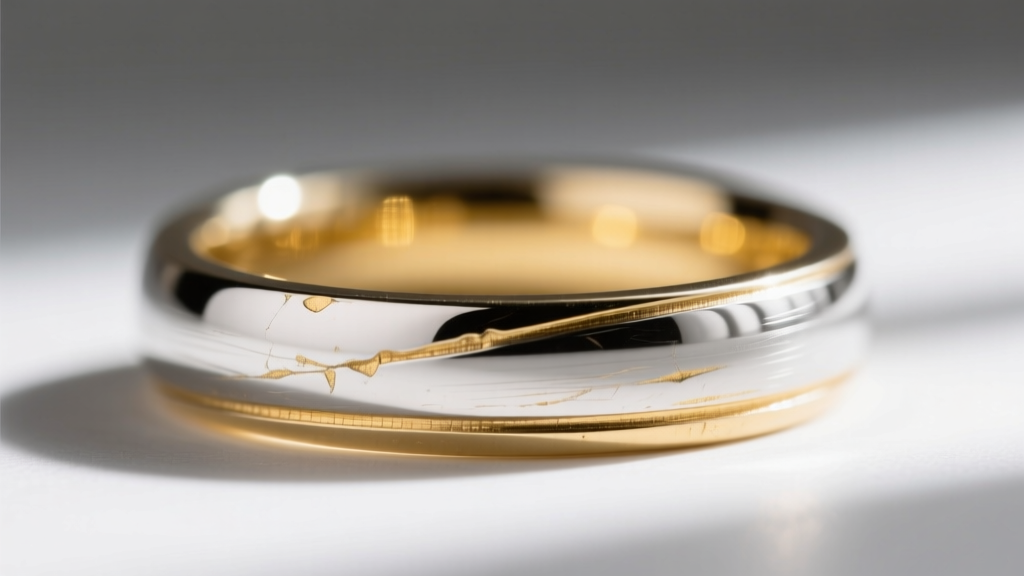
Regardless of the alloy recipe, 18k white gold naturally retains a faint yellowish-grey or 'champagne' undertone. To achieve the brilliant, mirror-like silver finish consumers expect, the metal is electroplated with a microscopic layer of rhodium, another platinum-group metal.
18k White Gold Jewelry vs. Platinum: A Head-to-Head Property Analysis
Platinum (specifically Pt950, which is 95% platinum and 5% ruthenium or iridium) is the benchmark for luxury jewelry. Comparing the physical properties of 18k white gold against Pt950 reveals distinct behavioral differences under stress.
Density and Weight Differences
Platinum is exceptionally dense, measuring approximately 21.45 g/cm³. In contrast, 18k white gold has a density of roughly 15.5 g/cm³. This means a platinum ring will feel roughly 40% heavier than an identically sized 18k white gold ring. Many buyers prefer the 'heft' of platinum as a psychological indicator of quality, while others prefer the lighter, less obtrusive feel of 18k white gold for large, statement pieces.
Hardness, Scratch Resistance, and Patina
Metallurgical hardness is measured on the Vickers scale (HV). Interestingly, 18k white gold (particularly nickel-alloyed) can actually be harder than standard Pt950. An 18k nickel white gold ring measures around 140-150 HV, while Pt950/Ru measures around 135 HV. However, hardness does not equal durability in jewelry.
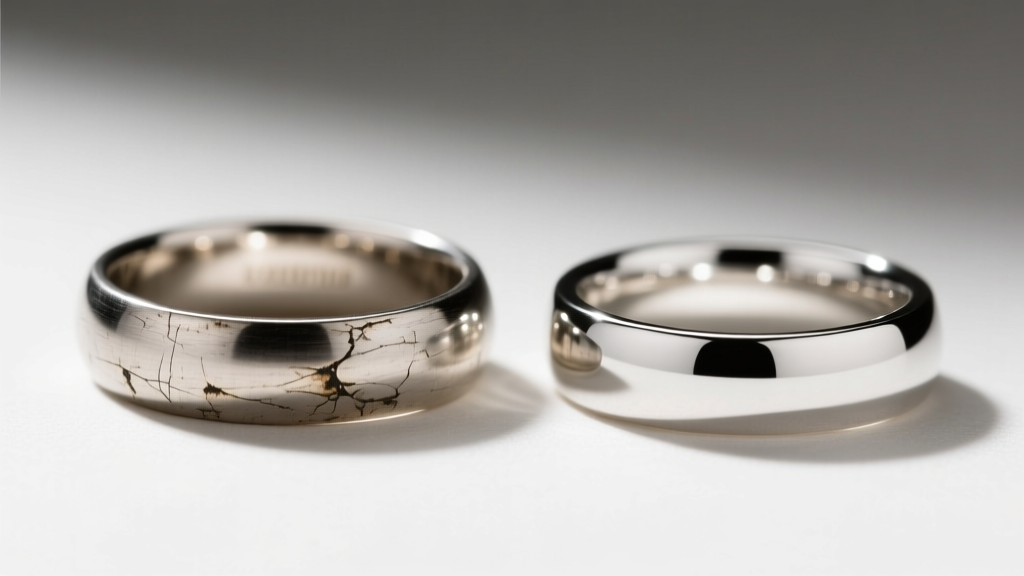
When platinum is scratched, the metal is merely displaced, creating a frosted appearance known as a 'patina.' The metal is not lost. When 18k white gold is scratched, microscopic particles of the gold alloy and the rhodium plating are actually abraded and lost forever. Over a decade of daily wear, a platinum ring will maintain its exact mass and structural dimensions, while an 18k white gold ring will physically thin out.
| Property | 18k White Gold (Pd Alloy) | 18k White Gold (Ni Alloy) | Platinum (Pt950/Ru) |
|---|---|---|---|
| Purity | 75% Au | 75% Au | 95% Pt |
| Density | ~15.6 g/cm³ | ~15.4 g/cm³ | ~21.4 g/cm³ |
| Vickers Hardness | 120 - 130 HV | 140 - 150 HV | 130 - 140 HV |
| Scratch Behavior | Material Loss (Abrasion) | Material Loss (Abrasion) | Material Displacement (Patina) |
| Hypoallergenic | Yes | No (Nickel Allergy Risk) | Yes |
The Rhodium Plating Factor: Maintenance Realities
The most critical property of 18k white gold jewelry is not the gold itself, but the rhodium plating that masks it. The Federal Trade Commission (FTC) Jewelry Guides strictly regulate how jewelers can market rhodium-plated items, ensuring consumers understand that the bright white color is a surface treatment.
Rhodium is incredibly hard and highly reflective, but it is applied in microscopic layers, typically between 0.75 and 1.5 microns thick. On high-friction areas like the bottom of a ring shank or the clasps of a bracelet, this plating will inevitably wear away. Depending on the wearer's body chemistry, friction, and exposure to chemicals, rhodium plating on an 18k white gold ring typically requires reapplication every 1.5 to 3 years. Re-plating costs between $50 and $150 per session, which must be factored into the total cost of ownership.
Platinum, conversely, is naturally white. While it may require occasional polishing to remove the patina and restore a high-gloss mirror finish, it never requires chemical plating to maintain its fundamental white color.
Hypoallergenic Properties: Navigating Metal Sensitivities
For individuals with contact dermatitis or metal allergies, the specific alloy of 18k white gold is a matter of medical importance. Nickel is one of the most common contact allergens globally. The European Union's Nickel Directive strictly limits the amount of nickel that can leach from jewelry, leading many European manufacturers to abandon nickel-based white gold entirely in favor of palladium alloys.
If you are purchasing 18k white gold jewelry, you must explicitly ask the jeweler for the alloy breakdown. If the piece is manufactured in the US or Asia, there is a higher probability of a nickel alloy being used to reduce manufacturing costs, as palladium is significantly more expensive than nickel. If you have sensitive skin, insist on palladium-alloyed 18k white gold or pivot to platinum, which is universally hypoallergenic.
Pricing and Long-Term Value Retention
From a raw materials perspective, the World Gold Council tracks the daily spot prices of precious metals. Historically, platinum traded at a premium to gold. However, in recent years, the spot price of gold has frequently surpassed or closely mirrored platinum due to shifting industrial demands and investment trends.
Despite the fluctuating spot prices, 18k white gold jewelry generally retails for 20% to 40% less than an identical platinum setting. This price gap is driven by three factors:
- Material Density: Platinum's higher density means more grams of metal are required to cast the exact same ring.
- Manufacturing Complexity: Platinum has a much higher melting point (1,768°C compared to gold's 1,064°C), requiring specialized equipment, oxygen-gas torches, and more labor hours for casting and polishing.
- Purity Premium: Pt950 contains 95% precious metal, whereas 18k gold contains only 75%.
Final Verdict: When to Choose 18k White Gold
Choosing between 18k white gold jewelry and platinum ultimately depends on your budget, aesthetic preferences, and willingness to perform maintenance. 18k white gold is the superior choice if you desire a bright, rhodium-white finish at a lower initial price point, or if you are purchasing a piece of jewelry like earrings or a pendant where high-friction wear and tear are minimal.
However, if you are designing an engagement ring or a wedding band intended for decades of daily, heavy wear, platinum remains the metallurgical champion. Its ability to develop a patina without losing mass, combined with its natural white color and hypoallergenic properties, makes it the ultimate heirloom metal. If you do opt for 18k white gold for a daily-wear ring, ensure it is alloyed with palladium to protect your skin, and establish a relationship with a local jeweler who can provide high-quality rhodium re-plating services when the inevitable wear occurs.


