How to Negotiate at a Gold Pawn and Jewelry Shop (2026)
Learn how to calculate melt value, test authenticity, and negotiate the best payout at a gold pawn and jewelry shop with our 2026 expert guide.

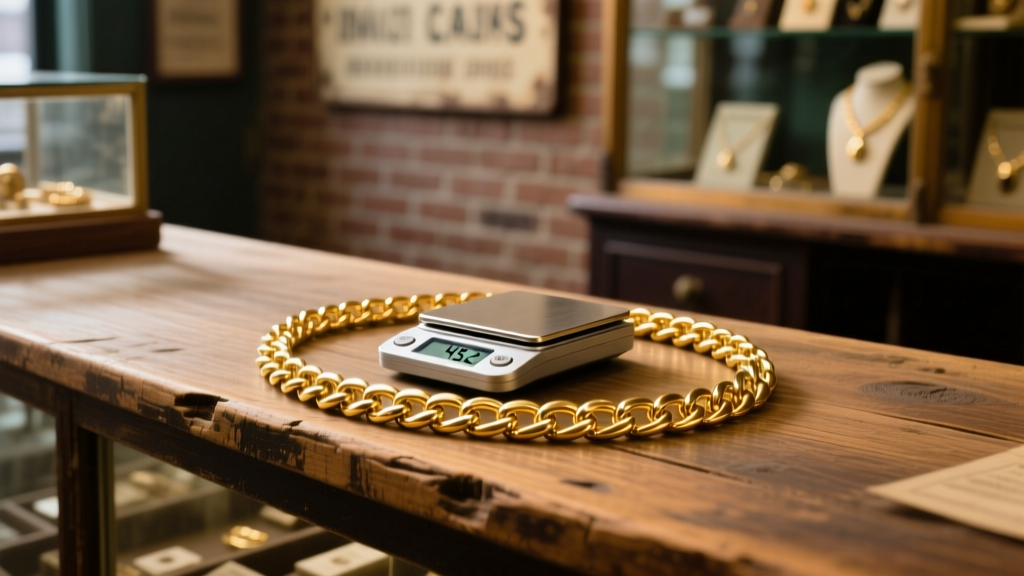
Walking into a gold pawn and jewelry shop without a strategic plan is the fastest way to lose hundreds, if not thousands, of dollars. With gold spot prices reaching historic highs in 2026, the spread between an item's intrinsic melt value and the cash offer a pawnbroker makes has never been wider. Pawn shops operate on volume and margin; their baseline business model relies on the average consumer's ignorance of precious metal markets and karat purity mathematics.
This guide strips away the intimidation factor of the pawn shop counter. We will break down the exact formulas used to calculate scrap value, the metallurgical testing methods you should demand, and the negotiation frameworks required to secure a payout that reflects the true market worth of your gold jewelry.
The Economics of Pawning: Melt Value vs. Retail Premium
Before you negotiate, you must understand what the shop is actually buying. Unless your piece is a highly sought-after vintage design from a heritage house (like Cartier or Tiffany & Co.), a gold pawn and jewelry shop is buying your item for its raw material weight, commonly referred to as "scrap" or "melt" value. They will melt it down and sell the refined bullion to a refinery or wholesaler.
To calculate your baseline melt value, you need three data points: the current spot price of gold per gram, the exact weight of your item, and its karat purity. You can track the live spot price via authoritative market trackers like Kitco. Note that the spot price is typically quoted in Troy ounces (31.1 grams), so you must divide the daily ounce price by 31.1 to find the per-gram baseline.
Karat Purity and Payout Multipliers
Gold jewelry is alloyed with metals like copper, silver, and zinc for durability. The karat system dictates the percentage of pure gold in the alloy. A shop will multiply the pure gold weight by the current spot price to find the melt value, then apply their profit margin (usually paying out 60% to 85% of melt for outright sales, and 40% to 60% for pawn loans).
| Karat | Purity % | Common Stamp | Melt Multiplier | Est. Payout per Gram (at $75/g Spot) |
|---|---|---|---|---|
| 24k | 99.9% | 999 / 24k | 0.999 | $67.50 - $72.00 |
| 18k | 75.0% | 750 / 18k | 0.750 | $50.00 - $54.00 |
| 14k | 58.3% | 585 / 14k | 0.583 | $39.00 - $42.50 |
| 10k | 41.7% | 417 / 10k | 0.417 | $28.00 - $30.50 |
Step-by-Step: Preparing Your Gold Before You Walk In

Never rely on the pawn shop's scale as your first point of verification. Preparation is your primary leverage in any gold pawn and jewelry transaction.
- Weigh at Home: Purchase a digital milligram jewelry scale (accurate to 0.01g). Weigh each piece individually. If a shop's scale reads 14.5g and yours reads 15.2g, you have immediate grounds to contest the offer or walk out.
- Identify Hallmarks: Use a jeweler's loupe (10x or 20x magnification) to locate stamps. Look for 417, 585, 750, or 999. Be highly suspicious of items stamped "14k HGE" (Heavy Gold Electroplate) or "1/20 14k GF" (Gold Filled). These contain negligible amounts of gold and will be rejected or bought for pennies.
- Separate by Karat: Shops will weigh and test items in batches. If you mix a 10k chain with an 18k ring, a lazy broker might test the 10k piece and apply that lower multiplier to the entire pile. Sort your items into separate baggies.
- Remove Non-Gold Components: Heavy gemstones, enamel, or steel spring rings on clasps add dead weight. While a broker should deduct for these, doing it yourself or asking them to remove the steel clasp before weighing ensures you aren't paying a hidden penalty.
On-Site Testing: What to Expect and Demand
Authenticity verification is non-negotiable. According to Jewelers of America, there are three primary testing methods used in retail and pawn environments. Understanding the difference protects you from lowball offers based on faulty testing.
The Acid Test (Destructive)
The traditional method involves rubbing the gold on a black touchstone to leave a streak, then applying nitric acid of varying concentrations. If the streak dissolves, it is below the targeted karat. The flaw: Gold-plated or heavy gold-filled items can pass the initial acid test if the broker does not file deeply into the metal. Conversely, an overly aggressive file can damage delicate vintage pieces. Always insist the broker tests in an inconspicuous area, like the inside of a ring band or the back of a clasp.
X-Ray Fluorescence (XRF) Spectrometry (Non-Destructive)
High-end gold pawn and jewelry shops use XRF guns. These devices shoot X-rays into the metal and measure the fluorescent energy emitted, providing an exact elemental breakdown (e.g., 58.4% gold, 20% copper, 21.7% silver) in seconds. Pro-Tip: If a shop uses XRF, ask to see the screen. This eliminates the guesswork and human error associated with acid color-matching and provides undeniable proof of your item's exact purity.
Electronic Testers
These pen-like devices measure electrical conductivity. They are highly inaccurate for alloys below 14k and frequently fail to detect sophisticated gold-plated tungsten or brass cores. If a broker relies solely on an electronic tester to justify a low offer on a heavy chain, politely pack up your jewelry and leave.
Negotiation Tactics for Gold Pawn and Jewelry Transactions
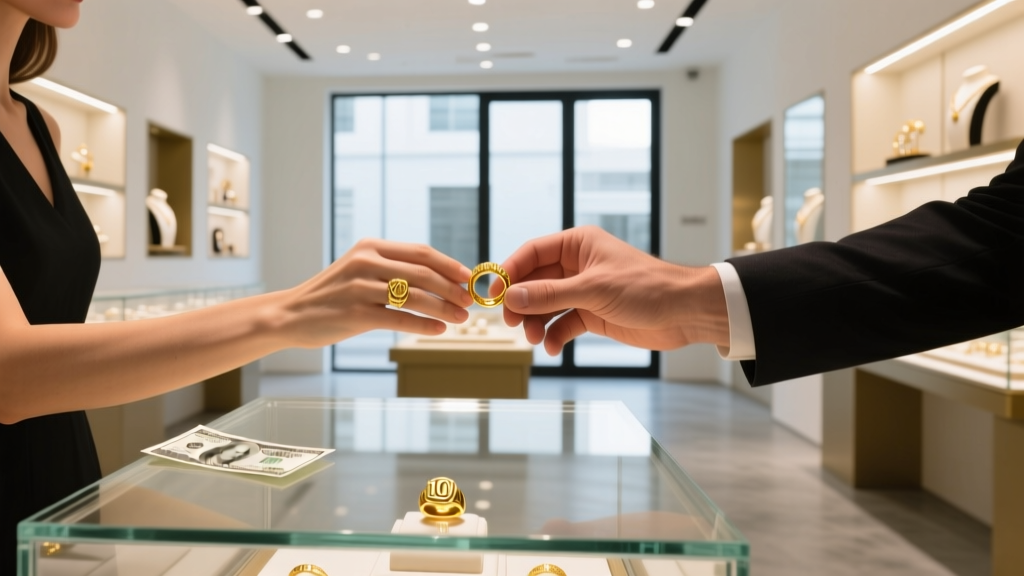
Once the weight and purity are established, the negotiation begins. Your goal is to close the gap between their initial offer and the true melt value.
- State Your Research: Do not ask, "What will you give me?" Instead, say, "I have 22.4 grams of verified 14k gold. At today's spot price, the melt value is exactly $945. I am looking for an 80% payout, which is $756." This immediately signals that you are an educated seller, not a desperate one.
- Leverage Multiple Offers: Visit at least three different shops. The first shop is your baseline. The second is your leverage. The third is where you close the deal. Mentioning a competing offer is the fastest way to trigger a broker's fear of losing inventory.
- Negotiate the "Scrap" vs. "Resale" Premium: If your item is in pristine condition, features a recognized designer hallmark, or is a highly liquid style (like a standard 14k Figaro or Cuban chain), it holds resale value above melt. Demand a 10% to 20% premium over the scrap offer, as the shop will simply clean it and place it in their display case rather than sending it to a refinery.
- Be Prepared to Walk: The ultimate negotiation tool is your willingness to leave. If a broker offers 50% of melt value for an outright sale, they are attempting to exploit your urgency. Pack your items calmly and head for the door; you will frequently be called back with a revised, higher offer before you reach the street.
Pawn Loan vs. Outright Sale: Understanding the Legalities
If you are using a gold pawn and jewelry shop for a short-term cash loan rather than an outright sale, the financial mechanics shift dramatically. Pawnbrokers assume the risk of holding and potentially liquidating your collateral. Consequently, Loan-to-Value (LTV) ratios are much lower, typically maxing out at 50% to 60% of the item's melt value.
You must also understand the legal framework governing these transactions. The Federal Trade Commission (FTC) and state-level pawnbroker regulations mandate strict holding periods. In most jurisdictions, if you default on a pawn loan, the shop must wait a statutory period (often 15 to 30 days post-default) before the item legally becomes their property to sell or melt. Furthermore, your personal data, including a government-issued ID and fingerprints in some states, will be logged into a local police database to deter the fencing of stolen goods. Always read the pawn ticket carefully, noting the exact APR (which can legally exceed 200% in some states), the grace period, and the precise redemption deadline.
Expert Takeaway: The most profitable sellers in the gold market treat pawn shops as commodity buyers, not appraisers. By controlling the data—weight, purity, and live spot pricing—you strip the broker of their informational advantage and force a transaction based on transparent market mathematics.