24 Karat Gold Jewelry: Technical Deep Dive Into Pure Gold Metallurgy
Explore the metallurgy, Vickers hardness, and wearability of 24 karat gold jewelry. An expert technical guide to pure 999.9 gold alloys and care.

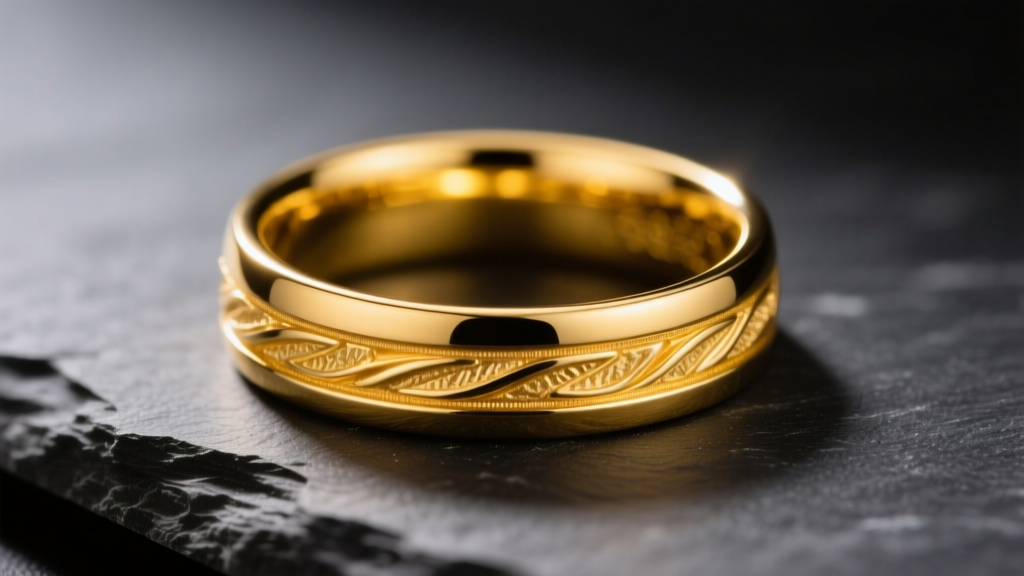
The Metallurgical Reality of 999.9 Fine Gold
When discussing 24 karat gold jewelry, we are fundamentally discussing elemental gold (Au) in its most unadulterated commercial form, typically refined to 99.99% purity (often stamped as 999.9). Unlike 18k or 14k alloys, which rely on copper, silver, zinc, or palladium to alter their mechanical properties, 24k gold lacks these solid-solution strengthening agents. To understand why pure gold behaves the way it does on a microscopic level, we must examine its crystal structure.
Gold crystallizes in a Face-Centered Cubic (FCC) lattice. This specific atomic arrangement features closely packed planes that allow dislocations to move easily under applied stress. In metallurgical terms, this high number of active slip systems is what grants pure gold its legendary malleability and ductility. However, this same FCC structure results in an exceptionally low Vickers Hardness (HV) rating. While a standard 14k gold alloy boasts a hardness of roughly 120 to 150 HV, annealed 24k gold sits at a mere 25 to 30 HV. This extreme softness dictates every aspect of how 24 karat gold jewelry must be designed, manufactured, and worn.
Work-Hardening and Structural Limitations
Jewelers cannot simply cast a 24k gold ring and expect it to survive daily wear without deformation. To increase the hardness of pure gold, manufacturers rely on strain hardening (or work-hardening). By mechanically deforming the metal through rolling, drawing, or hammering, dislocations in the FCC lattice multiply and tangle, effectively blocking further movement and increasing the metal's yield strength. Through severe cold-working, the hardness of 24k gold can be pushed to approximately 60 to 70 HV.
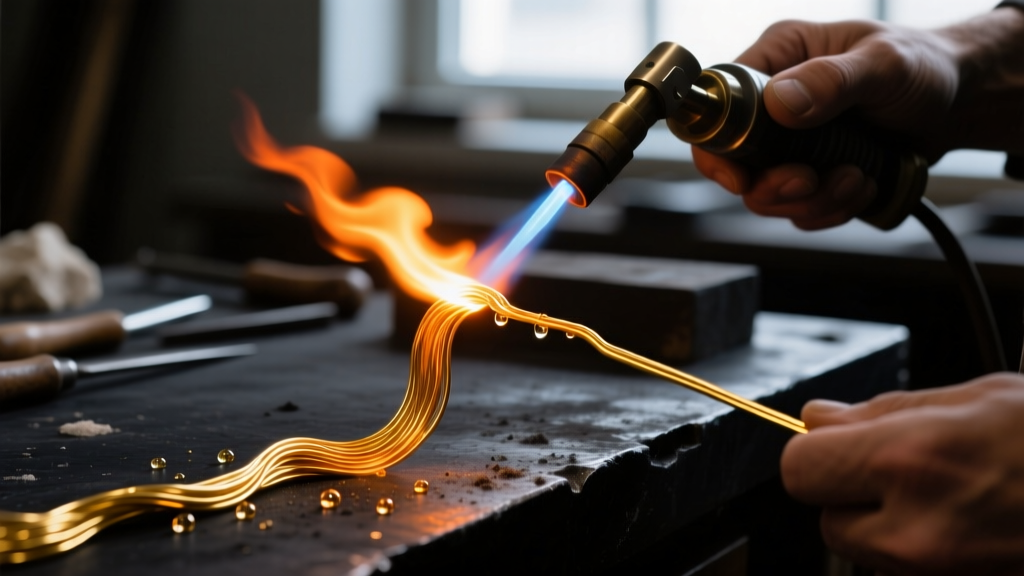
However, work-hardened 24k gold is highly susceptible to thermal resetting. If the jewelry is exposed to heat, the atomic lattice will recrystallize, erasing the work-hardening effects and returning the metal to its soft, annealed state. The recrystallization temperature for pure gold is remarkably low—approximately 200°C (392°F). This means that even routine jewelry repairs, such as soldering a nearby clasp, or prolonged exposure to hot water, can inadvertently anneal a work-hardened 24k piece, compromising its structural integrity.
The Electroforming Exception: Hard 24k Gold
One of the most significant metallurgical advancements in pure gold jewelry is the development of electroformed "hard gold." By utilizing specialized electrolytic baths containing specific organic additives and precise current densities, manufacturers can deposit 24k gold with a refined, ultra-fine grain structure. According to research presented at the Santa Fe Symposium, these electroforming parameters can inhibit dislocation movement at the grain boundaries, achieving hardness levels up to 130 HV while maintaining 99.9% purity. This allows for the creation of lightweight, highly durable 24 karat gold jewelry that resists scratching and deformation far better than traditional cast or fabricated pure gold.
Technical Comparison: 24k vs. Standard Alloys
To contextualize the mechanical behavior of pure gold, it is essential to compare its physical properties against standard jewelry alloys. The following data table illustrates the dramatic shifts in metallurgical performance as alloying elements are introduced.
| Metric | 24k Gold (99.99%) | 22k Gold (91.6%) | 18k Gold (75.0%) | 14k Gold (58.3%) |
|---|---|---|---|---|
| Vickers Hardness (Annealed) | 25 - 30 HV | 45 - 55 HV | 80 - 100 HV | 110 - 130 HV |
| Melting Point | 1,064°C (1,947°F) | 1,000°C (1,832°F) | 910°C (1,670°F) | 850°C (1,562°F) |
| Tensile Strength | ~120 MPa | ~200 MPa | ~350 MPa | ~450 MPa |
| Primary Failure Mode | Abrasion / Bending | Prong Wear | Stress Corrosion | Tarnish / Fatigue |
| Ideal Application | Investment / Bezels | Traditional Bands | Stone Settings | Everyday Chains |
Manufacturing and Design Imperatives
Designing 24 karat gold jewelry requires a fundamental departure from standard CAD/CAM jewelry practices. Because pure gold lacks the tensile strength to securely grip gemstones via traditional prongs, expert jewelers must utilize alternative setting techniques.
- Bezel Settings: The metal is rolled over the girdle of the stone. The extreme malleability of 24k gold allows for a tight, secure burnish without the risk of the metal cracking or work-hardening too quickly during the setting process.
- Tension and Friction Fits: Highly discouraged for 24k. The metal will eventually yield and flow under constant pressure, releasing the stone.
- Casting Shrinkage: Pure gold has a volumetric shrinkage rate of approximately 1.7% upon solidification. Without the grain-refining effects of alloying metals like iridium or ruthenium, cast 24k gold is highly prone to porosity and large, columnar grain structures that create weak points in the casting.
"Working with 999.9 fine gold requires an intimate understanding of its thermal memory. You are not just shaping metal; you are managing its crystalline state in real-time." — Master Goldsmith Technical Guidelines, Gemological Institute of America (GIA).
Real-World Failure Modes: Galling and Abrasion
The most common catastrophic failure in 24 karat gold jewelry is not snapping or breaking, but rather galling and abrasive wear. Galling is a form of severe adhesive wear that occurs when two similar, soft metals slide against each other under pressure. Because pure gold has a high coefficient of friction and lacks a protective oxide layer, microscopic asperities on the gold surface can cold-weld together and tear. This is why 24k gold chains with intricate, interlocking links (like the Byzantine or Foxtail weaves) can stiffen and degrade rapidly if worn against other gold pieces or subjected to continuous friction.
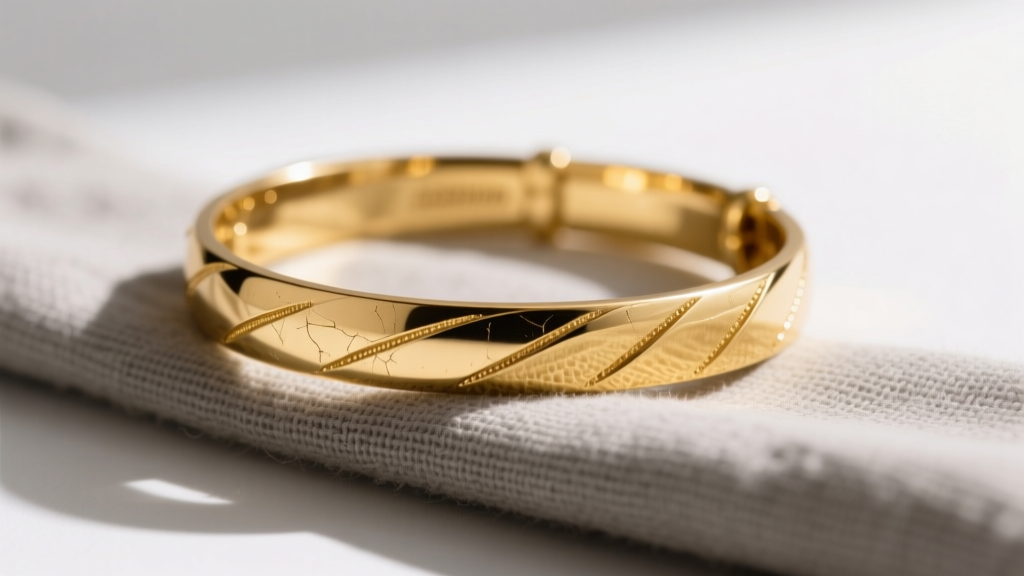
Furthermore, abrasive wear against environmental silicates (dust, sand, and dirt) acts like fine sandpaper on the 25 HV surface. Over a decade of daily wear, a 24k gold wedding band can lose a measurable percentage of its mass purely through micro-abrasion, developing a deeply rounded, softened profile and a distinct matte patina that collectors often prize, but structural engineers note as material loss.
Hallmarking, Assay Tolerances, and Valuation
From a valuation standpoint, 24 karat gold jewelry is treated closer to a bullion product than a standard accessory. According to the World Gold Council, the premium over the spot price of gold for 24k jewelry is heavily dependent on the manufacturing complexity rather than the material cost. When assessing 24k pieces, one must understand regional assay tolerances. In the United States, the FTC allows a tolerance of 3 parts per thousand for gold alloys, but for 24k (999.9), the market demands absolute purity. In regions like China and India, where 24k gold jewelry (often referred to as Chuk Kam or 916/999 gold) is a primary vehicle for generational wealth transfer, laser-welded hallmarks and X-ray fluorescence (XRF) testing are standard practices to verify the absence of subsurface tungsten or iridium inclusions.
Expert Care and Maintenance Protocols
Cleaning 24 karat gold jewelry requires avoiding harsh mechanical agitation. Ultrasonic cleaners can cause micro-cavitation that, over time, will erode the soft surface of work-hardened pure gold, particularly around intricate filigree or electroformed textures. Instead, experts recommend a chemical-only approach:
- Submerge the piece in a solution of warm distilled water and a non-ionic surfactant (avoiding standard dish soaps which often contain harsh degreasers and micro-abrasives).
- Allow the piece to soak for 15 minutes to dissolve sebum and environmental oils.
- Rinse with distilled water and dry using a low-pressure stream of compressed air or a pristine, lint-free microfiber cloth, patting gently rather than rubbing to prevent induced micro-scratching.
Ultimately, 24 karat gold jewelry represents the pinnacle of metallic purity, offering an unmatched, rich chromatic depth that alloys simply cannot replicate. However, owning and wearing it requires a deep respect for its metallurgical boundaries, treating it not merely as an accessory, but as a wearable piece of elemental history.


