How Can I Clean Gold Jewelry at Home Without Damaging It?
Learn how to clean gold jewelry at home safely. Expert troubleshooting for 10k, 14k, 18k, and 24k gold, plus what to avoid to prevent scratching.

If you frequently ask yourself, 'how can I clean gold jewelry at home' without ruining the finish, you are not alone. Gold is a remarkably resilient precious metal, but the alloys mixed with it—and the delicate finishes applied to it—are highly susceptible to improper cleaning. While the internet is flooded with DIY hacks involving baking soda, toothpaste, and boiling water, these methods are notorious for causing micro-scratches, stripping plating, and even inducing stress corrosion cracking.
In this comprehensive troubleshooting guide, we break down the exact metallurgy of your gold pieces and provide a foolproof, professional-grade cleaning protocol you can execute in your kitchen. Whether you are dealing with a heavily tarnished 10k rose gold band or a delicate 18k vermeil chain, this guide will help you restore the original luster safely.
The Metallurgy of Grime: Why Your Gold Looks Dull
Pure 24-karat gold is virtually impervious to tarnish because it does not react with oxygen or sulfur in the environment. However, pure gold is far too soft for daily wear jewelry (rating a mere 2.5 on the Mohs hardness scale). To increase durability, jewelers alloy it with metals like copper, silver, zinc, and nickel.
When your 10k, 14k, or 18k gold jewelry loses its shine, you are usually not looking at dirty gold; you are looking at oxidized alloy metals or a buildup of cosmetic films. Lotions, perfumes, sweat, and household chemicals create a microscopic film that traps dead skin cells and environmental sulfur. According to the Gemological Institute of America (GIA), this combination is the primary culprit behind the dull, grayish-brown patina that forms on lower-karat gold over time.
The Universal DIY Cleaning Protocol
For solid gold jewelry without porous gemstones (like pearls, opals, or emeralds), the safest and most effective home cleaning method relies on mild surfactants and gentle mechanical agitation.
What You Will Need:
- Distilled or filtered water (tap water contains chlorine and hard minerals that can leave spots)
- Mild, phosphate-free dish soap (e.g., original blue Dawn)
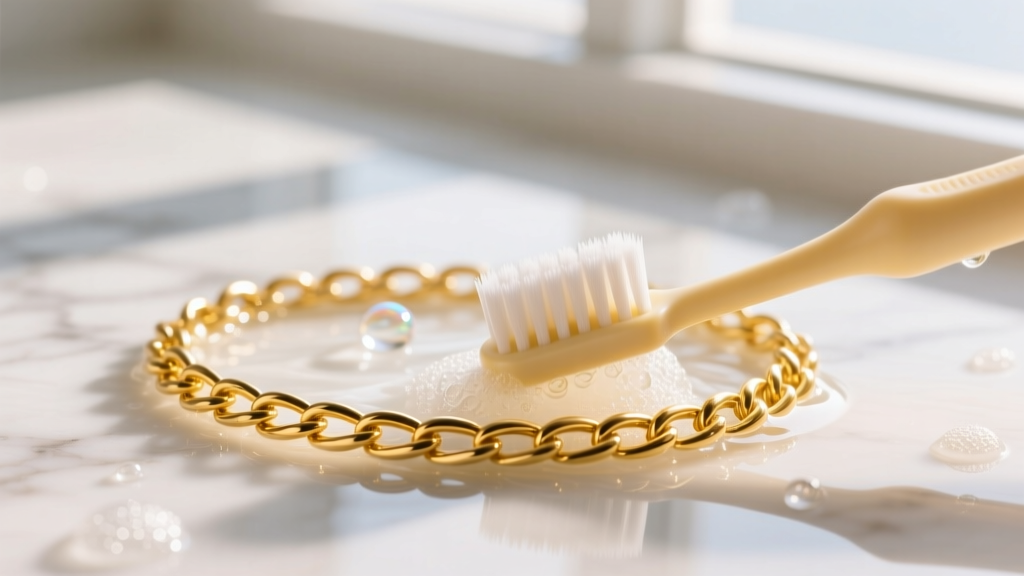
- An extra-soft baby toothbrush (never use a standard adult toothbrush)
- A lint-free microfiber jewelry cloth
- A small glass or ceramic bowl
Step-by-Step Execution:
- Mix the Solution: Add 3 to 4 drops of dish soap to one cup of lukewarm distilled water. Avoid hot water, as extreme temperature shifts can cause thermal shock in certain gemstone inclusions.
- Soak: Submerge your solid gold jewelry in the solution for 15 to 20 minutes. This allows the surfactants to break down the lipid bonds of body oils and cosmetic residue.
- Agitate: Gently brush the jewelry with the baby toothbrush. Pay special attention to the backs of settings and chain links where grime accumulates. Brush in one direction to minimize cross-hatching scratches.
- Rinse: Rinse thoroughly under a gentle stream of lukewarm distilled water. Ensure the drain is plugged!
Karat-Specific Troubleshooting
Not all gold jewelry reacts the same way to cleaning agents. The karat weight dictates the alloy composition, which in turn dictates how aggressive you can be.
10K and 14K Gold (High Alloy Content)
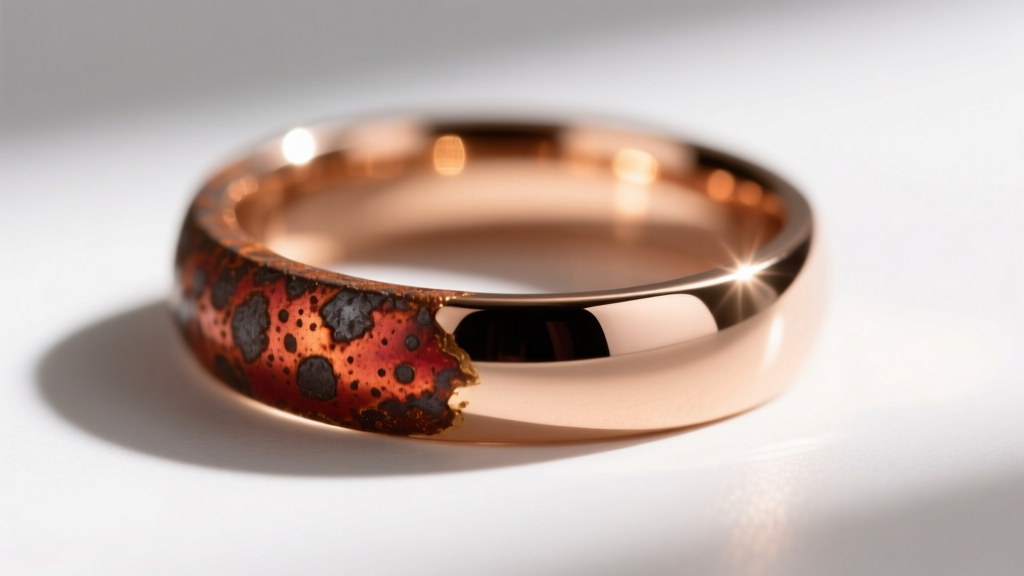
10k gold contains only 41.7% pure gold, while 14k contains 58.3%. The high copper and silver content makes these karats highly prone to oxidation and tarnish. If the standard soap soak does not remove dark tarnish spots, you may need a specialized, non-abrasive liquid gold dip. However, use these dips sparingly (no more than 30 seconds), as they contain mild thiourea compounds that can strip the natural patina and leave the metal looking artificially bright if overused.
18K and 24K Gold (High Purity)
With 75% and 99.9% pure gold respectively, these pieces will not tarnish, but they are incredibly soft. Skip the toothbrush entirely. The mechanical friction of bristles, even soft ones, can cause micro-marring on high-polish 24k surfaces. Instead, rely solely on the soaking method and use a soft cotton swab to gently dislodge dirt from crevices.
Gold-Plated and Vermeil (Delicate Surfaces)
The Federal Trade Commission (FTC) mandates that gold vermeil must have a gold layer of at least 2.5 microns over sterling silver. Standard gold plating can be as thin as 0.5 microns. Never soak plated or vermeil jewelry. Prolonged water exposure degrades the adhesion layer, causing the gold to flake or peel. Instead, dampen a microfiber cloth with your soapy solution, gently wipe the surface, and immediately dry it.
The Chemical Blacklist: What NEVER to Use
When figuring out how to clean gold jewelry at home, knowing what to avoid is just as critical as knowing what to use. Many popular DIY hacks will permanently ruin your pieces.
| Cleaning Agent | Chemical / Physical Risk | Verdict |
|---|---|---|
| Chlorine Bleach | Attacks copper/silver alloys, causing stress corrosion cracking and microscopic fractures. | NEVER USE |
| Toothpaste | Contains silica/calcium carbonate (Mohs 3-7). Will severely scratch gold (Mohs 2.5-3). | NEVER USE |
| Baking Soda | Crystalline structure acts as an abrasive sandpaper, dulling high-polish finishes. | NEVER USE |
| Alcohol / Acetone | Safe for plain gold, but will dissolve the epoxy used in many gemstone settings. | AVOID |
| Ultrasonic Cleaners | High-frequency vibrations can shake loose diamonds and shatter included gemstones. | USE WITH CAUTION |
Drying, Polishing, and Storage Protocols
How you dry your gold is the final point of failure in the home cleaning process. Air-drying gold jewelry almost guarantees water spots, especially if you used tap water. Hard water minerals will bake onto the surface as the water evaporates.
Immediately after rinsing, pat the jewelry dry with a clean, lint-free microfiber cloth. For intricate chain links or pavé settings where water gets trapped, use a hairdryer on the cool, low-airflow setting to blow the moisture out. Never use heat, as it can damage heat-sensitive stones like tanzanite or opals.
Once dry, give the piece a final buff with a dedicated jewelry polishing cloth (such as a Sunshine cloth). These cloths are treated with microscopic jeweler's rouge that safely removes the absolute finest layer of oxidation without scratching. Store your cleaned gold in individual anti-tarnish flannel pouches to prevent pieces from scratching each other and to limit exposure to ambient sulfur.
When to Abandon DIY and See a Professional
Home cleaning is excellent for routine maintenance, but it cannot fix structural or severe cosmetic issues. You should take your jewelry to a bench jeweler if:
- You notice deep scratches: Home polishing cannot remove deep gouges. A jeweler must use a motorized buffing wheel with tripoli and rouge compounds to re-level the metal.
- Prongs feel snagged or loose: Cleaning a piece with loose prongs can dislodge the dirt that is currently holding the stone in place, resulting in a lost gemstone. Always have prongs tightened before a deep clean.
- White gold looks yellow: White gold is naturally yellowish and is plated with rhodium to look bright white. If your white gold is turning yellow, the rhodium has worn off. No amount of cleaning will fix this; it requires professional rhodium re-plating.
By understanding the specific karat, alloy composition, and structural integrity of your jewelry, you can confidently maintain your collection. The next time you wonder how to clean gold jewelry at home, skip the harsh chemicals and rely on the gentle, scientifically backed methods outlined above to keep your pieces shining for a lifetime.