Shopping Guide: Dearborn Jewelry & Gold Factory مجوهرات ديربورن
Discover expert tips for buying 21k and 18k gold at Dearborn Jewelry & Gold Factory. Learn pricing math, hallmarks, and negotiation tactics.

The Allure of Dearborn’s Gold District
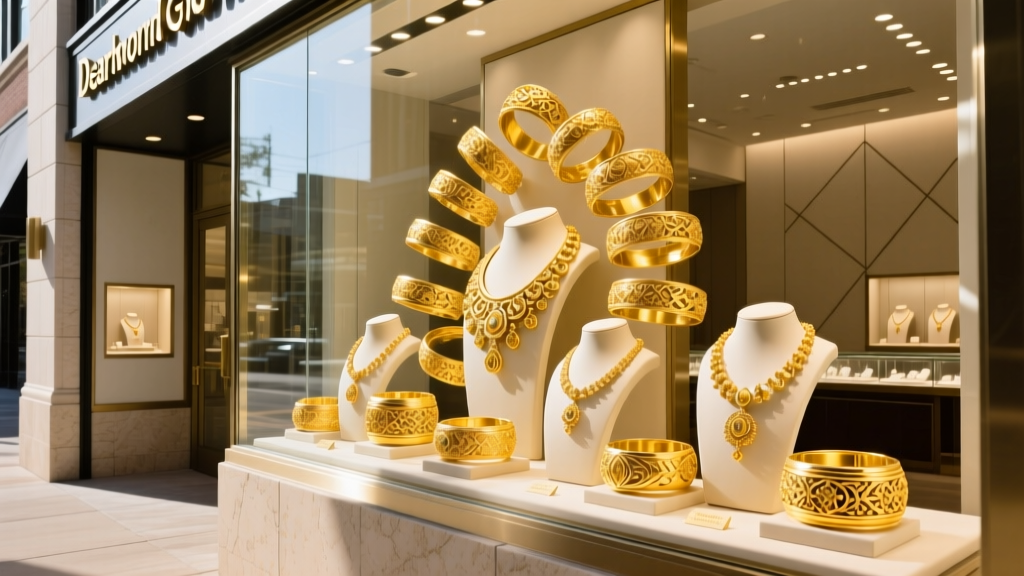
When discussing the premier destinations for authentic, high-karat Middle Eastern gold in the United States, one location consistently dominates the conversation: the Warren Avenue and Schaefer Road corridors in Michigan. For buyers seeking authentic dearborn jewelry & gold factory مجوهرات ديربورن pieces, this bustling district offers an unparalleled blend of cultural heritage, direct-import pricing, and master craftsmanship. Unlike standard American mall jewelers that primarily stock 14k white and rose gold, Dearborn’s gold factories specialize in the rich, buttery hues of 21k and 18k yellow gold, catering to a clientele that views jewelry not just as adornment, but as a tangible, wearable asset.
Shopping in this district requires a different approach than buying a standard diamond engagement ring. You are stepping into a market driven by global spot prices, intricate making charges, and centuries-old Levantine and Egyptian design traditions. This comprehensive buying guide will equip you with the exact metrics, negotiation strategies, and authentication protocols needed to navigate the مجوهرات ديربورن market like a seasoned insider in 2026.
Understanding Karats: The 21k Standard
The most critical distinction between mainstream American jewelry and the offerings at a Dearborn gold factory is the karatage. While 14k (58.3% pure gold) is the US standard for durability, Middle Eastern buyers heavily favor 21k gold. At 87.5% pure gold, 21k offers a vibrant, deep yellow color that closely mimics 24k, but with just enough alloy (typically copper and silver) to withstand daily wear.
| Karat | Purity % | Common Stamp | Primary Use in Dearborn | Durability & Color |
|---|---|---|---|---|
| 24k | 99.9% | 999 | Investment coins, bullion | Very soft, deep orange-yellow |
| 21k | 87.5% | 875 | Bangles, heavy chains, bridal sets | Moderate, rich buttery yellow |
| 18k | 75.0% | 750 | Diamond settings, modern designs | High, warm yellow |
| 14k | 58.3% | 585 | Everyday wear, men's rings | Very high, pale yellow |
According to the World Gold Council, the alloy composition in 21k gold is carefully calibrated. Factories in Dearborn often import master alloys from Italy or Turkey to ensure the copper-to-silver ratio prevents the gold from turning reddish or greenish, maintaining that highly prized Levantine yellow hue.
Decoding the Pricing: Spot Price vs. Making Charges
The most common mistake novice buyers make at a gold factory is treating the price tag like a fixed retail price at a department store. In Dearborn, gold jewelry is priced using a transparent, commodity-based formula. Understanding this formula is your key to negotiating effectively.
The Golden Formula
Every piece of jewelry at مجوهرات ديربورن is priced using the following equation:
Total Price = (Weight in Grams × Daily Spot Price per Gram) + Making Charge (Musnah)
- Weight in Grams: Always verify the weight on a digital scale calibrated in grams, not pennyweights (dwt), which are common in American pawn shops but rare in Middle Eastern gold trading.
- Daily Spot Price: This is tied to the global commodities market. Reputable factories will have the daily gram price for 24k, 21k, and 18k displayed on digital LED boards. You can cross-reference this with live market data from Jewelers of America or financial market trackers.
- Making Charge (Musnah): This is the craftsmanship fee, and it is the only negotiable part of the equation. It covers the labor, design complexity, and retail overhead.
Negotiating the Making Charge
Making charges in Dearborn typically range from $15 to $35 per gram for simple cast pieces (like plain rope chains or basic bangles). However, for intricate handmade filigree, micro-pave diamond settings, or complex hinged bangles, the making charge can easily exceed $60 to $100 per gram. When negotiating, never attempt to haggle the spot price of the gold itself; instead, ask the jeweler to "sharpen the musnah" or offer a discount on the labor fee, especially if you are purchasing multiple items or paying in cash.
Signature Styles at مجوهرات ديربورن
The gold factories in this district are not just retail shops; many are direct importers or have on-site master bench jewelers. When browsing, look for these culturally significant and highly sought-after styles:
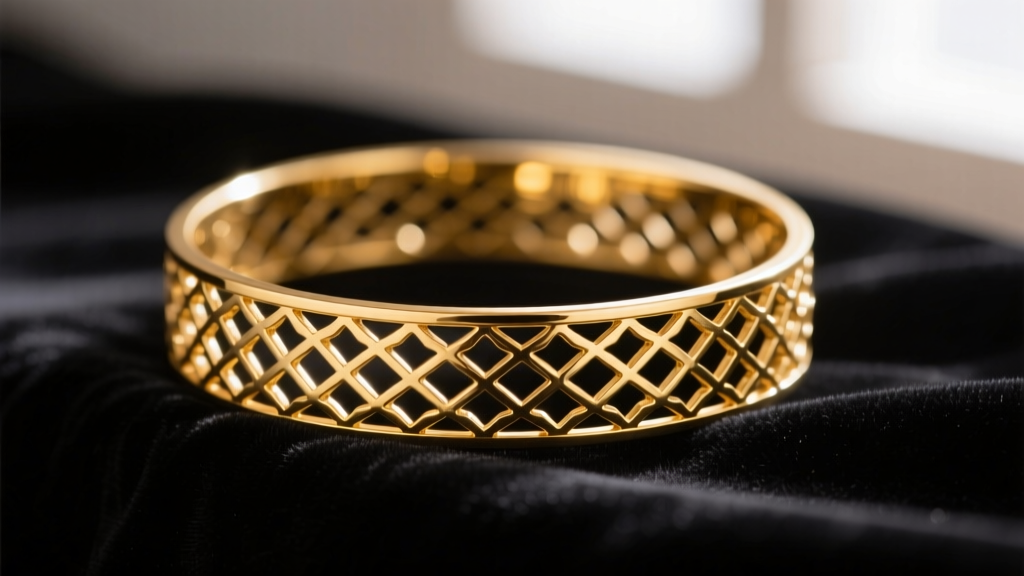
- Manilla and Hinged Bangles: Unlike solid bangles that must slip over the hand, hinged 21k bangles feature a hidden clasp and a figure-eight safety latch. Look for seamless hinges and secure locking mechanisms.
- Filigree and Ajoure Work: A hallmark of Syrian and Egyptian craftsmanship, this involves twisting fine gold wires into intricate floral or geometric patterns. Inspect the back of the piece; high-quality filigree should be as clean and polished on the reverse as it is on the front.
- Ottoman Lira and Coin Jewelry: Often used in bridal dowries or as gifts for newborns, these are 22k or 24k gold coins (like the Reshat or Ottoman Lira) encased in a 21k gold bezel. Ensure the coin itself is not soldered directly to the bezel, as this damages the coin's numismatic and melt value.
- Shabka Sets: Elaborate, matching bridal sets consisting of a heavy necklace, earrings, and a tiara or hairpiece. These are usually custom-ordered and require a significant deposit and a 4-to-8-week fabrication time.
Expert Tips for Authenticating Your Purchase
While the vast majority of jewelers in Dearborn’s gold district are highly reputable, family-owned businesses, it is your responsibility as a buyer to verify the authenticity and purity of your investment. Here is the professional protocol for ensuring your gold is exactly what it claims to be.
1. Inspect the Hallmarks
Every authentic piece of 21k gold should bear a microscopic laser stamp reading 875, alongside the manufacturer's trademark. Use a jeweler's loupe (10x magnification) to inspect the clasp of a necklace or the inner band of a ring. If the stamp looks blurry, uneven, or is missing entirely, request an immediate purity test.
2. Request an XRF Scan
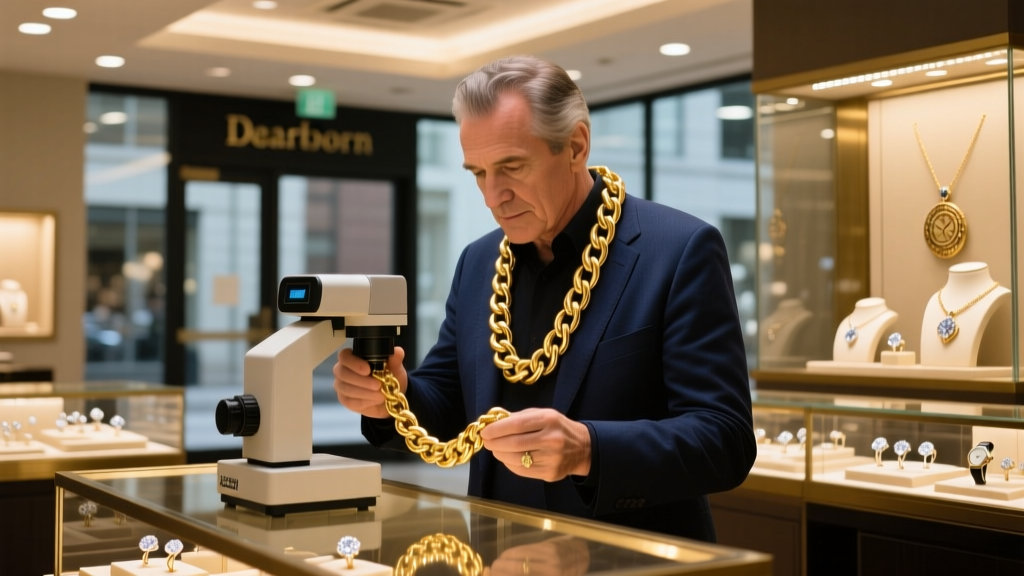
Top-tier gold factories in Dearborn are equipped with X-Ray Fluorescence (XRF) spectrometers. This non-destructive testing method shoots X-rays into the metal and reads the elemental composition in seconds. Ask the jeweler to scan the piece in front of you. The screen should show exactly 87.5% gold, with the remainder being copper, silver, or zinc. Avoid any seller who refuses to perform an XRF scan or relies solely on the outdated, destructive acid test for high-value items.
3. Check the Scale Calibration
Before your jewelry is weighed, ensure the digital scale is zeroed out and displays a certification sticker from the local weights and measures authority. A discrepancy of even 0.5 grams on a heavy 50-gram bangle can result in a significant financial overcharge based on current gold prices.
Final Verdict: Maximizing Your Investment
Shopping for dearborn jewelry & gold factory مجوهرات ديربورن is a unique experience that bridges the gap between cultural tradition and hard-asset investing. By understanding the mechanics of 21k gold alloys, mastering the spot-price-plus-musnah pricing model, and rigorously authenticating your pieces via XRF technology, you can secure breathtaking, heirloom-quality jewelry at prices that closely track the true commodity value of gold. Whether you are building a bridal trousseau or diversifying your portfolio with wearable wealth, Dearborn’s gold district remains one of the most vibrant and rewarding markets in North America.


